At 23, I ditched the Nuclear Industry for a gig that sparked happiness — landscaping. After falling in love with transforming lawns during my teen years in high school, I decided to bail on the nuclear scene, which had some bad vibes thanks to the whole union worker thing.
Tech
Mark Bradley of LMN Software: How Transitioning From Top Technician to Strategic CEO Built a Industry-Leading Business Management System
Mark Bradley shares his journey of transitioning from a struggling landscape technician to a software CEO, leveraging key performance indicators to scale operations and empower thousands of businesses.
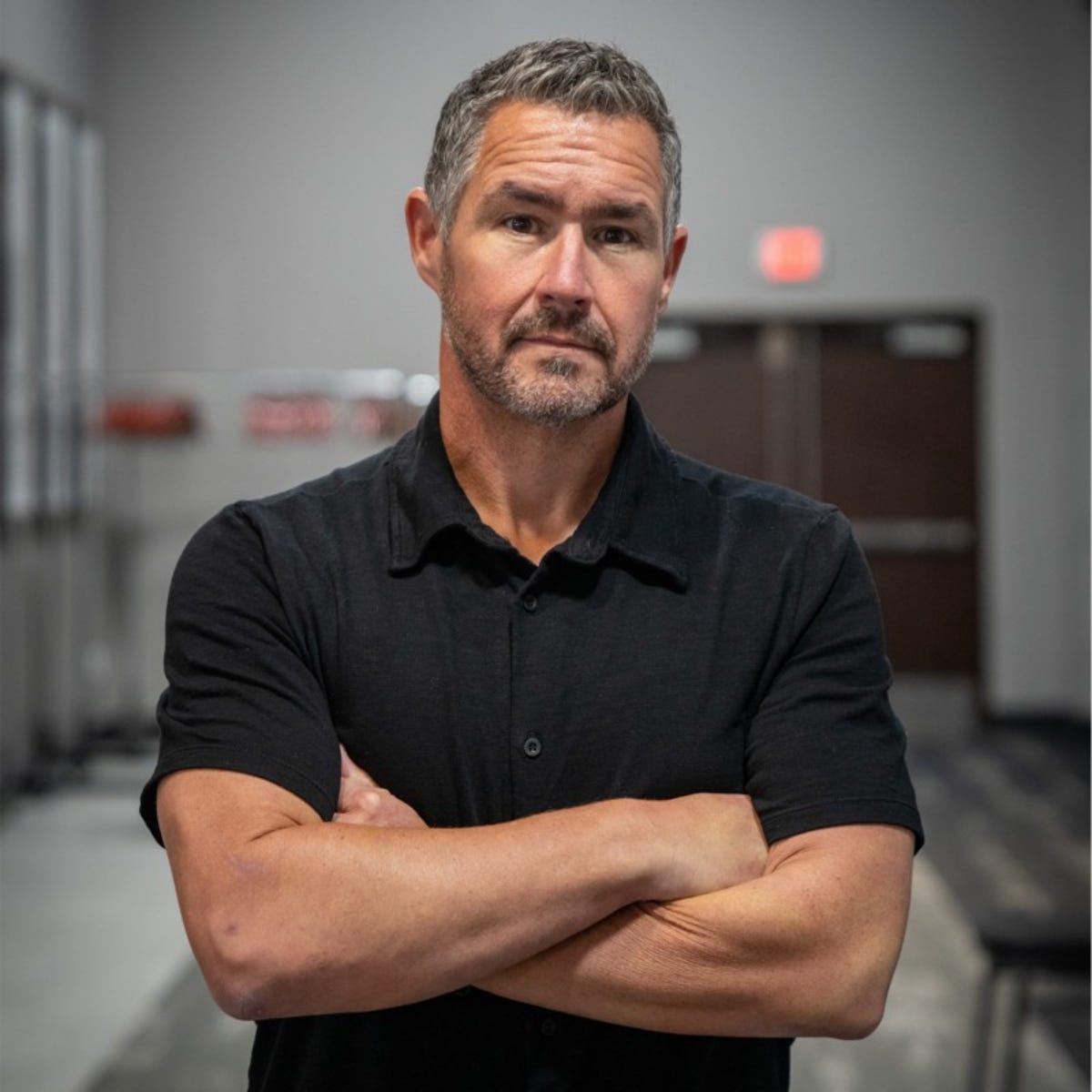
As part of our series called “5 Things I Wish Someone Told Me Before I Began Leading My Company” I had the pleasure of interviewing Mark Bradley.
Mark Bradley, Visionary Trailblazer and CEO and founder of LMN Software, built and grew his first endeavor, TBG Landscape, into a $50M business, transforming the landscape industry — achieving the accolade as the industry’s best business management system software.
Mark is a sought-after keynote speaker and business coach and has achieved Top 100 Landscape and Snow Contractors in North America. Mark has dedicated his life to evolving the landscaping industry by building and elevating others
Thank you so much for joining us in this interview series! Before we dive in, our readers would love to “get to know you” a bit better. Can you tell us a bit about your ‘backstory’ and how you got started?
At 23, I ditched the Nuclear Industry for a gig that sparked happiness — landscaping. After falling in love with transforming lawns during my teen years in high school, I decided to bail on the nuclear scene, which had some bad vibes thanks to the whole union worker thing. My grand plan? Creating kick-ass gardens! I wanted to turn my visions into reality, helping folks design these awesome spaces to hang with friends and family. Shoutout to my dad for passing on the trade skills — I took great pride in not just dreaming up designs but also getting my hands dirty. Things picked up crazy fast for the company, and suddenly, I was playing catch-up with the whole business management side. Yeah, I was nailing the design and construction stuff, but I was a bit lost when it came to leading strategy, finance, managing people, and crunching numbers. Like many other small business owners, I was a top-notch technician, but the whole business guru thing. Not so much. It was time to hit the books and figure out how to keep this landscaping dream rolling….it was 20 years of learning every day.
What was the “Aha Moment” that led to the idea for your current company? Can you share that story with us?
After a solid decade of running the landscaping show and becoming a CEO one day at a time (thanks to more courses, college-type programs, and a stack of business books taller than my pickup truck), I had cracked the success code. I could set strategy, whip up a supporting financial plan like a chef cooks up a gourmet meal, estimate job cost with the finesse of a boss, and I even crafted a system to teach my employees to understand how this all worked so they could evolve with me and earn more too. And guess what? It was repeatable, just like your favorite playlist.
So, I was, knee-deep in a massive residential landscaping project for a big-shot CEO of a Fortune 500 telecom and consumer electronics giant. This guy noticed — my team and I stood out like a flamingo in a flock of pigeons beside the other contractors building his house. He saw that we were all about efficiency and clocked onto the fact that I had this secret weapon: key performance indicators!
He was intrigued, wanted to know more about my system, and then dropped the bomb — I should cash in on this goldmine! My special sauce was just what the doctor ordered for many other small businesses out there. Who knew my knack for greenery and efficiency would turn me into a Software CEO? It was time to sprinkle my magic all over the landscape business world!
Can you tell us a story about the hard times that you faced when you first started your journey? Did you ever consider giving up? Where did you get the drive to continue even though things were so hard?
Ah, the brilliant idea to ditch a cushy job at 23 and dive headfirst into the glamorous world of landscaping — because who needs a stable income, right? Went from swimming in the cash pool with a sweet $175k job to barely making enough to buy a fancy cup of coffee at $37k in the first year. Talk about a financial rollercoaster!
I worked my tail off like there was no tomorrow, thinking, “Hey, how hard can this be?” Spoiler alert: harder than decoding ancient hieroglyphs. The business started feeling like a puzzle, missing half its pieces — frustrating and seemingly impossible as I realized I had no experience in business.
But hey, my undying passion for landscaping kept me going, even when my wallet was empty. In my first year, the holiday season rolls around, and I’m playing Santa on a budget, struggling to afford a decent gift for my wife. Ever tried rolling pennies to buy groceries? I have — not exactly a high point in my financial mastermind journey.
I couldn’t pay the bills that winter, and suddenly, the “brilliant” decision to jump ship from that amazing job felt more like a “what was I thinking?” moment. Realized I was a pro at the work but a total rookie at running a business. If I wanted to win at this crazy game, it was clear: time to conjure up a plan that didn’t involve rolling spare change for survival. It was time to seek mentors who have done what I set out to do, read more books, and spend time in a classroom now and then.
So, how are things going today? How did your grit and resilience lead to your eventual success?
Today, LMN is the guide for thousands of landscapers who, just like yours, started off as brilliant technicians who need a little education and some tech magic to become the heroes of their own stories. We’re talking about turning those green thumbs into tech-savvy geniuses with my recipe for success, so they can ditch the paperwork and focus on building kick-ass teams and solving customer problems like landscaping wizards after engaging with our landscape Mastermind educational programs and using our software tools.
Last year, we played the backstage managers for over 300,000 landscape superheroes, armed with our staff training programs and a field app that turns their phones into landscaping command centers. Picture this: key performance indicators, job plans, and schedules — all in the palm of their hands. They get to keep those company promises, score better paychecks, and help their companies grow so profitably they might as well be planting money trees.
Our software impacts the industry every day. It is like watching a landscape makeover show on steroids — unbelievably motivating! What keeps me tossing and turning at night? It’s not some horror flick; it’s the thought of making my customers’ businesses run smoother than a freshly mowed lawn.
Building software and training programs that turn dreams into reality? Feels like I’m the Gandalf of the landscaping realm, helping people unlock their full potential in business. Forget the dollar signs; it’s about knowing that business owners and employees can earn better incomes and live a good life. It’s about impacting the quality of landscaping services consumers receive — turning properties into works of art.
Can’t picture doing anything else. I’m on a mission to shake up the landscape industry. I’m not hitting pause anytime soon!
What do you think makes your company stand out? Can you share a story?
LMN isn’t just a software superhero for landscapers; it’s the brainchild of landscapers, by landscapers, and for landscapers. We aren’t sitting in some ivory tower guessing at the struggles — nope, we’ve walked the same turf as our customers. When we build software, it’s not just about features and codes; it’s about unlocking the true potential of “my” people — the landscapers.
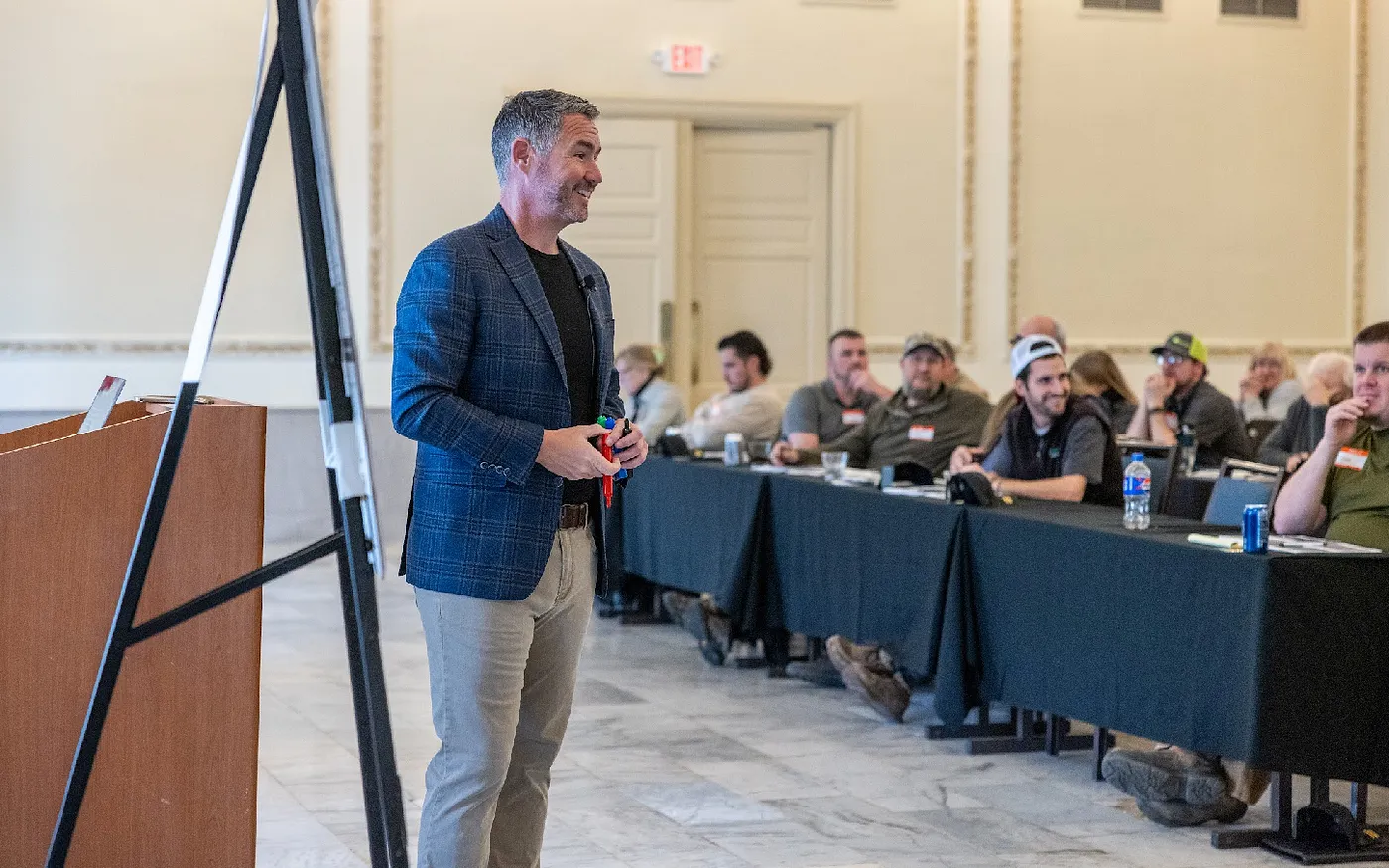
I’m not just a CEO glued to a desk; I’m roaming across North America for a whopping 180 days a year. Why? Because I’m not here to just sell software; I’m here to teach the “why” behind it. Imagine landscape mastermind classes that pop up like mushrooms — every week, online, in person, and throw in over 100 online events a year for good measure. Why do I do it? Simple. I want to ensure my customers don’t just use the software; they understand it. It’s not about clicks and buttons; it’s about mastering the business game. So, if you hear a landscaper schooling you on business lessons, you might just be in one of our events. Because in LMN land, it’s not just software; it’s a revolution!
Can you share a story about the funniest mistake you made when you were first starting? Can you tell us what lessons or ‘takeaways’ you learned from that?
Ah, the good ol’ days when I was so desperate to improve my landscaping business that I’d do just about anything, except maybe juggle chainsaws — I didn’t have the insurance for that. Picture this: no time, no money, and me, the master of ridiculous decisions.
Hiring staff? Oh, I had a foolproof method. I’d toss ads online, and conduct high-stakes phone interviews, and if someone managed to show up at my tiny shop at the ungodly hour of 6 am, I figured they deserved a shot. My trusty pickup truck doubled as a mobile t-shirt dispensary. Size ’em up, toss a shirt their way, and congrats if they were sober enough to catch it — they were officially part of the landscaping circus.
Then came the real test — a day of work that would make Hercules break a sweat. They’d either bail, which in hindsight was the smart move, or they’d tough it out and join the hustle. I called this an interview process. The catch? Only the not-so-bright ones stuck around. My hiring game was about as effective as a screen door on a submarine.
One day, surrounded by what seemed like a garden of idiots, I had an epiphany — the idiot in chief was me. It’s time for a grand plan: find better people, train ’em up properly, and teach them to do everything I did to create these amazing landscape projects on their own without me standing around pointing fingers. My plans evolved, and I got better, but let’s be real — learning to run a business shouldn’t feel like a sitcom plot.
Often leaders are asked to share the best advice they received. But let’s reverse the question. Can you share a story about advice you’ve received that you now wish you never followed?
So, there I was, innocently soaking up wisdom like a sponge when Captain Cynical strolled into my life with a nugget of advice, it probably set a record for “Worst Guidance Ever Given.”
Picture this: a well-intentioned friend, bless his heart, decides to enlighten me with the golden rule of life — never trust the blue-collar workers. He claimed to give them an inch, and they’ll take a mile.
To drive the point home, he shared tales of his employees stealing him blind and taking advantage of every chance they had to screw him over in his absence. It all sounded plausible if your life’s ambition is to have small goals and be the ruler of an inch-wide kingdom.
So there I stood, nodding to this masterclass in skepticism, unwittingly preparing to dodge imaginary landmines set by the hardworking folks just trying to earn an honest living. Despite knowing this was likely not entirely accurate, it made me extra skeptical. The voice in my head was quickly applying this bad approach to management when things were crumbling around me as the business was growing faster than my leadership.
You are a successful business leader. Which three character traits do you think were most instrumental to your success? Can you please share a story or example for each?
Curiosity has been my lifelong companion, sometimes to the chagrin of my teachers during my school days. Back then, the classroom felt like a stage for my personal rebellion against monotony. Instead of toeing the line, I immersed myself in anything but the prescribed curriculum — reading ahead, dabbling in unrelated projects, and sneakily tackling homework for future classes. The conventional pace of school never aligned with the speed at which my mind craved stimulation. This insatiable curiosity led me to seek wisdom from experts and mentors on anything that caught my attention, a trend that has persisted throughout my life.
Hockey, my early love, became the training ground for my confidence and leadership skills. The arena taught me the art of making decisions decisively and standing by them. Sharing ideas and opinions, while embracing collaborative feedback, became second nature. Much of my confidence stems from a valuable lesson my father imparted — favoring rational decision-making over emotional impulses, no decision was made without some questions to follow to ensure I had thought things through.
The discipline emerged as a silent force in my life, a trait forged through the test of waking up at 5 am for three decades and putting in long, unpaid hours with very few days of truly not working in between. Acknowledging that my ideas often needed refinement, I embraced the discipline to act today in a way that would shape a better tomorrow and every day after that. It became a personal mantra: “Discipline or Disappointment.” This discipline fueled my career, transforming the unfinished into the accomplished.
Which tips would you recommend to your colleagues in your industry to help them to thrive and not “burn out”?
Put yourself first. Worship your Calendar — Get focused with a clear vision for what you want in life then eliminate, delegate, and automate everything you possibly can — then calendar everything you need to prioritize to Optimize your physical and mental health. Take time to recover each day. Optimize your love life, we all need companionship and it truly is the best form of recovery I believe that a Divine Relationship creates the perfect version of ourselves as a man or a woman — Ying and Yang are real. Optimize your relationships with kids, family, and friends, they recharge your internal energy and provide you with a different source of happiness when needed. Last, optimize yourself as a leader — seek mentors and peers to learn from and with. We all need social reinforcement sometimes.
Prioritize yourself. Worship your Calendar. Start by honing in on a crystal-clear vision for your life, then get serious with elimination, delegation, and automation to rid yourself of unnecessary burdens. Let your calendar be your guiding light, a sacred scroll mapping the path to optimizing your physical and mental well-being.
In this grand optimization quest, remember the vital daily recovery ritual. Treat your mind and body like the precious temples they are, we only get one mind and body in this life.
Turn your attention to matters of the heart. Craft a love life that fuels your soul and serves as the ultimate recovery haven. I swear by the belief that a Divine Relationship transforms us into the finest versions of men and women, proving that the mystical dance of Yin and Yang is not just a philosophy but a tangible reality.
Nurture the relationships with your kids, family, and friends. They are the secret keepers of your internal energy, ever-ready to recharge your happiness reserves when life takes a toll.
And, of course, refine yourself as a leader. Seek mentors and companions on this journey of self-improvement because your business will stall or take a dive when you stop evolving as a leader. We all need that occasional pat on the back or a nod of approval from our peers — it’s social vitamins for the soul. Participating in Peer Groups, Associations, and helping out with non-profit organizations provides another way to learn and recover.
What are the most common mistakes you have seen CEOs & founders make when they start a business? What can be done to avoid those errors?
Starting a business to make money instead of to create a fulfilling life
Calling themselves a CEO before they are one. A start-up owner who has never operated a business or held an executive position in a legitimate company should refer to themselves as a start-up owner, a president, or an entrepreneur. Still, the CEO title is earned. It requires time, domain experience, business experience, personal growth, leadership growth, and many many mistakes….and time….so I think calling yourself a CEO before you are one just because you registered a business is like calling a kid in school who plays sports at lunchtime in the schoolyard a professional athlete. Then, even when you have earned the title of CEO (when you have or need an actual executive team you can be the Chief Executive Officer and only then) and you are officially in the “Big Leagues” I think you need to remember that there is a top player in every game…..it takes more and more time and experience combined with an incredible inner drive actually to become good let alone great as a business leader. I am humbled every day as a CEO at how much there is to learn, and I hope that feeling never ends for me, because if it does I will have stopped evolving…..I believe that is the final day of my career as a CEO.
Not understanding who the customer they plan to serve or specifically what problem they are solving and how to assign value to the solution or product they have to solve the problem in a way that allows them to create a clear message to create demand
Selling the way they buy instead of selling based on the actual value in the eyes of the customer. Most people set the prices too low and limit the potential to be great because of their scarcity mindset……not enough margin to invest in continuous improvement and not enough budget to build a great product or service and a team to continue to make the company better each day so that the customer’s problems are solved adequately enough to fuel future demand in the marketplace they serve.
They need to understand how to create a budget and financial plan to support the operation needed to succeed on the mission they have signed up for.
In your experience, which aspect of running a company tends to be most underestimated? Can you explain or give an example?
Time management. As business owners, we often fail to set clear missions for ourselves and the businesses we lead. When you get a clear mission you can set goals to succeed on the mission and develop supporting strategies in a way that can be broken down into time blocks. When you have fewer goals and clear key results, you can design a calendar to spend time on each goal each day and create and execute strategies that drive improvement in bite-size pieces. Ask yourself what you can do today to get 1% better Are you sure that what you have planned for the day serving the mission most effectively, and are you sure that you are hitting these in the right order of importance? We all focus on what we like….after all, we humans only move to avoid pain or seek pleasure….and if we are not clear on the mission and the supporting goals we will likely not be clear enough to decide what to focus on each day…..so we will act upon whatever is most clear that day….and you guessed it — we will do what provides pleasure or avoids pain for that thing we see even if it has nothing to do with our mission or goals…..so most people are just wasting time most of the time fixing problems that do not change anything. We only have so much time in life, so why waste it doing things that do not matter? More focus, more high-value actions, and less time wasted = more time for personal relationships and other activities that provide fulfillment in other areas of our lives.
What are your “5 Things I Wish Someone Told Me Before I Began Leading My Company”?
- Get Clear on the company mission and evolve as a leader constantly to be the leader you need to be to achieve this mission.
- Surround yourself with the best people you can find and replace them if they stop evolving with you on your journey. Set 3–5 Goals for the business and own them as the leader, then for each goal identify 3–5 key results needed for each quarter and have your team take ownership of these key results so that you have a clear view of what you are doing together (Objectives and Key Results — Measure what Matters — author John Doerr)
- Get serious about focus. Create block time from everything so that you put enough time into priority work to move the needle in each important business area each day. You get incremental improvements each day to build upon the day after and maintain momentum. Make sure your team does the same with their calendars so that you can gain momentum and speak the same language.
- Measure everything. Having key metrics ensures that you know what is going well and what is not so that you can learn from your mistakes or drive improvements to things that are going well but could go better. These key metrics allow you to know what success looks like, and more importantly, they allow you to explain this to your team as well, and then and only then can they evolve and be accountable for their contribution to the business.
- Make rational decisions. Leave your emotions at the door. Use data, key metrics, and facts, and make decisions once you have had time to assemble the information, take input from others who have more expertise than you to ensure that you are not missing anything, and then make a decision and stick with it long enough to see what the results are so that you can assess and adjust the strategy to drive further improvements.
You are a person of great influence. If you could start a movement that would bring the most amount of good to the most amount of people, what would that be? You never know what your idea can trigger. :-)
The middle class has all but disappeared in North America. I want to convince business owners and leaders that it is their job to create a middle class, where people can own homes, and cars, provide a healthy lifestyle for their families, and enjoy the short life we have to live. A world where 1% of the people have 99.99% of the money is not good for anybody. Not even the 1%. Paying people a livable wage is just a decision, designing a business that can afford to pay great people fair wages is a responsibility of the business owner. The government has tried and failed, the more it tries the larger the federal debt becomes and the more damage they do to the middle class. Only business owners can change this. It will take a movement. I am doing my part in the landscape industry to convince business owners that they can run more successful businesses with this mindset.
How can our readers further follow you online?
LinkedIn — Mark Bradley, https://www.linkedin.com/in/mark-bradley-13a799102/
Instagram @markbradley360s https://www.instagram.com/markbradley360/
This was very inspiring. Thank you so much for the time you spent with this!
About the Interviewer: Douglas E. Noll, JD, MA was born nearly blind, crippled with club feet, partially deaf, and left-handed. He overcame all of these obstacles to become a successful civil trial lawyer. In 2000, he abandoned his law practice to become a peacemaker. His calling is to serve humanity, and he executes his calling at many levels. He is an award-winning author, teacher, and trainer. He is a highly experienced mediator. Doug’s work carries him from international work to helping people resolve deep interpersonal and ideological conflicts. Doug teaches his innovative de-escalation skill that calms any angry person in 90 seconds or less. With Laurel Kaufer, Doug founded Prison of Peace in 2009. The Prison of Peace project trains life and long terms incarcerated people to be powerful peacemakers and mediators. He has been deeply moved by inmates who have learned and applied deep, empathic listening skills, leadership skills, and problem-solving skills to reduce violence in their prison communities. Their dedication to learning, improving, and serving their communities motivates him to expand the principles of Prison of Peace so that every human wanting to learn the skills of peace may do so. Doug’s awards include California Lawyer Magazine Lawyer of the Year, Best Lawyers in America Lawyer of the Year, Purpose Prize Fellow, International Academy of Mediators Syd Leezak Award of Excellence, National Academy of Distinguished Neutrals Neutral of the Year. His four books have won a number of awards and commendations. Doug’s podcast, Listen With Leaders, is now accepting guests. Click on this link to learn more and apply.

Published inAuthority MagazineTop Lessons, Top Authorities · 42K Followers
Exclusive, curated interviews with the leaders and changemakers shaping tomorrow. Leadership lessons, industry deep dives, and executive profiles.