In today’s current data centers, memory utilization is still very low — like 30 to 40 percent. Most of the time memory is simply just sitting there not doing anything but still burning power.
Tech
Gerry Fan of XConn Technologies: Why Hardware Innovations In Memory Design Are Crucial To Mitigating The Massive Energy Consumption Of AI
The CEO and veteran chip design expert explains how XConn Technologies is utilizing Compute Express Link technology to solve the escalating memory and sustainability challenges in modern data centers.
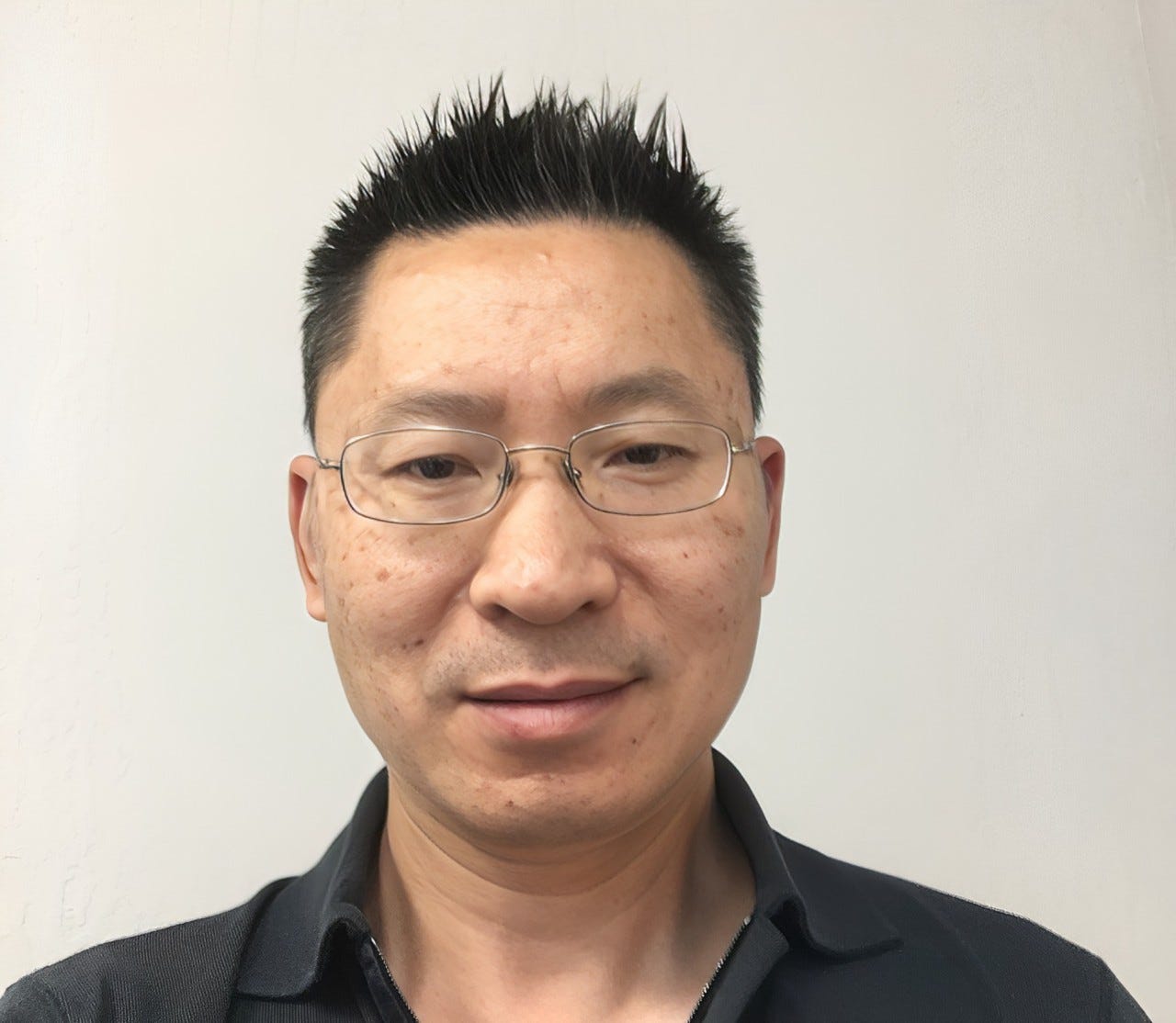
As a part of our series about cutting-edge technological breakthroughs, I had the pleasure of interviewing Gerry Fan of XConn Technologies.
Gerry Fan is CEO of XConn Technologies, a company that is an innovation leader in next-generation interconnect technology for the future of high-performance computing and AI applications. Founded in 2020 by a team of memory and high-performance switching experts, XConn is intent on bringing the value of Compute Express Link™ (CXL™), an industry-supported Cache-Coherent Interconnect for Processors, Memory Expansion and Accelerators, to the mainstream market to mitigate the escalation of energy consumption in today’s data centers.
Prior to his role as CEO of XConn, Fan managed chip design teams at Broadcom and Marvell Semiconductor.
Thank you so much for doing this with us! Before we dive in, our readers would love to learn a bit about you. Can you tell us a story about what brought you to this specific career path?
Early in my career, I was a firmware engineer developing firmware drivers for 2D and 3D graphics chips. It was back in the early 90s when graphics innovation was emerging, and I became fascinated with graphics technology. Over time, developing firmware drivers was no longer exciting. It’s software and that’s something you can’t touch and connect with. Chips are different. They’re hardware and something real that you can connect with.
Because I wanted to be part of the new graphics revolution, I made the shift to become a graphics chip designer. Here I was more involved in a cutting-edge kind of technology which actually brought me back to my college training in VLSI (very large-scale integration) integrated circuit design.
What is exciting about chip design is that with hardware you cannot recompile like software. You only have one shot to get it right. As my career unfolded, I began to really perfect the art of chip design, managing chip design teams with companies including Marvell Semiconductor and Broadcom before founding XConn.
Can you share the most interesting story that happened to you since you began your career?
Back when I began to evolve my career in graphics chip design, the hardest thing on the market was to develop chips for the DVD video era. As I worked to perfect my craft of DVD chip design, I truly learned how to optimize my design strategy. From here I evolved to develop networking chips and then I moved on to memory.
Can you tell us about the cutting-edge technological breakthroughs that you are working on? How do you think that will help people?
Today, I am laser focused on developing next-generation interconnect technology for AI and HPC applications which are the future of computing. These high-demand applications are consuming memory bandwidth at rates never before seen in the history of computing. To further innovation and widespread adoption of AI, we must solve the memory challenge.
Consider this. In today’s current data centers, memory utilization is still very low — like 30 to 40 percent. Most of the time memory is simply just sitting there not doing anything but still burning power. You must supply cooling to the system just to cool down the data center, even if you’re not really doing anything useful.
What happens when data centers amp up their processing for AI and HPC applications? When AI truly proliferates, the electricity consumption, and cost and effort to cool data centers down will become a monstrous challenge. It will be a transformative problem contributing to global warming and will significantly impact the world’s sustainability.
This is the problem we are seeking to solve with more efficient composable memory design using Compute Express Link™ (CXL™) technology, an industry-supported Cache-Coherent Interconnect for Processors, Memory Expansion and Accelerators. The CXL specification offers unprecedented memory capacity and bandwidth so that critical applications, such as research for drug discovery, climate modeling or natural language processing, can be delivered without memory constraints. By applying CXL technology to break through the memory bottleneck, XConn is helping to advance next-generation applications where a universal interface can allow CPUs, GPUs, DPUs, FPGAs and other accelerators to share memory seamlessly. By designing these interconnects and composable memory effectively, we can optimize power efficiency and drive down power consumption by enabling memory sharing and pooling so that data centers can operate more sustainably.
How do you think this might change the world?
If we achieve our goals, XConn innovations can dramatically lower data center power consumption while still enabling the acceleration of AI to drive valuable research and discovery breakthroughs. Our work will help speed up technology advancements while lowering the impact of the processing power, and resulting CO2 emissions, required to achieve them. As a result, we will help the world reduce its carbon footprint and create better outcomes for our planet.
Keeping “Black Mirror” in mind, can you see any potential drawbacks of this technology that people should think more deeply about?
As we empower the proliferation of AI, there may certainly be drawbacks. While AI can be a powerful enabler of discoveries that can help cure disease or transform innovation for the greater good, it can also be used for adverse causes. We all must remain vigilant to ensure that technological innovations are delivered in the most mindful ways to impact the world in positive ways.
Was there a “tipping point” that led you to this breakthrough? Can you tell us that story?
For me, the tipping point was when I truly considered the under utilization of memory in today’s data centers and how aggregating memory usage in much more effective ways could have a truly momentous impact on the world. We can’t just continue to maintain the status quo and expect the world to absorb the energy consumption impact of AI. It must change to make innovation plausible.
What do you need to lead this technology to widespread adoption?
Our innovations will drive cost efficiency and a return on investment that will be significant for major cloud service providers including Amazon, Google and Microsoft. As they begin to deploy composable memory technology to support next-generation computing, widespread adoption will be inevitable from there.
What have you been doing to publicize this idea? Have you been using any innovative marketing strategies?
We are active participants in the CXL Consortium and the Open Compute Project as well as the PCI Security Standards Council. Each organization has many major member companies that advocate for the advancement of processing and memory efficiency. Together with these organizations, we are working to build thought leadership on the value of transforming next generation computing while also influencing multiple stakeholders to adopt next generation processing and memory technology.
None of us are able to achieve success without some help along the way. Is there a particular person who you are grateful towards who helped get you to where you are? Can you share a story about that?
As a startup, we cherish the insights and business experience of our investors. Of course, we are grateful for their funding of our technology developments but even more we value their knowledge and expertise to help us scale growth. One of our investors in particular, Jackie Yang, has really personally helped me achieve strategic accomplishments as a founder and CEO and has enabled us to surround our startup with the ecosystem to succeed.
How have you used your success to bring goodness to the world?
One of the areas I am most passionate about is in the support of education for low-income or low-resource children. It is a cause that my family has supported for many years. Together, we work to sponsor tutoring organizations for middle and elementary school children from families without the resources they may need to excel in STEM (science, technology, engineering and mathematics) or even learning to read and write. I have found these programs to be truly inspirational.

What are your “5 Things I Wish Someone Told Me Before I Started” and why?
- It’s a marathon, not a sprint. When building a startup, you need to know that you can’t expect to see the rewards come fast. Success comes with time, effort and persistence.
- You never know what the day will bring. As a founder and CEO of a startup, every day brings its own challenges. You live in every role of the company and every task is yours to own. This also means that the more things you touch, the more things you may have to fix. Be prepared to deal with the unexpected.
- When looking for funding, know that it doesn’t often come from where you expect. You may think you know who is most likely to deliver the capital you need, but investors can come from unexpected places. It can often be someone you didn’t even know.
- Don’t discount people with potential. When hiring as a technology startup, you must be creative to compete with the “big boys” for talent. Don’t just look for employees with experience. Experience can be learned. Instead, seek employees with potential that also share your passion and vision.
- Protect your IP with patents. As a startup, your innovations are the backbone of your value. Protect that value by securing it with patents. Those patents over time will translate into your overall company valuation. Without them, your business is apt to be stolen.
You are a person of great influence. If you could inspire a movement that would bring the most amount of good to the most amount of people, what would that be? You never know what your idea can trigger. :-)
I am out to inspire a technology revolution to minimize energy consumption and the carbon footprint in data centers that process next generation AI and HPC applications. By making data centers more sustainable, we will have contributed to a better planet for everyone.
Can you please give us your favorite “Life Lesson Quote”? Can you share how that was relevant to you in your life?
My life lesson quote would be to “follow your gut and stay the course.” There are many ways I could have deviated during my career which would have changed the journey I am currently on. But I truly have a passion for what I am producing. By sticking with my gut instinct and continuing on my path, I have been able to achieve great things and expect so much more to come.
Some very well-known VCs read this column. If you had 60 seconds to make a pitch to a VC, what would you say? He or she might just see this if we tag them :-)
Tomorrow’s innovations will come through breakthrough discoveries from artificial intelligence. Yet, AI won’t succeed unless it becomes more sustainable. XConn is delivering innovations in composable memory to lower the energy consumption and cost of AI processing so that data centers around the world will be able to empower AI without impacting our fragile global environment.
How can our readers follow you on social media?
Readers can follow me at https://www.linkedin.com/in/gerry-fan-5769608/.
Thank you so much for joining us. This was very inspirational.
AM
Written by
Authority Magazine Editorial Staff
Editorial Desk · Authority MagazineThe Authority Magazine Editorial Desk produces, verifies, and edits long-form primary-source interviews with executives, innovators, clinicians, creators, and social impact leaders across Business, Tech, Pop Culture, Wellness, and Social Impact.

Published inAuthority MagazineTop Lessons, Top Authorities · 42K Followers
Exclusive, curated interviews with the leaders and changemakers shaping tomorrow. Leadership lessons, industry deep dives, and executive profiles.