The only leader who ever made me cry at work is also the one person I look upon as my most impactful mentor.
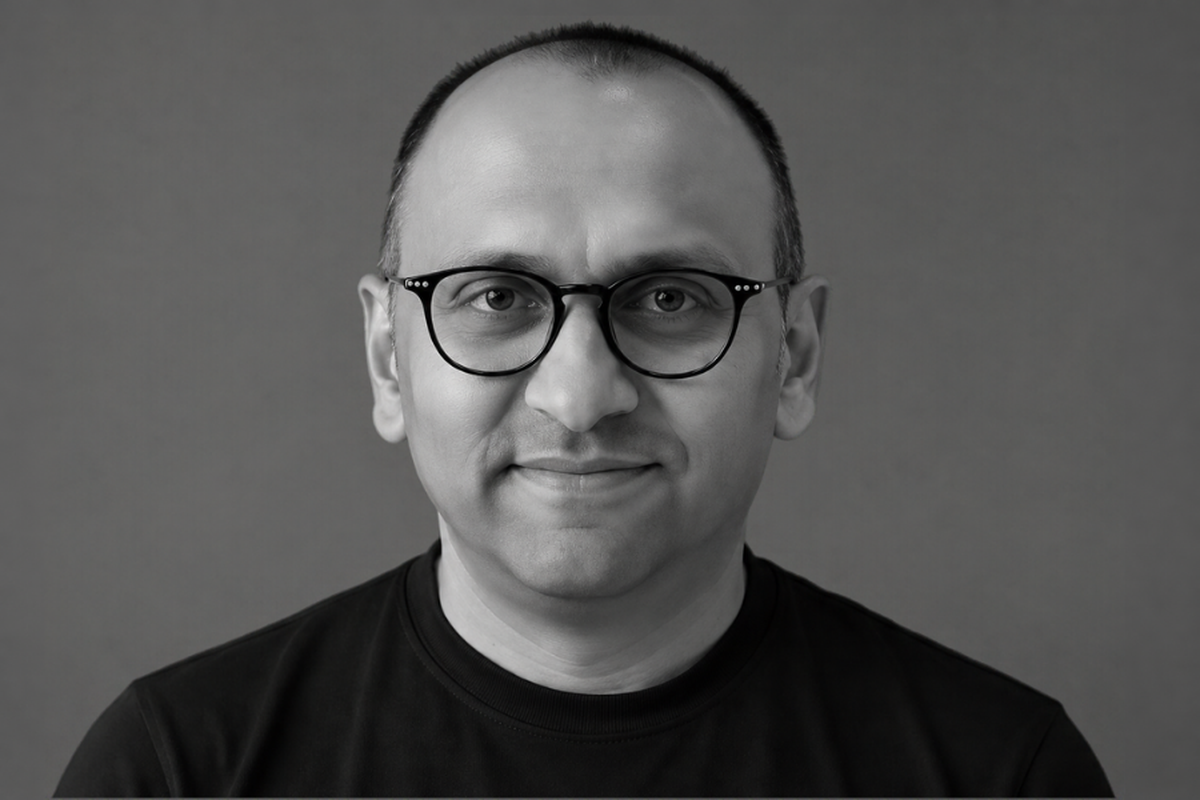
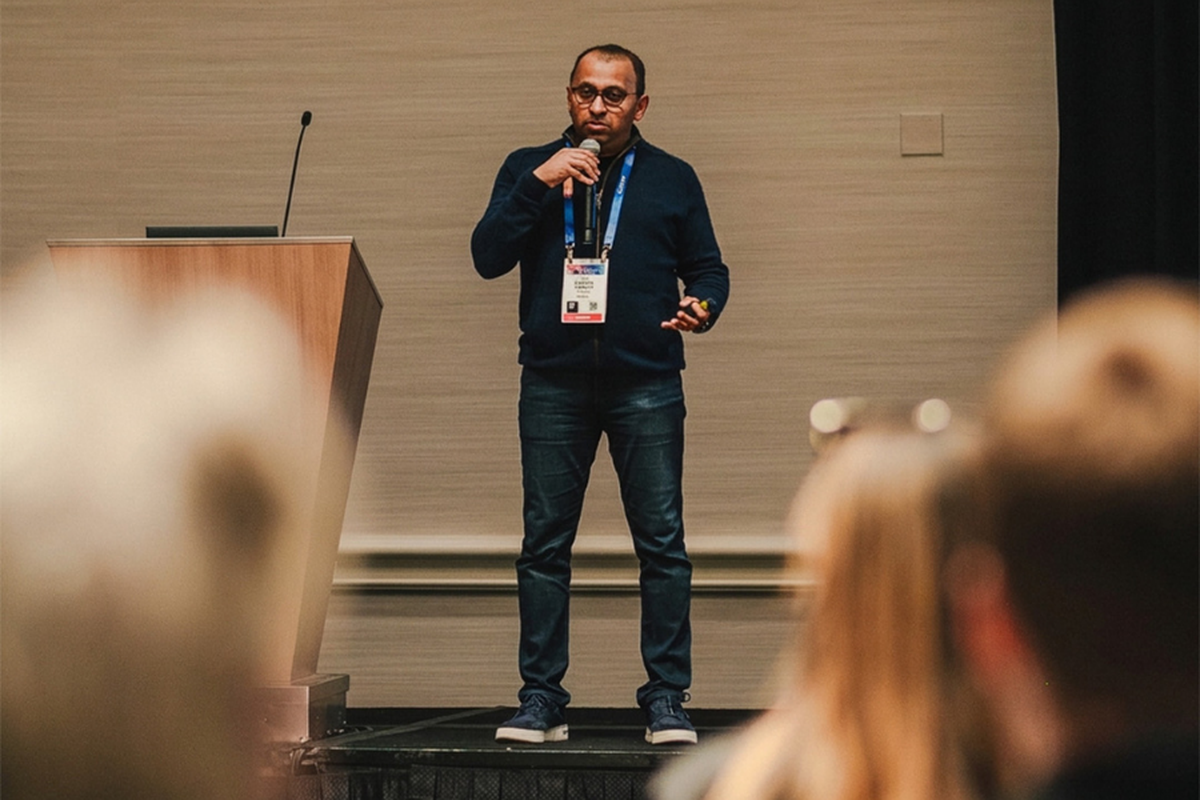
As a part of this series, we had the pleasure to interview Karthik Ganesh.
Karthik is naturally drawn toward companies that want to challenge the status quo. He is also at a point in his career where it is imperative that his work is deeply purpose-driven with meaningful societal impact — not just a stakeholder one. Making healthcare more accessible is what drew Karthik to OnMed — a company reimagining America’s healthcare access infrastructure in partnership with public and private organizations, while improving health equity in underserved communities. Recognized as a CES 2025 Top Pick, TIME Best Invention of 2025, and a 2026 Edison Award winner, it’s the kind of innovation that changes lives. With a focus on tech-enabled healthcare, Karthik has built and transformed companies, delivered market-leading results, created significant enterprise and investor value, developed high-performing teams, and driven meaningful M&A transactions with strategic investors and private equity. Along the way, Karthik has had the rare privilege of experiencing the healthcare ecosystem from nearly every vantage point: payer (Aetna, Cigna), pharmacy benefits (EmpiRx Health, Express Scripts), provider-sponsored plans and value-based care (QualCare, CareAllies), consulting (EY, Deloitte), and now care delivery with OnMed. Beyond the boardroom, Karthik is a prolific writer and speaker on healthcare, leadership, and resilience, with features in leading industry journals and podcasts. He is also the author of The Happiness Model: A Roadmap to Inner Peace.
Thank you so much for joining us in this interview series! Before we dive in, our readers would love to learn a bit more about you. Can you tell us a bit about your childhood backstory and how you grew up?
I grew up in Mumbai, India and came to the US in 1998. Our home growing up was always filled with love and respect…feel very blessed to have had an excellent childhood. I was an only child and fairly introverted, so my childhood was spent primarily with books and music. My love for reading has been my most consistent throughline in life. I read 40–50 books every year.
Can you share the most interesting story that happened to you since you began your career?
The only leader who ever made me cry at work is also the one person I look upon as my most impactful mentor. This was over 20 years ago. She continually saw a gear in me that I didn’t know existed and she pushed me really hard to find it. There was this one time where I was totally fatigued and she was still pushing…and for the first time I could feel tears starting to form from what I thought was extremely unfair treatment. It didn’t take me long to find my next gear and exceed her expectations. The way she treated me was the ultimate sign of respect for what she thought of me and my capabilities, and I will forever be grateful for that lesson. Being plainspoken and constantly pushing my top performers to find their next gear is something that I have built into my leadership style over the years.
You are a successful business leader. Which three character traits do you think were most instrumental to your success? Can you please share a story or example for each?
The character traits that have been core to me as a person and a leader are minimalism, resilience, and an obsessive focus on the journey. These traits have consistently guided me in life and got amplified when I had a significant personal situation in 2012 with the loss of my daughter to a brain tumor. Loss teaches you life lessons like nothing else can. It fortified my personal resilience. The fundamental acceptance that things happen for a reason has enabled me to double-down on situations that warrant a deeper journey and to walk away from those that don’t. These traits have also guided me professionally as I’ve been brought in to successfully build or rebuild companies.
Ok super. Let’s now shift to the main part of our discussion about “5 Things Health-Tech Companies Can Do To Shorten The Road From Innovation To Adoption.” To begin, can you tell us about your company and the healthcare problems your technology is designed to solve?
Solve a problem people already feel. At OnMed, we start with a simple reality — people struggle to get timely care. The CareStation exists to close that gap, so the value is clear from day one.
Make it easy to adopt. A CareStation is self-contained and doesn’t require buyers to rebuild their facilities or workflows. The easier it is to deploy, the faster it gets used.
Simplify the business model and make it predictable. Our customers should know what they’re paying for and what to expect in return. Straightforward pricing and clear terms mean fewer surprises and faster decisions. We have a 6-page contract.
Prove it early. We back our claims with real-world impact data so buyers, partners, and patients can trust what we deliver.
Stay a partner after the sale. Deployment is the starting line.
What makes your technology different from other solutions already available in healthcare?
The CareStation brings a real clinical consultation into the community. A live licensed clinician works with integrated diagnostic tools, like a digital stethoscope and HD exam camera, inside a private unit. It can be operational in as little as 45 days. That means partners can add real access to care quickly, without construction or new facilities.
Can you tell us the backstory about what inspired you to enter the health-tech industry and develop this particular solution?
I was recruited into OnMed as the CEO. The company (and the product) needed to be comprehensively rebuilt. The product-market fit was excellent. Too much of health-tech is conceived as a field of dreams…if we build, they will come…the CareStation is different. It meets a critical need and can be deployed in the midst of communities…bringing care where it’s needed the most.
Can you share the story of a time a product you believed in stalled between “this works” and “people actually use it”? What was really slowing adoption down, and what finally broke the logjam?
It is vital that health-tech companies leverage their customers to drive adoption. Customers truly become partners when they own the outcomes and the benefits of the solution they’ve chosen. B2C as a pureplay hasn’t worked in healthcare. B2B2C models, where the health-tech company and their customers co-own the solution have the best chance at thriving.
Many leaders assume that strong clinical evidence or regulatory clearance is the finish line. What is the biggest myth about how adoption actually happens inside a hospital, practice, or health plan, and what should health-tech leaders do instead? Please share an example.
The biggest myth is that strong clinical evidence guarantees adoption…it doesn’t. Inside a hospital or health plan, clinical, IT, finance, and operations leaders each have a say, and evidence only answers the clinical question. So, engage all of them early, and make it easy for your internal champion to carry the case. That’s why we built the CareStation to be simple to deploy. Evidence gets you the meeting, but making it easy to say yes gets you the deal.
Based on your experience, can you please share “5 Things Health-Tech Companies Can Do To Shorten The Road From Innovation To Adoption”?
1. Solve a problem people already feel. Technology gets adopted when it addresses a clear, urgent need, not when it’s simply new.
2. Make it easy to adopt. Fit into existing systems, workflows, and habits so there’s minimal disruption and a short learning curve.
3. Simplify the business model and make it predictable. Offer straightforward pricing and contracts so buyers know what they’ll pay and what they’ll get. Less complexity and less risk mean faster decisions.
4. Prove it early. Build credibility with real-world data, clinical validation, and clear outcomes that buyers, regulators, and users can trust.
5. Stay a partner after the sale. Invest in training, support, and listening to feedback, because success on the ground drives the next customer.
Who inside a customer organization most often makes or breaks adoption (the frontline clinician, IT, the CFO, or the patient), and how do you win that person over in the first 90 days? What metric tells you adoption is real, rather than a pilot that only looks good on paper?
The people who make or break adoption are the ones closest to the daily work. The CFO and IT can approve it, but if frontline staff don’t point patients to it, it sits idle. In the first 90 days, I’d focus on making their lives easier. Get it running smoothly, show up in person, fix problems fast, and listen to what they tell us. The metric that tells you it’s real is repeat use. A pilot can look good on opening-week numbers. Adoption is when people keep coming back in month three without anyone pushing them. As a point of reference, 37% of the CareStation’s users/patients return back within the first 6 months.
What are some of the biggest challenges you have encountered when trying to introduce your technology into healthcare organizations, and how have you worked to overcome them?
The biggest challenge is that healthcare organizations have spent years building and integrating what they have. Anything new has to justify itself against that investment, and a CareStation can create a new care setting almost immediately. That speed is a strength, but it can also feel like a threat to what’s already in place. Getting our healthcare customers to see the CareStation as accretive to their existing solution ecosystem and strategies has been vital to our playbook.
What is the biggest mistake you see health-tech companies making when trying to get healthcare organizations to adopt their products? What should they be doing differently?
The biggest mistake is leading with the technology. Health-tech companies get excited about what they’ve built and spend the meeting explaining features. Healthcare organizations don’t buy features. They buy relief from a problem they already have, whether that’s overcrowded EDs, staffing shortages, or patients who can’t get care. Death by facts is the surest way of tanking a sale and subsequent adoption.
How important are clinical outcomes, financial return on investment, and operational efficiency in driving adoption? What is the most effective way for companies to demonstrate their value?
All three matter, but not by themselves. Clinical outcomes build trust, financial return justifies the decision, and operational efficiency makes it sustainable. Buyers don’t weigh them separately. They want to know whether the solution moves the organization forward as a whole. That’s why I think about impact, not transactions. The most effective way to demonstrate it is a 360 view — what changes for patients, for clinicians and staff, for the operation, and for the bottom line. Does access improve? Does care get timelier and more continuous? Does pressure ease on the people delivering it? Does the organization become more resilient and better connected to its community? When you can show movement across those drivers, together, the value is hard to dispute. The key is to agree with the customer up front on what success looks like, then measure against it and share what you learn. That turns a sales conversation into a shared view of impact.
Looking ahead five years, how do you think the process of adopting new healthcare technologies will change? What should innovators be doing today to prepare for that future?
I think adoption will get faster and more demanding. Health systems and payors will have less patience for long pilots, and they’ll expect solutions to show real impact quickly and work with what they already have. Innovators should prepare now by making deployment simple, fitting into existing systems, and measuring value openly with customers. The technology that wins will be the one people trust.
If you could offer one piece of advice to a health-tech founder who has developed a promising technology but is struggling to get healthcare organizations to actually use it, what would you tell them?
Stop selling the technology and start solving the customer’s biggest headache. Then make it so easy to adopt that saying yes feels like the low-risk choice.
How can our readers further follow your work online?
OnMed can be followed at www.onmed.com; I’m personally very active on LinkedIn and write exhaustively about healthcare, technology, and resilience.
Thank you so much for joining us. This was very inspirational, and we wish you continued success in your important work.
About The Interviewer: Saul Marquez started out selling spine implants for Stryker and left an executive role at Medtronic to build Outcomes Rocket, a healthcare strategy and full service marketing agency. Twenty years in healthcare and 2,300+ interviews later, his conviction is simple: success in healthcare isn’t luck, it’s algorithmic, and it’s still a relationship game. Learn more at outcomesrocket.com