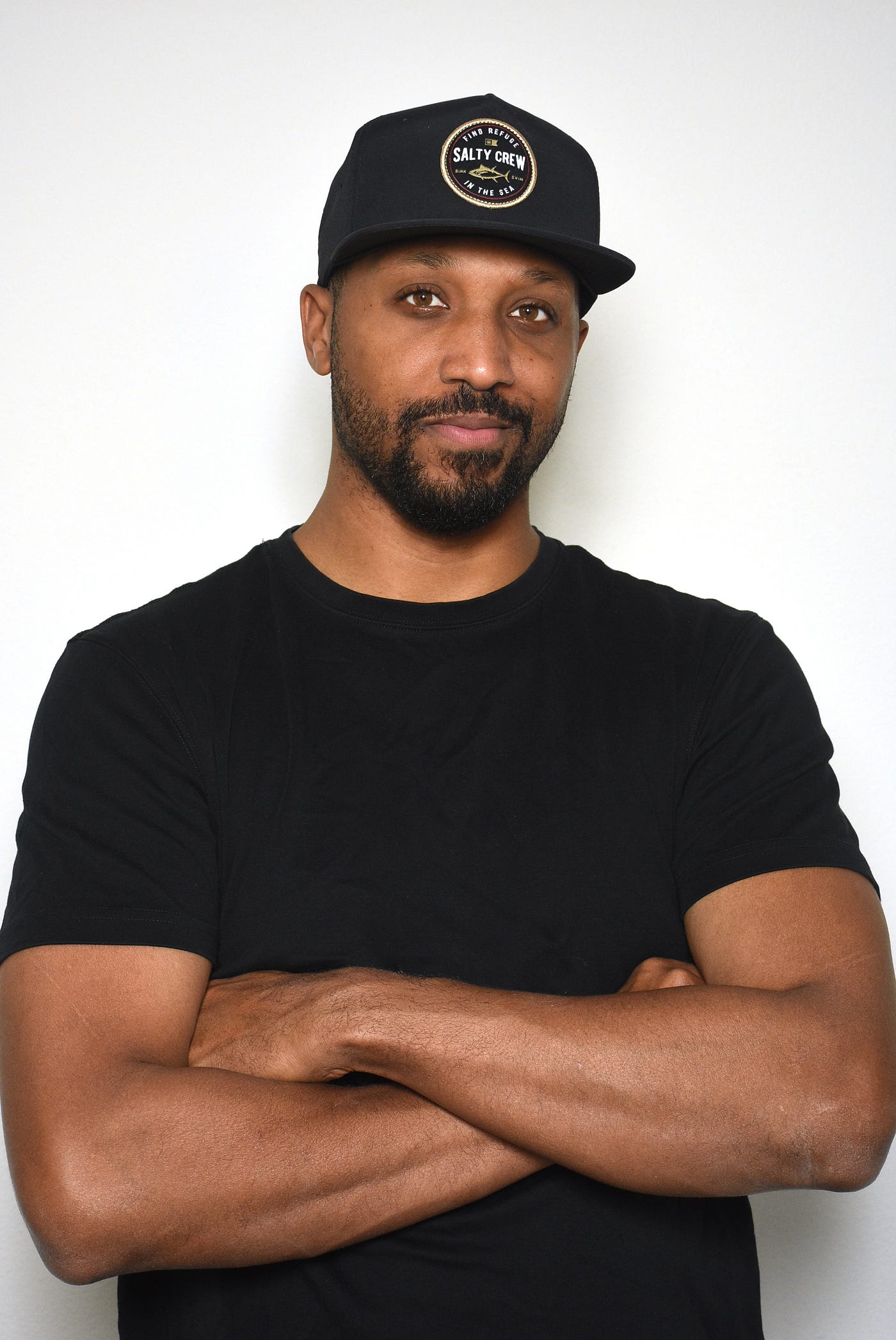
As the founder of a tech company, I like to mention that I actually don’t have a background in business or technology. In fact, going all the way back to high school, I’ve always had a passion for the stage and theatre.
Tech
Patrick Comer on Theatrical Leadership, ResTech Pioneering, and Building a Tech Hub in New Orleans
The Lucid founder and tech veteran shares how his background in theater shaped his approach to empowering teams, overcoming skepticism, and driving regional tech innovation.

As part of our series called “5 Things I Wish Someone Told Me Before I Began Leading My Company,” I had the pleasure of interviewing Patrick Comer.
Since 1998, Patrick has been a founder, investor, and executive for startups. He began his career as Chief of Staff at govWorks, a Silicon Alley darling featured in the film, Startup.com. In 2003, he started his journey in market research with IFILM and joined OTX Research (acquired by Ipsos) in 2005. Patrick founded Lucid with a vision to democratize data collection by applying programmatic technology to market research. Lucid is now the world-wide leader in enterprise marketplaces for sampling. Patrick was named Tulane Distinguished Entrepreneur of the Year by the A.B. Freeman School of Business. In 2018, the New Orleans Times-Picayune listed him as one of the city’s most important figures in the “300 for 300” project.
Thank you so much for joining us in this interview series! Before we dive in, our readers would love to “get to know you” a bit better. Can you tell us a bit about your ‘backstory’ and how you got started?
As the founder of a tech company, I like to mention that I actually don’t have a background in business or technology. In fact, going all the way back to high school, I’ve always had a passion for the stage and theatre. I started out by building sets and scenery, and after earning my theatre and music degree, I moved to NYC to work as a scenic carpenter. I’ve worked on both Broadway and Off-Broadway productions and even dabbled as a director for productions at Terry Schreiber studio.
Once the dotcom boom hit, though, I saw an opportunity in tech. ‘Business’ was considered the dark side in the eyes of my theatre peers, but I wanted in on the internet craze, and with everyone else jumping on the bandwagon, so why couldn’t I?
Over drinks with my brother, we thought up and started our first company, Money Nexus. Little did we know, we were competing with Elon Musk — as our idea for a platform that transferred money online was remarkably similar to PayPal. While that business venture ultimately failed, the experience inspired us to think seriously about entrepreneurship. Six months later, we started another business called Govworks.com, which was on the cusp of raising over $17 million in Series A when the dotcom bubble burst. Ever since, I’ve been a tech and data guy.
What was the “Aha Moment” that led to the idea for your current company? Can you share that story with us?
Years ago, I was at a company called OPX and when it was sold, I decided not to stay on in a different role and found myself in a position to start fresh. My wife and I decided to relocate to her hometown, New Orleans, and get involved in the post-Katrina recovery effort.
Not long after the move, I realized that even 2.5 years post Katrina there were still no real job opportunities in New Orleans. It may not qualify as a real ‘aha’ moment for the idea behind Lucid, but the notion that I wanted to find a way to better support the city’s recovery was born. I knew that I needed to do what I do best — start a company from scratch, a company that would bring jobs to the community.
I’d spent a handful of years in the market research and data collection space, making it a natural place to start. My brother flew down on the weekends, we worked from my garage and brainstormed ideas on how to improve market research. Nine months later we had the idea for Lucid. So in theory, without my brother, who knows where I’d be — probably still working as a carpenter in New York City.
Can you tell us a story about the hard times that you faced when you first started your journey? Did you ever consider giving up? Where did you get the drive to continue even though things were so hard?
Anyone who’s rageous, silly, naïve, bombastic enough to start a new company is going to have hard times, that just comes with the territory.
One significant barrier came right away: starting a company in a city that didn’t have an established tech hub. NYC and SF have a built-in workforce, they know the lingo and they know what to expect. The talent generally already has the right experience under their belt. None of that was native to New Orleans. How do you build a fast-growing tech company, when no one that you can hire knows what you’re talking about? (we ended up hiring many young and eager MBAs fresh out of Tulane).
Another challenge in the beginning: balancing work and home life. My daughter was 18 months old, and my son was a newborn when I started Lucid. I was trying to be a productive, ‘always on’ startup CEO while also trying to leave the office every day at 5:30 to be a husband and a father — but that wasn’t sustainable. I wanted a work environment that put family first. Supporting our team and their families, and giving them the space to be parents and have a life that’s worth living alongside work, has been baked into our core values because of how we started early on. I think the rest of the world is finally catching up.
Every day I thought about giving up, especially because being a CEO can be a lonely position with a lot of second guessing. I kept in mind that this was a reinvestment in myself as the leader, visionary and founder, and finally embraced the fact this role is constantly changing and evolving. I was also driven by the direct impact on the community.
Lucid was bringing job opportunities to the city, especially in the early days, and also providing a framework for others to build companies that could contribute to the growth of a tech hub in New Orleans. A big reason behind my passion toward continuing to build the company when things got hard was because of the impact every bit of growth was having on the people around us. That’s what gets me going every day.
So, how are things going today? How did your grit and resilience lead to your eventual success?
The business model that we started back in 2010, the programmatic buying and selling of sample and the birth of Research Technology (ResTech), took about eight years before it was accepted by the larger market research industry.
Early on the idea of how transformative technology could be in improving research was rejected and dismissed. It took a lot of grit and determination to continue to drive the company and push the industry vision forward. It’s only been in the past couple of years that the lightbulb switched on for everyone around us. Now customers and the industry at large understand the concept that Lucid is delivering. The path to ‘yes’ is faster and easier, but it took years of pushing the boulder uphill over and over again — kind of like the Greek legend, Sisyphus.
What do you think makes your company stand out? Can you share a story?
Our ability to hire and attract real kickass people that can jump in and start owning the workload and operating from day one. For instance, we recently hired a new Associate Director of Public Relations and she was probably given more responsibility right out of the gate than she would care to have. However, without much knowledge about Lucid and our internal processes, she has been able to hit the ground running and get the job done. We trust and empower each member of our team to excel in their role.
This comes from my background in theater, where trust of the team around you is required for the magic of theater to actually occur. On set, there’s the director, the cast of actors, designers in various technical fields, etc. And, the role of the director (or those at the helm) is not to tell everyone what to do, but to create an environment where each role can show you what they’re capable of — that’s what I’ve created at Lucid.
Can you share a story about the funniest mistake you made when you were first starting? Can you tell us what lessons or ‘takeaways’ you learned from that?
I don’t remember a funny mistake, however, there were a few funny instances I recall from our days working out of my garage.
One of our very first hires had to lug an old desktop computer with the towers into the garage every day. It was amusing to see him drive up in a hatchback and move this heavy computer around just to get work done. The team also made fun of me because I was very cheap in the beginning. When we finally switched to laptops, we got the cheapest little netbooks that had no processing power — they were really terrible to work on, but we kept those things until we secured our first round of financing.
The lesson there is that there is light at the end of the tunnel. Where you start is not where you’re going to end up, and regardless of how the situation looks, just keep pushing because eventually, things will get better.
Often leaders are asked to share the best advice they received. But let’s reverse the question. Can you share a story about advice you’ve received that you now wish you never followed?
I think some of the most important advice to ignore can be your own. It’s hard to go against your gut feelings and decide to start a new company or take an idea to fruition, but it’s important to push yourself outside of your comfort zone. This can be how the best ideas can come to be.
You are a successful business leader. Which three character traits do you think were most instrumental to your success? Can you please share a story or example for each?
The three character traits that were most instrumental to my success are trust, compassion, and commitment.
When it comes to trust, one of our first investors, who eventually became our first CFO, was Christie Lukewire. She had a background in banking and invested in Lucid before we had any success. Coming into the office on her first day, she asked what financial system we used (which at the time was nonexistent). We had a stack of invoices in one box and a stack of receipts in another box. It was a daunting job to build the entire financial system from the ground up. But I brought her in because she trusted me and I trusted that she would figure it out, and she did.
I truly think that compassion and commitment to your vision are also instrumental for any leader to have and instill in their team. Lucid has offered employees a paid day off for service since the very beginning. I don’t know how many companies are doing that, maybe more now, but earlier on it wasn’t really a focus. That compassion was born out of this desire by the team to support our community. There was one time when heavy rains caused severe flooding south of Baton Rouge, not far from us. A lot of people lost their homes and the next day our team wanted to go help. Without hesitation we gave them the time off.
That compassion and commitment to the vision of community building is embedded in our company values — it’s what we do. To this day we still offer paid service days and other opportunities that allow employees to give back.
Which tips would you recommend to your colleagues in your industry to help them to thrive and not “burn out”?
I would recommend sleeping and working out. You will burn yourself out if you don’t get regular sleep, especially those who are parents. Also, working out is something I wish I would have started earlier in my career. Ever since I made a habit of working out, my mindset has gotten better.
What are the most common mistakes you have seen CEOs & founders make when they start a business? What can be done to avoid those errors?
When I talk to other founders, the hardest thing to figure out is what’s the most important thing to focus on right now. Everyone is going to have an opinion, but they don’t know what’s actually going on in the business. The only person who actually knows what to focus on is the founder. You have to figure out how to prioritize and focus on what’s important largely by yourself.
An even more common mistake is not giving yourself permission to start the company sooner. That’s the biggest barrier for me. It wasn’t the idea, it was giving myself permission to do it, taking the risk and then actually putting myself out there. As the founder, you are in front — everything that is right is right by you and everything that is wrong is your fault, whether or not you had anything to do with it. Everyday people are second guessing you internally and externally, and there’s always someone going ‘that Lucid CEO has no idea what he’s doing’. Don’t let this mindset dictate your actions, put your imposter syndrome to bed even though it’s still there.
In your experience, which aspect of running a company tends to be most underestimated? Can you explain or give an example?
One of the things I found to be important earlier in my career as CEO, was documentation. If I knew how important it was to document what we do and how we do it, to make it easier for others to learn it, we would have started that process a lot earlier. It’s not a super sexy answer, especially when I could talk about product, technology, and fundraising. But man, it is hard to scale if no one knows what they are doing and no one knows where to look to understand or figure out what they are doing.
Documentation and preparing for scale early are very underestimated aspects of running a company. I would’ve gone back and changed tons of things that would’ve decreased a bunch of pain and suffering down the road.
Ok super. Here is the main question of our interview. What are your “5 Things I Wish Someone Told Me Before I Began Leading My Company”? Please share a story or an example for each.
First, if you hire family, you may have to fire family — keep that in mind. Second, investors are like marriages, they’re going to last a really long time, so make sure you have a good prenup. Third, when in doubt, get more revenue. Revenue cures all ails, just get more.
Fourth, it’s going to be an emotional rollercoaster. It’s going to be a ride, so don’t be afraid to get all of the support necessary. Get a coach and utilize all available support systems. Don’t be afraid to reach out for help, you don’t have to be that strong. You are a human being and should get all of the support under the sun. Medical or whatever it is, do it because that is required to make it through.
Lastly, you will miss the founding team ten years later. Not everyone stays around; you make huge investments in people that you really care about and for all the right reasons, they have to move on. Eventually, they go to the next part of their career and the emotional investment is hard because you miss them once they leave.
You are a person of great influence. If you could start a movement that would bring the most amount of good to the most amount of people, what would that be? You never know what your idea can trigger. :-)
I would start a movement that was really rooted in community building. I mean, that’s why I started Lucid, to have an impact on a community that needed it most.
How can our readers further follow you online?
- LinkedIn: https://www.linkedin.com/in/comerpatrick/
- Twitter: @ comerpatrick
This was very inspiring. Thank you so much for the time you spent with this!

Published inAuthority MagazineTop Lessons, Top Authorities · 42K Followers
Exclusive, curated interviews with the leaders and changemakers shaping tomorrow. Leadership lessons, industry deep dives, and executive profiles.