When a feature can bring immediate value to a product already embedded in a patient workflow, we consider whether it should be included.
Leading a healthtech company means bringing together technology, business, and the needs of patients and healthcare professionals. How do you build a strong team, earn trust, navigate complex healthcare systems, and turn an innovative idea into a product that makes a meaningful difference? What does it take to grow a successful business while staying focused on improving healthcare? As a part of this series, I had the pleasure of interviewing Ann Barnes.
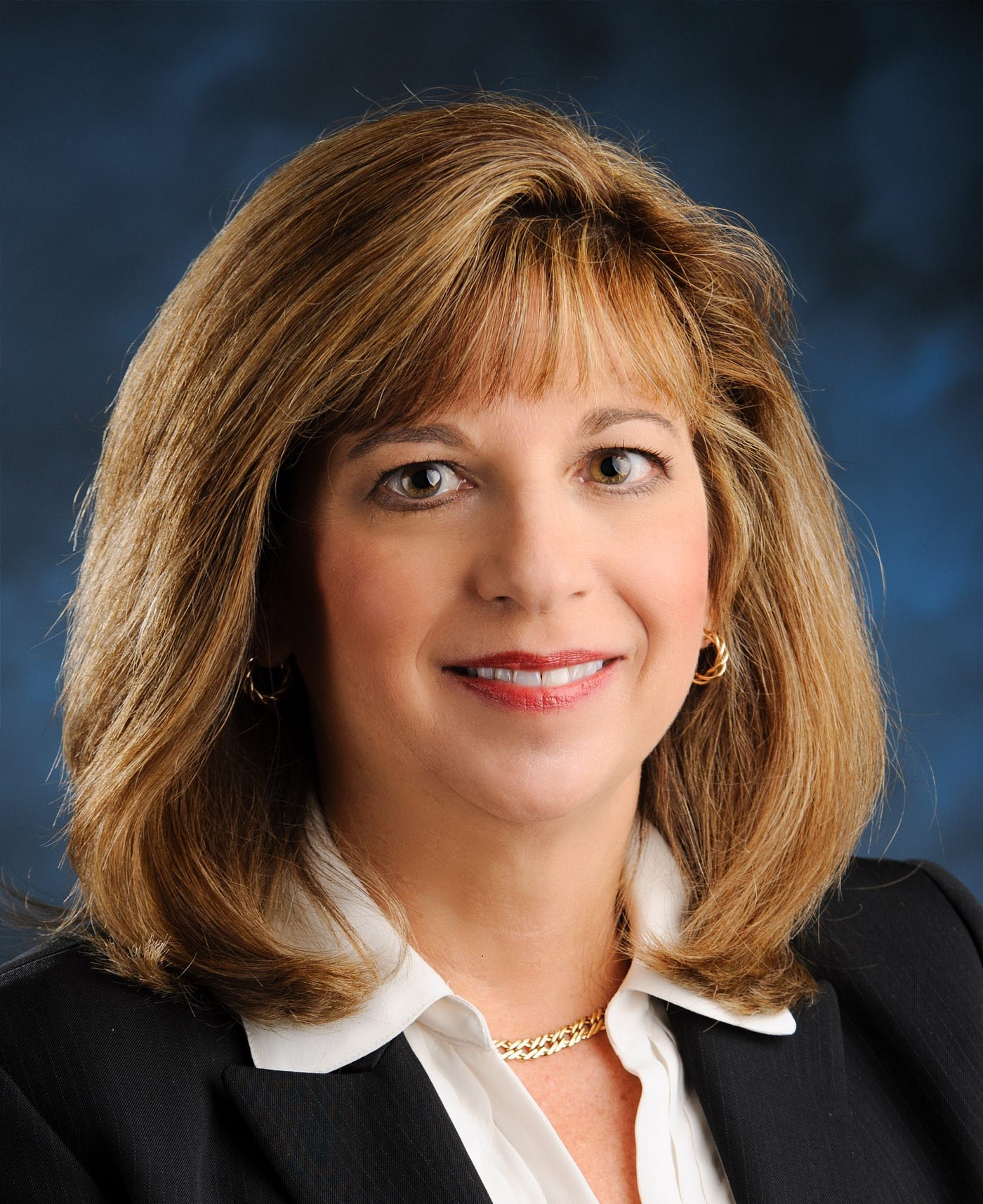
Ann Barnes is CEO of IMO Health and the 2026 recipient of the Healthcare Leaders Ian Adler Memorial Innovator Award. Since taking the helm in 2018, she has grown IMO Health from its roots in clinical terminology into a clinical data intelligence company spanning data quality, analytics and clinical intelligence. Today it works with 95% of U.S. providers and every major EHR platform. Before IMO Health, she was president and CEO of MedData, which she grew and led through its sale to MEDNAX. A longtime champion of women leaders and diverse teams, she was named to the 2022 PharmaVoice 100 Most Inspiring People list.
Thank you so much for joining us in this interview series! Can you tell us a bit about your childhood and how you grew up?
I was raised by a first-generation Hispanic mother, whose primary language was Spanish, and a white father. They came from very different backgrounds, and I spent most of my time with my mother’s side of the family. That experience taught me the importance of education, hard work and persistence. I became the first in my family to graduate from college, and an internship during college helped launch my career.
Can you share the most interesting story that happened to you since you began your career?
I came to IMO Health in an unusual way. I turned down the chance to interview four times because I couldn’t understand the company from a 45-minute conversation. I thought that meant I wasn’t the right person for the job.
After joining, I spent a couple of months still struggling to understand what the company did and what it could become. I called the investors and told them I thought we had made a mistake. They said that was exactly why they had hired me: They wanted someone to dig in and uncover the company’s potential.
That pushed me to ask more questions and break the business down into its simplest parts. I realized that if I didn’t understand it, others might not either.
Which three character traits do you think have been most instrumental to your success? Can you share a story or example for each?
Curiosity has helped me learn unfamiliar businesses and technologies. I’m willing to ask questions and admit when I don’t know something. Even now, as we work through AI, I’ll ask people to break an idea down so I can understand what it means, how it could work and what the risks are.
Next, grit matters because building a company involves roadblocks and difficult stretches. Leaders need the persistence to keep going and help their teams believe they can get through challenges and emerge stronger.
Finally, I’ve learned to hire talented people who aren’t like me. I value diversity of thought and background. The teams I’ve built, including the team at IMO Health, have been central to my success.
Can you tell us about your journey in the healthtech industry and what inspired you to take on a leadership role in this field?
I’ve worked in several industries, including manufacturing, franchising, banking and software. I came to healthcare through healthcare services, where I led a revenue cycle company. I was drawn to the opportunity to improve an industry where even back-office changes can ultimately benefit the patient experience.
I also saw how much room healthcare had to use technology to solve problems. Moving into healthtech gave me an opportunity to make a difference, and that opportunity has only grown with AI. Health systems, providers and patients all need help making healthcare work better.
Healthcare is a uniquely challenging industry because even the most promising technology can struggle to gain adoption. What do you see as the biggest obstacles to building a successful healthtech company, and how have you navigated them?
A healthtech company needs to build something that adds lasting value and embed it in the workflow where that value is needed. A useful tool can still be difficult to adopt if it sits outside the healthcare process.
At IMO Health, our products need to fit into the clinical workflow. Physicians are already managing demanding workloads and working in the EHR. Asking them to leave that system to use another tool adds friction. Whether a product supports clinical work or the revenue cycle, it needs to fit seamlessly into how people already work.
Healthtech leaders have to balance the needs of patients, healthcare providers, investors and other stakeholders. Can you share an example of a difficult decision where you had to balance business growth with the goal of improving patient care?
IMO Health is part of the patient documentation process, though we don’t directly determine patient care. Over the past few years, we’ve had to decide which new features to add to products customers already use and which to offer separately.
When a feature can bring immediate value to a product already embedded in a patient workflow, we consider whether it should be included. Other features may be better suited to a separate product or add-on. Adding functionality to an existing product can also let us make it available to providers more quickly.
Based on your experience, what are the “5 Things You Need to Lead a Highly Successful Healthtech Company”? Please share a story or an example for each.
1. Be curious: Ask questions and break complex ideas into their simplest parts. When I joined IMO Health, I told employees I wanted them to be able to explain the company to their families at Thanksgiving. Once people understood what we did and the value we created, they could tell a shared story about our work and where we were headed. That clarity helped energize employees and customers.
2. Surround yourself with smart people: Hire talented people who bring perspectives different from your own. I’ve built the smartest team I’ve ever worked with, and those people bring in other smart people. Their talent has been essential to what IMO Health has accomplished.
3. Wake up every day ready to run: A growth company has to keep adding value for current customers while earning new ones. At IMO Health, we call this our “giddy up” philosophy. Everyone needs to be ready to move, especially now, as AI and the market change so quickly. It has to be a company-wide commitment.
4. Recognize that the journey isn’t a straight path: Leaders can set a destination, but they can’t know every turn along the way. In 2019, provider customers asked us to build a product that could make sense of data from many sources. We finished it just as COVID hit, when hospitals had little time to consider a new product. We pivoted and took it to the healthtech market instead. That opened new opportunities in healthtech and life sciences, and eventually brought us back to the provider market. The journey and its lessons shaped where we are today.
5. Be open to luck: Smart decisions matter, but luck can shape a company’s path, too. A few years ago, we acquired Melax Tech for its natural language processing capabilities. We knew the technology and team were a good fit, and integrated the NLP into our products in three weeks. What we didn’t fully anticipate was how the team’s AI and data science expertise would help us develop a knowledge graph. That became foundational to applying AI in clinically specific ways. We were smart to make the acquisition, and lucky to discover how much more it could make possible.
Building a successful healthtech company requires more than developing a great product. How do you create a team and company culture that can innovate, adapt to change and execute effectively in such a complex and highly regulated industry?
My primary job as CEO is to hire talented people, set the course and vision, and give them room to do their work. I also focus on building a team that collaborates, debates productively and asks both tough and basic questions.
New employees often bring the most value in their first year because they see things differently and ask questions the rest of us may have stopped asking. Making room for fresh perspectives, healthy debate and collaboration helps the team keep improving. Curiosity, flexibility and grit also help us stay connected to a common goal.
Looking ahead three to five years, what changes do you expect will have the greatest impact on healthtech companies? How should leaders prepare their organizations to take advantage of emerging opportunities while avoiding potential pitfalls?
AI will have a major impact on every company. Leaders need to identify where it can help and where it isn’t useful, and help employees see it as a way to focus on higher-value work.
AI is also speeding up product development. Companies now need to keep pricing, marketing and sales readiness moving at a similar pace, without overwhelming their teams or customers.
Healthcare delivery is changing, too, with growth in areas such as home health and telemedicine. Leaders need to consider a wider range of care settings as they build for the future.
How can readers further follow your work online?
Readers can follow my work on the IMO Health website and on LinkedIn.
Thank you for sharing these insights!
About The Interviewer: Saul Marquez started out selling spine implants for Stryker and left an executive role at Medtronic to build Outcomes Rocket, a healthcare strategy and full service marketing agency. Twenty years in healthcare and 2,300+ interviews later, his conviction is simple: success in healthcare isn’t luck, it’s algorithmic, and it’s still a relationship game. Learn more at outcomesrocket.com