Before we launched our direct-to-consumer hearing aids in the US, in July 2020, and while we were still looking for funding, our CEO, Nic Klopper, and I traveled to Europe to meet with potential investors. Talking to them about our idea and the opportunity we saw in the market, they told us categorically that there was no way to make our idea a success.
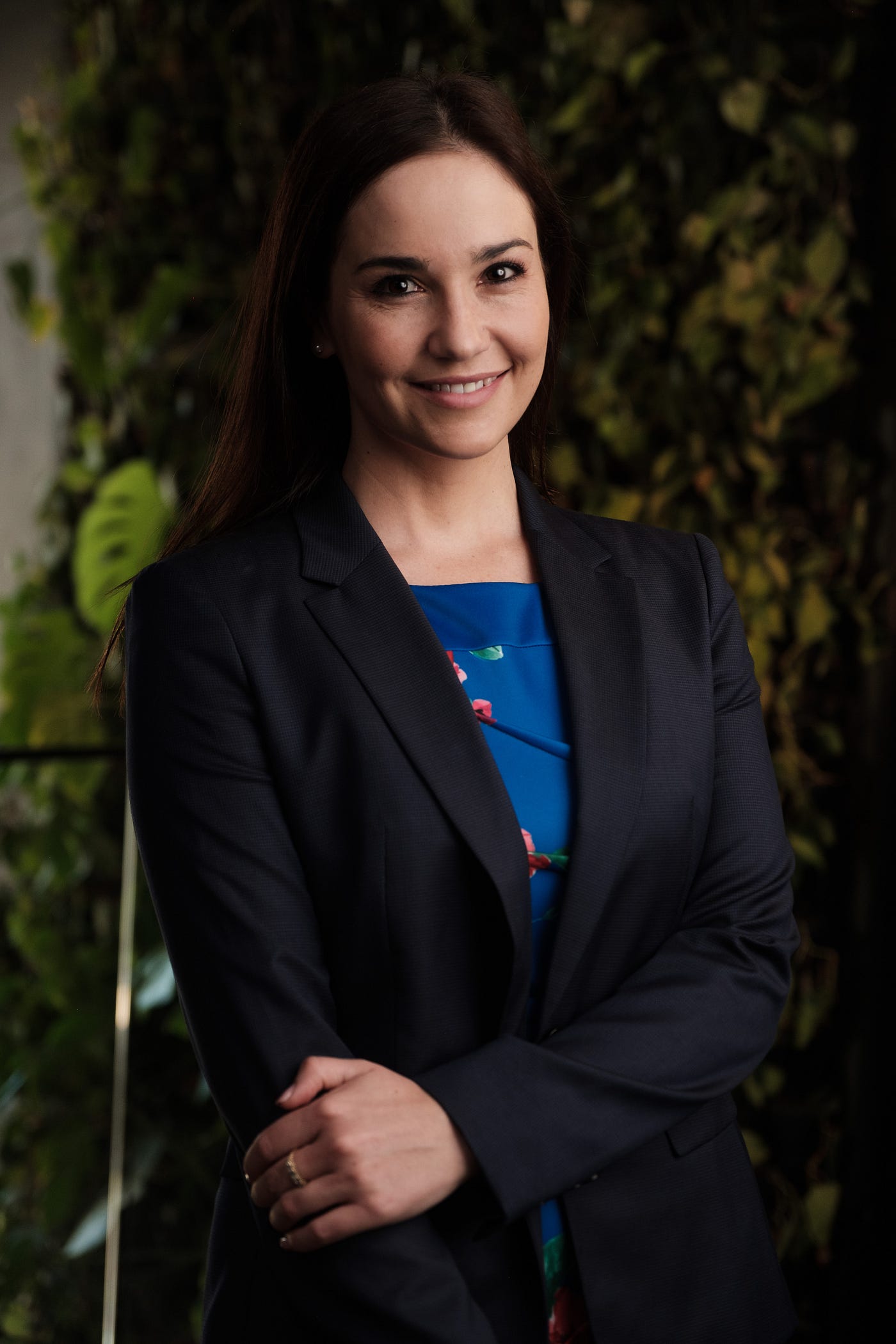
As a part of our interview series called “Women Of The C-Suite”, we had the pleasure of interviewing Seline van der Wat.
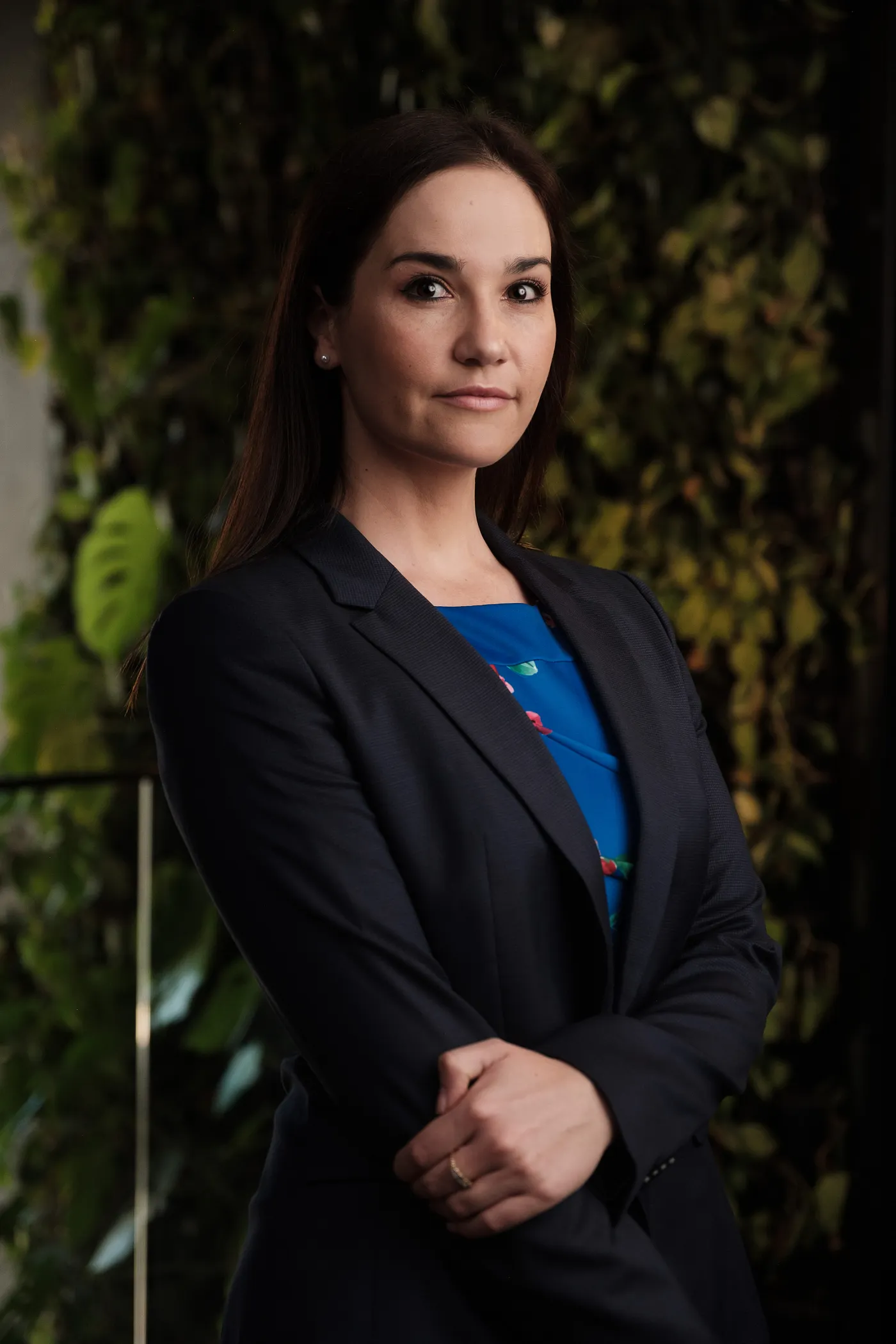
Seline van der Wat is the Chief Operating Officer of Lexie Hearing and hearX Group. A passionate visionary with a background in industrial and systems engineering, Seline helps develop and lead company strategy, business development, product and system architecture, data analysis and reporting. Since joining hearX in 2017, she has helped the company grow its workforce, raise funds and expand its reach through strategic partnerships with some of the world’s leading brands.
Thank you so much for joining us in this interview series! Before we dig in, our readers would like to get to know you a bit more. Can you tell us a bit about your “backstory”? What led you to this particular career path?
I grew up in a small, rural part of South Africa, in the middle of nowhere, the second of four daughters. My mother, a teacher, believed that to become well-rounded individuals we each needed to participate in a team sport, an individual sport, play an instrument, and participate in a group music activity. At the time, teaching was one of the only professions available to women in the area, but she was driven to teach her daughters new skills and ensure that they would be equipped to choose their own path and career.
The framework she created for us opened up so many doors and led me to study engineering. Even though the professor of my first engineering class at college welcomed the class by reminding us that women weren’t cut out for that career path and that it was unlikely that the few women in the class would still be there by the end of the program, I was motivated to be part of building something that would outlive me, and work on a project or in an industry that would have a lasting impact on society.
With that in mind, I launched my career working in renewable energy. In later years, the CEO of the company I had first worked with invited me to the opening of the renewable energy project I had worked on. That night, as the outcome of the project was being presented, I realized it would be around long after I would. The realization that my sisters, my family, my nieces and nephews would all benefit from the work that we had done, impressed upon me to keep working on projects that could have lasting impact, and carve out a career for myself that focused on accomplishing that. Which is how I ended up devoting my time to healthcare and the important work we’re doing at Lexie Hearing and its parent company, HearX.
Can you share the most interesting story that happened to you since you began leading your company?
Before we launched our direct-to-consumer hearing aids in the US, in July 2020, and while we were still looking for funding, our CEO, Nic Klopper, and I traveled to Europe to meet with potential investors. Talking to them about our idea and the opportunity we saw in the market, they told us categorically that there was no way to make our idea a success.
Little did they know, the warning did nothing more than to fuel a fire in our hearts and ensure that we headed back home with even more determination to succeed. Four years later, I’m grateful to say that we’ve been able to do just that. It took endless hours, focus and determination, but we’ve launched a successful brand, many outstanding products, and our determination to have a lasting, positive impact on the hearing healthcare industry in the US burns stronger than ever.
It has been said that our mistakes can be our greatest teachers. Can you share a story about the funniest mistake you made when you were first starting? Can you tell us what lesson you learned from that?
I was conducting an interview with a potential engineering candidate. I usually ask questions that extend further than technical and professional aspects because I want to know more about who they are, their personal life, passions and interests. I asked the standard, “What do you do for fun?” to which he responded, “I’m working on perfecting a raspberry pie.” I was delighted, as a former MasterChef South Africa contestant and avid foodie, I immediately jumped in and asked about what type of crust — chocolate, traditional pastry or something else, what flavors he was testing, and the techniques he was trying. I received blank stares from the candidate and our CEO. Afterall, he was an engineer talking about a raspberry pi — a low cost, small DIY computer, not a delicious, edible pie.
In the moment I was mortified, but with time I have learned not to take myself too seriously. It’s okay to make mistakes, and the more I laugh at myself, the more comfortable I make others to share their thoughts, opinions and even their mistakes. It’s so important that your colleagues and employees feel comfortable and accepted enough to be their authentic selves. As a result, the working environment we create and nurture together is more transparent, collaborative and creative, all of which are essential for innovation.
None of us are able to achieve success without some help along the way. Is there a particular person who you are grateful towards who helped get you to where you are? Can you share a story about that?
My very first work opportunity out of college set me on a path that has directly led me to where I am today. My CEO, Anton-Louis, sat me down and told me that even though it was my first job, my role within the organization mattered and that he was going to treat me as such. He handed me a budget of millions of dollars and multiple high-stakes projects to be responsible for. I immediately understood that I had the tools (and responsibility) I needed to make a success of the task at hand, and it inspired me to explore how I could accomplish that on my own merit. It also taught me to take full accountability for my actions and decisions and deliver results. From my first day, I felt and believed that my contribution counted for a lot. Looking back, it’s remarkable what the effect of a supportive, dynamic executive or leader is. I’m grateful to my manager for opening my eyes to what I could achieve and for believing in me, and by doing so he gave me a priceless gift — the ability to believe in myself.
Years later I had the opportunity to join the cast of MasterChef South Africa with my sister, and I had to approach the same CEO and ask him to set aside six weeks for me to participate. I was really anxious about it, knowing that it was a big ask. He didn’t hesitate and immediately agreed that it would be the best thing for my personal and professional growth. Little did I know how much the experience would teach me about connecting and relating with people and learning to tell my story in a way I’d never considered before. The skills I acquired have been put to good practice throughout my career. Another debt of gratitude I owe to that inspirational leader.
Leadership often entails making difficult decisions or hard choices between two apparently good paths. Can you share a story with us about a hard decision or choice you had to make as a leader?
The hardest decision I’ve had to make as a leader is knowing when to step away from a project you have invested time and resources into, because it’s just not working. It’s learning that the ‘“stepping away” isn’t necessarily failure, even if it looks that way. So much is learned in those moments and from the experience, it’s important to be able to stop, reflect, and take as much from those moments as you do from moments of celebration.
The first project we undertook at hearX would probably be considered a horrible failure by most. We tried for over two years to get it off the ground. It was a noise monitoring device for headphone products that would help people understand the dangerous levels of noise they’re exposed to. We analyzed, pivoted, re-designed, but eventually owned the fact that it wasn’t going to work and we closed down the project. What I learned from the experience was that just because a project isn’t a success doesn’t mean it wasn’t a good idea — it just wasn’t going to work in the way we wanted it to. At the same time, it worked for us in unexpected ways. It got many industry players to pay attention to us and was the starting point for powerful, successful partnerships.
As a leader I’ve had to learn the hard way that it’s important to be able to own when you’re not right. There’s so much strength in humility and choosing to put pride aside and cut your losses. I’ve accepted (and now welcome) the idea that I don’t have to be the smartest person in the room, it takes putting the right group of smart people together in a room to create new ideas, products and solutions.
Ok, thank you for that. Let’s now jump to the primary focus of our interview. Most of our readers — in fact, most people — think they have a pretty good idea of what a CEO or executive does. But in just a few words can you explain what an executive does that is different from the responsibilities of the other leaders?
An executive takes the ultimate responsibility when there’s nobody else to hide behind. At the end of the day, my role is to be accountable for the good, the bad and everything that lands in between. The work I do doesn’t fall into one portfolio at Lexie Hearing, it’s far-reaching and, as a result, the decisions I make require tremendous thought and consideration.
I love the quote, “Speak the truth, even when your voice shakes.” Some days it may seem that the decisions are very difficult to make or that everyone is upset with you — the board, shareholders, and employees. But in between, there are magical moments when those same people are amazed by what you’ve built or the progress the business has made. Those moments make every tough decision worthwhile.
What are the “myths” that you would like to dispel about being a CEO or executive? Can you explain what you mean?
The biggest misconception is that executives only delegate and don’t get their hands dirty themselves. I’ve chosen to show up as an executive that is 100% “in it” with my team and ensure that I’m well-versed on the details. I’ve found that it’s essential to do so to make the right decisions, fast.
Another myth I’d dispel is that executives make decisions without thinking through them or having a rigorous thought process. At the end of the day, I’m responsible for 170 people (and their families), who each have their own communities to take care of with the jobs we offer them. I never take decisions lightly. The decisions I make are a result of careful thought and consideration, and they’re a product of being in the trenches with my team daily, showing up for them and working deliberately alongside them.
In your opinion, what are the biggest challenges faced by women executives that aren’t typically faced by their male counterparts?
Having been told in college that I wouldn’t succeed in my career as an engineer, I feel a lot of pressure as a female executive to keep my seat at the table because I know that many other women look up to me. As a female executive in the tech industry, we’re very much still paving the way for other women and there’s a lot of pressure that comes with that.
Statistics show that women only apply for a job if they feel they’ve met 100 percent of the criteria, while in comparison, men apply even if they only meet 60 percent of the criteria. This demonstrates the inherent perspective among women that they should be grateful for the opportunity and not ask for what they deserve for fear of losing it. In my experience, men don’t think that way.
What also strikes me is that women in leadership positions are expected to be more nurturing and as a result often take on the role as the disciplinarian and maternal figure. I think this is partly because we’re taught growing up to be everything to everyone, all the time. We’re expected to make other people comfortable, and we’re innately trained as women to de-escalate situations. It’s a systemic problem that carries over into our professional lives.
What is the most striking difference between your actual job and how you thought the job would be?
I never thought it would be this exhilarating to raise capital. It’s the part of my job that brings me the most joy and pays off for a lot of the hard work in building hearX and Lexie Hearing. What would seem to the rest of the world like an overnight success is actually the result of a lot of hard work, planning, strategy, positioning, and being told “no” countless times. We’ve created a product and experience for customers that’s incredibly special, and I’ll be first to admit that it’s exceeded even my wildest dreams.
Is everyone cut out to be an executive? In your opinion, which specific traits increase the likelihood that a person will be a successful executive and what type of person should avoid aspiring to be an executive? Can you explain what you mean?
Not everyone is cut out to be an executive. If you’re an outstanding communicator (being able to say something in 20 words instead of 100) and you can isolate situations to be able to make decisions without being overwhelmed, then you might have what it takes.
As an executive, you’ll need to be resilient, you’re going to hear people say no many times. You have to be able to get back up and keep moving.
Finally, it’s important to be able to distill information into pillars to get down to the core of any issue and disregard everything else. It’s easy to over analyze and not take action, that won’t drive a company forward. Focus on the things that are moving the needle, that’s what will get you to the finish line.
What are your “5 Things I Wish Someone Told Me Before I Started” and why?
- I wish someone had told me that the executives that work with me would become my best friends. I wouldn’t have expected it because we’re so different and we often have to debate really difficult scenarios from different angles, but we always show up in public on the same page and support one another.
- The thing that will get you through the really difficult, isolating days is having a core group of people that you can trust and be completely honest with. They’ll let you have your down days and help you figure out how to show up better the next day.
- Take care of your mental health and get a therapist early on. Have them help you proactively rather than once you reach burnout. Your mental health affects every part of your job now.
- I wish someone would have told me that it would be so rewarding. Watching what we built from an idea on a piece of paper with 10 post-its is insanely cool. I wish someone had told me to stop and take in the rewarding milestones and moments on the road to getting where we are today.
- Pay attention to who you let into your inner circle, not everyone is a cheerleader of your success. Also understand that not everyone is able to deal with pressure and stress. If you have people like that in your inner circle it will have an effect on your productivity and mental health.
You are a person of great influence. If you could inspire a movement that would bring the most amount of good for the greatest number of people, what would that be? You never know what your idea can trigger.
I would love for the Lexie Hearing story and success to inspire the rest of the health industry to reevaluate its priorities and focus on and become passionate about making healthcare more affordable and more accessible to everyone, everywhere. We are able to make smart solutions that are significantly cheaper without compromising on quality or care. It takes motivation and passion, but it is possible, and I cannot overemphasize how rewarding it is to experience firsthand how the work that you do changes people’s lives and changes how they are able to interact with their families, their communities — and in essence, life.
We are very blessed that some very prominent names in Business, VC funding, Sports, and Entertainment read this column. Is there a person in the world, or in the US with whom you would love to have a private breakfast or lunch with, and why? He or she might just see this if we tag them
Reshma Saujani, the CEO of Girls Who Code, has had such a huge impact on me and many other women worldwide. She is so in-tune with psychology and often challenges who people believe women to be. She challenges women everywhere to be who they truly are, knowing that in of itself that is more than enough. She has aspirational ideas and remarkable emotional intelligence. She’s also the founder and CEO of @momsfirstus, which is actively driving changes in legislation in terms of paid family leave, affordable childcare and equal pay.
Thank you for these fantastic insights. We greatly appreciate the time you spent on this.
About the Interviewer: Douglas E. Noll, JD, MA was born nearly blind, crippled with club feet, partially deaf, and left-handed. He overcame all of these obstacles to become a successful civil trial lawyer. In 2000, he abandoned his law practice to become a peacemaker. His calling is to serve humanity, and he executes his calling at many levels. He is an award-winning author, teacher, and trainer. He is a highly experienced mediator. Doug’s work carries him from international work to helping people resolve deep interpersonal and ideological conflicts. Doug teaches his innovative de-escalation skill that calms any angry person in 90 seconds or less. With Laurel Kaufer, Doug founded Prison of Peace in 2009. The Prison of Peace project trains life and long terms incarcerated people to be powerful peacemakers and mediators. He has been deeply moved by inmates who have learned and applied deep, empathic listening skills, leadership skills, and problem-solving skills to reduce violence in their prison communities. Their dedication to learning, improving, and serving their communities motivates him to expand the principles of Prison of Peace so that every human wanting to learn the skills of peace may do so. Doug’s awards include California Lawyer Magazine Lawyer of the Year, Best Lawyers in America Lawyer of the Year, Purpose Prize Fellow, International Academy of Mediators Syd Leezak Award of Excellence, National Academy of Distinguished Neutrals Neutral of the Year. His four books have won a number of awards and commendations. Doug’s podcast, Listen With Leaders, is now accepting guests. Click on this link to learn more and apply.

Published inAuthority MagazineTop Lessons, Top Authorities · 42K Followers
Exclusive, curated interviews with the leaders and changemakers shaping tomorrow. Leadership lessons, industry deep dives, and executive profiles.