Honesty, openness, and vulnerability are the easiest way to form emotional connections with others.
Business
Morgan Gold of Gold Shaw Farm: How Embracing Radical Transparency and Social Media Turned a Vermont Homestead Into a Multi-Million Follower Enterprise
From corporate marketing executive to viral farming sensation, Morgan Gold shares how leaning into failure and trusting your own path builds a sustainable modern agricultural business.
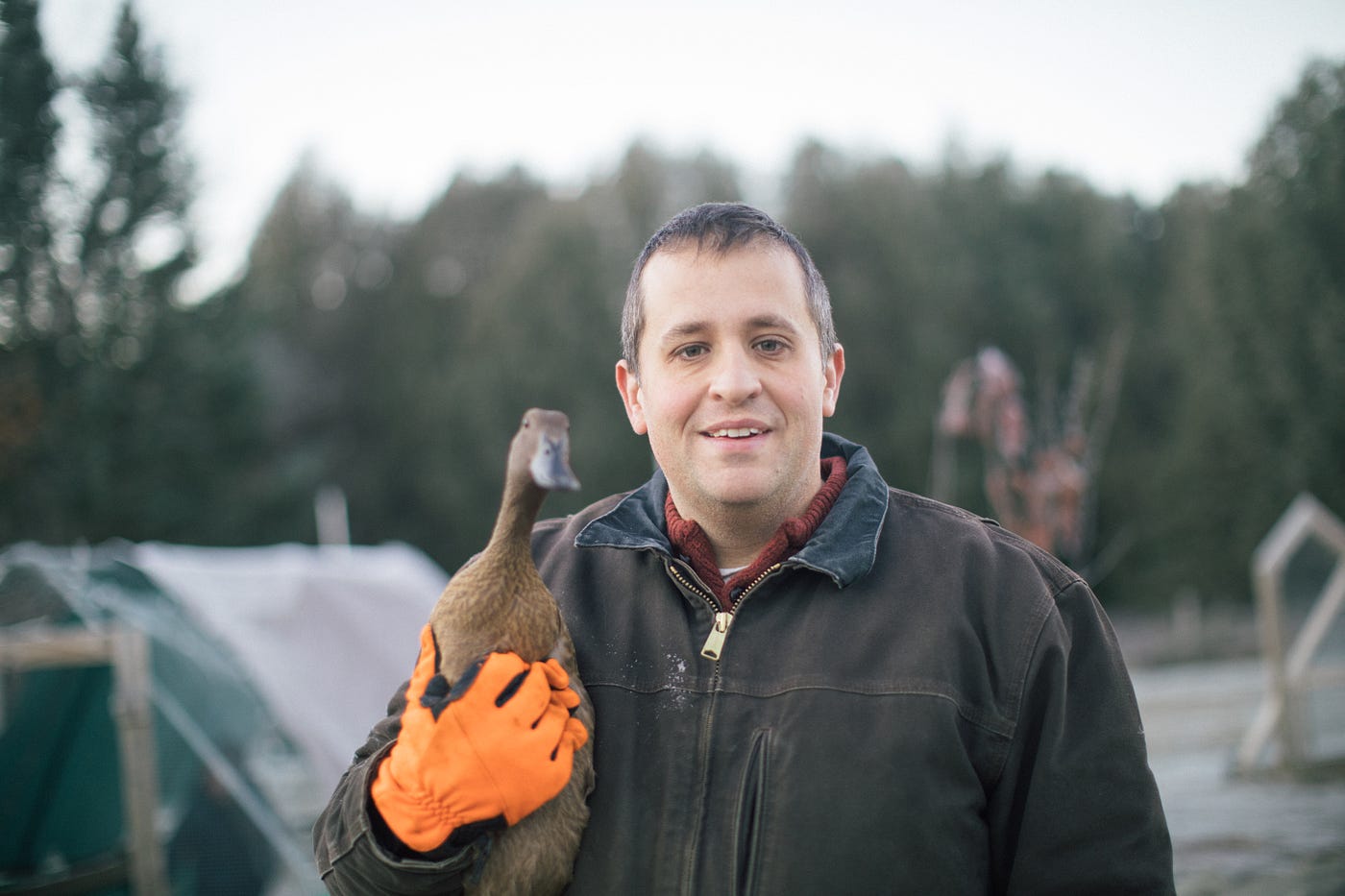
The war in Ukraine and catastrophic climate events have caused a global food crisis. This has highlighted the central role that the farming and agricultural industries play in sustaining society as we know it. In particular, it has highlighted the US Agricultural industry, and its role as the “Breadbasket of The World.” So what does it take to create a successful career for someone looking to enter the farming or agriculture industries? In this interview series, we are talking to leaders or principals in the farming and Ag industries who can talk about the future of modern farming and what it takes to create a successful career in the farming and agriculture industries. As a part of this series, we had the pleasure of interviewing Morgan Gold.
Morgan Gold is a farmer and storyteller based in Peacham, Vermont. After growing up in the suburbs of Connecticut and spending most of his adult life living in large East Coast cities, Morgan got fed up with the rat race and moved to a 160-acre farm in Vermont’s Northeast Kingdom. He raises ducks, geese, chickens, cattle, pigs, and trees on his small farm operation. Since establishing Gold Shaw Farm in 2018, Morgan has built a social media audience of more than 4.5 million followers.
Thank you so much for joining us in this interview series! Before we dig in, our readers would like to get to know you a bit more. Can you tell us a bit about your “backstory”? What led you to this particular career path?
I grew up in suburban Connecticut as a kid obsessed with drawing comic strips, photocopying them, and sharing them with my friends. I ended up going to art school in Boston, but by the time I graduated, the only jobs that were available to me were in corporate video production. Eventually, I found my way into a marketing career, jumping from job to job at insurance and investment companies, ultimately landing as the chief marketing officer for a large ETF and mutual fund company in Maryland at the age of 34. Even though I had worked really hard to find myself in that position, I was depressed and unfulfilled. At that same time, I had become fascinated with growing food and farming. After some time, my wife and I decided to leave the DC area and move to a 160-acre former dairy farm in Northern Vermont. I started raising ducks as my first farm business venture. In order to sell my duck eggs, I made a plan to start documenting my learning journey of becoming a farmer through regular YouTube videos. I kept at it and now, five years later, I find myself with a profitable small farm operation as well as a social media following of more than 4.5 million people across YouTube, TikTok, Facebook, and Instagram.
Can you share the most interesting story that happened to you since you began this fascinating career?
I am a duck farmer who is allergic to duck eggs. The plans for my first agricultural enterprise were always to raise ducks that would produce eggs. My thinking was that my happy ducks would make happy eggs, and I could eat those eggs and sell the extras locally to high-end customers and charge a premium for my high-end product.
The day I discovered my farm’s first duck egg was exciting. It was a sunny September afternoon, and I found a giant white orb in the grass while doing the evening duck chores. Jemima Puddleduck, a sizeable white Pekin duck who remains on our farm as I write this, as the oldest duck on the farm, had laid the egg. I immediately took the egg inside, scrambled it with a bit of butter in a cast iron skillet, and devoured it. I had always heard about how delicious duck eggs were; they definitely lived up to the hype. (Yes, my entire smart farm plan was based on producing a product I had never eaten regularly.)
I remember going to bed and feeling a little queasy, but around midnight I shot out of bed and sprinted for the bathroom. After about 18 hours, my symptoms subsided, and things returned to normal. Duck egg allergies are not as common as chicken egg allergies, but they can still occur.
You are a successful leader. Which three character traits do you think were most instrumental to your success? Can you please share a story or example for each?
Early on I really struggled with sharing my farm’s failures on social media. For example, one night I had several ducks killed by a predator and I wasn’t sure if I should share that with the people who watched my videos. I was concerned that it made me look stupid and inept. But the videos I started sharing that showed my failures ended up becoming some of my most popular videos because they gave viewers the opportunity to see that quitting the city life for farm life is not all rainbows and unicorns. Honesty, openness, and vulnerability are the easiest way to form emotional connections with others.
Can you please give us your favorite “Life Lesson Quote”? Can you share how that was relevant to you in your life?
“It’s better to be different than it is to be better.”
Even though I didn’t grow up on a farm or even start farming until my late 30s, I now find myself one of the most watched farming influencers in the world. I think that’s because I have worked to let my natural skills and talents drive the growth of the farm instead of following a standard playbook that is used by others.
Ok super. Let’s now shift to the main part of our discussion about the farming industry. The idea of farming has a very romantic and idyllic character to it, especially to some people living in a busy cosmopolitan context. Do you think now would be a good time for younger people with no farming history to get involved in the farming industry? Can you explain what you mean?
The world needs more small farmers. The world needs more farmers who think about managing their farms as an ecosystem. While it is hard work and the reality often has some stark contrasts with the idealized pictures folks often have in their heads, I think that there is a tremendous amount of opportunity for young folks willing to break from the conventions of the past 100 years of agriculture and blaze a new trail.
Where should a young person start if they would like to “get into” farming?
Start in your own backyard, rooftop, or fire escape. I got my first taste of growing food with a few containers of tomatoes that I grew on a rooftop in Brooklyn when I was living in New York City. That encouraged me to rip up the front yard of our row house in Washington DC to plant vegetables and from there I moved to even more ambitious projects with our Vermont property. Often times folks wait until they have just the right situation before getting started. In my opinion, you shouldn’t do that. Jump right in and let your waiting room become your classroom: try, fail, learn, repeat.
With greater attention being placed on the importance of the farming and Ag industries, what do you predict will be different about the farming and Ag sectors, over the next ten years?
I think the more farmers can blend new technologies (social media, mobile computing, automation, artificial intelligence) with old-school methods (integrated farming, holistic planning, function stacking, and operating on a small scale) the more successful we will all ultimately be. Over the past 100+ years, scale and production maximization have been the two major driving forces for most agriculture. I think holistic impact and operation profitability are going to be the biggest drivers over the next 100 years.
I’m very passionate about trying to help minorities to become more engaged in gardening and urban farming. What do you think can be done to engage more minorities and people of color in the farming and Ag industries?
I think it comes down to Education/Exposure and Addressing Structural Inequities. More community outreach is needed to help get folks started. Additionally, more resources need to be made available around addressing structural challenges to capital availability and land availability.
We all know that inflation is affecting so many parts of our lives. How does inflation affect farms? What steps have you taken to keep costs down?
Costs of materials and resources (feed, supplies, etc) have skyrocketed over the past few years. And while I have taken small steps to reduce production costs, those increases are generally what they are and sometimes a good product can’t be made with additional shortcuts. That has led some small producers like myself to increase prices. I have definitely seen that higher prices have led to less accessibility to a wide variety of consumers. It’s unfortunate, but true.
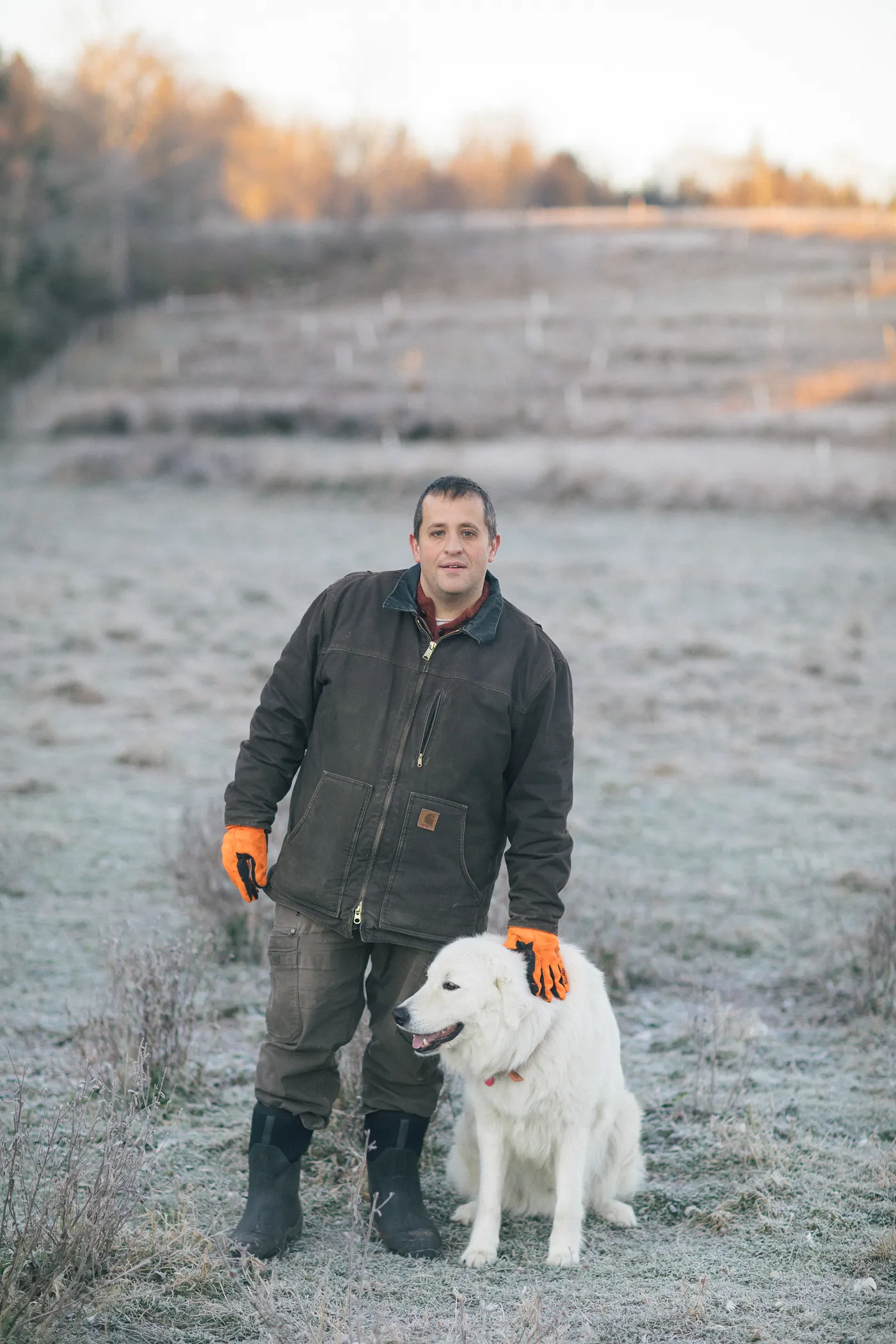
Here is the main question of our interview. Can you please share your “5 Things You Need To Create A Successful Career In The Farming and Agriculture Industries”?
First off, there’s no escaping a good old-fashioned Work Ethic in this business. Often times on the farm, getting a project done requires some elbow grease and a lot of patience. In farming, no task is too small or insignificant; everything matters. To keep up with that constantly growing to-do list you need to be able to roll up your sleeves and dig in.
Now, onto the Learning Mindset. Here’s the thing about farming — it’s never the same from one season to the next. Mother Nature has her own plans, and it’s our job to adapt. For instance, a harsh, unexpected frost taught me more about the importance of a warm brooder for baby goslings than any book could.
Next up, Resilience. I remember one season, a mink decimated my ducks. It was heartbreaking, to say the least. But it was then that I realized farming isn’t just about success — it’s about bouncing back. You take your knocks, dust off your pants, and work to ensure something like that won’t happen again.
The art of Storytelling may not seem related to farming, but I beg to differ. Whether it is growing a following on social media or pitching your produce at the local farmer’s market, if you can’t tell your customers why what you offer is worth their hard-earned money, then your farm business will never survive. Being able to share your farm’s story connects you to your customers, and that bond is stronger than any tractor you might be able to buy.
Lastly, Passion. Nothing keeps you going through a 4 AM start or busting up a frozen-solid-water trough in -20 degree weather like a deep-seated love for the land and its fruits.
You are a person of significant influence. If you could inspire a movement that would bring the most amount of good to the most amount of people, what would that be? You never know what your idea can trigger. :-)
If I had the power to influence a movement, it would be to inspire our best and brightest young minds to embrace farming.
Our world is fast-paced, technologically driven, and more disconnected from nature than ever. Yet, it’s our land, our soil that provides the very foundation for our survival — our food. Agriculture is a sector filled with opportunities for innovation, resilience, and an intimate connection with Mother Nature. It’s not just about sowing seeds and harvesting crops; it’s about problem-solving, understanding ecosystems, practicing sustainability, and literally, feeding the world.
Young people have a unique opportunity to reshape agriculture, to blend their tech-savvy minds with the soil-toughened hands of traditional farming. Imagine a future where our farms are not just efficient, but also sustainable, with AI-driven tractors and drones working alongside farmers in the field. A future where urban farming is the norm, and every rooftop garden contributes to a greener, more resilient city.
I envision this movement as the rebirth of the farming industry. An era where ‘farmer’ is synonymous with ‘innovator,’ ‘caretaker,’ and ‘world-changer.’ By leading this change, we could combat food insecurity, mitigate climate change, and reconnect our society with the very land that sustains us. Let’s make farming not just a noble profession, but a desirable one.
So I say to all the bright young minds out there, consider this — the next frontier might not be in space, but right beneath our feet, in the rich, fertile soil of our land.
How can our readers further follow your work online?
Find us on YouTube, TikTok, Instagram and Facebook under the account name “Gold Shaw Farm.”
This was very meaningful, thank you so much, and we wish you only continued success.
MM
Written by
Martita Mestey
Writer & ContributorContributor at Authority Magazine covering leadership, innovation, and industry insights.

Published inAuthority MagazineTop Lessons, Top Authorities · 42K Followers
Exclusive, curated interviews with the leaders and changemakers shaping tomorrow. Leadership lessons, industry deep dives, and executive profiles.