One of the biggest mistakes I made early in my career was thinking I could do everything on my own and not asking for help. I quickly learned I am only as good as my team.
Business
Klaudette Christensen: Why The Best Leaders Aren't Always Extroverts With Advanced Degrees
The Executive Vice President and Chief Product Officer at Experian shares her journey of leadership, overcoming imposter syndrome, and driving financial inclusion.
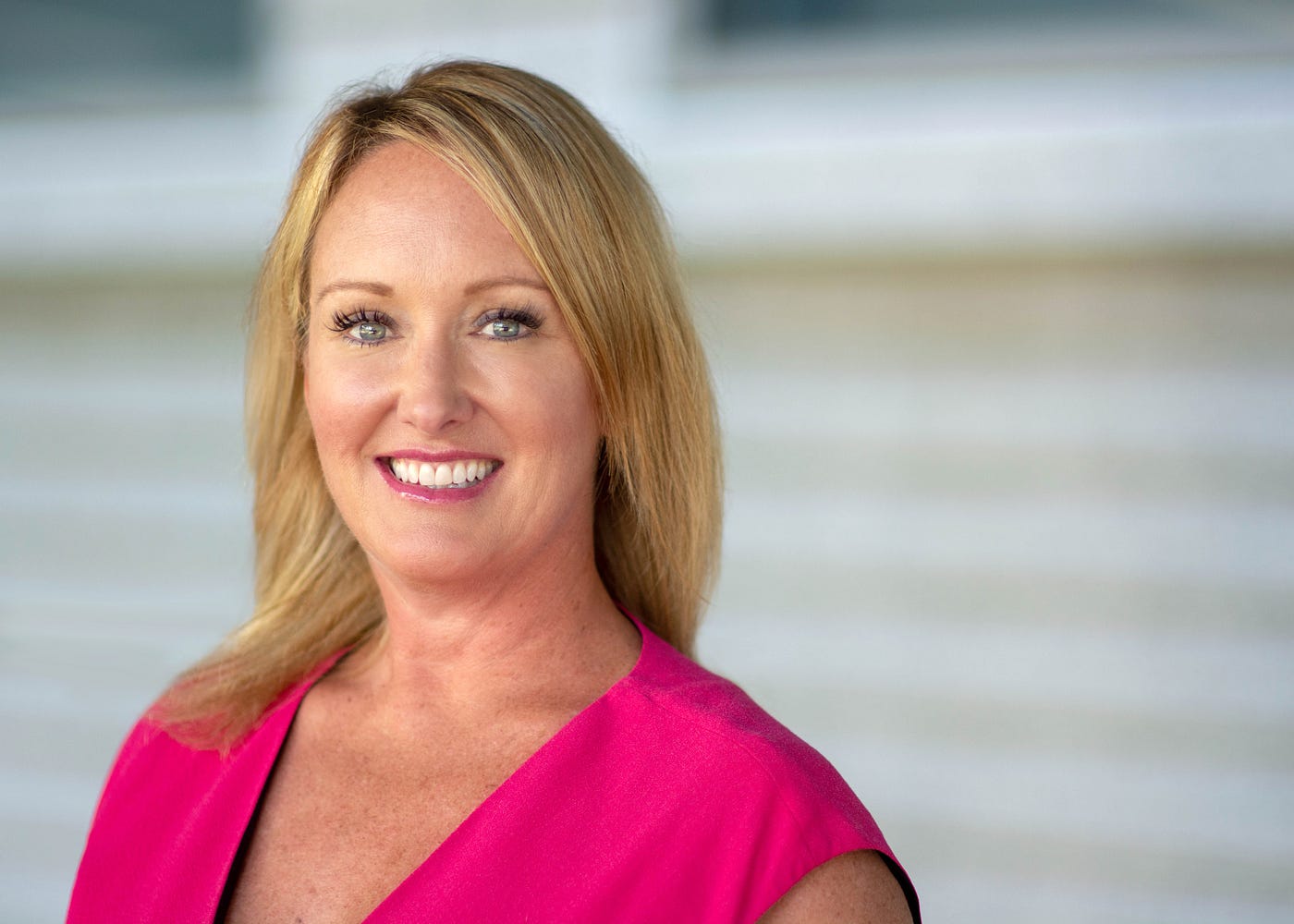
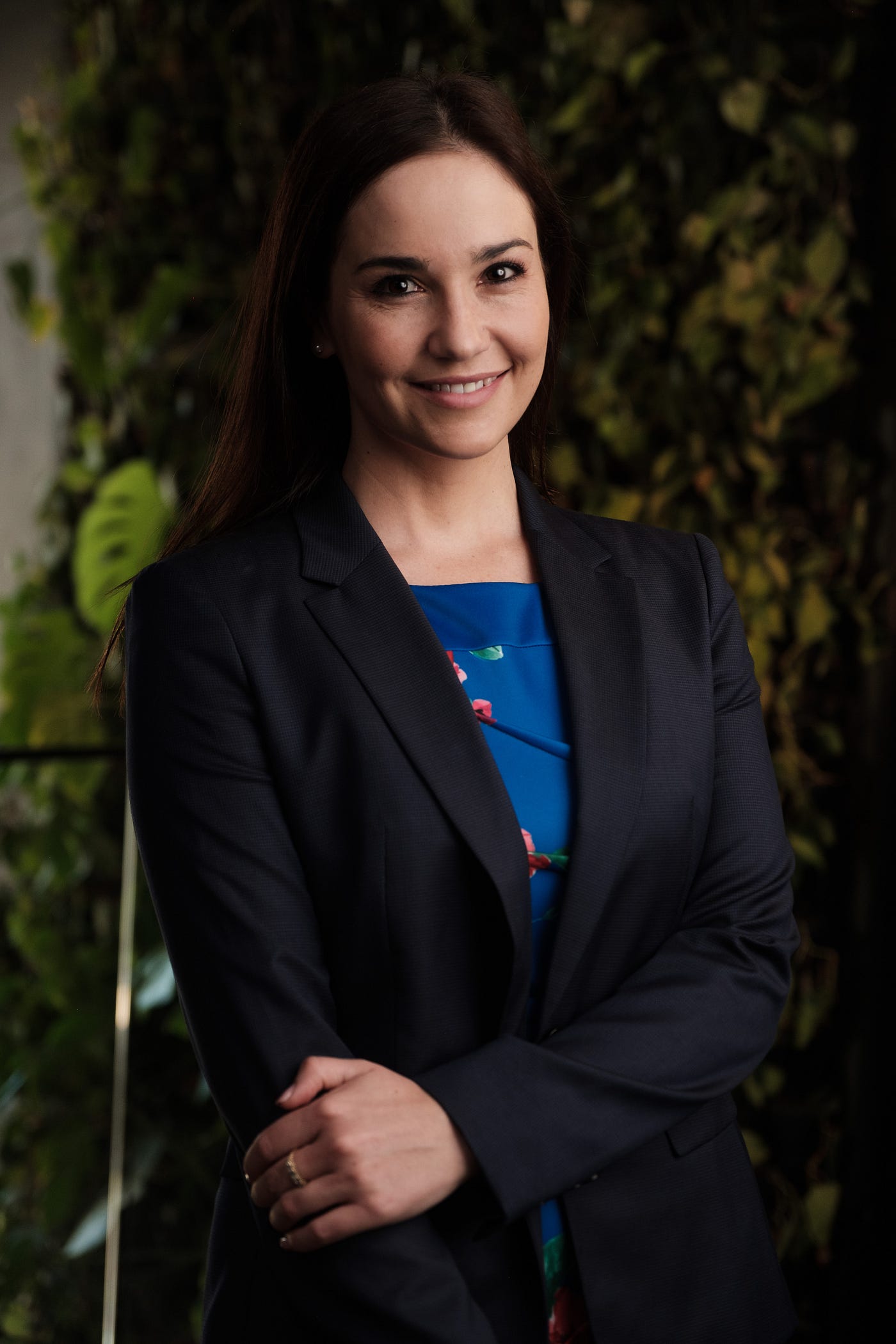
As a part of our interview series called “Women Of The C-Suite”, we had the pleasure of interviewing Klaudette Christensen.
Klaudette Christensen is Executive Vice President/Chief Product Officer for Experian Consumer Information Services, with responsibility for functions including strategy, product management, product marketing, and analytics. Prior to this appointment, she served as Chief Operating Officer for Experian Marketing Services in North America. She was responsible for the marketing lifecycle of a consumer through business-to-business and business-to-consumer solutions which includes revenue growth, product management and development, data management and operations to meet our clients’ and consumers’ current and emerging needs.
Thank you so much for joining us in this interview series! Before we dig in, our readers would like to get to know you a bit more. Can you tell us a bit about your “backstory”? What led you to this particular career path?
My career at Experian began over 10 years ago and I have been fortunate to touch many different areas within the company. I have undertaken various leadership roles, including growth initiatives across a variety of business units here. Prior to joining Experian, I led business development and marketing efforts for Prosper Marketplace, Merrill Lynch and E-LOAN. I have over 20 years of product management, sales, account management, marketing and operations experience across a variety of industries and functions.
I’m driven by a sense of purpose and have always had a solution-oriented mindset, which is an important part of my career journey. I’m passionate about driving financial inclusion and helping consumers achieve their financial goals. At Experian, we achieve this by enabling our clients to make the most informed decisions with expanded data and advanced technology while also delivering the best customer experience. I also love the challenge of solving customer problems, which starts at the front-end with hearing from clients directly and then building and delivering innovative solutions that meet their needs. Leveraging my diverse experience and background has helped me be both strategic and tactical in solving client problems.
Can you share the most interesting story that happened to you since you began leading your company?
I recently stepped into a new role as Executive Vice President/Chief Product Officer for our Consumer Information Services business. I held a role in this business unit from 2015–2019 and it’s been invigorating to see how it has evolved as well as the upcoming innovations we have coming to meet the needs of our clients. Most notably, we’re finding new and innovative ways to harness the power of data and technology across our entire organization. We’re focused on helping our clients make the most informed decisions while also being a champion for consumers.
It has been said that our mistakes can be our greatest teachers. Can you share a story about the funniest mistake you made when you were first starting? Can you tell us what lesson you learned from that?
One of the biggest mistakes I made early in my career was thinking I could do everything on my own and not asking for help. I quickly learned I am only as good as my team. Having a strong team that works together to achieve goals is critical when I have too much on my plate, but it also creates a collaborative environment that helps inspire new innovative ideas and solutions.
None of us are able to achieve success without some help along the way. Is there a particular person who you are grateful towards who helped get you to where you are? Can you share a story about that?
My dad is absolutely that person for me. He’s helped guide and direct me throughout my career as he held similar roles to those I’ve had. I’ve always gone to him for advice and used him as a sounding board when making important decisions. He not only taught me to always be humble and grateful for what I’ve achieved, but also to be proud of what I’ve accomplished.
Leadership often entails making difficult decisions or hard choices between two apparently good paths. Can you share a story with us about a hard decision or choice you had to make as a leader?
A few years ago, I decided to take on a new role that was a bit more unknown to me and leave a business that was thriving and familiar. Although sometimes these decisions are difficult, I looked at this as a growth opportunity. Now looking back, I’m glad I took this leap of faith as it made me stronger as a leader. The role came with its own unique challenges but ended up being so rewarding. It enabled me to learn a new business, work with new leaders, build credibility with a new employee base and sharpen my skillsets.
Ok, thank you for that. Let’s now jump to the primary focus of our interview. Most of our readers — in fact, most people — think they have a pretty good idea of what a CEO or executive does. But in just a few words can you explain what an executive does that is different from the responsibilities of the other leaders?
Executives play a unique role as they need to focus on the big picture while ensuring their team members accomplish the day-to-day tasks that help accomplish goals. It’s also important to keep your company’s purpose at the forefront of everything your team does. One of the reasons I am proud to work at Experian is because of our commitment to financial inclusion and to helping consumers get access to the fair and affordable credit they need. As a champion of the consumer, we operate with a sense of purpose and are continually finding ways we can help consumers along their financial journey. As a leader, I get to help my teams make these goals a reality every day.
What are the “myths” that you would like to dispel about being a CEO or executive? Can you explain what you mean?
Below are a few myths from my point of view:
- Extroverts are the best leaders because of their outgoing nature. I’ve found this not to be true. In my experience, some of the best leaders I’ve seen are introverts.
- Effective leaders have a high standard of education. Over the years, I’ve seen that leadership is about personality, not the degree.
- Leadership is not one-size-fits-all. As a leader, you need to be agile and adapt accordingly.
In your opinion, what are the biggest challenges faced by women executives that aren’t typically faced by their male counterparts?
In my opinion, I think female executives, including myself, can struggle with imposter syndrome. Women often have a hard time owning their successes even when they are high performers. I think that’s why it’s important for women to find mentors and advocates that can help encourage and coach them along the way.
At Experian, we have Employee Resource Groups (ERGs) that are company supported networks that provide support for employees through a stronger sense of community and connection. While we have a variety of different ERGs, Women in Experian is one that specifically helps inspire, empower and elevate women at Experian to reach their career goals. It’s a great way for employees to connect with one another, meet potential mentors and receive advice that can help them reach the next step in their career journey.
What is the most striking difference between your actual job and how you thought the job would be?
I’m fortunate to have done this role in a smaller capacity before. What strikes me is the continuation of opportunities we have at Experian to provide products and solutions to our clients and help drive better financial outcomes for consumers.
Is everyone cut out to be an executive? In your opinion, which specific traits increase the likelihood that a person will be a successful executive and what type of person should avoid aspiring to be an executive? Can you explain what you mean?
From my experience and point of view, not everyone is cut out for it and that’s okay. I think you have to really want it and be ready to work really hard. Specific traits of successful executives include adaptability, decision making, change management, self-awareness and executive presence.
What are your “5 Things I Wish Someone Told Me Before I Started” and why? (Please share a story or example for each.)
- Achieving growth takes patience: It’s important to have patience because real growth is driven by experience — including the wins and the fails. When I look back on my career, I realize there were times where I wanted to progress faster or achieve more but that doesn’t always come quickly.
- Make your health a priority: I always think of the saying on an airplane that you must put your oxygen mask on first before you can help others. Prioritizing your physical and mental health is essential to your success. When your health and happiness are in order, it enables you to think clearly and be a confident, strong leader.
- Build influence and trust: It’s important to have integrity in everything you do. By always striving to do the right thing, it allows you to build influence and trust among a variety of stakeholders.
- Be flexible with ambiguity: I think we often want things to be black and white but as a leader there are going to be a lot of times where you must deal with ambiguity and make decisions on the spot. Executives have to be ready to pivot and wear many hats with grit and resilience.
- Focus on the people: I’ve found over the years, that I’m only as good as my team. Invest time and resources into the people that you work with daily. It’ll lead to success in the future.
You are a person of great influence. If you could inspire a movement that would bring the most amount of good for the greatest number of people, what would that be? You never know what your idea can trigger.
If there was a single movement I could inspire, I would want there to be stronger financial education provided from an early age across the U.S. I’ve found through my volunteer efforts that providing financial literacy resources and tools is incredibly valuable for families so they can take control of their financial health.
By teaching financial literacy, not only can adults make more informed decisions but that information trickles down to their children too. Financial education has the potential to help future generations escape the cycle of financial hardship.
We are very blessed that some very prominent names in Business, VC funding, Sports, and Entertainment read this column. Is there a person in the world, or in the US with whom you would love to have a private breakfast or lunch with, and why? He or she might just see this if we tag them
Not only am I a sports fan, but I’m a huge Green Bay Packers fan. Even though he left to join the New York Jets, I’ve always been intrigued by Aaron Rodgers. He’s known for his high performance and athletic ability. Even through adversity, he’s continued to work hard and push himself in his career. I think it would be fascinating to sit down with him to talk about his successes, failures and what’s motivated him throughout the years.
This was very inspiring. Thank you so much for joining us!
About the Interviewer: Douglas E. Noll, JD, MA was born nearly blind, crippled with club feet, partially deaf, and left-handed. He overcame all of these obstacles to become a successful civil trial lawyer. In 2000, he abandoned his law practice to become a peacemaker. His calling is to serve humanity, and he executes his calling at many levels. He is an award-winning author, teacher, and trainer. He is a highly experienced mediator. Doug’s work carries him from international work to helping people resolve deep interpersonal and ideological conflicts. Doug teaches his innovative de-escalation skill that calms any angry person in 90 seconds or less. With Laurel Kaufer, Doug founded Prison of Peace in 2009. The Prison of Peace project trains life and long terms incarcerated people to be powerful peacemakers and mediators. He has been deeply moved by inmates who have learned and applied deep, empathic listening skills, leadership skills, and problem-solving skills to reduce violence in their prison communities. Their dedication to learning, improving, and serving their communities motivates him to expand the principles of Prison of Peace so that every human wanting to learn the skills of peace may do so. Doug’s awards include California Lawyer Magazine Lawyer of the Year, Best Lawyers in America Lawyer of the Year, Purpose Prize Fellow, International Academy of Mediators Syd Leezak Award of Excellence, National Academy of Distinguished Neutrals Neutral of the Year. His four books have won a number of awards and commendations. Doug’s podcast, Listen With Leaders, is now accepting guests. Click on this link to learn more and apply.

Published inAuthority MagazineTop Lessons, Top Authorities · 42K Followers
Exclusive, curated interviews with the leaders and changemakers shaping tomorrow. Leadership lessons, industry deep dives, and executive profiles.