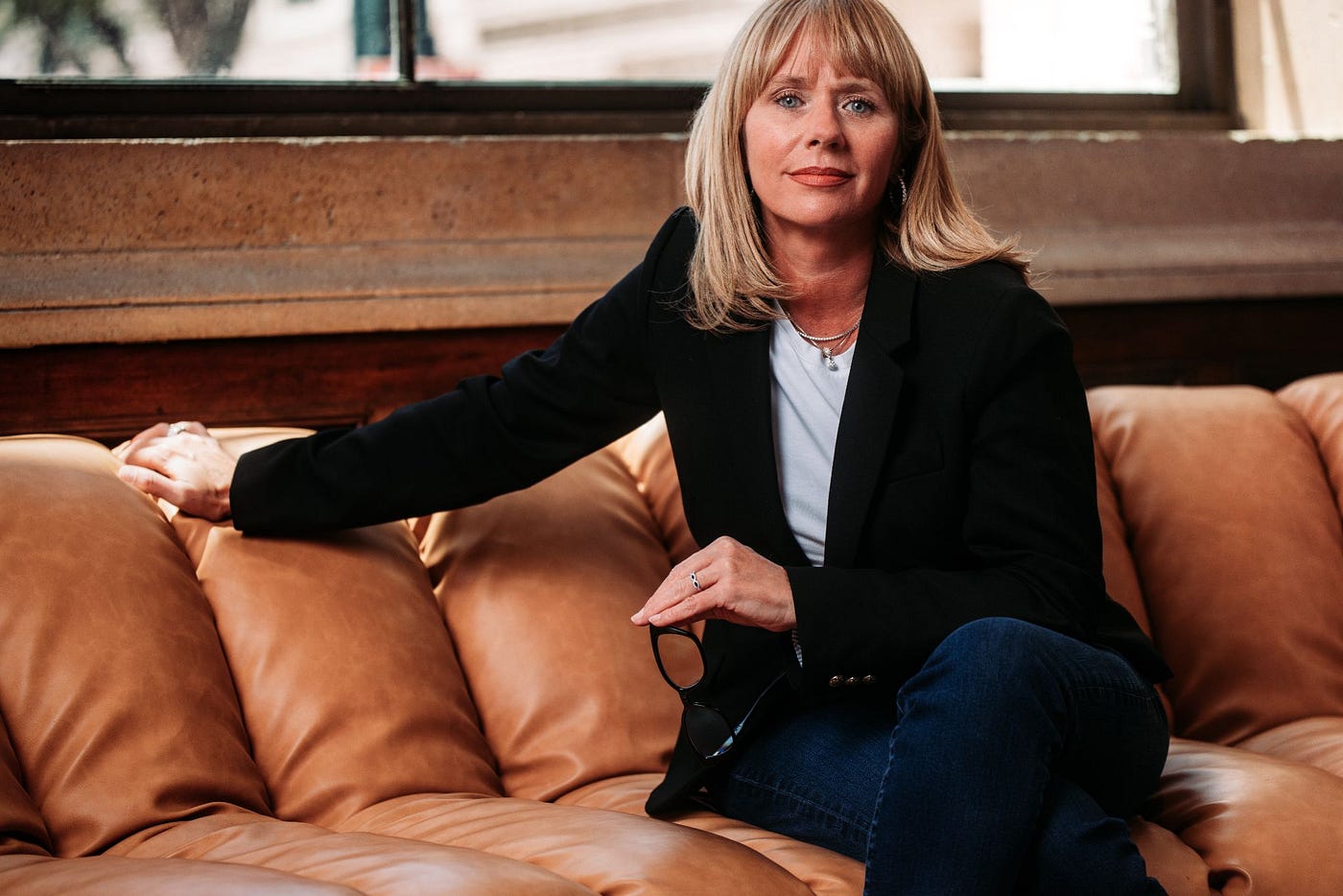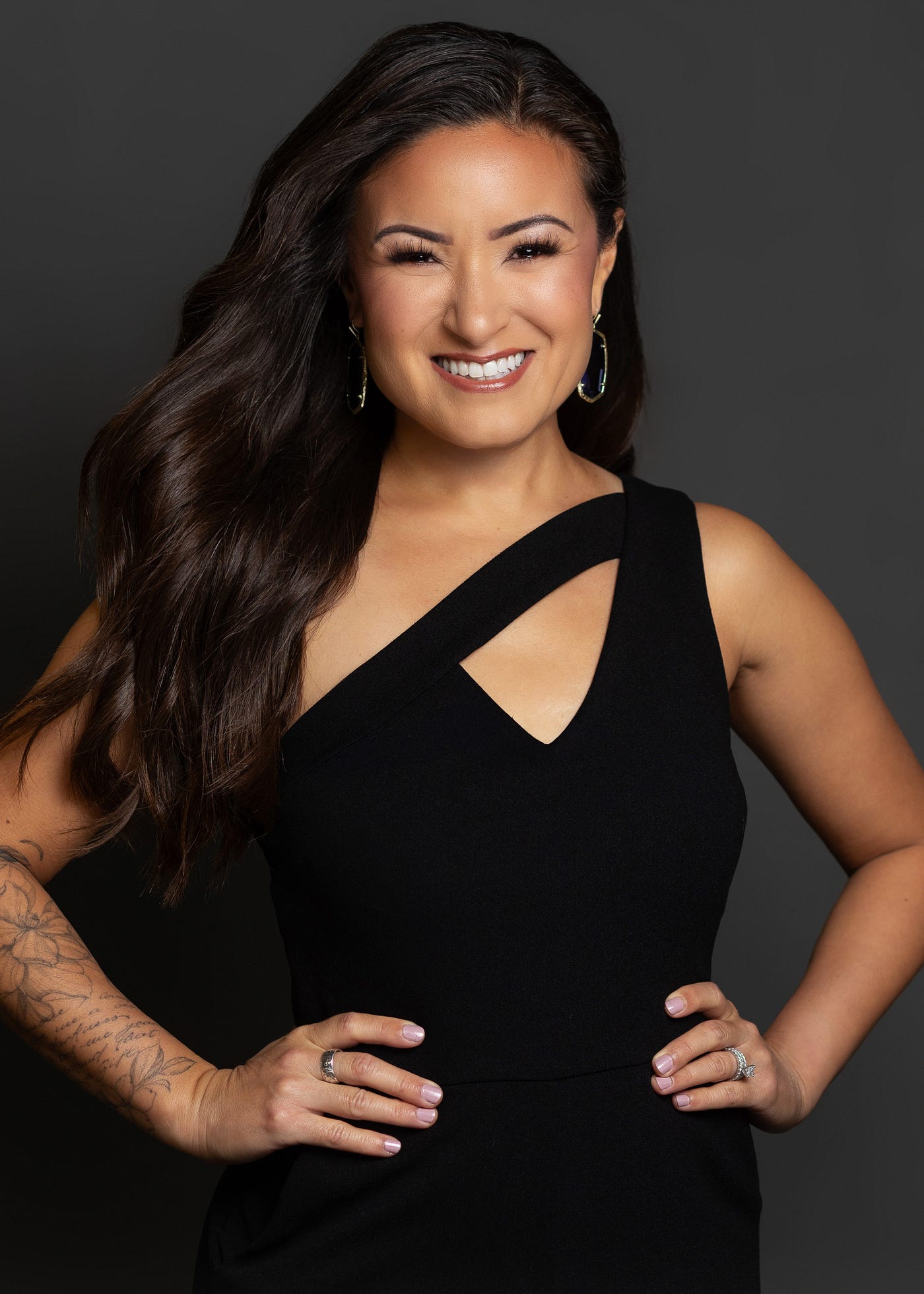
Battling postpartum depression, along with a laundry list of other diagnoses, I had to confront the fact that traits I'd called strengths were what was actually tearing me apart.
Inspirational Women Of the Speaking Circuit: (insertname & organization) On The Five Things You Need To Be A *
Highly Effective Speaker
Please write your answers below, leaving the questions in the document. We might schedule a follow-up call or skype to round things out.
As a part of our series about Inspirational Women of the Speaking Circuit, I had the distinct pleasure of interviewing Sarah Lopez.
Sarah Lopez is the author of I Chose to Be Here: Loyalty, Lies, and Leaving the Con. Raised by a con artist, she spent years reinventing herself before confronting what survival had cost her. An award-winning communications strategist and professional speaker, Lopez has advised leaders through high-stakes moments and spent nearly two decades connecting with audiences on stage, television, and beyond. After a career spent finding the right words for everyone else, she is finally using them to tell her own story. Learn more at authorsarahlopez.com.
Thank you so much for doing this with us! Our readers would love to get to know you a bit better. Can you tell us the story of how you grew up?
I was born in Berkeley, California, and am the middle child between two brothers. We were raised by a con artist, and by the time I was eleven, I was a pretty seasoned swindler myself. My dad had us helping him exploit the foster care system, pitch pyramid schemes, sell items at flea markets, and sell See's candy using stories that weren't true. We didn't attend school, moved nearly thirty times, and, along with four other kids (seven in total), brought in over a quarter of a million dollars in an eighteen-month period through our candy-selling operation…tax-free.
But the con isn't the part of my story I am most interested in talking about. It's what happened to me afterward.
I got really good at surviving. I reinvented myself, built a successful career in communications, and became the person no one ever suspected of having mental health issues. I felt I had made it because I outran my childhood, developing a life that was so different from how I grew up that if I shared my story with you, you'd think I was kidding.
Then I became a mother, and everything changed.
Battling postpartum depression, along with a laundry list of other diagnoses, I had to confront the fact that traits I'd called strengths were what was actually tearing me apart. My memoir, I Chose to Be Here: Loyalty, Lies, and Leaving the Con, is about that journey and what happened when I finally learned that sometimes the strongest thing you can do is say, "I need help."
Can you share a story with us about what brought you to this specific career path?
As a first-generation college student at San Jose State University, I went into it with an open mind. My goal was to graduate with a degree that would lead to a stable career. The expectations I placed on myself were high because I knew attending a four-year university would be a first in my family, and I wanted to make sure I took full advantage of my education.
But I was a little lost. I changed my major five times and found myself floundering around, trying to figure out what to do. It wasn’t until I attended an intro to public relations class that I realized my love for this field. I remember our professor would assign us a new case and task us with drafting a press release, media alert, FAQ, etc., and I thrived. I’d meticulously type out my work and knew this was what I wanted to do professionally.
Can you tell us the most interesting story that happened to you since you began your career?
On March 11, 2020, I flew to Southern California for the California School Public Relations Association’s annual conference as the director of communications and community engagement for the Dublin Unified School District. Little did I realize the entire world was about to shut down due to COVID. Oddly enough, I was in a hotel full of communications professionals and was lucky enough to be in a position where we could all work together on trying to figure out messaging, getting intel on which districts were announcing a closure, and advising our superintendents.
As much as our school districts wanted us to be back at the office, this was the right place to be. Over the next few months, my public information officer and I issued over 100,000 words of communication to our community regarding COVID protocols, distance learning, the latest information from the health department, and more.
It was a crazy time, but I’m glad to have been part of the whirlwind helping my district navigate this crisis.
Can you share a story about the funniest mistake you made when you were first starting? Can you tell us what lesson you learned from that?
When I first started out in my career, I was a marketing assistant for a ratings agency in Marin County. One of my responsibilities was to coordinate a series of workshops for our clients to attend. One of them took place in Santa Clara County, and on the day of the event, I showed up to the hotel an hour and a half before to set up. When I spoke to the front desk, they said there was nothing on their schedule.
Turns out, I had advertised the wrong hotel.
I was so embarrassed but knew I needed to think fast. I ended up having one person stay there to redirect people to the right venue while I went through and called over 50 attendees with the right information. A good lesson in double-checking the details.
None of us are able to achieve success without some help along the way. Is there a particular person who you are grateful towards who helped get you to where you are? Can you share a story about that?
There are many, but I’d like to shine this spotlight on Dr. Dave Marken. He was the very first superintendent I had the opportunity to work with in Dublin. He had been retired and chose to go back to work to lead a community he loved after the previous superintendent had been let go. From the moment I met him, I knew he was special. I’d often tell him he reminded me of a male version of Miss America. He led with authenticity and made every interaction with a student, staff, or community member feel like they were the most important person in the room. He taught me that relationships matter and that people are more likely to listen to what you have to say if you genuinely care about what they have to say as well.
Dave and I went through absolute insanity together. From the moment I arrived, we had crisis after crisis, including air quality issues, extreme heat, bullying allegations, unsubstantiated threats, fires, food recalls, gas leaks, infectious diseases, leadership turnover, misinformation, heated negotiations, vandalism, and deaths, including the loss of three Dublin High School students on Christmas Day.
During my time in Dublin, I battled major imposter syndrome, always so unsure of myself. Dave trusted me, seeking my strategic counsel on issues and really taking what I had to say to heart. He made me believe in myself and believe that I could do this job. Five years later, my team was a ten-time award-winning communications department, earning both state and national recognition. I am forever grateful to him for giving me the confidence I needed to excel.
You have been blessed with great success in a career path that can be challenging and intimidating. Do you have any words of advice for others who may want to embark on this career path, but seem daunted by the prospect of failure?
Seek mentors. Get involved in the professional organizations in your field. Be a part of the conversation.
When I entered this field, I walked in ready to learn from those who had been a part of it for decades. I got involved with the National School Public Relations Association (NSPRA), California School Public Relations Association (CalSPRA), and California Association of Public Information Officials (CAPIO). Through my participation, I found my people. Whenever I needed advice, I had people I could go to for help who genuinely wanted to see me succeed. It made a huge difference in my career.
What drives you to get up everyday and give your talks? What is the main empowering message that you aim to share with the world?
Conversations around mental health are more important than ever. And through my career, I’ve seen many high achievers quietly struggling beneath the surface. These are the people who you’d never expect to be having serious issues. They are the ones who make everything look easy, who are responsible, who are the ones everyone else goes to for help. Yet they are the ones who need it most.
The main empowering message that I aim to share around the world is that strength isn’t about how much you can carry. It’s about recognizing when something is no longer working for you and having the courage to change it.
Can you share with our readers a few of your most important tips about how to be an effective and empowering speaker? Can you please share some examples or stories?
This is going to feel awkward; however, I promise you it is worth the effort. Film yourself. After you have prepped your talking points, turn on the camera and give the speech or presentation. Then, sit down and watch it. Look at yourself with an open mind and celebrate both what you think you did well and what you need to work on. Then do it again.
For over a decade, my husband and I prepped young women who were competing in the Miss America Organization, and we’d use this technique to help them prepare for their panel interviews. No doubt, it feels odd watching yourself. But what you gain from being able to see what your judges and audience are seeing is invaluable.
And try to do a few practice runs as if you are in the moment. Wear the outfit you are planning to have on. Practice good posture. Smile as if everyone is in front of you. Enunciate your words and project your voice.
As you know, many people are terrified of speaking in public. Can you give some of your advice about how to overcome this fear?
Remember that nerves and excitement feel surprisingly similar. There have been so many moments in my life when I walked into a situation genuinely terrified to go on stage. To calm myself down, I first acknowledge my own feelings because it’s completely okay for me to be scared. Then, I close my eyes and take a deep breath while reaching both of my hands as high into the sky as I can. On the exhale, I put my hands down and focus on making my shoulders as relaxed as possible.
Now is the hard part: I add a new phrase to my brain.
I’ve acknowledged my fear, and it’s time to change my tune. “I am so excited to be here today,” or “What a great opportunity I have in front of me,” or insert your best phrase here. Allow the adrenaline to give you positive energy. Then get out there and give that speech.
Ok, thank you for all that. Here is the main question of our interview. What are your "5 Things You Need To Be A Highly Effective Public Speaker?” Please share a story or example for each.
1. Learn from the experts. Ever since I was in college, I have loved watching TED Talks. There are so many great ones. Take the time to look them up, notice what has millions of views, and watch what they are doing. Study their body language, the format of their speech, and the delivery, including their tone and pauses. One of my favorite books to this day is Talk Like TED: The 9 Public Speaking Secrets of the World's Top Minds by Carmine Gallo. Listening to those who are doing what you want to do well is a real game changer.
2. Figure out your learning style. When I was in college, my boyfriend used to read my textbooks aloud to me. This relationship worked out great because I married him. Turns out I loved asking him to do this because I am an auditory learner. Once I figured that out about myself, it was much easier for me to absorb information. When it came to public speaking, rather than reading my bullet points, I’d record myself saying them and listen to the recording instead. I implore others to do this for themselves. Take an online quiz (there are plenty) and determine what style works best for you.
3. Don’t wait to feel motivation before getting started. I know myself well. If I procrastinate, I will inevitably be more stressed than I need to be. The more prepared I am, the less likely nerves are to take over. I remind myself, “Future me will thank me for this moment.” Start right when you know a speech is coming up. Write one key point, crank out a couple of sentences, brainstorm the storyline…anything to make movement.
4. Film yourself. Yes, this may feel unusual, but it is so valuable to see yourself on camera. Pay attention to your posture, grammar, intonation, facial expressions, and hand gestures. Ask yourself, “Do I sound natural or rehearsed?” You will likely catch something you had no idea you were doing. I know I always do. The goal isn’t to criticize your performance; it's to see what the audience is experiencing so you can make it the best it can be.
5. Remember, the audience wants you to succeed. When prepping for an interview, presentation, or keynote, remember that people want to see you do well. They want to leave the room feeling something, being inspired, or having learned something new. The more comfortable you are, the more comfortable they will be. Walk in knowing everyone is already rooting for you. Your mindset is everything.
You have such impressive work. What are some of the most interesting or exciting projects you are working on now? Where do you see yourself heading from here?
In June 2024, I quit my job to focus on writing a memoir. Two years later, it is being published!
What I just said there makes it sound like it was a really simple process. It was anything but that. During that time, I was also a full-time toddler mom, and writing 100,000-plus words while chasing my kid was a bit of a challenge. I’m thankful to my husband for helping me find time to make this project come to fruition.
My memoir, I Chose to Be Here: Loyalty, Lies, and Leaving the Con, is the inaugural title for One Anthem Press and will be available in the fall. I’m about to record the audio version as well, so it will be available on Audible and Libby. It’s been a whirlwind, and I am looking forward to sharing it with the world.
Can you share with our readers any self care routines, practices or treatments that you do to help your body, mind or heart to thrive? Please share a story for each one if you can.
I love working out on my own while listening to a great podcast. Some of my favorites include Cults to Consciousness by Shelise Ann Sola, The Shit No One Tells You About Writing with Cece Lyra, Carly Watters, and Bianca Marais, and Bachelor Happy Hour with Charity Lawson and Rachel Recchia. I like a nice balance between true crime, professional development, and reality TV. My goal every day is to get at least a half hour to myself to either use my rowing machine or go on an outdoor walk.
I also have a drawer full of sample beauty products that I am determined to use up this year. So, every week, I strive to use up at least one of those products. It’s self-care and ensures nothing in my house goes to waste.
Can you please give us your favorite "Life Lesson Quote"? Can you share how that was relevant to you in your life?
Well, it’s definitely my favorite because it is tattooed on my arm. It’s the poem The Uses of Sorrow by Mary Oliver.
Someone I loved once gave me a box full of darkness. It took me years to realize this, too, was a gift.
The last time I saw my biological father was in 2014. During that brief meeting, something became abundantly clear: I had spent a lifetime loving someone who only loved me back when I had something to offer him. For years, I thought letting go meant giving up. But I learned I could still love him, understand his behavior, and remember the good old days without sacrificing myself anymore for the sake of the relationship.
The gift wasn’t the darkness. It was the realization that I didn’t need to live in it anymore.
You are a person of huge influence. If you could inspire a movement that would bring the most amount of good to the most amount of people, what would that be?
It’s that asking for help is a strength. The three words I avoided my entire life were “I need help.” When I finally acknowledged I couldn’t carry everything that was weighing me down, that was when I started healing.
Is there a person in the world whom you would love to have lunch with, and why? Maybe we can tag them and see what happens!
Oh… Sheryl Sandberg. I’m a huge fan. I was very early in my career when I read Lean In and it changed my whole perspective on women in leadership. I gained such a respect for people like her who paved the way for women like me trying to make it in this world. She truly made an impact on my life, especially my professional career, in the way I learned to find the guts to speak up for myself. I actually named a chapter in her honor called “A Seat at the Table.”
If she ever acknowledged my existence, I would probably faint.
Are you on social media? How can our readers follow you online?
Yes, I am! You can find me on Instagram, TikTok, and YouTube at authorsarahlopez. I’m also on X at hisarahlopez.
This was so informative, thank you so much! We wish you continued success!
About the Interviewer: Douglas E. Noll, JD, MA was born nearly blind, crippled with club feet, partially deaf, and left-handed. He overcame all of these obstacles to become a successful civil trial lawyer. In 2000, he abandoned his law practice to become a peacemaker. His calling is to serve humanity, and he executes his calling at many levels. He is an award-winning author, teacher, and trainer. He is a highly experienced mediator. Doug’s work carries him from international work to helping people resolve deep interpersonal and ideological conflicts. Doug teaches his innovative de-escalation skill that calms any angry person in 90 seconds or less. With Laurel Kaufer, Doug founded Prison of Peace in 2009. The Prison of Peace project trains life and long terms incarcerated people to be powerful peacemakers and mediators. He has been deeply moved by inmates who have learned and applied deep, empathic listening skills, leadership skills, and problem-solving skills to reduce violence in their prison communities. Their dedication to learning, improving, and serving their communities motivates him to expand the principles of Prison of Peace so that every human wanting to learn the skills of peace may do so. Doug’s awards include California Lawyer Magazine Lawyer of the Year, Best Lawyers in America Lawyer of the Year, Purpose Prize Fellow, International Academy of Mediators Syd Leezak Award of Excellence, National Academy of Distinguished Neutrals Neutral of the Year. His four books have won a number of awards and commendations. Doug’s podcast, Listen With Leaders, is now accepting guests. Click on this link to learn more and apply.