Diversity is not just putting people of color in marketing campaigns; it is embracing their experiences and viewpoints to arrive at new and better solutions.
Tech
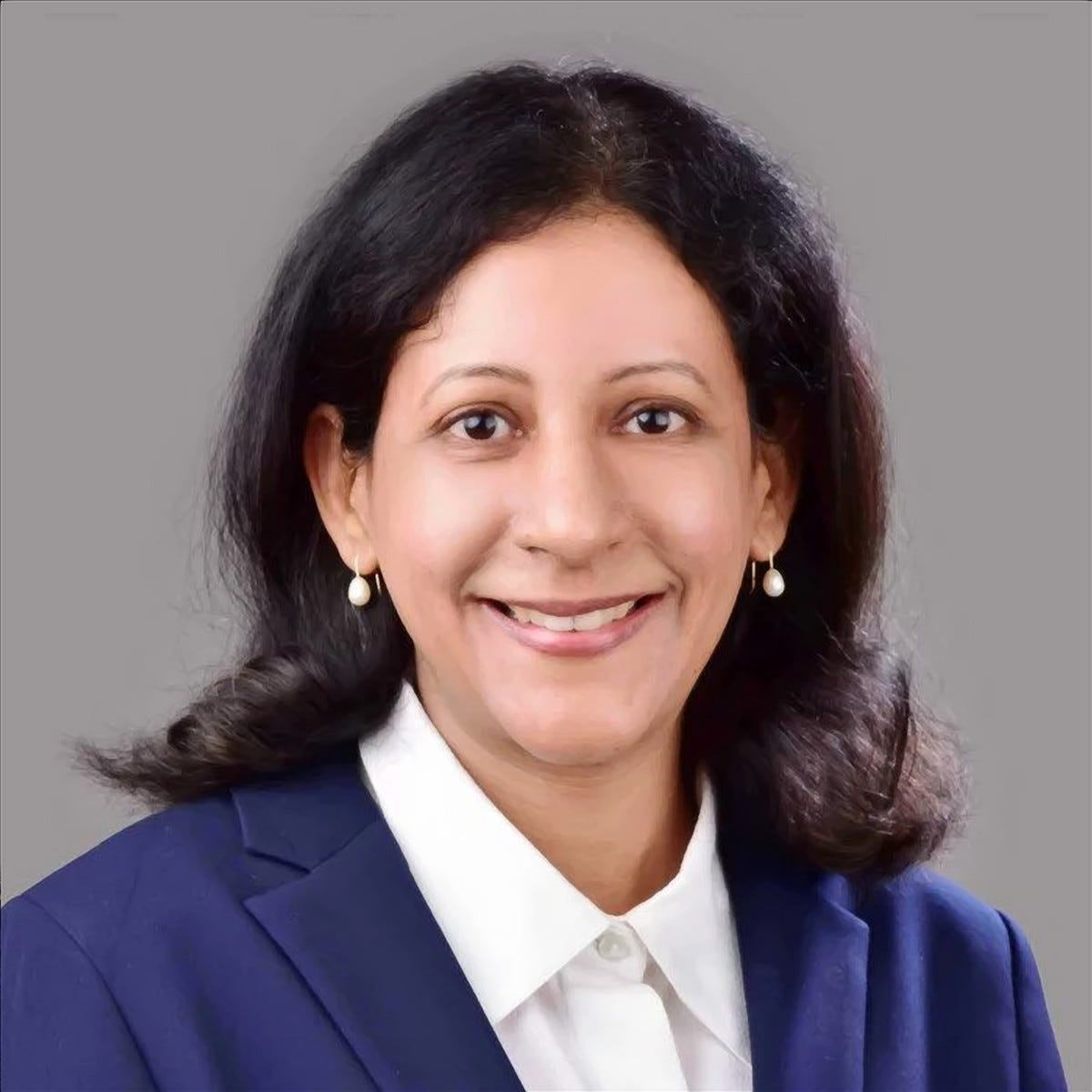
Sarabjit Dahyia of IT Careers 4 U: Why Embracing True Diversity In The Boardroom Is The Ultimate Catalyst For Breakthrough Innovation
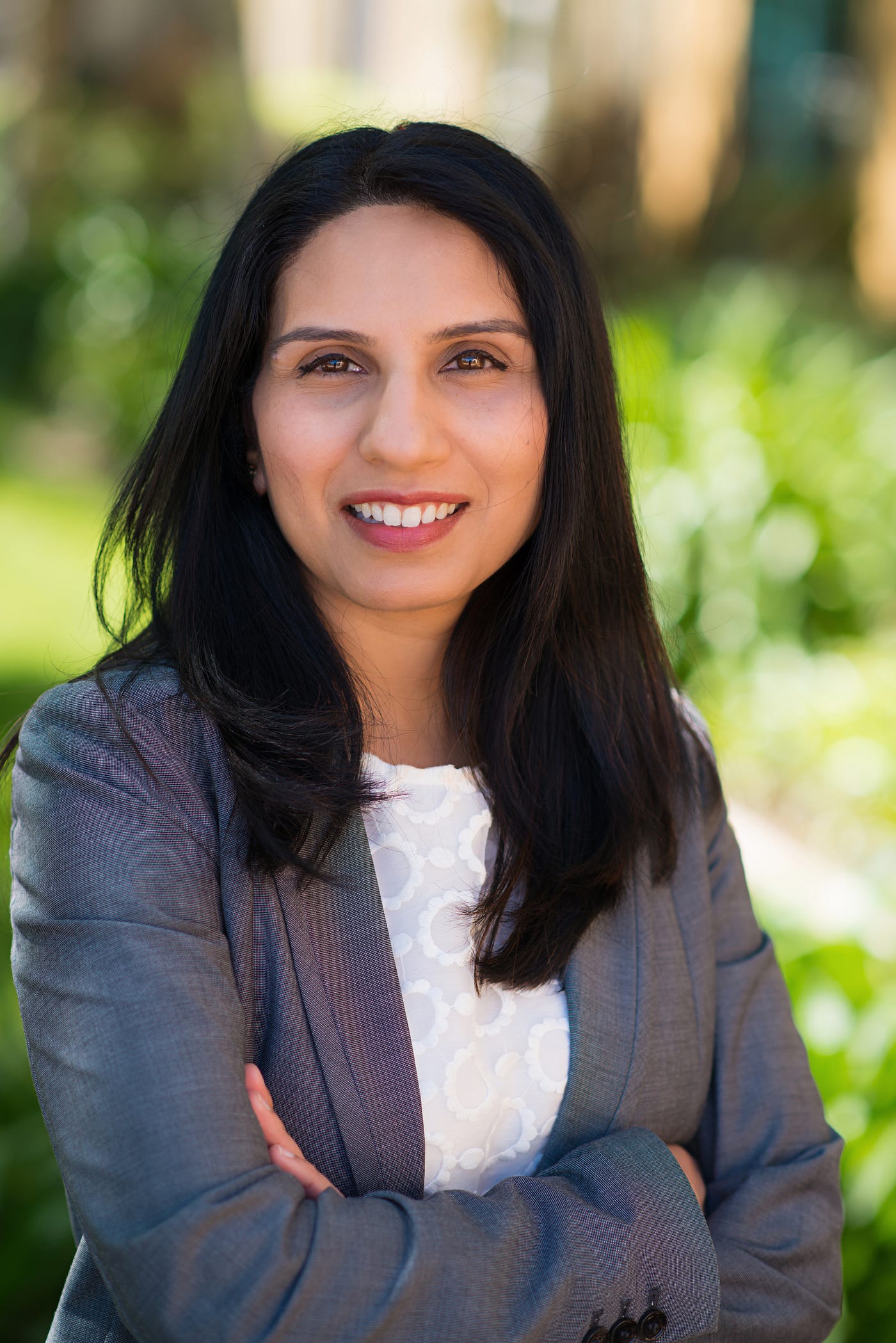
IT Specialist and Founder Sarabjit Dahyia shares how overcoming early career hurdles and challenging homogenous boardrooms shaped her mission to help minorities thrive in tech.
We are living in a new world in which offices are becoming obsolete. How can teams effectively communicate if they are never together? Zoom and Slack are excellent tools, but they don’t replicate all the advantages of being together. What strategies, tools and techniques work to be a highly effective communicator, even if you are not in the same space?
In this interview series, we are interviewing business leaders who share the strategies, tools and techniques they use to effectively and efficiently communicate with their team who may be spread out across the world. As a part of this series, I had the pleasure of interviewing Sarabjit Dahyia.
Sarabjit Dahyia is an IT Specialist, Mentor, and Founder of IT Careers 4 U. She has extensive experience building large-scale systems for renowned Fortune 500 Companies such as Morgan Stanley, Citigroup, and Health Care organizations such as Centene. She also implemented the Electronic Health Record Systems (EHRS) for the California Department of Corrections and Rehabilitation. For over two decades, Sarabjit has earned a reputation for excellence as a Project Management Executive, Team Leader, Communicator, and Mentor by providing superior executive-level coordination and execution for businesses and customers.
After decades of honing her craft, Sarabjit now guides aspiring business leaders who want to follow a clear path to a successful IT career. She and her students have an underlying passion to see more women and minorities thrive in the IT industry. Her proprietary program, IT Careers 4 U, has a track record of drastically helping her students increase their income in the IT industry without additional college certifications or degrees, while also providing tangible training, experience and internships that ensure their success.
Thank you so much for joining us in this interview series! Before we dive in, our readers would love to “get to know you” a bit better. Can you tell us a bit about your ‘backstory’ and how you got started?
Growing up, I never had any career guidance. Making your way in Corporate America can be difficult, and as a woman it is harder still. Being a child of immigrant parents created many challenges. I grew up seeing the crazy hours my parents worked to earn a living — I often tell people my morals and values come from TV Shows like Full House and Family Matters because my parents were always at work. I wanted so badly to earn a good living without working my parents’ impossibly full schedules. Where other little girls dreamt of Barbie dolls and finding their Ken, I dreamt of having a high-paying job and a car, financial security and freedom. After all, that’s the American dream!
I found it very hard to get a decent-paying job right out of school, even with my college degree. It seemed like everyone had a connection or “knew somebody,” whereas I had to truly make my own path in the world of IT. Paving my own way — without the guidance or support that many of my colleagues had — was not only difficult, but scary. The first job I got with my BS in Computer Science was with Citigroup’s Remote Access Support. As it turns out, “Remote Access Support” is just a fancy name for a team of individuals that provided help desk support to Citigroup’s investment bankers who yelled at us anytime they couldn’t connect to WiFi or had other issues accessing their systems remotely. I remember going into the bathroom many times and staring at myself in the mirror. In my gut I knew that I could do better, and trusting my instinct gave me the motivation to talk to recruiters about other opportunities that better matched my skill set.
My very next interview was for a Junior Business Analyst role with MetLife. I had no idea what this role was or how far it would take me. All I knew was that I didn’t want to be in a help desk role. I deserved better. Now, many years later, I manage large-scale projects for State & Federal governments while coaching and mentoring individuals to help them find fulfilling careers that match their skill sets.
Can you share the most interesting story that happened to you since you began your career?
My most interesting story actually comes from just a few years ago. In college, I majored in Computer Science — a major which generally had very few women in the graduating class. During college, I actually felt proud to be in a profession that was not traditionally “for women.” When I got into Business Analyst Roles and then Project Management, I found fewer and fewer women, and hardly any women of color. At first I didn’t even notice because I was always so used to being in a room full of men.
A few years ago, I was elected to be on the Board of Directors for a small Credit Union in Sacramento, CA. Being a Comp Sci major, I spent most of my time learning about applications and systems. I didn’t even know what a board of directors was or what its role in the organization. Naturally, I was excited and proud to sit on the board. When I looked around the room during the first board meeting, however, I saw that it was composed almost entirely of older white men. The only other woman had been on the board for 25 years and was known for “being like one of the guys.” Being in this environment gave me a new perspective on how important diversity is to the success of businesses, teams, and environments. My qualifications as an experienced business professional, and perhaps even more so as a daughter of immigrants, helped me broaden boardroom discussions, challenge viewpoints, and reframe issues facing the board. That was when I realized diversity is so critical to the success of businesses, teams, and projects. Diversity is not just putting people of color in marketing campaigns; it is embracing their experiences and viewpoints to arrive at new and better solutions.
Can you please give us your favorite “Life Lesson Quote”? Can you share how that was relevant to you in your life?
“If you think you’re right, you’re right. And if you think you’re wrong, you’re right.”
-Henry Ford
I remember seeing this quote painted on a wall early in my career. Maybe I was too young to understand it at the time, but in my head, I was thinking “why would the company waste so much time and money on a quote that makes no sense?” How can you be right or wrong and still be right?” It made no sense to me at all.
More recently, the quote has taken on a much deeper meaning for me: it’s all about the mindset. Mindset is such a powerful and underappreciated contributor to success. In my first position as a help desk technician, I knew that deserved better, and I made it happen. I went from working a help desk position to leading multimillion dollar projects. However, if I felt the help desk position was the role that I was best suited to, then I might still be working as a help desk technician. Just as Henry Ford said, we define our paths with our belief systems.
None of us are able to achieve success without some help along the way. Is there a particular person who you are grateful towards who helped get you to where you are? Can you share a story about that?
Angela Grant — Angela was the Senior Counsel at esurance when I was the Senior Manager responsible for implementing car insurance products in many states across the U.S. This was my first leadership role where I was responsible for managing the implementation and operations teams. All my prior positions required me to implement projects as an individual contributor by interacting with and coordinating many different parts of the organization.
Angela was a leader at esurance that I admired. She was smart and funny, and she seemed to be the “guidance counselor” for everyone at esurance. Anyone who needed advice or assurance was found in Angela’s office. I wanted to be that kind of leader. The kind of leader that was trusted, kind, and led by example. One of Angela’s greatest strengths (and there were many!) was her ability to create urgency and common goals for the team.
When I joined esurance, we didn’t have an enterprise-wide project management tool. Project requests often came in via email, and prioritization occurred based on influence. Managing ongoing projects was even more hit or miss because everyone had their own individual to-do lists. I wanted to find a solution to this issue instead of just managing it. So I followed Angela’s approach of creating urgency and common goals. I first identified, at the organization level, the benefits of having an enterprise tool and the reasons that this tool needed to be implemented sooner rather than later. I then led the implementation of an enterprise Project Management Tool that was not only successfully implemented within my Product Teams, but also across the various other teams within esurance.. I created awareness and excitement for the Tool by showcasing its effectiveness at managing projects inflight and providing visibility for planning purposes. By following Angela’s example, I was able to solve a large prioritization and management problem that had been plaguing not only my teams, but others across the company.
Ok wonderful. Let’s now shift to the main focus of our interview. The pandemic has changed so many things about the way we behave. One of them, of course, is how we work and how we communicate in our work. Many teams have started working remotely. Working remotely can be very different than working with a team that is in front of you. This provides great opportunity but it can also create unique challenges. To begin, can you articulate for our readers a few of the main benefits of having a team physically together?
I was already managing Internet Of Things (IoT) projects for Centene remotely before the pandemic. From time to time we planned hack-a-thon type meetings where we brought in team members from all over the United States to have brainstorming and discovery sessions. With the pandemic, our teams were limited to 100% remote work with no travel for hack-a-thon events, which created long work hours and left us with no creativity or room for expansion. In my experience, having team members be physically together provides an opportunity to build relationships, which then facilitates creativity and capacity to understand and appreciate different perspectives. Without physically being together, it sometimes becomes difficult to speak up — especially for more introverted team members. Being together also often softens up the team; it enables team members to articulate feelings and explore approaches to solving problems. Even simple things such as grabbing coffee allows team members to interact and actually get to know each other’s families, hobbies, and interests, which enables us to understand each other as humans — not just as co-workers.
On the flip side, can you articulate for our readers a few of the main challenges that arise when a team is not in the same space?
Yes, absolutely. Working remotely can make certain situations a little more difficult to handle. Conflict resolution is one of those things that is done better in person. When trying to resolve a conflict with an individual or when working through an issue with the team, it’s often better done in person to allow the speaker to read body language and gauge and control the conversation — especially when delivering less than desirable news. For example, in one of my most recent positions where I was leading an EVV (Electronic Visit Verification) project for the State of California, we as a project team missed some of the scope from the upcoming release (about a week away from launch date). As the Program Leader, I needed to deliver the news to our Stakeholders, and I had delivered this type of news more often than I care to admit. However, delivering the news about delayed scope over a Zoom call didn’t feel genuine or authentic. It was hard for me to read the room and understand how my stakeholders were taking the news. While my delivery of content for this meeting would have been largely the same in-person, I definitely could have done a better job if I could have made eye contact with my stakeholders and gauged their reactions as I explained the reasons for and impact of the delay.
Fantastic. Here is the main question of our interview. Based on your experience, what can one do to address or redress each of those challenges? What are your “5 Things You Need To Know To Communicate With Your Team Effectively Even If You Are Rarely In The Same Physical Space ? (Please share a story or example for each.)
I manage large scale IT projects with lots of moving parts, and the following format has worked well for me. Before I dive deep on the concepts that have worked for me, I want to clarify my work environment to provide some context for my answers.
My role is program management, and my teams generally are building or enhancing existing large-scale IT systems, or we’re onboarding a SAAS (Software As A Service) for State and Federal entities. Our Project Team consists of a Program Manager, a Project Manager, a Business Analyst, a Systems Analyst, Developers, a Quality Assurance Analyst, and UX Designers (which is basically anyone working on the project from a technical standpoint). Meanwhile, our Project Stakeholders are typically Project Sponsors (who pay for the project), or actual end-users or a team that represents them.
With that said, I do believe my approach is universal enough that it can be beneficial in various work environments:
1. Daily Stand-ups — A 10 to 15 minute meeting at the beginning of the day to allow all team members actively working on the project to attend and provide status on what they are actively working on, what’s next for them, and any roadblocks they’re facing.
When I was managing the EVV project for the State of California, we had many internal teams within Sandata, which was the vendor selected to implement the EVV software solution. We had daily standups for all of Sandata’s internal team members that were working on implementing the solution. This allowed me and the rest of the team to understand which items were completed and also items that required a little more love and attention.
2. Open environment for communication — creating and maintaining an environment where team members can have open communication is vital to sustaining creativity and engagement in remote teams. While there is obviously no substitute for in-person communication, I encourage my teams to use tools that enable them to have meaningful interactions whenever possible. While messenger and texts absolutely have a place and can be great tools for tackling small tasks, calls and video meetings can help encourage fulsome, impactful conversations that are more likely to spark openness and new ideas.
3. Track progress to end goals/objectives — have an ability to track tasks to the completion deadlines. Having a view on “what does it take to cross the finish line” allows the team to work together to get things completed on time, within scope, and within budget. For example, having a project plan in place can help identify and define what “done” looks like. This makes it possible for the entire team to follow the same marching orders.
4. Open Items/Action Items — Having an open dialogue on open items and action items, regardless of how many there might be, creates an awareness of “everything” that’s out there. I create an Open Items/Action Items list at the project level, which is updated during all meetings when new open items and action items are identified by team members on the project. Once a week, I will review any open items and action items not yet completed and make sure to discuss next steps with the team. Oftentimes, things that are not getting completed in a timely manner require further clarification or are facing some other blocker which I can usually help push through. The mere fact that the entire project team is aware of open items and action items that are not completed puts us in a better position than most IT projects.
5. Accountability/Partnership — there are often lots of moving parts during large-scale implementations, and having accountability and partnership from your Stakeholders or Business Owners makes all the difference between successful and unsuccessful projects. Having a common understanding and goals with not just the project team but also the Project Sponsors, Product Owners, and Leaders or Stakeholders creates a more collective environment that’s ready to thrive. Stakeholders are usually the end users of the system, so it would make sense to have accountability and communication with them. Unfortunately, this isn’t always the case. Oftentimes Stakeholders feel like it isn’t their job to help the project team implement systems and solutions. In my experience, having involved Stakeholders who partner with the project team results in smoother and ultimately more successful projects.
Has your company experienced communication challenges with your workforce working from home during the pandemic? For example, does your company allow employees to use their own cell phones or do they use the company’s phone lines for work? Can you share any other issues that came up?
During the pandemic, I worked at two different organizations. One of the organizations had more communications tools — notably Microsoft Teams — while the other had fewer tools. I have come to the conclusion that, while systems can’t replace in-person communication, having the right systems in place can profoundly help bridge the gap.
The company with Microsoft Teams was able to maintain a collaborative environment for the project team. Microsoft Teams allowed colleagues to “chat” almost as if they were walking over to someone and saying “hey, I got what you were looking for — here it is!” It allowed us to place phone calls along with this chat function, and it integrated with our calendars, making it easy to schedule meetings and circulate links. It was also good for accountability; Teams allowed us to track conversations and make sure everything was moving forward.
At the other organization, communication was a bit more difficult. Each team member needed a Zoom account, and they needed to manually schedule meetings and circulate links. Without Teams’ integration tools, we needed to send (and read!) a lot more emails to interact and communicate with each other. My inbox would often be flooded with one-line emails that could have been a quick chat (in a physical office) or a brief in-app message (in Teams). A final side-effect of this lack of communication integration was that personal cell phone-usage became the norm, making it difficult to track whether communications were happening or requests were being made.
Let’s zoom in a bit. Many tools have been developed to help teams coordinate and communicate with each other. In your personal experiences which tools have been most effective in helping to replicate the benefits of being together in the same space?
As I mentioned above, Microsoft Teams helped make communication between team members a lot easier to manage. Microsoft Teams also uses SharePoint on the backend which allows team members to share documents and manage version control (and no, I’m not sponsored!). Team members are able to replace the “physical conversation” with an efficient chat and call system, and it makes it easier to share documents and reduce the number of emails flying back and forth with large attachments. Teams and similar tools help to foster conversations and keep the essence of having a conversation even when colleagues can’t be together in-person.
If you could design the perfect communication feature or system to help your business, what would it be
If I could design the perfect communication system, some or part of the features would include “going for coffee” and “drinks,” which would allow team members to go off the record and just connect with one another. Over my career, most of the people that I have become friends with are people that I once worked with, managed, or were my managers. We were able to create friendships because we were able to communicate and understand each other as individuals, which also allowed us to work well with each other. Remote work and remote teams often create an environment where there’s all work and no play. So if I could design a system, I would surely create a way for people to connect.
The technology is rapidly evolving and new tools like VR, AR, and Mixed Reality are being developed to help bring remote teams together in a shared virtual space. Is there any technology coming down the pipeline that excites you?
I recently tried VR at Van Gogh Digital Exhibition and I was blown away with the attention to detail. I’m not sure how we can use tools like VR, AR and Mixed Reality in the work setting, but I’m definitely excited to see how these tools can enhance remote work — perhaps there will be some virtual coffee meet-ups in the near future!
Is there a part of this future vision that concerns you? Can you explain?
While I mentioned a number of the challenges that our increasingly-remote workplace brings, I ultimately believe the benefits will outweigh the costs. The workforce is headed in a direction that will be dependent on the skill set required in the workplace. Service-oriented positions that require one-on-one interaction will remain in-person, and those that don’t will remain remote. While we do lose some interactions with the remote work environment, the benefits far exceed the losses. Having the ability to hire the best talent for the job is no longer limited to the talent pool available in the physical parameters of the office settings. I do think that Covid has helped move us in this direction. I remember when I managed large-scale projects for the State of California as a Consultant, I was not allowed to work from home even though I sat in my office and led conference calls with people across the state. Remote work was looked down upon and was not something that the leadership felt comfortable with. Today remote work is the norm and all the work is still getting done.
So far we have discussed communication within a team. How has the pandemic changed the way you interact and engage your customers? How much of your interactions have moved to digital such as chatbots, messaging apps, phone, or video calls?
All my team communications have become digital. We use MS Teams and Zoom for chat and audio and video calls. Meetings have become more normal because you can’t just walk over to so-and-so and ask a simple question. As a result, I have to make sure so-and-so is available for me to reach out to her and discuss the items at hand.
In my experience, one of the trickiest parts of working with a remote team is giving honest feedback, in a way that doesn’t come across as too harsh. If someone is in front of you much of the nuance can be picked up in facial expressions and body language. But not when someone is remote. Can you give a few suggestions about how to best give constructive criticism to a remote team member?
While there’s no substitute for in-person conversation, I find it’s best to make these types of conversations as similar to an in-person meeting as possible. For me, that means a video call is a must. The camera doesn’t pick up everything, but you can get a better sense for nuance on video than you could on a phone call or an email. Once we’re in the video call, I find it helpful to give specific examples for my feedback. While this is always a best practice, it’s especially important to tie constructive criticism to clear, objective metrics in a digital space since it can be harder to read a team member’s emotions. Lastly, I always emphasize ways that the team members can improve. This makes the feedback more constructive and actionable and also lessens the potentially negative impact of “you did this wrong” by replacing it with “here’s how this could be better.”
Can you give any specific ideas about how to create a sense of camaraderie and team cohesion when you are not physically together?
Having a common goal and task list aligned with timelines and milestones such as a Project Plan creates cohesion for our team. With us physically being apart, having a common understanding of the marching orders is one of the many things that has kept us on track and helped us deliver projects on time and in scope. Many of my colleagues ask me how to come up with a task list associated with a timeline, and the answer is easy. As a leader of a project or area, I work with team members to gather a list of tasks required to get to the finish line from their own prespective and then identify timelines it will take to get the tasks completed. Once I understand these individual tasks and the associated timelines, I create a Project Plan outlining the end-to-end tasks across all team members. This Project Plan creates a shared vision for all the team members involved on the project, which creates camaraderie and gives us a common goal.
Ok wonderful. We are nearly done. Here is our last “meaty” question. You are a person of great influence. If you could inspire a movement that would bring the most amount of good to the most amount of people, what would that be? You never know what your idea can trigger. :-)
I often think about what kind of impact I want from my life. I want to create an environment where we strive to provide opportunities for individuals that best meet their skill sets. Where skills-based training is available instead of only “4-year college,” which guarantees nothing. I’m not against colleges and universities — I just feel like colleges and universities should do more to provide the real-world experience that students need to get hired into fulfilling jobs that match their skill sets. For this reason, I have created a training program that provides hands-on experience in the roles of a Business Analyst and Scrum Master. It allows students to successfully transition into high-paying roles after they’ve completed training, giving them better work opportunities, positive work life balance, and higher pay. And it gives their kids the chance to grow up with parents who are present, happy, and living their own American dream. Who knew a petite brown woman could do so much!
How can our readers further follow your work online?
I can be found at the following platforms:
YouTube: https://www.youtube.com/c/InDemandBusinessAnalyst (6.2K subscribers)
LinkedIn: https://www.linkedin.com/in/sarabjit-dahyia-pmp-mba-21b0196/
Facebook: https://www.facebook.com/groups/BAInDemand
Thank you so much for the time you spent doing this interview. This was very inspirational, and we wish you continued success.
The pleasure is all mine; it’s been an honor to share my story with the readers, and I hope to inspire them to keep going. “If you think you’re right, you’re right. If you think you’re wrong, you’re right.”
AM
Written by
Authority Magazine Editorial Staff
Editorial Desk · Authority MagazineThe Authority Magazine Editorial Desk produces, verifies, and edits long-form primary-source interviews with executives, innovators, clinicians, creators, and social impact leaders across Business, Tech, Pop Culture, Wellness, and Social Impact.

Published inAuthority MagazineTop Lessons, Top Authorities · 42K Followers
Exclusive, curated interviews with the leaders and changemakers shaping tomorrow. Leadership lessons, industry deep dives, and executive profiles.