If you’re worried about something tomorrow, and it ruins your today, you’re not only less productive, but you’re potentially missing out on something great.
Tech
Ben Taft of Mira Labs: Augmented Reality Is the Ultimate Paradigm Shift for Industrial Enterprise
The co-founder and CEO of Mira Labs shares his journey growing up as the child of refugees and building an enterprise augmented reality company from the ground up.
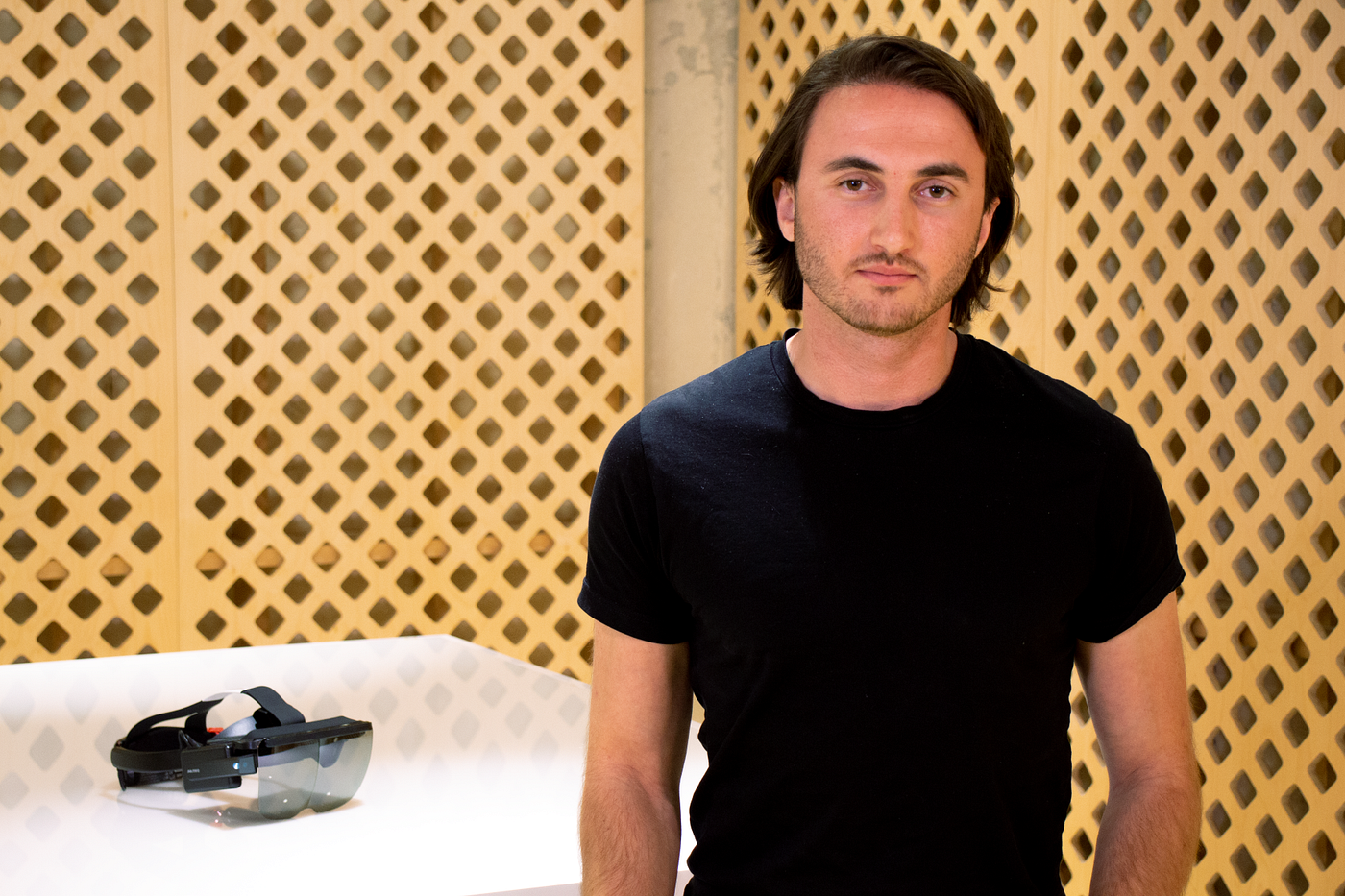
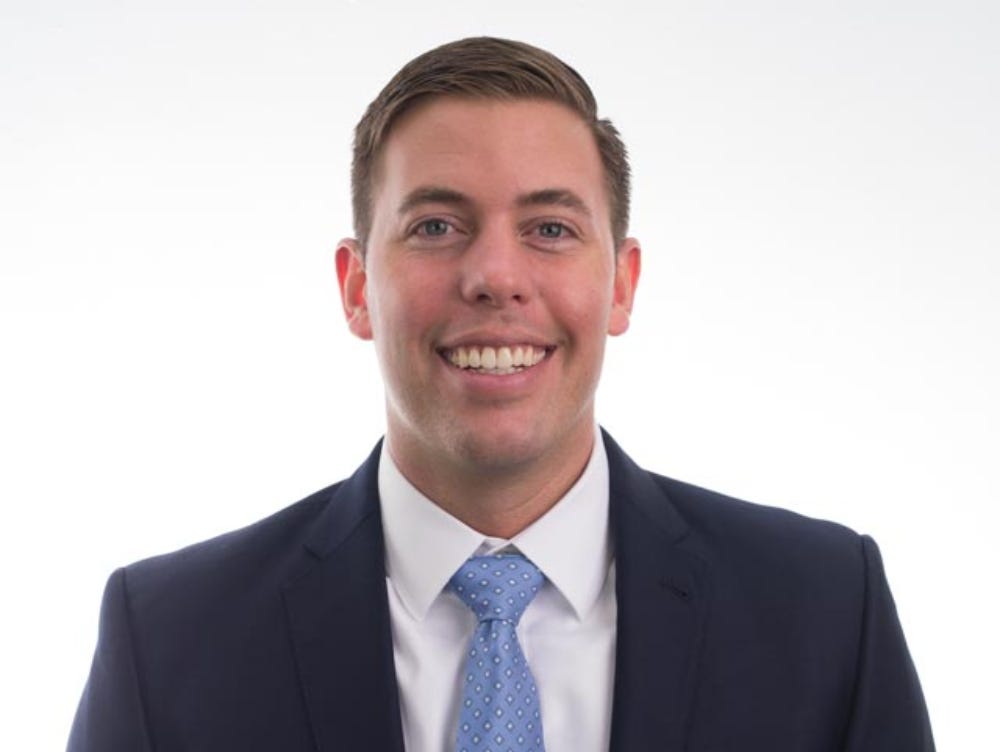
The Virtual Reality, Augmented Reality & Mixed Reality Industries are so exciting. What is coming around the corner? How will these improve our lives? What are the concerns we should keep an eye out for? Aside from entertainment, how can VR or AR help work or other parts of life? To address this, we had the pleasure of interviewing Ben Taft, co-founder and CEO of Mira Labs.
As a child of immigrants who fled the Soviet Union — with only $17 to their name — Ben Taft knows the value of hard work and the importance of the American Dream. This early exposure, coupled with his belief in the same American Dream that drew his parents to the country, is the foundational bedrock upon which Ben’s entrepreneurial spirit was built. With his guidance, Mira has evolved from its original 3D printed, fishbowl-based prototype to a fully functional AR Headset and integrated software solution utilized by customers around the world today — from mid-level organizations through Fortune 500 leaders. Likewise, his commitment to delivering AR-supported tools to help solve customer problems en masse has only expanded over time.
Thank you so much for doing this with us! Before we dig in, our readers would like to get to know you a bit. Can you tell us a bit about your backstory and how you grew up?
Of course. I’m the child of two immigrant parents, who strongly influenced my upbringing, as all parents do. But they weren’t just immigrants — they were refugees. My mother fled and landed in Milwaukee with $17 to her name and didn’t know how to speak English. My father came as a refugee but was fortunate enough to secure a scholarship at UCLA. They met and relocated to the Bay Area, so naturally, I had a lot of exposure to the Bay Area tech scene. My father was always deep into the technology world — whether working in IT or part of a start-up — while my mom was a classical pianist.
But as a result of their struggles and watching them approach everything with an immigrant mindset, it bred in me an innate belief in the American dream and an understanding of the hustle required to achieve it.
So from a young age, I was entrepreneurial. For example, when my parents couldn’t afford to spare any money for allowance, it pushed me to figure out a way to make a disposable income that allowed me to keep up with the more comfortable life of those in my immediate friend circle. It’s why I started my first company at 11 — and I haven’t looked back since.
Is there a particular book, film, or podcast that made a significant impact on you? Can you share a story or explain why it resonated with you so much?
My natural inclination is to recommend business books, but instead, I’m going to recommend something that I think will help your readers find balance (which is crucial as an entrepreneur) — and that is Peace is Every Step, by the Vietnamese monk Thích Nhất Hạnh. It’s taught me to pause and be present in the moment instead of constantly worrying about what’s next. If you’re worried about something tomorrow, and it ruins your today, you’re not only less productive, but you’re potentially missing out on something great.
Is there a particular story that inspired you to pursue a career in the X Reality industry? We’d love to hear it.
The Summer after my freshman year, a friend of mine reached out to ask me if I could grab a few friends of mine — a designer, a developer — and come up to the Bay Area. I brought a buddy of mine from the Academy who spent the entire Summer teaching me about Augmented Reality. It was so clear that AR was the next computing paradigm, and I was positive that I knew I’d regret it if I didn’t pursue something in this industry.
Can you share the most interesting story that happened to you since you began this fascinating career?
The most interesting thing that happened early on in our journey was when we got to demo our early fishbowl prototype to Marc Benioff (the founder of Salesforce). We got in touch with him through a USC connection, and he agreed to host us in SF, where we came and showed him our prototype while pitching him on the big vision we had of AR. He appreciated our scrappy approach, energy, and vision so much that right there in that meeting, he wrote up an email to a few of his friends encouraging them to meet with us and invest as well — but those friends weren’t just anybody; they were investors like Will.i.am, the early PayPal team, Ashton Kutcher and others like that — all on one single thread with everyone on CC!
Can you share a story about the funniest mistake you made when you were first starting? Can you tell us what lesson you learned from that?
The funniest mistake we ever made was in a very early pitch (even before the idea for Mira was fully formed); we wanted to raise money to build a prototype. We put together an excel spreadsheet that listed out the exact price of every component down to the penny — and when we went and pitched we asked for the exact dollar amount required to buy these components (which included things like tax, shipping, etc.). The total amount was strangely specific, like $51,352.68 or something like that. That investor never let us live that one down! (We’re still friends today)
None of us are able to achieve success without some help along the way. Is there a particular person who you are grateful towards who helped get you to where you are? Can you share a story about that?
There are so many people that have helped me; it’s such a struggle to limit them to just one person. But for this one, I’m going to have to recognize my two co-founders — Matt Stern and Montana Reed. We’ve been in this, together, since the beginning.
During our sophomore year, we formed a little group that would become the founding team for Mira, and we entered dozens of pitch contests around LA. Do you know how many we won? Zero. But we finally got traction when we entered a pitch contest held by our school, the Iovine and Young Academy at USC — and secured $10k as a result. I thought it was the best day of my life.
Are you working on any exciting new projects now? How do you think that will help people?
My main project is, of course, the company where I serve as CEO — Mira. We’ve worked hard to gain traction in the industrial space, and we’re lucky to have a solid group of exceptional customers — Koch/Invista, the US Air Force to name a couple. So now, we’re at a place where we finally have the resources to lean into partnerships and explore licensing our device proactively. Matt Stern, our COO, has been taking the lead on this new project, and we’re excited to see how quickly it’s panning out.
Let’s now shift to the main focus of our interview. The VR, AR, and MR industries seem so exciting right now. What are the 3 things in particular that most excite you about the industry? Can you explain or give an example?
First, the potential to augment humanity in a way never seen before is what gets me up in the morning. It’s incredible to think that with the right technology, anyone can have the knowledge to do or learn anything at any time. For example, we often partner with Original Equipment Manufacturers to couple our headsets with their purchases. What this means for the customer is that if there is ever a problem that needs troubleshooting, they can pop the headset on and run through a pre-made AR checklist that helps them troubleshoot immediately. Alternatively, they can call a remote expert who can see from their perspective and help them get back up and running with as little downtime as possible, potentially saving them millions of dollars.
Secondly, it’s great to see more companies explore the metaverse space with the intention of taking action. We’ve been in this space for a while, and we’re finally hitting that curve where we don’t always have to first educate a potential customer on what AR is.
Thirdly, I love seeing the new ways that our licensing partners are utilizing our technology to service niche industries, from healthcare to entertainment. These are things we would never have the capacity or often opportunity to pursue on our own but are thrilled to support.
What are the 3 things that concern you about the VR, AR, and MR industries? Can you explain? What can be done to address those concerns?
Right now, there is a considerable hype about the metaverse, especially the VR metaverse — a place where we can escape our real lives and immerse ourselves entirely in virtual worlds. While I’m a fan of some of the entertainment aspects of this space and think there is real potential for it, a future where we spend most of our time in a completely simulated environment does not appeal to me.
My second concern relates to my first in some ways — the idea that people are entering the metaverse space and creating these impactful new products without thinking about the long-term consequences for the people who utilize them. We were fortunate that one of our first major customers was Orica, a global leader in commercial explosives and blasting solutions. As a result, we had to evolve our product intentionally, with safety as the driver of many of our features. We weren’t allowed the chance to move fast and break things — or more importantly — people.
Finally, with all this hype comes unrealistic expectations from consumers. We all remember when Magic Leap released the video of a whale breaching in the middle of the gym years back while the audience applauded in awe. That type of promotional content — about what could be in the future versus what’s capable today — sets us back as an industry by distracting people, and shifting focus from execution to eternal ideation about what could be, someday. I hope we can all focus on some of the incredible things that companies can do today and get excited about that — even if it’s not a whale.
To help counter some of these concerns, our goal at Mira is to be as transparent about technology as possible and not over-promise but overdeliver. We also try to remind ourselves daily that our progress should be geared toward delivering valuable solutions that help the people behind the product.
I think the entertainment aspects of VR, AR, and MR are apparent. Can you share with our readers how these industries can help us at work?
Our company specializes in B2B AR, and one area where we’ve seen the most significant value is in the industrial sector. Our product, the Mira Prism Pro headset, has a see-through interface that can display information, such as AR checklists, or connect with remote experts that call in via our desktop suite — and it’s all powered by the iPhone in your pocket.
There are considerable benefits in real-time remote troubleshooting, support, inspections, and audits. By utilizing our end-to-end hardware and software solution, companies can see immediate improvements across their organization. Not only can they eliminate costly downtime, collaboration friction, and unnecessary travel expenses, but they can increase compliance, safety, and their bottom line.
What is a “myth” that you would like to dispel about working in your industry? Can you expand?
There are many out there, but one common myth I hear is that everyone in our industry is an engineer; that couldn’t be farther from the truth. We need a balance of all types of people and perspectives to get projects off the ground.
What are your “5 Things You Need To Create A Highly Successful Career In The VR, AR or MR Industries?”
You’ll succeed in this industry by following many best practices to help you succeed in any industry. I think some of the following can summarize that:
- Judge your progress in reality, but dream towards the future. It’s okay if you can’t plan your career or your company five years down the road, and it’s okay to dream of what it could be. However, you need to make progress in the present. What’s the next step you need to take today? Stop dreaming about it, do it.
- Create with purpose, not for publicity. Someone once mentioned that if a company had the Ted Talk before the product, they would never invest in them. And I think that’s a pretty solid rule to stand by.
- Work for good people; be a good person. Your success will, in many ways, be determined by the people you surround yourself with — so surround yourself with good people. And don’t forget to be a good person yourself — give people, especially your employees, the benefit of the doubt.
- The motivation will often follow the hard work. If we all waited until we were motivated, nothing would get done. Most of the time, the motivation follows the hard work, so just get started.
- Excuses only hurt you in the end. I’ve heard every excuse in the book on why something can’t or won’t work. Sometimes they are valid. But life is like a map; if you find yourself up against a wall, you simply need to re-route, not give up. Excuses for not pursuing or achieving your goals may be comforting in the short term but will only hurt you over time.
You are a person of great influence. If you could inspire a movement that would bring the most amount of good to the most amount of people, what would that be? You never know what your idea can trigger. :-)
I wish more people would start companies. I’d love to inspire a movement of more people taking the leap of faith and creating valuable products and services in the world that align with their own unique soul, vision, and perspective.
We are very blessed that very prominent leaders read this column. Is there a person in the world, or in the US with whom you would like to have a private breakfast or lunch, and why? He or she might just see this if we tag them :-)
Richard Branson! I would love to understand how he was able to create so many successful companies all under one roof — and how he was able to do it all from a remote island :)
This was very inspiring. Thank you so much for joining us!
FG
Written by
Fotis Georgiadis
Editor & Journalist · Authority MagazineFotis Georgiadis is a senior columnist at Authority Magazine covering Tech and Business, conducting primary-source Q&A interviews with founders, executives, and industry leaders.

Published inAuthority MagazineTop Lessons, Top Authorities · 42K Followers
Exclusive, curated interviews with the leaders and changemakers shaping tomorrow. Leadership lessons, industry deep dives, and executive profiles.