I began in financial market risk management before moving into climate and energy. I founded Tempus Energy because I could see opportunities to build an energy system that was cleaner and more efficient, but also how established structures were preventing that change.
The concept of leadership is continuously evolving today. While traditional leadership models have often been male-dominated, there is a growing recognition of the unique strengths and perspectives that women bring to these roles. This series aims to explore how women can become more effective leaders by authentically embracing their femininity and innate strengths, rather than conforming to traditional male leadership styles. As a part of this series, we had the pleasure to interview Sara Bell.
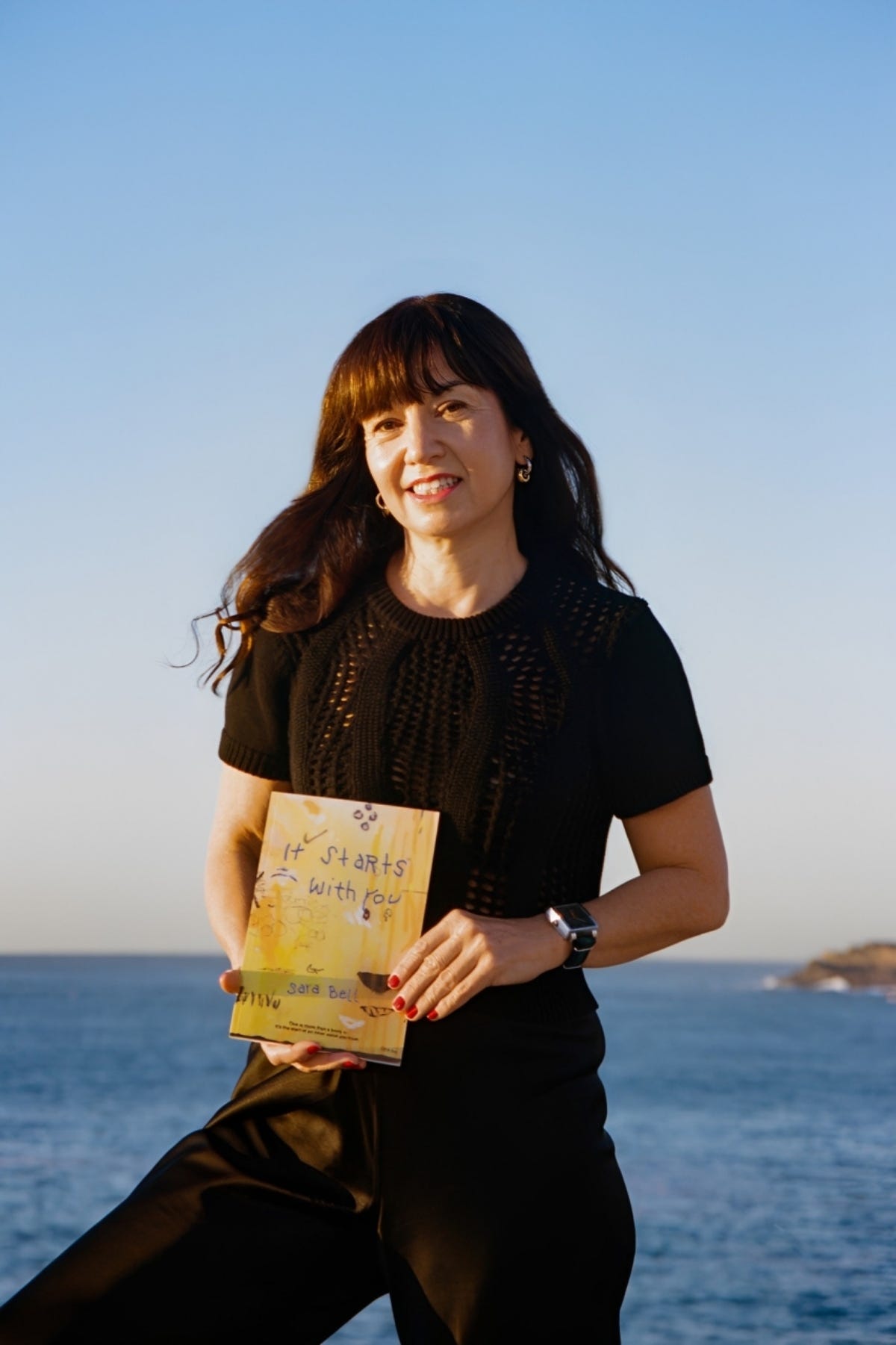
Sara Bell is the founder and CEO of RIISE, a global marketplace for sustainable fashion and beauty, and RIISE Productions, a film and television production company committed to lower-impact filmmaking. Before founding RIISE, Sara established Tempus Energy in 2012. She spent four years legally challenging fossil fuel subsidies worth billions in the European Courts, a case she ultimately won in 2018, in one of the defining moments of her career. Raised in Sweden, Bell moved to the UK as a teenager before relocating to Australia at 21, where she now lives. After becoming a mother, she began the process of deliberately breaking cycles of generational trauma. This work became the foundation for her new book It Starts With You and the methodology at its heart.
Thank you so much for joining us in this interview series! Before we dive into our discussion about authentic, feminine leadership, our readers would love to get to know you a bit better. Can you share the backstory about what brought you to your specific career path?
My career might look varied from the outside, but there is a consistent thread running through it: I am interested in what enables people to change, and what gets in their way. I began in financial market risk management before moving into climate and energy. I founded Tempus Energy because I could see opportunities to build an energy system that was cleaner and more efficient, but also how established structures were preventing that change. Today, I am the founder and CEO of RIISE, which combines a sustainable fashion and beauty marketplace with film and television production. Our ambition is to show how desirable a climate-friendly life can be. I want people to fall in love with a future they want to help create. My book, It Starts With You, approaches change from a more personal perspective. It explores how understanding our upbringing and changing our internal voice can help us develop self-trust and make more conscious choices. For me, these areas belong together. Building a better future requires changes to our systems, but it also requires us to understand the patterns influencing our own behaviour.
Can you share the most interesting story that happened to you since you started your career?
Through Tempus Energy, I challenged the European Commission’s approval of the UK’s Capacity Market and won a ruling overturning it in 2018. Turning that victory into lasting change proved much harder, and the business eventually closed. It taught me that being right does not automatically create change. At RIISE, I focus on making people want to participate by showing them something beautiful, desirable and relevant to their lives.
What do you think makes your company stand out? Can you share a story?
RIISE leads with optimism. We show how beautiful, exciting and desirable a climate-friendly life can be, creating a vision people want to be part of. My background in climate and energy taught me that understanding the urgency of change does not automatically inspire people to act. People need something to move towards: clothes they love, experiences they enjoy and a future they can feel excited about. Through our fashion and beauty marketplace, we bring that vision into people’s lives through quality, craftsmanship and the pleasure of finding something they will treasure. Knowing how a piece was made can deepen that connection, turning the initial excitement of buying it into the lasting joy of owning it. Our film and television work takes that ambition onto the screen, weaving environmentally responsible choices into compelling, aspirational worlds. Across RIISE, the aim is to make people fall in love with a way of living they want to help create.
You are a successful business leader. Which three character traits do you think were most instrumental to your success? Can you please share a story or example for each?
Optimism. RIISE grew from my belief that people need a future they can feel excited about. Optimism helps me see possibilities and gives me the energy to pursue them. Persistence. Challenging the European Commission required sustained conviction despite uncomfortable odds. It also taught me to stay committed to an outcome while remaining willing to change my approach. Self-awareness. Early as a founder, I realised that sharing my pressure could undermine my team’s productivity. Understanding my own behaviour helped me communicate with greater care and give people what they needed to do their jobs.
Leadership often entails making difficult decisions or hard choices between two apparently good paths. Can you share a story about a hard decision or choice you had to make as a leader? How have these challenges shaped your leadership?
Launching the Tempus legal challenge before we had secured investment was a difficult decision. The board worried it would deter investors; I believed confronting a fundamental barrier to our business could attract people who shared our ambition. It taught me to examine the risk of doing nothing as carefully as the risk of acting. A familiar path can feel safe while leaving your biggest obstacle untouched.
Can you share a personal experience where embracing your unique leadership style, which might not align with traditional expectations, led to a significant positive impact in your organisation or team?
As our technology team grew at Tempus, I realised one day that it was made up entirely of white men. People can gravitate towards familiar backgrounds and networks when hiring, which is why organisations need structures that challenge unintentional bias. In an early-stage business, those processes are often still developing, and you can find yourself playing catch-up. The team’s workload was increasing rapidly, so recruitment had become a priority. I made it clear that before I approved further hires, I expected the team to broaden its search and make a serious effort to find candidates beyond its existing networks. Continuing to recruit in the same way would mean waiting longer for the additional capacity they needed. There was some initial resistance, but the next three people we hired brought much greater diversity to the team. We found excellent candidates, including a female programmer, and broadened the perspectives within the department. For me, authentic leadership includes being willing to challenge an established pattern, even when that creates discomfort. Encouraging change sometimes requires more than explaining why it matters. You have to set a clear expectation and be prepared to follow through.
In your journey as a leader, how have you balanced demonstrating resilience, often seen as a masculine trait, with showing vulnerability, which is equally powerful, but typically feminine? Can you give an example where this balance created a meaningful difference?
I appreciate the intention behind this question, because leadership benefits from both qualities. I have always thought of resilience and vulnerability as human traits, rather than inherently masculine or feminine. I would like every leader to feel able to develop both. Building a company requires enormous resilience. So much of success comes down to getting up every time you are knocked down, then doing it again, to the power of n. Other factors matter, but the ability to keep finding a way forward can feel decisive. An idea needs someone willing to carry it through repeated setbacks and uncertainty. Writing It Starts With You brought those qualities together. Sharing personal experiences allowed people to see beyond my professional roles. It meant being comfortable with being seen as someone who had struggled and learned through that struggle. It also turned difficult experiences into something that could help others develop their own self-trust.
As a woman in leadership, how have you navigated and challenged gender stereotypes, especially in situations where traditional male-dominated approaches are the norm? What strategies have you employed to remain authentic to your style?
Working in financial markets and energy, I often encountered a male image of authority. Developing trust in my own intellect and creativity helped me find my own approach. The truth is, I often fly by the seat of my pants. I trust myself to understand a situation, make connections and respond without rehearsing every possibility. Women can feel they must prepare exhaustively before they have earned the right to contribute. I would encourage them to give their existing abilities more credit. Self-trust creates room for spontaneity, creativity and a leadership style that feels like your own.
How do you utilise emotional intelligence and active listening to create an inclusive environment in your team or organisation? Could you share a specific instance where these qualities particularly enhanced team dynamics or performance?
Listening starts with noticing my own reaction. If I am preparing a defence, I am giving less attention to the person speaking. On the one occasion I could not pay salaries on time, I explained the cause and expected delay, then made arrangements for people who needed some funds sooner. The company faced one problem, but its consequences differed for each employee. I needed to understand their circumstances as well as explain ours. Emotional intelligence means recognising your own emotions while remaining attentive to what someone else needs.
What role has mentorship played in developing your authentic leadership style, and how do you communicate authentically to inspire and empower both your mentors and mentees?
Early in financial markets, I worked for a highly respected woman. After the Head of Treasury made some requests, I expected her to give me instructions. Instead, she admitted she had no idea what he meant and trusted me to work it out. She showed me that leadership means building a capable team and trusting it. Her confidence helped me develop my own. In It Starts With You, my “mashup parent” idea draws on qualities we admire in different people to create a constructive internal voice. Mentorship can work similarly: learn from several people while developing an approach that is authentic to you.

Based on your experience and research, can you please share “5 Ways Leading Authentically As A Woman Will Affect Your Leadership”? Please share a story or an example for each.
1. You become clearer about the values behind your decisions. For me, authenticity begins with understanding what matters to you and examining whether your behaviour reflects it. RIISE expresses my belief that positive emotion can help people engage with environmental change. Building a business around aspiration gave that belief a practical form. It influences the products we select, our imagery and the stories we want to tell.
2. You become more able to choose your response under pressure. Some of our reactions are deeply embedded in how we were raised. Messages about authority, mistakes, disagreement or approval can continue to influence us long after childhood. Authentic leadership requires us to examine those messages so we act instead of reacting.
3. You can combine warmth with clear expectations. I value care and empathy, but I also believe people deserve clarity. A leader can understand why someone is struggling while still addressing a problem that affects the team. The same principle sits behind the mashup parent idea in my book. A constructive internal voice offers support while helping you take responsibility. It does not humiliate you, and it does not excuse everything.
4. You develop a more useful relationship with setbacks. When your identity depends on appearing successful, a setback can become very difficult to examine honestly. Tempus gave me an experience of both a major legal victory and the eventual loss of the business. I had to find a way to recognise the value of what we achieved while facing what we could not make work.
5. You make more room for other people to contribute as themselves. If you accept that effective leadership can take different forms, it becomes easier to recognise ability in people whose style differs from yours. RIISE brings together commercial and creative work, which requires different perspectives. A useful contribution might come through a detailed question, a visual idea or a challenge to an assumption. For women, I think this is especially valuable. We can expand the possibilities for leadership by allowing our differences to be visible.
Are there potential pitfalls or challenges associated with being an empathetic leader? How can these be addressed?
Empathy becomes unhelpful when it leads you to avoid difficult conversations or excuse behaviour that affects others. The colleagues absorbing the consequences deserve consideration too. The answer is clear boundaries: listen, understand the circumstances, agree what needs to change and follow through. Self-awareness matters here. Sometimes what feels like kindness is our own discomfort with conflict. Recognising that helps us act with greater honesty and care.
You are a person of great influence. If you could start a movement that would bring the most amount of good to the most amount of people, what would that be?
I would make learning to parent ourselves a normal part of adult life. We absorb messages growing up that shape our relationships, decisions and use of power. We need to examine which messages support us and which we need to change. The mashup parent in It Starts With You offers a starting point: drawing on qualities we admire in others to develop a supportive, constructive internal voice. How we manage ourselves affects our children, our teams and our communities. Greater self-awareness gives us more choice about what we pass on.
Thank you for the time you spent sharing these fantastic insights. We wish you only continued success in your great work!