The biggest challenge I faced on my journey to becoming an author was finding time, not only to write, but also to learn to write.
As a part of this series, we had the pleasure to interview ROJÉ AUGUSTIN.
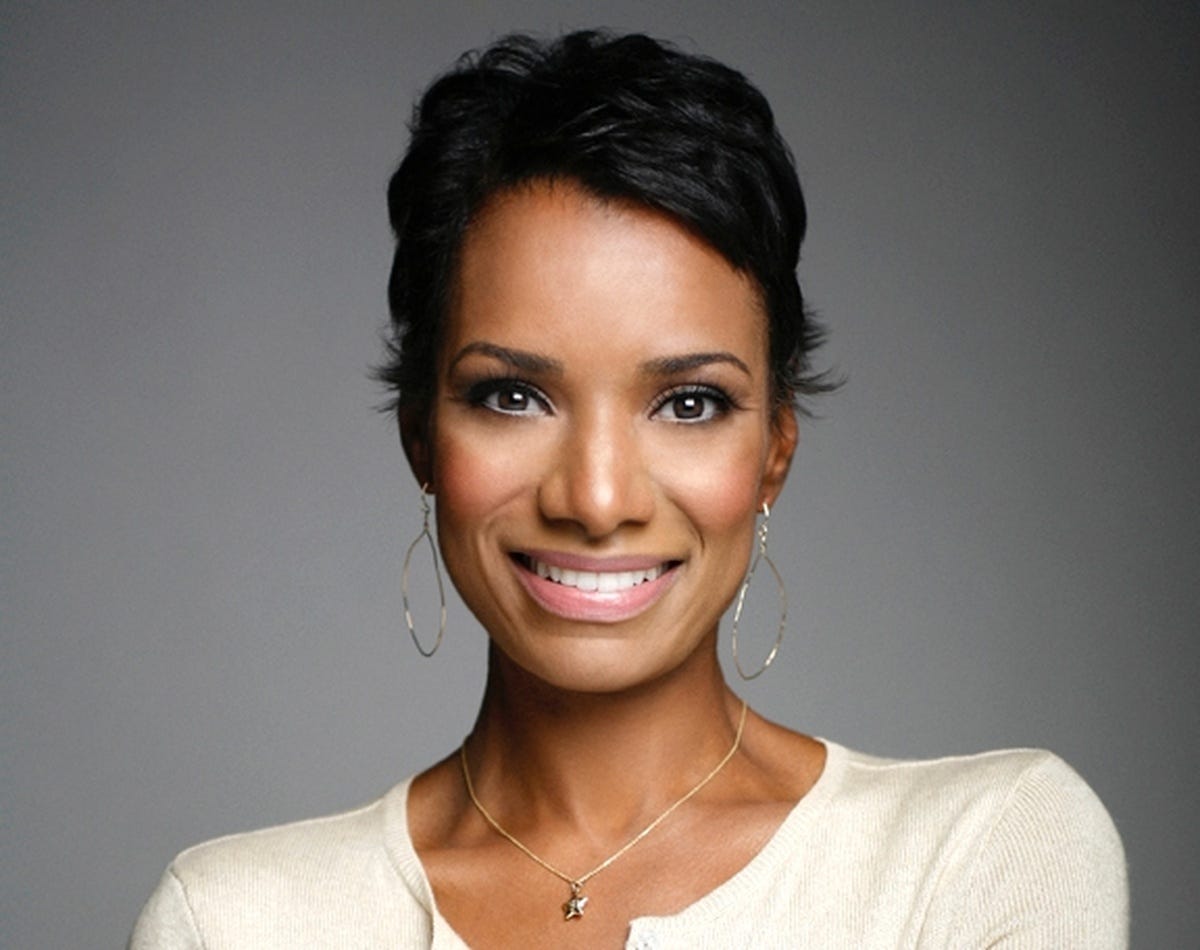
Rojé Augustin is a writer, producer, and journalist born and raised in New York City. She began her career at the New York Daily News, as an editor for BET Weekend Magazine. She then moved to television, first at CBS News Productions, working in cable documentary features, then to ABC News 20/20 with Barbara Walters and John Stossel; Primetime with Diane Sawyer, and Good Morning America Weekend Edition. In 2007, while living in London, Rojé began work on her debut novel, The Unraveling of Bebe Jones, which was self-published and won the 2013 U.S. National Indie Excellence Award in African American fiction. It was also a finalist in the National Black Book Festival. She was featured as a “writer to keep your eyes on” in Essence Magazine’s News & Culture Column, ‘Patrik’s Pics’ (August 2013), as well as on NY1’s morning books television segment. Rojé is currently based in Sydney and works as a journalist and producer for a global news organisation. She is also an Australian citizen. She has studied in Paris and London and is a graduate of Columbia University with a Bachelor of Arts with Honours from the Literature & Writing Program. When she is not working, reading, or spending time with family and friends, Rojé loves to skate through the park while listening to her favourite tunes.
Thank you so much for joining us in this interview series! Can you share a story about what brought you to this particular career path?
When I was around ten years old, on the last day of school, I was given a newsletter that included an illustration of a girl holding a book in both hands, smiling as she read. I recall the illustration appeared at the bottom of the newsletter, handed out as part of a school library drive to encourage kids to read more while on summer vacation. The newsletter came with a blank log sheet, numbered one to ten, where the children would list the titles they’d read during that summer.
I remember the illustration vividly, the way the girl held the book in her hands, and how her fingers flared elegantly against the front and back covers. As I sat on my bed at home scanning the newsletter, I found the image so enchanting that I wanted to do the same. I went searching for a book, but we didn’t have any in our house. The books I’d read up to that point were text or instruction books.
And then, about a week later, a friend of my parents’ had come for a visit. I vaguely understood this friend had been abroad and had come bearing gifts for my brother and me. I was given a life-sized, stuffed koala toy, and three books: Pippi Longstocking, Encyclopaedia Brown Mysteries and an anthology of children’s fairytale classics.
Reading these books transported me to another world. They instilled in me a love of stories. I logged these books on my reading log and went on the hunt for more. The next book I read was To Kill a Mockingbird, which I checked out at our local library. It was that novel that cemented my life-long passion for storytelling.
When I wasn’t reading, I watched television, which was also transporting. I realized I just loved a good story, whether told on the page or screen. Good stories excited me, and inspired me to write. Not long after that reading drive, I began to keep journals. That early love of storytelling eventually led me to journalism, television production and scriptwriting, where I could pursue, produce and tell stories of my own and share them with others.
That was where it all began. With a newsletter, a few books and a koala toy. To think of it now, that I grew up to become a writer and television producer living in Australia… well, it was perhaps meant to be.
Can you share the most interesting story that occurred to you in the course of your career?
Early in my career, I worked as an assistant producer at ABC News Primetime when I was assigned to a story about Jack the Ripper. Or rather, a profile of crime novelist Patricia Cornwell and her recently released nonfiction book, Portrait of a Killer, which presented her theory that Walter Sickert, a German-British painter, was the 19th-century killer known as Jack the Ripper. Diane Sawyer was the host. I would be assisting the lead producers in putting the segment together for air.
After a week, maybe two, an interview had been conducted, B-roll had been shot and the package was in its final stages of editing. It would go to air on Thursday night at 8 p.m. The Wednesday before air, Diane decided she wanted to include a reenactment of Jack the Ripper prowling the streets of Whitechapel for his next victim. She wanted a horse-drawn carriage; she wanted a smoke machine; she wanted a location that evoked 19th-century working-class London. And she wanted Jack the Ripper, cloaked and menacing, as he stalked from the shadows.
“Great idea!” everyone agreed. “No problem! We can get it done!” Even though it was now one day before air. And then it seemed everyone turned to me. I nodded in agreement, yeah, great idea, and looked around at everyone for a minute, smiling, nodding, until someone — Diane? A producer? I don’t remember now, but someone said something to the effect of, “Well, why are you still here? Go!”And that’s when I realized the job of getting all of this done would fall to me, the assistant, the youngest person on the team, just beginning my career, essentially still learning the ropes, with a little less than a year under my belt.
It was around 10:30 in the morning when I stumbled out onto Columbus Avenue in a complete panic. How was I going to pull this off? No one told me what to do, and I hadn’t a clue where to begin. I felt as if I would be sick right there on the street. But the prospect of being sacked, the sheer terror and humiliation of pissing off Diane Sawyer, tightened something in my brain that day. I recall standing on the corner, looking out towards Lincoln Center and not really seeing anything at all, just feeling a sense of the world suddenly shrinking down into a tiny pinprick before my eyes, like the aperture of a camera zooming into focus.
I had to get this done, I thought to myself. But how? What was the first thing I needed to do? Find a location. I focused on that and nothing else. Where in NYC could I recreate the grimy, cobblestoned streets of Whitechapel? And then it came to me. The Meatpacking District in Lower Manhattan! I knew that a crew was being organised for me through the production office. So I rang the production manager and told her to send the crew to Gansevoort Street. While that was being done, it was on to the next task: a horse-drawn carriage and Jack the Ripper.
I realized I was only a ten minute walk from Columbus Circle, where a line of horse-drawn carriages awaited tourists daily along Central Park. I rushed over and walked up to the first coachman I saw. He was wearing a cloak and top hat. Bonus! I explained the situation. To my tremendous relief, he agreed to take part in the shoot for a fee of seven hundred dollars, cash upfront. Okay. I rang the producers. They would get the cash, but I had to travel back to the office to retrieve it. When I returned to Columbus Circle, the coachman was where I’d left him. I gave him the envelope of money, a mix of fifties, twenties and tens, which made me think a collection had been taken up around the office. I told him to head to Gansevoort Street, that there would be a camera crew there, and that I would meet him there as soon as possible. Off he went, and just like that, I had my horse-drawn carriage and I had Jack the Ripper.
Now it was on to the smoke machine. I went back up to the office and Googled smoke machines. I rang the closest company and inquired about renting one. Soon I was in a cab hightailing it to Midtown. During the rental process, I was asked if I had my permits and insurance documents. Permits and insurance documents!? Panic started to rise in me again. I rang the production manager to sort out this unexpected curveball.
Over the next couple of hours, I travelled back to the newsroom to grab a printout of an insurance certificate. Then cab it to the permit office, gain the necessary permissions to film in a public location using a smoke machine, collect said machine from the Midtown warehouse, and finally travel to Gansevoort Street, lugging a cumbersome fifty-pound case.
When I arrived at the location, it was just after 2 p.m. The crew was there, setting up their equipment. They had already scouted the perfect alley to film the reenactment. But there was no coachman and horse-drawn carriage. I was panicked that he wouldn’t show up. That he would just keep the money and call it a day. But about 20 minutes later, again to my great relief, I heard the clopping of horseshoes on the cobblestones, and it sounded so 19th-century London. Music to my ears! I knew then that it was going to happen and that it would be a great shoot.
We set up the cameras, dim red lighting to enhance the mood, and the smoke machine, and began filming. After a handful of takes, we wrapped around 5:00 p.m. I packed up the smoke machine and hitched a ride with the crew back to the ABC offices, where I delivered the Beta tapes to the editor, who would now cut the footage into the finished profile.
When it aired the next night, the segment was indeed elevated by the reenactment. Even though it had caused me so much stress, it had been a good call on Diane’s part, and I’m grateful that I was entrusted with the task. It also taught me how to focus. I was only able to pull it off by compartmentalising the job into steps.
That approach has served me well to this day. Whether producing a television segment on deadline or researching and writing a book, I’ve learned that even the most daunting projects become manageable when you take them one step at a time.
What is the biggest challenge you faced in your journey to becoming an author? How did you overcome it? Can you share a story about that that other aspiring writers can learn from?
The biggest challenge I faced on my journey to becoming an author was finding time, not only to write, but also to learn to write. I believe the act of writing is itself an education, provided you do enough of it.
During most of my writing periods, I worked a full-time, salaried job, at least until I had my first child and then took time off to be a stay-at-home mother, which itself is work, albeit unpaid. While raising my child, I completed my first novel, the longest single thing I’d written up to that point. It was a self-published novel called The Unraveling of Bebe Jones, which I intended as a kind of roman à clef. (If you don’t know what that means, look it up.)
I overcame the challenge of limited time by committing to sit down at my desk and write for at least three hours, from 9 p.m. to midnight, at least four nights a week. I maintained that schedule both while working full-time and later, when I was a stay-at-home mother. I also taped a sheet of paper to the wall near my desk at home with the word “DISCIPLINE” printed in big, bold letters.
And I always created a writing space wherever I lived, a dedicated area where I could treat writing like a job. I learned that you don’t necessarily need large stretches of uninterrupted time to write a book. You just need to make consistent use of whatever time you have.
Can you share a story of the funniest mistake you made when you were first starting? Can you tell us what lesson you learned from that?
Unfortunately, the mistakes I made when I was first starting out in my career were never funny! One that comes the closest to being funny was when I was fresh out of college and looking to start my career. I had a job interview at a major network that was to take place around 10 AM. The night before the interview I stayed up late, didn’t prepare and woke up later than I should the following morning. I jumped in the shower about ahalf hour before the scheduled, (my time management was dismal back then) washed my hair and put on a suit that was just wrong. Cream-colored, plaid, big shoulder pads, elbow patches…Ugh… When I arrived at the interview, I was ten minutes late and my hair was wet. I’m sure you can guess the outcome.
That experience was so stinging, it taught me a great deal about being prepared, being on time, having the right look and always doing my best. Sure, I made lots of mistakes after that, but rarely the same. My mistakes taught me the value of integrity. I’ve learned that approaching life with integrity, taking responsibility for what you do and holding yourself accountable when you do make mistakes can go a long way towards preventing mistakes in the first place.
What are some of the most interesting or exciting projects you are working on now?
I prefer to not say at this point. Sorry! I’m in the process of working out what my next book will be, whether true crime or crime fiction, and I’m fleshing out several ideas to see which one sticks, so to speak.
Can you share the most interesting story that you shared in your book?
A mother of four living in a small country town stabs her partner to death thirty-seven times before decapitating him, skinning him, and serving up slices of his cooked flesh as dinner for his children. True story.
That extraordinarily brutal crime is the story of my book, The Butcher of Aberdeen. But what I was most interested in examining was how a woman who was by many accounts a generous, gregarious, and devoted mother, could also be capable of such unimaginable violence. What happened in her life that brought her to this point? Was it nature or nurture? Was she born a monster or made that way? Those are the central question the book explores.
What is the main empowering lesson you want readers to take away after finishing your book?
The main empowering lesson I want readers to take away from the book is that domestic and family violence is not strictly about gender, it’s about power and control. Katherine Knight’s story was essentially a story of domestic violence against men, a topic that remains largely overlooked in mainstream public discourse. In New South Wales, Australia, domestic and family violence is legally defined in the Crimes (Domestic and Personal Violence) Act 2007 as “any behaviour by a person directed against another [with whom] they have a domestic relationship, that is violent, threatening, coercive, or controlling, and causes the victim to fear for their safety or wellbeing.”
Based on this definition it’s clear that Knight was not only a domestic abuser, she was a serial abuser, too. But the fact that all her victims were male raised some uncomfortable questions about why she was allowed to abuse for so long without consequence, and how gender can shape our understanding of domestic violence. While men make up a much smaller portion of domestic abuse victims overall, the numbers are nonetheless significant. According to the Australian Bureau of Statistics (ABS) around one in eight Australian men (11.9–12%) report having experienced violence or abuse by an intimate partner or family member since the age of fifteen. Men also account for almost one-quarter of family and domestic violence-related hospitalisations, amounting to approximately 2,300 hospital admissions each year. In cases of intimate partner violence against men, the perpetrator is often a female partner. That said, there is no question that domestic violence overwhelmingly affects women. The ABS and the Australian Institute of Health and Welfare (AIHW) report that around one in four women (27.4%) have experienced violence or abuse by an intimate partner or family member since the age of fifteen. Men account for the overwhelming majority of domestic violence offenders, while women comprise more than three-quarters of family and domestic violence-related hospitalisations. When domestic homicides occur, women are also far more likely to be killed by an intimate partner. And intimate partners are responsible for around 67% of female domestic homicide deaths, compared with 29% of male domestic homicide deaths. But there is no denying that men are victims too, often they don’t share their experiences because of shame or embarrassment, or because they feel they would not be taken seriously. And often men don’t recognise they are in abusive relationships.
Based on your experience, what are the “5 things you need to know to become a great author”?
1. Know The Elements of Style by William Strunk Jr and E.B. White. Once you get the rules of grammar, syntax, and style under your belt, you have it forever.
2. Know how to structure a story. Structure is your foundation, the supporting framework for your story. You can’t build a great house without architectural blue prints. The same holds true for stories.
3. You need to know lots of words! Increase your vocabulary. When you come across a word you don’t know, look it up. It only takes a minute. A broad vocabulary helps.
4. Know your audience, but write for yourself.
5. Read a lot.
What is the one habit you believe contributed the most to you becoming a great writer? Can you share a story or example?
I would say the habit that contributed most to my becoming a ‘great’ writer is not expecting my early drafts to be any good. In fact, I make it a point to write the worst possible drafts I can. I do so first by hand, taking pen to paper, and writing as if I’m talking to a friend. A conversation but between me and the page. No one will ever see my early handwritten pages anyway; I usually shred them once I’ve moved on to typing.
But I find the act of handwriting helps the process flow because I don’t get ‘writer’s block’ when I write conversationally. After all, how often do we get ‘talker’s block’? Never. Most people can rabbit on with their stories for ages, never at a loss for words. But get them to write it down and suddenly they don’t know what to say. So I write like I’m having a conversation. It helps me get the story on paper more quickly than trying to type a first draft. As I said, the initial drafts are always terrible. But getting the rubbish out leaves room for the quality stuff, which invariably comes down the track if you stick with it. In that sense, the work of writing is really in rewriting.
I am essentially like a sculptor, the story a beautiful figure in my mind. The words are the medium. And just as a sculptor begins with an unsightly lump of clay, so does a writer begin with an unsightly first draft. It’s about teasing out the beauty. Cutting away, moulding, smoothing, polishing, warming it all up. Before you know it, you’ve carved out your own little universe.
Persistence is the other habit I would credit. You have to keep at it, even when what you write at first bears little resemblance to what you imagine. You’ve got to want to do it no matter what.
Which literature do you draw inspiration from? Why?
I draw inspiration from stories that have a certain music to their prose, while also telling an engaging story. It could be anything: crime, horror, classics, poetry. I’m drawn to the way words are put together, when they make the hairs on the back of my neck stand on end. It’s not simply the beauty of the language, but also the precision of an insight or observation that can take my breath away. James Baldwin was a master at this, as were Joan Didion, E. B. White, Langston Hughes, Maya Angelou, Charles Dickens. There are so many others I could name, but you get the point. That’s where I draw my inspiration: the hair-raising sensation of a well-told story.
You are a person of enormous influence. If you could start a movement that would bring the most amount of good to the most amount of people, what would it be? You never know what your idea can trigger. :-)
I would start a “Stillness Movement.” I’ve learned through meditation that there is a tremendous amount of power in being still. It’s at once the simplest thing in the world and the most difficult thing in the world to do. We are constantly moving and doing. Even in sleep, we are never completely still. But learning to be consciously still is an empowering, life-changing experience. It’s enough to start with five minutes or so a day and work up to longer periods. And I’m talking about the act of just sitting like a statue, a deliberate practice of physical stillness. I’ve found that merely concentrating on achieving perfect motionlessness quiets the mind without trying to quiet the mind. The result is a sense of calm, self-awareness and peace, which, ultimately, is joy.
How can readers follow you on social media?
@rojetruecrimeauthor — TikTok, Insta, Facebook
Thank you so much for the time you spent on this interview. We wish you continued success!