Speed and discipline aren't opposites. Discipline is what makes speed possible.
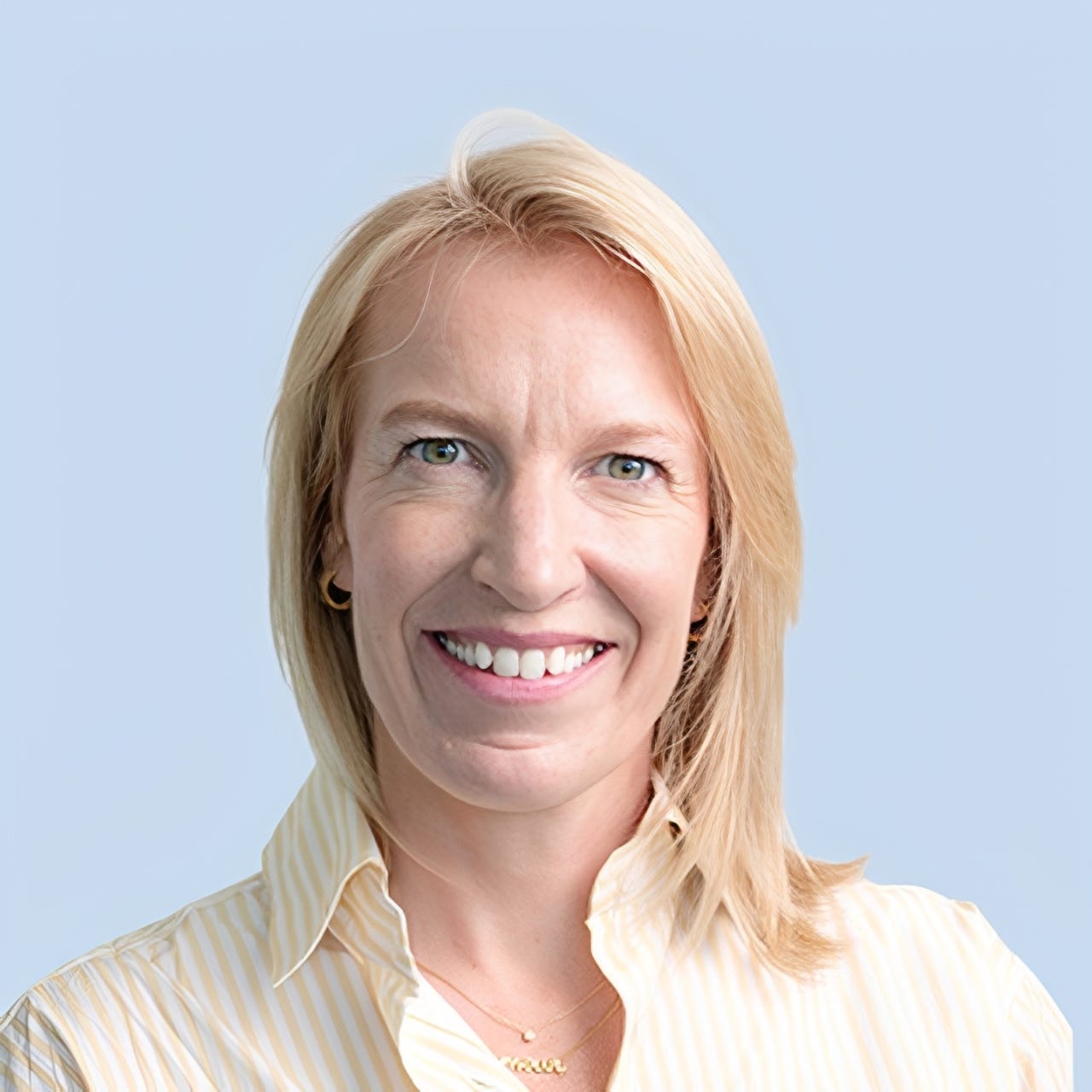
As a part of this series, we had the pleasure to interview An Vandebosch.
An Vandebosch serves as Head of Development at argenx, where she leads Development Strategy and Execution across the pipeline. She joined argenx in 2023 as Head of Quantitative Sciences, bringing deep expertise in clinical development and data-driven decision-making. Before joining argenx, An spent almost 18 years at Johnson & Johnson, taking on roles of increasing responsibility across multiple disease areas. She made significant contributions to numerous clinical development programs, including serving as Statistics and Modeling Lead for the COVID-19 vaccine program. An is passionate about innovation and has been highly active within the broader biopharma statistics community. An holds a Ph.D. in Mathematics from Ghent University.
Thank you so much for joining us in this interview series. Before we dive into our discussion, our readers would love to “get to know you” a bit better. Can you share with us the backstory about what brought you to your specific career path?
I studied mathematics at Hasselt University in Belgium. The turning point was when a pharmaceutical executive, then at J&J and now a colleague at argenx, visited our class. He talked about the role statisticians can play in developing new medicines, and that talk really changed my direction. I moved to Ghent University to study statistics and stayed on for a PhD focused on clinical trials.
I then joined J&J as a biostatistician and stayed almost 18 years, working across many disease areas from tuberculosis to Ebola, and led statistics and modeling for our COVID-19 vaccine program. Along the way, I realized my real passion wasn’t statistics itself but drug development. I was especially drawn to how a smart study design can get a medicine to patients faster.
In 2023, I joined argenx. I recognized the same sense of urgency I had felt in vaccine development. I also liked that argenx only goes after molecules with strong biology and the potential to really change care for patients. argenx focuses on autoimmune diseases in the field of immunology, and autoimmune diseases more common than most people think, but many remain under-recognized and undiagnosed, and too many patients are still waiting for treatments that work for them. That is the gap we’re working to close.
I came in to lead Quantitative Sciences. Today, as Head of Development, I work with a talented team to shape how quickly our science reaches the people who need it. It’s a responsibility we take on with humility and a lot of energy.
Can you share the most interesting story that happened to you since you started your career?
It’s hard to pick just one story, but a few moments have stayed with me.
The first was working on a tuberculosis (TB) drug at J&J. It was the first time I really saw what our work means for patients. People with multidrug-resistant TB were taking up to seven medicines at once, and I saw what that does to a person. The medicine we were developing attacks the bacterium’s energy supply, and it made a huge difference for those patients. What I took from it is that to tackle diseases worldwide, you need targeted innovation, driven by data.
Some of my most formative moments since then have been at argenx. Shortly after I joined in 2023, we had three Phase 3 readouts in quick succession: chronic inflammatory demyelinating polyneuropathy (CIDP), primary immune thrombocytopenia (ITP) and pemphigus vulgaris, a rare blistering skin disease. Some of the results were positive, some were not. Each time, the whole team sat around the table to work out what the data were really telling us. What stayed with me was how we handled the disappointing results. There was no blame and no looking away, just a lot of dedication and humility. We asked what we could learn, and we used that to grow as a company, build knowledge, and keep looking for innovative ways to take calculated risks.
What do you think makes your company stand out? Can you share a story?
What makes argenx stand out for me is how close the link is between our science and the people it’s meant for. We regularly invite patients to argenx to share their experiences, and those conversations stay with you. They remind us why we do this work and push us to ask what more we could be doing. We try to bring patients in at every step: how we design our clinical trials, how we choose what to measure, and how we plan to bring a medicine to market.
You can see the same focus in our Vision 2030 goals. We deliberately measure our success by how many patients we reach, not by revenue: By 2030, we want to reach 50,000 patients with our medicines, have 10 approved uses for them, and have five new molecules in late-stage (Phase 3) trials.
How we build our pipeline is the other thing that stands out. We look for molecules with strong biology that could really change the course of a disease, and we move with real urgency. That combination is a big part of what drew me here. We also know we can’t do it alone. Through our Immunology Innovation Program (IIP), we partner with leading academic researchers to turn discoveries into new antibody medicines. That model gave us the first approved FcRn blocker in the U.S., Japan and the EU.
Empasiprubart is the next example. It’s in late-stage studies in multifocal motor neuropathy (MMN) and chronic inflammatory demyelinating polyneuropathy (CIDP). When one molecule might help patients across several diseases, the hard questions become where to go first, how to design the studies, and what evidence will matter most to patients. As a developer, those are exactly the questions I love working on.
You are a successful business leader. Which three character traits do you think were most instrumental to your success? Can you please share a story or example for each?
The first is curiosity. I’ve always been curious about the “how” behind the results, not just the results themselves. That curiosity took me from mathematics to drug development. It was tested again when I moved from leading Quantitative Sciences to leading all of Development and had to learn new disciplines quickly. My way of doing that was simple: ask the naive question early and surround myself with people who know more than I do. That fits well with how we work at argenx. We call it entrepreneurial science: the curiosity to challenge assumptions and explore bold ideas, combined with the scientific rigor to test them properly. Neither works without the other.
The second is humility. It’s also what drew me to argenx. We know we don’t have all the answers, so we look to work with others whenever it helps us get medicines to patients faster. Our Immunology Innovation Program is built on that idea. We bring our skills in designing antibodies and developing medicines, and leading academic researchers bring their deep knowledge of the disease. Together, we look for new scientific opportunities that neither side would find alone. I see the same thing inside the company: the best decisions come when people with different expertise sit at the same table.
The third is resilience. In drug development, setbacks are part of the path. Most ideas don’t make it, and even good medicines rarely follow a straight line. What matters is what you do next. A disappointing result is still data. It tells you something about the disease, the patients or the way you designed the study, and if you’re willing to look at it honestly, it makes the next decision better.
Ok, thank you for that. Let’s now jump to the primary focus of our interview. What emerging technologies do you believe will have the most significant impact on your industry in the next five years, and how are you preparing for them?
AI will clearly have a big impact. But AI is only as good as the question you ask, the design behind it, the data you feed it and the judgment you bring to interpreting the output. AI may bring us greater intelligence, but we still need to bring the wisdom, The argenx Way, and our commitment to patients.
At argenx, we don’t treat AI as a separate strategy; it’s part of how we run the business. In Development, the real opportunity is making better decisions earlier: designing smarter studies, finding the right patients and choosing the right sites. That’s how we shorten the time it takes to get new medicines to people. To prepare, we’re building the data foundations and the skills to use these tools responsibly, so we can move quickly without compromising the quality of our evidence.
How do you balance the need for rapid innovation with the risk of potential disruptions in your organization?
I don’t really see rapid innovation as a disruption. I see it as an opportunity to keep improving how we develop medicines for patients. The key is to take calculated risks and to work closely with others. Smart study designs allow us to be bold, because we agree up front what success looks like and what we’ll learn either way. Then even a disappointing result gives us direction instead of setting us back. Speed and discipline aren’t opposites. Discipline is what makes speed possible.
Can you share an example of a strategy you’ve implemented to future-proof your business against upcoming technological changes?
For me, the most future-proof thing we can do in Development is to keep thinking through innovative ways of developing medicines, grounded in data, in what the biology and the mechanism of action tell us, and in what real clinical benefit means for a patient. It all starts with a well-designed study. A good study keeps paying off: it answers the question clearly, and it tells you something useful even when the result isn’t what you hoped for.
One example is a platform study we’re running in myasthenia gravis. Normally, every new treatment idea gets its own trial, with its own setup and its own screening for patients. Here, we built one shared framework. Patients go through one shared screening and are then guided to the study that suits them best. Within the platform we can test different medicines, combinations and dosing approaches.
What makes it future-proof is that the platform can grow with the science. New studies can be added under the same framework, so we don’t start from scratch each time.
For patients who have often waited years for better options, that’s how speed and rigor work together.
What skills or mindsets do you believe are essential for leaders to thrive in a time of rapid technological advancement?
First, leaders need to be comfortable with data. We have more data than ever, and better ways to make sense of it. That means every leader, not just the specialists, should understand the evidence behind their decisions.
Second, leaders need to be comfortable with uncertainty. That means taking calculated risks and staying flexible in how we reach our goals for patients.
Third, leaders need to build an environment of trust and grow other leaders. People only take smart risks and speak up early when they feel trusted. In a company growing as fast as argenx, what we can do for patients depends on how well we develop our people.

Ok super. Here is the main question of our interview. What are your “Five Things You Need to Prepare For The Disruptive Future”? If you can, please share a story or an example for each.
- Embrace change. The future won’t wait until you feel comfortable. I learned that when I moved from leading Quantitative Sciences to leading all of Development.
2. Share ownership instead of relying on hierarchy. As organizations grow, it’s tempting to add more process around every decision. But speed comes from giving people clarity on what matters and the ownership to act. At argenx, that entrepreneurial mindset helps us move with urgency while staying accountable for our decisions.
3. Invest in talent. You don’t build the best teams by asking everyone to follow the same path. As argenx grows, developing the next generation of leaders is how we prepare for challenges we can’t yet see.
4. Build the ecosystem. No company can do this alone. Innovation moves faster when we work alongside academic researchers, physicians and patient communities.
5. Stay curious as you grow. Leaders need the humility to keep questioning what they know, to look for different perspectives and to change course when they learn something new. The more responsibility you take on, the more that curiosity matters.
How do you develop a culture within your team that is both adaptable and resilient in the face of fast-paced innovation?
Developing people and future leaders is one of the most rewarding parts of my role. I’ve experienced it myself: argenx gave me the freedom to grow into a new role, and I try to give my team that same space. For me, an entrepreneurial culture is one where people feel safe to challenge ideas, including mine, and to say, “We tried this, we learned something, and now we see it differently.”
How do you ensure that ethical considerations and social impact remain a priority as you navigate rapid advancements in technology?
For me, scientific rigor is an ethical commitment. Patients who volunteer for our trials trust us to design studies that give clear, honest answers. The experiences of patients guides everything we do at argenx and keeping that at the center of all we do keeps us focused on our high bar for excellence and ethics. For example, when we designed our first trial in myasthenia gravis, we listened to the patient community and learned how differently the disease affects each person. So we built a dosing approach that adapts to each patient’s own response.
At argenx, that means designing trials that reflect the patients we serve, sharing results openly and applying the same discipline to new tools like AI: checking that they work, being transparent about how we use them and respecting patient data.
You are a person of great influence. If you could start a movement that would bring the most amount of good to the most amount of people, what would that be? You never know what your idea can trigger. :-)
I would start a movement to get faster answers for people living with underserved diseases. Too many people wait years for a diagnosis, and then years more for a treatment. If companies, universities, regulators and patient communities keep working together, we can shorten that wait dramatically. That’s how scientific possibility becomes real change in people’s lives.
How can our readers further follow your work online?
https://www.linkedin.com/in/an-vandebosch-0081225/
Thank you for the time you spent sharing these fantastic insights. We wish you only continued success in your great work!