First, my willingness to push past my comfort zone over and over again. When I was first presented with the opportunity to branch out on my own, I had to face the fear of failure.
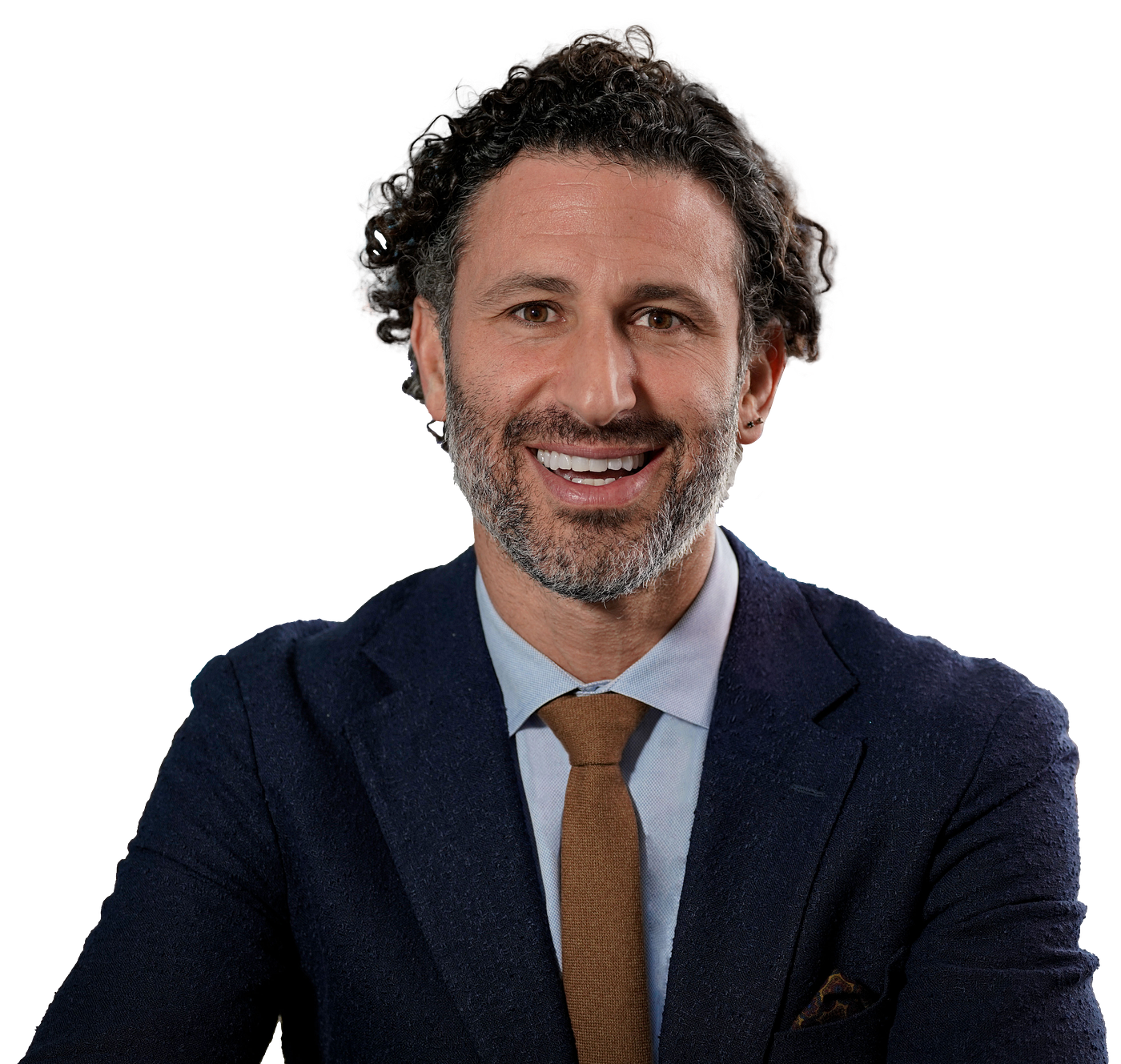
As a part of this interview series, I had the pleasure of interviewing Ramez Shamieh.
Ramez Shamieh is a trial lawyer and founder of Shamieh Law who has built his practice around representing clients facing the life-altering consequences of catastrophic injuries, wrongful deaths and serious trucking and personal injury cases. Licensed across Texas, Louisiana, Arkansas and New York, Shamieh has earned recognition from Super Lawyers, D Magazine, Texas Lawyer, Martindale-Hubbell and numerous other organizations for his legal work and professional accomplishments. A former D1 college soccer player turned trial attorney, he brings the same discipline and fight to the courtroom that once defined him on the field, with a singular goal: holding negligent parties accountable and helping injured clients and their families navigate the hardest chapter of their lives.
Thank you so much for joining us in this interview series. Before we dig in, our readers would love to get to know you a bit more. What is the “backstory” that brought you to this particular career path in Law? Did you want to be an attorney “when you grew up”?
I never grew up thinking I would be a lawyer — I dreamed of playing professional soccer, earned a scholarship to SMU, and was part of a team that set numerous NCAA records. When professional opportunities in the U.S. were limited, I turned to law school at Tulane, inspired in part by movies like Jerry Maguire and A Few Good Men, with an initial plan to pursue sports law.
Then, in 2010, my brother was the victim of a hit-and-run accident. Everything changed for me — I immersed myself in personal injury law fighting to get him justice, and in that process, I realized this was the work I was meant to do.
Can you tell us a bit about the nature of your practice and what you focus on?
My practice is focused primarily on personal injury litigation — catastrophic injuries, wrongful death, trucking and motor vehicle collisions, and other cases where someone’s life has been fundamentally changed by another party’s negligence. I’ve built a reputation for taking cases to trial when insurance companies won’t offer a fair resolution; that willingness to go the distance often changes the outcome before we ever reach the courtroom. I’ve recently added an immigration section that I’m extremely excited about as well.
You are a successful attorney. Which three character traits do you think were most instrumental to your success? What unique qualities do you have that others may not? Can you please share a story or example for each?
First, my willingness to push past my comfort zone over and over again. When I was first presented with the opportunity to branch out on my own, I had to face the fear of failure. I had a great job at a great firm and was about to be named a partner. I could have easily stayed where I was, but instead, I trusted the unknown, and the rest is history. That same choice, between comfort and growth, shows up for me almost every day, in every part of my life, not just at the office.
Second, I have a deep reverence for service. I’ve dedicated my life to serving others. That includes my service to God, my clients, my family, my employees, and every person I interact with. To do that well, I put real emphasis on my own physical and mental health, because I can’t pour from an empty cup. I am a certified breath instructor and have become laser-focused on my body movement, food quality, water intake, supplements, sleep, and various healing modalities to recover. I do all this to be the best version of myself for everyone I serve.
Finally, humility. I was born into a Palestinian Christian family in Lake Charles, Louisiana. My family emphasized traveling the world so I could understand how fortunate we are to be alive and for all the blessings we have. I constantly remind myself to be grateful, and this instantly changes my energy. One of the things I take Pride in is treating everybody the same whether it’s a CEO of a business or the trash man picking up my trash. I treat everybody with respect dignity and like they’re my friend.
Do you think you have had luck in your success? Can you explain what you mean?
I don’t believe in luck as much as I believe in preparation meeting opportunity. There are no coincidences in life. I believe each of us creates meaning through the beliefs we choose to hold, be it positive or negative, and I truly believe that positive things happen to people who program their minds to embrace that energy. I stay mindful of negative thoughts or beliefs and work to reframe them in a more positive light. The more I do that, the more opportunities seem to find their way to me, and the more prepared I am to undertake them.
Do you think where you went to school has any bearing on your success? How important is it for a lawyer to go to a top-tier school?
I’m grateful for the education I received at SMU and Tulane, and both schools gave me opportunities and relationships that have been important throughout my career. But I don’t believe graduating from a top-tier school is what ultimately makes someone a great lawyer. Law is a profession where your work ethic, preparation, ability to connect with people, resilience, and willingness to keep learning can matter just as much — if not more — than the name on your diploma.
My own journey certainly taught me that success is less about where you start and much more about what you do with the opportunities you’re given.
Based on the lessons you have learned from your experience, if you could go back in time and speak to your twenty-year-old self, what would you say? Would you do anything differently?
There are two things I would tell myself: first, you are abundant and exactly where you need to be.
Every single lesson along the way will guide you to where you are going. Do not look at the lesson or experience in a negative way. Look at it from a neutral lens and be open to what the experience has to teach you.
And second, the more you open your body, the more you open your mind. Everything in your body is connected. Put an emphasis on balance and health, as focusing on these elements will help you live a healthier life.
This is not easy work. What is your primary motivation and drive behind the work that you do?
My primary motivation comes from knowing what it feels like when someone you love is suddenly put in a position where they need an advocate. When my brother was injured in a hit-and-run, I saw firsthand how overwhelming that experience can be, and fighting for him changed the trajectory of my career. Since then, I’ve tried to approach every case with the same mindset: this isn’t just a case file or a number — it’s someone’s life, their family, and their future.
What are some of the most interesting or exciting projects you are working on now?
Right now, I’m energized about entering new fields of practice, such as immigration. Coming from a family of immigrants, it’s an honor to serve people who are working to become Americans. Helping them achieve the American dream is also a dream of mine. I’m also so grateful for the community work my office has done. I have an unbelievable marketing team, both locally and nationally, and they’ve helped create opportunities to speak at various events, share resources, and support local communities in the areas we serve.
Where do you go from here? Where do you aim to be in the next chapter of your career?
For me, the next chapter isn’t simply about building a bigger firm, so much as building a better one. I want Shamieh Law to continue growing while preserving the culture we’ve worked hard to create: a place where people are encouraged to think independently, communicate openly, take care of themselves, and genuinely care about the clients we serve. I also want to continue developing as a trial lawyer, speaker, and leader, and to share the lessons I’ve learned about resilience, awareness, and personal growth with the people around me.
Without sharing anything confidential, can you please share your most successful “war story”? Can you share the funniest?
My most successful “war” story was the case that allowed me to start my own firm. From 2014 to 2016, I worked at another law firm and was not paid a salary. I was strictly on an “eat what you kill” system. It’s not for everyone, of course, but something about that self-imposed pressure allowed me to really thrive in that environment. I worked up a huge brain injury case exactly the right way over the course of two years and was able to start my own firm when the case settled.
The funniest had to be during one of my first trials. I called a young chiropractor who treated my client to the stand. He was completely inexperienced in a courtroom, and the moment he was sworn in, he froze, just totally unable to speak. It wasn’t exactly funny at the time; we had to take several breaks, and finally, after 30 or 45 minutes, he was able to start testifying. I still think about that moment whenever I prep a witness now. It serves as a very necessary reminder for me that no matter how much you know, walking into a courtroom for the first time is its own kind of terrifying.
Ok, fantastic. Let’s now shift to discussing some advice for aspiring lawyers. Do you work remotely? Onsite? Or Hybrid? What do you think will be the future of how law offices operate? What do you prefer? Can you please explain what you mean?
For a young lawyer, I would 1000% recommend not working remotely or hybrid. Surrounding yourself with other lawyers and paralegals in those early years is how you learn the things you can’t pick up from a screen. But as my career has grown, I’ve found a better balance for myself. I’m now able to split time between the office and home, because I need some quiet space to think without the day-to-day pace of the office pulling at me.
Looking ahead, I think AI is going to reshape law offices significantly. The higher-skill, higher-judgment work is what will remain in-house, while a lot of the smaller, repetitive tasks shift to AI.
How has the legal world changed since the release of Chat GPT? How do you think it might change in the near future? Can you explain what you mean?
ChatGPT and AI have already changed the legal world by making it easier to access information, analyze large amounts of material, and automate some of the routine work that lawyers spend time on. We’re also seeing AI become hugely important on the other side of the table, with auto insurers and other companies using technology to evaluate claims, assess risk, and make decisions about coverage and payouts, which makes it especially important for lawyers to understand these systems and challenge decisions that don’t always account for the full circumstances. I do think it will continue to transform the day-to-day operations of law firms, especially in legal research, case prep, doc review, etc., and give lawyers more time to spend on actual strategy and their clients. But technology can’t replace the human side of practicing law, especially in litigation. From my experience, that’s where the human elements — judgment, credibility, relationship-building, and actually understanding and empathizing with a client’s story — are still so critical.
Based on your experience, how can attorneys effectively leverage social media to build their practice?
Honestly, I think the most effective way for attorneys to use social media is to educate rather than simply advertise. People don’t really know what questions to ask after an accident, so sharing quick tips and practical information in a clear, accessible way can build real trust, well before someone ever needs to actually hire a lawyer. I also think people want to know the person behind the suit and tie, so showing some personality, values, and the culture of your firm helps create a genuine connection with your audience. For me, social media is an opportunity to share knowledge, tell real stories, and demonstrate how we approach our work while building relationships with people in the community.
Excellent. Here is the main question of our interview. What are your “5 Things You Need To Become A Top Lawyer In Your Specific Field of Law?” Please share a story or an example for each.
1. Create healthy habits for a healthy lifestyle. This profession is extremely challenging and stressful, and without a healthy lifestyle, you will burn out. I learned this the hard way in my early years, so now I treat my physical and mental health as part of my job, not separate from it. A clear mind and a strong body are what let me show up for my clients the way they deserve.
2. Relationships matter. Be a good person and be kind, because that’s what will help you settle cases and build a brand. Reputation follows you in this industry, and people remember how you treated them long after they forget the details of the case.
3. Losing a trial is the best way to become a better lawyer. The real secret is, you learn more from the losses than you do from the wins. Losing, especially in the early stages of your practice, forces you to go back and dissect every decision you made, from jury selection to how you presented your evidence to how you entered the room. Those losses taught me more about trial strategy than any win ever could, because wins let you believe you did everything right, even when you didn’t. Losses don’t let you hide from your mistakes.
4. Find a great mentor. I was fortunate to have an unbelievable mentor who guided me through understanding the law, and I still reach out to him to this day for help.
5. Don’t ever think you’re the smartest person in the room. The moment you believe that, you stop listening. Listening to opposing counsel, to your own team, to the jury, to your client. Staying humble means staying teachable, and staying teachable is what keeps you sharp.
We are very blessed that some of the biggest names in Business, VC funding, Sports, and Entertainment read this column. Is there a person in the world, or in the US with whom you would love to have a private breakfast or lunch, and why? He or she might see this. :-)
Sacha Baron Cohen, hands down.
This was very inspiring. Thank you so much for the time you spent with this. We wish you continued success and good health!
About The Interviewer: Eric L. Pines is a nationally recognized federal employment lawyer, mediator, and attorney business coach. A former federal employee himself, he represents federal employees nationwide and serves as in-house counsel for more than fifty thousand federal employees through his work with federal employee labor unions. He formerly served as Chief Counsel for AFGE Local 1923 and serves as counsel for FEMA bargaining unit employees and numerous Department of Defense and Department of Veterans Affairs unions. His firm represents federal employees in a wide range of employment matters, with particular experience in reasonable accommodations, Federal Employee Disability Retirement through OPM, and representation of Department of Veterans Affairs doctors and nurses. Mr. Pines and his firm also handle Social Security Disability matters for employees. He has served as a mediator for numerous federal agencies, including as the Library of Congress’ in-house EEO Mediator, and has served as an expert witness in federal court. Learn more at www.pinesfederal.com or contact him at eric@pinesfederal.com.