
When an established status quo leaves a great part of the population without access to resources and opportunities, then challenging and disrupting that status quo is positive in my book.
Raffy Montemayor shares his journey from traditional banking to leading tech disruption, explaining how innovative consumer lending can bridge the massive credit gap in the Philippines.
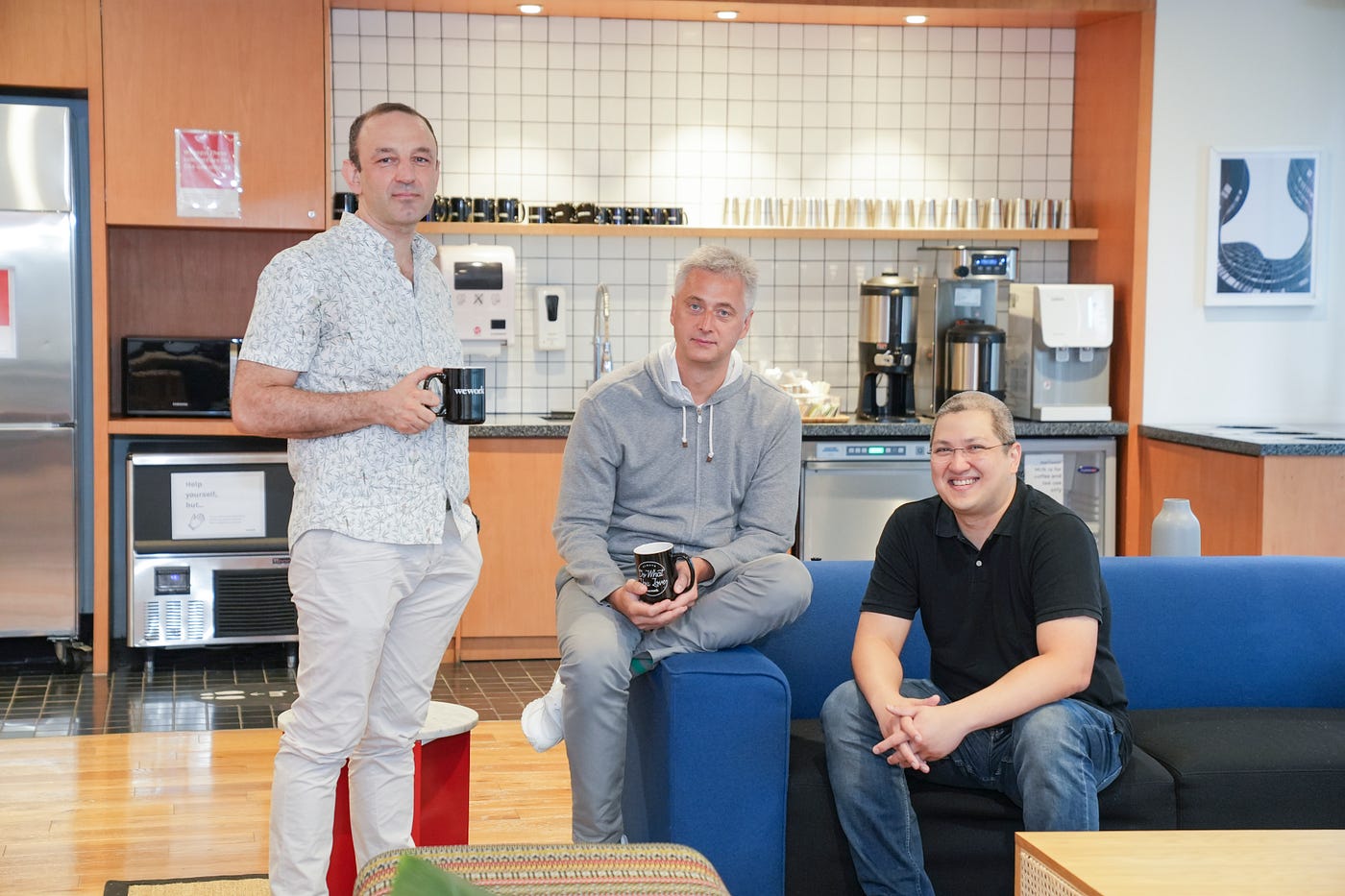
When an established status quo leaves a great part of the population without access to resources and opportunities, then challenging and disrupting that status quo is positive in my book.
As a part of our series about business leaders who are shaking things up in their industry, I had the pleasure of interviewing Raffy Montemayor.
Raffy Montemayor is a Co-Founder and Philippines Business Head at Salmon. Raffy has more than 20 years of experience in the Philippine banking and tech sectors including country leadership roles at Agoda, OLX and Carousell. In HSBC, he focused on credit cards where he saw first-hand the closed-loop system that plagues local banking and makes it a challenge to expand financial inclusion in the country.
Thank you so much for doing this with us! Before we dig in, our readers would like to get to know you a bit more. Can you tell us a bit about your “backstory”? What led you to this particular career path?
I spent the first half of my career at HSBC Philippines, looking after Sales, Marketing and Portfolio Management for the credit cards business. HSBC, the second-largest credit card issuer just behind Citibank Philippines at the time, preferred issuing credit cards to applicants who already had one — the approach taken by most credit card issuers in the Philippines.
My exposure to the tech sector began a bit later when I decided to earn my MBA at INSEAD’s France and Singapore campuses. That’s when I saw two very different sides of tech — the glamorous side in Silicon Valley and the grittier side in Delhi and Mumbai. I truly fell in love with it all and decided to be a part of it, just as the tech sector was just starting to develop in the Philippines. For the next decade from 2012 onwards, I served as the country CEO of some of the most popular tech companies in the Philippines, such as Agoda (online travel) and OLX, which later became Carousell (online classifieds).
My love of tech and my desire to use tech and innovation to challenge the status quo in consumer lending, making financial services more accessible to a greater number of people, came together to lead me to my current role at Salmon.
Can you tell our readers what it is about the work you’re doing that’s disruptive?
Salmon is working to improve financial inclusion by making finance simpler, more intuitive, and more accessible for all. Up until now, the closed loop nature of the local banking system has meant that traditional financial services have only been available to a select few. While lending is scarce, demand for loans and other financial products is continuing to rise, and Salmon is disrupting the market and challenging the status quo by making access to credit easier than ever before. We view consumer lending as only the beginning of our journey and aim to diversify our offering in the future as we move towards our goal of becoming a leading credit-led bank in Southeast Asia.
Can you share a story about the funniest mistake you made when you were first starting? Can you tell us what lesson you learned from that?
I made a rookie mistake back in my early days at HSBC, which led me to be nicknamed ‘the TV guy’ at the bank. In a nutshell, I negotiated a 50% discount on Samsung TVs, which required a minimum order of 5,000 television sets. Then, I convinced the entire bank that Samsung TVs would serve as attractive acquisition incentives for Visa and Mastercard Gold credit card customers. The ambitious plan didn’t quite work out as anticipated — we only met half of our target acquisitions and were left with thousands of TVs on our hands. As a result, I learned to be more creative than ever and to rely on great teamwork, as we had to integrate the TVs into every possible marketing campaign for the next year. Eventually, we were able to unload the TVs and all turned out fine, but the TV guy nickname stuck with me for the rest of that year at HSBC.
We all need a little help along the journey. Who have been some of your mentors? Can you share a story about how they made an impact?
I have a lot of gratitude for Chris Rourke, (former) Head of Marketing at HSBC Philippines, and SVP of Consumer Assets Marketing Pat Carlos, who were my two main mentors early in my career. They have highlighted the importance of communicating your wins to the right stakeholders, and delegating tasks more effectively to leverage your colleagues’ diverse set of talents and achieve the best possible outcome for all.
In 2009, I led the work that resulted in a 20% increase in cardholder engagement, even though this unfolded against the backdrop of the global financial crisis and several major natural disasters impacting the Philippines. This was an important strategic victory, but it remained invisible to key stakeholders within our organization. That’s when Chris Rourke taught me the importance of ensuring that great results were communicated internally, reaching senior management across the business. In the end, explaining our work and the results we achieved helped us become even better as a team going forward. Throughout my career, I’ve committed to improving this type of communication, which has been instrumental in inspiring others to join Salmon’s mission of expanding financial inclusion as we work towards providing every Filipino with access to credit.
In addition to communicating great results, feedback from Pat Carlos made me realize that a leader has to trust his or her team to take on more responsibility. Taking Pat’s feedback to heart, I focused on honing my delegation skills throughout 2009 and shifted my leadership approach to a more coaching-oriented style, mentoring my team closely, while avoiding micromanagement. I strove to create a supportive learning environment, securing the backing of senior managers to allow room for my team members to grow, even if that meant making a few mistakes along the way. The result of this transformation was remarkable: within less than a year, my team had successfully launched over 50 marketing programs and helped increase active loans by 10% — a remarkable achievement, given the difficult macroeconomic climate of the early 2000s.
To this day, I try to stick to this collaborative, coaching-heavy approach in order to help my team shine and achieve great results together.
In today’s parlance, being disruptive is usually a positive adjective. But is disrupting always good? When do we say the converse, that a system or structure has ‘withstood the test of time’? Can you articulate to our readers when disrupting an industry is positive, and when disrupting an industry is ‘not so positive’? Can you share some examples of what you mean?
The big debate around improvements in artificial intelligence shows that disruptive innovations require a great deal of thought and planning, as these disruptive innovations can prompt negative consequences when it comes to moral and ethical considerations, job creation or data privacy. However, when an established status quo leaves a great part of the population without access to resources and opportunities, then challenging and disrupting that status quo is positive in my book.
Time doesn’t stand still, and I strongly believe that technology can be a force for good when it disrupts an established way of doing things to improve it. This is our mission in the financial services sector, where Salmon aims to disrupt the closed-loop financial services industry to ensure that credit and eventually additional financial products and services are transparent, easy-to-use and available to more people.
The Philippines has historically had one of the lowest GDP to lending ratios in Southeast Asia and is home to only about 6 million unique credit card holders out of a population of over 110 million people. While lending is scarce, demand for loans and other financial products is continuing to rise with GDP growth estimated to average 6%-7% annually over the medium term. I believe that Salmon’s aim to disrupt the status quo in the financial services industry the Philippines, and potentially the rest of Southeast Asia, will have a positive effect on people’s lives.
Can you please share 5 ideas one needs to shake up their industry? If you can, please share a story or an example for each.
1. Fintechs must help expand financial inclusion by easing access to credit.
The Fintech Revolution 1.0 was about defining Filipinos as unbanked because they don’t have a bank account. During the pandemic, GCash grew to more than 81 million users and the BSP supported the creation of 6 digital banks to help make it easier to open bank accounts. As of December 2022, there were 102 million depositors in the Philippine banking system. That’s growth of 1.5 times since 2019, representing 142% of the Philippine adult population — an amazing achievement for our country.
While a bank account is an important step towards financial inclusion, access to credit is also key because it directly impacts the financial wellbeing of individuals and businesses. Credit is essential for starting or expanding small businesses, creating jobs and fueling growth of local economies. It can provide financial safety nets in times of emergencies, help Filipinos improve their living conditions, fund education, boost productivity and so much more.
In 2022, consumer loans in the Philippines were only 6% of GDP, significantly lower than that of our regional peers. We also see this reflected in our credit cards industry, where only 8% of adult Filipinos have a credit card — a figure that has remained fairly static since my days at HSBC. This needs to change and the pressing demand for this change is already there.
2. Building the right team will help achieve scale.
Our ambition is to become a leading credit-led neobank in Southeast Asia. On day 1, we built what we call a 10x team so that we are ready to scale and grow sustainably going forward. We’ve hired the best and the brightest from around the world, including talent from leading digital and traditional banks, technology companies and government institutions to enable us to grow quickly and responsibly.
3. Using tech innovation in an online and offline setting.
Part of what makes us unique as a fintech is that we’re big believers in marrying technology with an offline setting as a starting point. Our first product, called a Point-of-Sale installment loan, is primarily available offline, but we use biometric technology and other innovations to verify customer identity and combat fraud.
Being present offline makes us more approachable and accessible to the everyday Filipino, while our tech know-how allows us to carry out stringent risk assessment and quickly approve or decline loan eligibility.
4. Know-how to leverage data.
Part of our secret sauce as a fintech is how we use existing credit bureaus and alternative data sources to collect many data points to build, continuously develop and improve our credit scoring model. Through use of all this data, combined with other fraud prevention techniques, we’re able to keep our first payment delinquencies to single digits. This shows we can successfully assess the risks when catering to underbanked Filipinos, as we continue to connect with additional data service providers in our market.
5. Happy customers are the key to success.
Our approach to improving access to credit by combining innovative technology with an offline presence and scaling quickly and responsibly by employing a data-driven approach leads to a great customer experience. Our surveys show that 92% of our customers would recommend us to their friends and family.
We are sure you aren’t done. How are you going to shake things up next?
We are focusing on disrupting the status quo to expand financial inclusion in the Philippines, but with time, we may be ready to expand our mission to serve the underbanked in other parts of Southeast Asia.
Do you have a book, podcast, or talk that’s had a deep impact on your thinking? Can you share a story with us? Can you explain why it was so resonant with you?
The “Start with why” TED talk by Simon Sinek had a deep impact on my thinking, helping me to prioritize roles and opportunities to pursue in the latter part of my career. Through reflection, I verbalized my personal why — which is to help improve the lives of everyday Filipinos. The way I moved towards this goal has evolved as I searched for different ways of making a positive impact in my country after earning my MBA at INSEAD in 2011. At Agoda, we helped connect international and domestic travelers with hotels and resorts with spare rooms to foster tourism in the Philippines. At OLX and Carousell we helped promote a circular economy by connecting people looking to sell unused or underutilized items with people who would find value in them. Now at Salmon, we are helping solve the financial inclusion puzzle by providing more Filipinos with access to credit.
Can you please give us your favorite “Life Lesson Quote”? Can you share how that was relevant to you in your life?
Fr. Ferriols, a legendary philosophy professor at my university, famously coined the phrase “Lundagin mo, baby!” It can be translated as “take the leap, baby!” and encourages you to take the chance to make something happen. That’s the approach I’ve taken with my career — shifting from banking to tech and now to fintech by co-founding Salmon.
You are a person of great influence. If you could inspire a movement that would bring the most amount of good to the most amount of people, what would that be? You never know what your idea can trigger.
I would like to inspire everyone in the fintech space, and financial services in general, to embrace the Fintech Revolution 2.0 — which to me means revolutionizing access to credit in the Philippines context. We all understand technology’s transformative power and see how it is starting to reshape financial services in the Philippines and the rest of emerging markets. While a bank account is an important step towards financial inclusion, so is access to credit, as it directly impacts financial wellbeing and access to opportunities for individuals and businesses. I’d like to inspire others in our ecosystem to work towards greater financial inclusion in the true sense of the word.
How can our readers follow you online?
You can find me on LinkedIn and learn more about Salmon here.
This was very inspiring. Thank you so much for joining us!
The Authority Magazine Editorial Desk produces, verifies, and edits long-form primary-source interviews with executives, innovators, clinicians, creators, and social impact leaders across Business, Tech, Pop Culture, Wellness, and Social Impact.

Exclusive, curated interviews with the leaders and changemakers shaping tomorrow. Leadership lessons, industry deep dives, and executive profiles.

The co-founder, CEO, and COO of MOOD shares how rigorous operational frameworks and tech-driven discipline are transforming the emerging cannabis industry.

The third-generation design leaders share how balancing century-old heritage with modern technology and new brand ventures fuels long-term industry leadership and growth.

The Chief Growth Officer reveals how complete supply chain traceability and a commitment to nomadic heritage are redefining sustainability in the global fashion market.
The accomplished chef shares insights from his journey through top-tier kitchens and the essential mindset needed to thrive in the culinary world.
Arash Hashemi shares how transitioning from corporate finance to building a low-carb pasta brand required embracing failure and relentless resourcefulness.
The real estate investor and media personality shares how his background in construction and finance paved the way for building sustainable housing and lasting community impact.

The founder and CEO of Ring Concierge explains how she bypassed traditional venture capital, overcame industry skepticism, and built a millennial-focused luxury brand.

The founder of FeetFinder shares how he turned a unconventional concept into a thriving, profitable online marketplace through relentless dedication and community feedback.