Persistence, perseverance and patience create the perfect triangle.
Business
Arash Hashemi of Kaizen Food Company: Persistence and Patience Are the True Engines of Product Innovation
Arash Hashemi shares how transitioning from corporate finance to building a low-carb pasta brand required embracing failure and relentless resourcefulness.
Many successful people reinvented themselves in a later period in their lives. Jeff Bezos worked in Wall Street before he reinvented himself and started Amazon. Sara Blakely sold office supplies before she started Spanx. Dwayne “The Rock” Johnson was a WWE wrestler before he became a successful actor and filmmaker. Arnold Schwarzenegger went from a bodybuilder, to an actor to a Governor. McDonald’s founder Ray Kroc was a milkshake-device salesman before starting the McDonalds franchise in his 50's.
How does one reinvent themselves? What hurdles have to be overcome to take life in a new direction? How do you overcome those challenges? How do you ignore the naysayers? How do you push through the paralyzing fear?
In this series called “Second Chapters; How I Reinvented Myself In The Second Chapter Of My Life “ we are interviewing successful people who reinvented themselves in a second chapter in life, to share their story and help empower others.
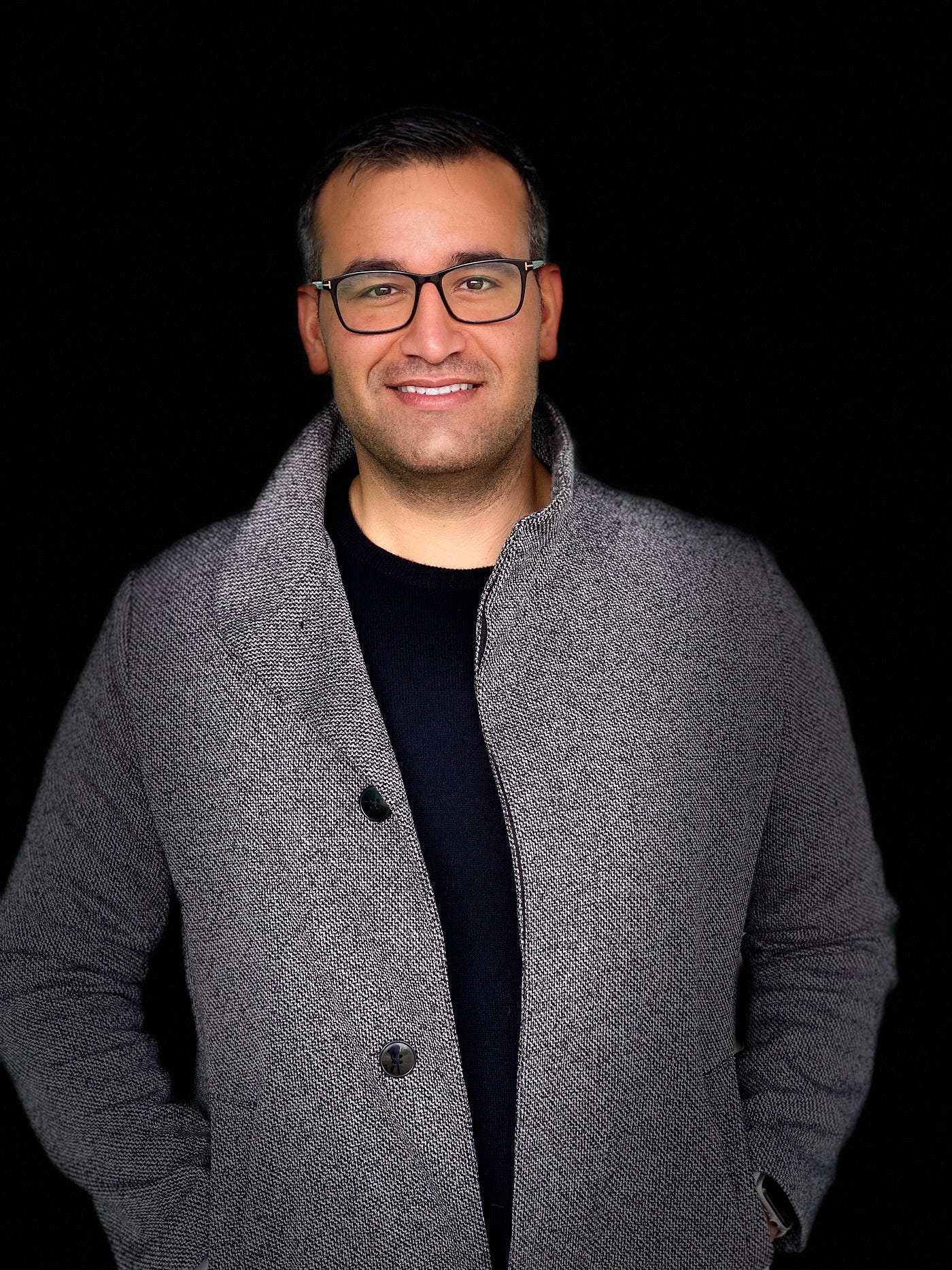
As a part of this interview series, I had the pleasure of interviewing Arash Hashemi.
Arash Hashemi is the co-founder and CEO of Kaizen Food Company, a food and recipe influencer and an Ironman triathlete. He spent years in corporate finance and strategy before walking away to build a more fulfilling career from the ground up. That led to a transformative weight loss journey he documents on social media and ultimately, his own food brand with an innovative, low-carb, lupin bean pasta as its flagship product.
Thank you so much for doing this with us! Before we start, our readers would love to “get to know you” a bit better. Can you tell us a bit about your childhood backstory?
Of course! I am a first generation American. While I was born in the United States, I lived in Tehran from the age of three to 10, and in Canada from the age of 10–13. Looking back, it felt like we had it all before moving to Canada. In Iran, my father was a University agriculture professor and the Dean of Students. We had a seemingly comfortable life in Iran.
At almost 50 years old, my parents restarted life in a brand new country with no family, no network and practically no job prospects. My parents immigrated to Canada from Iran in search of a better life for my brother, sister and I. We moved into a small apartment in Halifax, Nova Scotia.
At a young age, I won the life lottery for the first time: I learned the importance of sacrifice, humility and a strong work ethic from my parents. We lived frugally. We circled grocery store flyers, looking for the best deals and shopped accordingly. I vividly recall my father delivering newspapers and flyers with my brother and I.
In 2000, my parents and I moved to the U.S. and my father slowly worked his way up again at UMass-Amherst as a Researcher. It wasn’t until 2015 that he re-earned his Professor title.
In high school, I won the life lottery for the second time. At school, I was a troublemaker — always acting out and seeking attention. It was reflected in my report cards. They always read: “distracts others from tasks”.
But Ms. Shea, the Business Education teacher at my high school, saw something special in me early on, before anyone else did. I caused all of my teachers grief but for some reason, she took me under her wing and helped me get on the “right track.” I completed every single course she taught, including computer courses, accounting, entrepreneurship and hospitality. I co-led the Future Business Leaders of America club and managed the school store. Her efforts were truly life-changing. In my Junior year, she drove me to business schools to interview early, taught me how to write letters professionally, and emphasized the importance of a simple Thank You note. She supported me from a distance, letting me learn and grow and make my own mistakes. She believed in me and I knew I couldn’t let her down. Because of this, I aimed to show up as my best self.
Ms. Shea was an incredible mentor. While I would continue to win more life lotteries as the years went on, my first two wins were the foundation for how my life would unfold.
Can you please give us your favorite “Life Lesson Quote”? Can you share how that was relevant to you in your life?
I have many, but one that continues to surface is a quote from the late Steve Jobs:
“Most people never pick up the phone. Most people never call and ask. And that’s what separates sometimes the people who do things from those who just dream about them. You gotta act.”
I’m always amazed by what is possible by simply just asking. People want to help and people do come through. You get things done, and more quickly. You learn and fail and learn some more. Action can result in big wins, but also small wins. And at the end of the day, the goal is to move the needle. This has proven to be true for me in everything I’ve done- from a career managing corporate finance to building a food brand from the ground up and even tackling personal health goals. I try to be resourceful, engage with my network, and find a way to give back to them. I try to pick up the phone.
You have been blessed with much success. In your opinion, what are the top three qualities that you possess that have helped you accomplish so much? If you can, please share a story or example for each.
I am successful because I’ve made the decision to embrace and accept failure. And as the saying goes, “keep in mind that neither success nor failure is ever final.”
Persistence, perseverance and patience are the top three qualities I strive to demonstrate. It’s not always easy as you’re going through it, but that’s how I aim to lead my life.
I’ll touch on these three qualities at once because I think they are so closely tied together. Persistence, perseverance and patience create the perfect triangle.
In late 2017, my wife Madalina and I set out to create the world’s first low-carb dried pasta, an endeavor we began without any previous food manufacturing experience.
We started developing the recipe for the pasta in our home kitchen and after several months of trial and error, we believed our product was ready for a manufacturer. But finding a pasta manufacturer willing to work with us proved to be our next big challenge. Almonds were the main ingredient in our product which meant our pasta was not allergy-friendly.
I must have called every single pasta manufacturer in the entire North American continent. After hundreds of calls and weeks on the phone, I finally found one that was willing to take a bet on us. We felt like we were on cloud nine.
We flew out, only to realize our recipe wouldn’t work in a commercial setting. It took nine months, hundreds of tests and dozens of visits to the facility until we were finally able to make our pasta. But there was just one big problem: to get our recipe to be commercially viable, we made so many changes that our final recipe was nothing close to what we had set out to introduce to the market. Despite a strong launch, the pasta was a major failure.
Our pasta received one-star reviews left and right, and people were cruel with the comments. They called me a fraud, compared the pasta to dog food and cardboard (actually, they said cardboard tasted better). It was downright embarrassing. While we did have plenty of happy customers, the negative voices drowned out any of our success.
It was a tough lesson, but I knew I had to stay the course. I was blessed to be in this with Madalina. We were determined to find a different way. We spent months testing new recipes and after a second failed launch, we finally achieved what we had set out to do almost two-and-a-half years after the first product launch.
Let’s now shift to the main part of our discussion about ‘Second Chapters’. Can you tell our readers about your career experience before your Second Chapter?
After graduating from UMass-Amherst, I won my third life lottery: I was hired by GE and accepted into its Financial Management Program (FMP).
At the time, GE was one of the world’s most valuable companies — it powered almost 75% of the world’s airplane engines and owned mega companies like NBC. GE also provided clean drinking water to two-thirds of the world and was a major leader in healthcare.
FMP was GE’s leadership development program and it was tough. It exposed young college graduates to rotational job assignments within a specific GE business — in my case, GE Aviation — but it also required completion of financial coursework, Six Sigma training and a number of executive-level projects.
After two years on the program, participants were selected to try out for GE’s Corporate Audit Staff via a one-month assignment called a “pilot”. If selected, they would spend another 2–5 years living out of a suitcase, auditing GE businesses globally, conducting operational and compliance reviews and serving as internal consultants to senior leaders in the company. It was demanding and required travel 100% of the time, but it was like putting your GE career on steroids.
I was lucky enough to spend three years on the program. I traveled to over 30 countries and lived in incredible locations including Nigeria, Kenya, Egypt, the UAE and Italy. I learned a lot during that time, but one of the biggest benefits outside of my industry knowledge was that I became a more well-rounded thinker and better global citizen.
After completing the program, I was placed into large-scale jobs at GE, culminating into my final role leading Cash for GE’s $30 billion Aviation unit.
At that point in my life, I had achieved more than I could have ever envisioned as a kid growing up in Iran. I had met my wife Madalina, had an amazing team and lifelong friends, but something didn’t feel right: I wasn’t living life on my terms. I had gained a lot of weight and knew I was living an unhealthy life. My heart wasn’t into my work anymore and I knew I didn’t want to end up in Finance leadership.
And how did you “reinvent yourself” in your Second Chapter?
In September 2017, I walked away from my career. I quit under the guise of “pursuing a business idea”, but deep down, there was nothing. I just knew that I wanted to get in shape, compete in a triathlon and to somehow get into the food business.
I had a vision, but I didn’t have a plan. Deep down, I did have faith, however.
I started an Instagram account, @ShredHappens, and I began documenting my weight loss journey, a total of over 100 pounds. This second chapter wasn’t just a different career path but it was a whole new physical transformation, too. I became more active and aware of my overall health. My interests changed as well. Soon, I realized I really enjoyed the process of making healthier versions of my favorite foods.
When I quit, everyone kept asking what my “business idea” was, but I would just find ways to stall them. Truth be told, I was embarrassed, but deep down I believed in myself.
About a year-and-a-half after taking the plunge, my light-bulb moment came in the form of this low-carb pasta idea. I had truly fallen in love with creating healthier versions of my favorite foods and realized that there wasn’t a good low-carb pasta on the market. Through this process, Madalina and I created Kaizen Food Company. Our pasta has a new main ingredient- lupin beans- an ancient superfood with an impressive nutritional profile. One serving of our pasta has 85% fewer net carbohydrates and three-times the protein of regular pasta.
And my social media reach has been even more fulfilling. I now have the privilege of inspiring over 1.2 million people around the world through the low-carb food content I share on my Instagram and TikTok accounts. There is nothing more satisfying than receiving messages from strangers around the world thanking me for my recipes, telling me about their iterations and sharing their own weight loss achievements they’ve reached due in part to my recipes. The small impact I am able to have on the world is truly humbling.
Can you tell us about the specific trigger that made you decide that you were going to “take the plunge” and make your huge transition?
I think an analogy is fitting here. I had been climbing up a mountain and as I was climbing, the view changed. I realized it wasn’t the right mountain, and while I was good at climbing (in this case, my career), it wasn’t fulfilling.
I eventually came to the realization that I knew I would come to regret my decisions and choices later in life if I continued to spend time chasing the wrong dream for the wrong reasons.

What did you do to discover that you had a new skillset inside of you that you haven’t been maximizing? How did you find that and how did you ultimately overcome the barriers to help manifest those powers?
In this “second chapter” transformation, I have discovered a couple of main skillsets that I didn’t realize I had.
I think one of my most beneficial attributes is that I’m a people person who values authenticity. During my time in the corporate finance world, it wasn’t something that I was always in tune with. However, once I launched my Instagram account and started developing unique relationships with other people (who also helped keep me accountable on my own weight loss journey), I started to realize the value of showing up as your authentic self. I had zero marketing or social media experience, but because I was using this online space to share a very personal journey of mine, I was able to connect with people, build a following as an influencer in the food space and ultimately pivot that skillset into marketing a business.
The other newly-discovered skillset is a more obvious one that is also tied to the first: an ability to create content around exciting low-carb recipes with bold, culturally-inspired flavors. This started as a weight loss journey which was a whole new territory for me that came with clear barriers. I knew I wanted to change my life and improve my health, but it wasn’t going to happen overnight. I overcame those barriers by falling back on the three traits that I value most: perseverance, persistence and patience.
I developed a new eating style, weaved physical activity into my daily routine and made small improvements every day. My passion for healthy eating led to creating and sharing low-carb recipes and ultimately to developing and launching a food brand. None of this would have ever happened if I hadn’t followed and leaned into those new skillsets.
How are things going with this new initiative? We would love to hear some specific examples or stories.
Kaizen Food Company is a dream-come-true for Madalina and I. But as it often goes in the world of entrepreneurship, the path there was paved with so-called “failures.”
I mentioned authenticity earlier and I want to touch on that again here. After the initial almond-based pasta proved to be unsuccessful, we started from scratch to develop a different formulation of low-carb pasta.
We launched Kaizen Food Company in early 2022 with a lupin bean flour-based pasta, much to the excitement of those who followed our journey closely and had anticipated our first product. The initial reviews of the pasta were mixed and we knew we had to do better. We took in that feedback, made improvements to the pasta and launched a new-and-improved version with a 100% “love it” guarantee. This is one of the benefits of going direct-to-consumer first instead of jumping straight into retail stores. It gives you the chance to stay close to customers, listen to feedback and improve.
Today, we’re getting ready to introduce three new pasta shape varieties and we couldn’t be more excited. The taste and texture of our latest version is the very best yet and doesn’t feel like a compromise.
The name “Kaizen” means “continuous improvement.” That is our philosophy and commitment to our customers and ourselves. If we were not authentic in that sense, it would have been nearly impossible to earn back the trust of our customers, friends and family. But because we’ve been transparent through this journey, our customers have seen first-hand our dedication to “continuous improvement” and creating the very best product for them.
Is there a particular person who you are grateful towards who helped get you to where you are? Can you share a story about that?
I have so many people that I am grateful for, and with that, it’s time to share Life Lottery Win Number 4. My wife, Madalina.
Having the unyielding support of a life partner is truly a blessing and something I don’t take for granted.
Madalina selflessly accepted my desire to walk away from my career to pursue my dreams.
She spent hours (often late into the night after a full day at work) making recipes, coordinating
shipping, strategizing, building spreadsheets, or packaging orders from our basement at 3AM.
Our pasta recipe is proprietary, so we don’t share it with our manufacturer. For the first year, we would fly three to six hours to the manufacturer on the weekend or holidays to mix thousands of pounds of flour by hand, in 50-pound batches. We would spend full days at a time and leave covered in flour. I am sure it’s the last thing Madalina wanted to do during the Thanksgiving, Christmas and Easter holidays, but she did it with the most incredible attitude and without any hesitation.
Entrepreneurship can be a stressful, lonely road and when we failed, Madalina had to deal with the emotional toll of disappointment and even my resulting depression. Despite a tough two-and-a-half- year journey of trial and error, Madalina continued to push me and inspire me, and us, to move forward.
Can you share the most interesting story that happened to you since you started in this new direction?
Being able to connect with a community around the world is the most rewarding and interesting aspect of the last few years. Each day, I get to interact with people not only across the entire country, but across the globe. My audience recreates my low-carb meals, salads, and recipes from around the world.
There have been days where someone posts a photo of a dish using my pasta from Kuwait, Dubai, or Thailand. We don’t even ship there, yet they have found a way to order it!
Did you ever struggle with believing in yourself? If so, how did you overcome that limiting belief about yourself? Can you share a story or example?
I have always had challenges with self confidence, and over time, I have become better at being able to identify it in the moment, acknowledge it and overcome it.
For myself, the best way to overcome it is to recognize it and ask myself “if not me, then who?” and “if not now, then when?”.
During the pasta development process, I wanted to throw in the towel countless times. I would tell myself that I am not capable because I’m not a food scientist or that if it was possible it would have already been done. But I kept persevering, kept persisting and I kept being patient. If I had quit, it would have never happened.
In my own work I usually encourage my clients to ask for support before they embark on something new. How did you create your support system before you moved to your new chapter?
I built my support system as I went along. Prior to this “second chapter,” my network consisted mostly of corporate finance and accounting professionals. I didn’t know a single social media influencer, Ironman triathlete or consumer packaged food company owner.
I think it’s important to have supporters and friends you can rely on, as I did, but I want to underscore the value of getting out there and building relationships with those in your field.
I connected with like-minded individuals through social media, local meetups, at coffee shops, on podcasts and even conferences. It’s a network that has supported me and come through for me in too many ways to name here, and their support is invaluable.
Starting a new chapter usually means getting out of your comfort zone, how did you do that? Can you share a story or example of that?
At one point in my career, I remember looking around the table at our Finance leadership team and it occurred to me that I no longer desired to have a seat at that table.
It would’ve been easy to stay the course and continue to move forward in the career I spent years building. But comfort zones are limiting and my desire to find work that was fulfilling was greater than losing that comfort.
I had all of the things that society labels as the fruits of success. And I chose to leave that behind for a better life, similar in fact to what my parents did when we left our home in Iran. In hindsight, they had already set the example for me early on. It wasn’t easy and it sometimes felt like an insurmountable task, but those fork-in-the-road moments prove to be pivotal in shaping our story.
What are your “5 things I wish someone told me before I started leading my organization” and why? Please share a story or example for each.
- Be comfortable with the ambiguity. Yes, it’s important to plan ahead, but it’s also important to adapt in the moment and navigate uncertainty.
- Seek out support. This is something I struggle with and I’m learning to get better at. One person cannot do it all and I’m learning this every day. As my business grows, I’m learning how to delegate to others who can support me and free up time for me to play offense. Being able to delegate is a strength, not only for you, but your organization too.
- Play offense. A lot of times we are in meetings, reacting, or responding. It’s important to dedicate time to be proactive and intentional, to strategize and plan ahead. My day often consists of back-to-back meetings but when I set aside time to strategize, my whole outlook changes and it’s easier to see the bigger picture.
- Set boundaries with yourself and with others. There are always tasks to be done but it’s so valuable to know how to tune out the noise and step away. You often come back with a new, fresh perspective. For example, I often find myself too busy and I will make excuses not to exercise. But every time I get out there for an intentional run or walk , I come back refreshed with new ideas and a new way of thinking.
- Don’t forget your customer. This can be internal customers or external customers. We often spend time focusing on acquiring new customers and not enough time nurturing relationships with current customers. I try to let my customers know how much I appreciate them — I aim to send repeat customers personal notes or texts as often as I can.
You are a person of great influence. If you could inspire a movement that would bring the most amount of good to the most amount of people, what would that be?
It would be incredible to inspire a movement that ensures no child ever goes hungry. I would love to lead an organization that provides food directly to children or reimburses them for the cost of groceries and school lunches.
Child hunger is a global issue with staggering statistics. No family should have to worry about feeding their kids, and no kid should have to worry about their next meal.
We are very blessed that some very prominent names in Business, VC funding, Sports, and Entertainment read this column. Is there a person in the world, or in the US with whom you would love to have a private breakfast or lunch with, and why? He or she might just see this if we tag them. :-)
Over the years, I’ve learned so much from Sara Blakely and Jesse Itzler.
Sara’s story is so inspirational to me. She went door-to-door selling fax machines while working day and night on her dream to launch Spanx. While she has built a massive empire, she leads with humility and generosity.
Her husband, Jesse Itzler, has too many business successes to mention. But what I respect most is him teaching the importance of shaking things up and pushing yourself out of your comfort zone. I love that every year he challenges himself to do something a bit… unusual. He had a Navy SEAL live with him and his family for a month (there’s even a book about it titled Living with a SEAL, a New York Times bestseller which you must read)! He’ll set big, bold goals and he’ll compete in wild athletic races and competitions. He’s proof that creativity, determination and pushing our limits (read: stepping out of your comfort zone) is crucial in building the life you want.
How can our readers further follow your work online?
KaizenFoodCompany.com and on Kaizen’s Instagram. Additionally, I continue to share low-carb recipe videos and content on Instagram (@ShredHappens) and TikTok.
Thank you so much for sharing these important insights. We wish you continued success and good health!
PJ
Written by
Pirie Jones Grossman
Editor & Journalist · Authority MagazinePirie Jones Grossman is a senior columnist at Authority Magazine covering Tech and Business, conducting primary-source Q&A interviews with founders, executives, and industry leaders.

Published inAuthority MagazineTop Lessons, Top Authorities · 42K Followers
Exclusive, curated interviews with the leaders and changemakers shaping tomorrow. Leadership lessons, industry deep dives, and executive profiles.