Grief for growing up in poverty and not being able to get a diagnosis simply because we were poor. Grief for what “could” have been my life if I had received help earlier.
INTERVIEW QUESTIONS.
(If you are unable to download it, please click File-Download)
Please answer the questions, and leave the questions formatted as they are in the document. We may schedule a follow-up call or skype to round things out.
(Kindly insert your three-sentence bio, written in the third person, here. The rest of the interview should be in the first person)
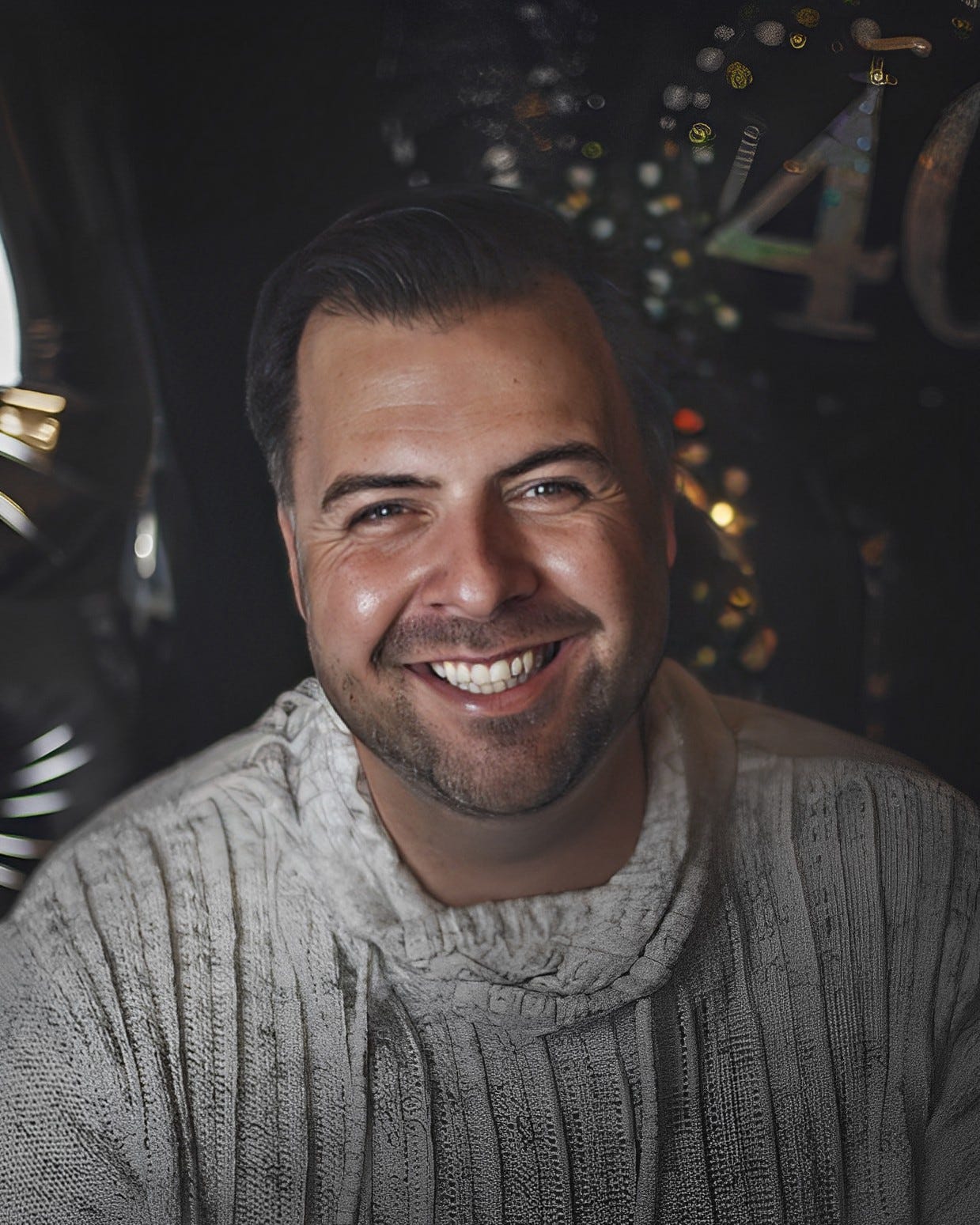
Professor Chesko is an award-winning speech and debate coach and tenured college professor known for his compassionate teaching methods. When he's not in the classroom, he spends his time as a devoted father to his three children. In his spare time, he started creating video content online over the pandemic and now has over one million followers across his platforms.
Thank you so much for doing this with us! It is really an honor. Our readers would love to get to know you a bit better. Can you share your "backstory" with us?
Thank YOU for having me! My story contains a lot of firsts. I’m a first-generation American with my father immigrating here from El Salvador. I was the first to attend and graduate from a university. I am the first to escape from poverty, first to buy a house, and, of course, the first to get diagnosed with ADHD.
Growing up as a “gifted and talented” child, I was constantly labeled a troublemaker for my inability to sit still and concentrate in class. The phrase “so much potential” was my childhood albatross, “if only [I] could just learn to sit still and pay attention.” My teachers continually suggested that I should see a doctor for my behavioral issues, but my family was very poor and without any sort of health insurance, I was left to just keep on swimming along and hoping that I wasn’t wasting my “potential.”
I always knew that I related to people with ADHD, but was not able to receive a formal diagnosis until I was 37 years old, when the pandemic hit and all of my tricks that I had used to hack my disability were no longer at my disposal. Less than 5-minutes into our first meeting, my doctor exasperatedly said, “Wow, you are aggressively ADHD, how have you never been diagnosed?” And that was the moment where everything in my life just started to make a little more sense.
Do you feel comfortable sharing with us the story surrounding how you became disabled or became ill?
I’ve always had ADHD and anxiety, but because there is so much misinformation surrounding it, I could never get the help I needed. I was just “lazy,” or “talkative,” or even “too smart” for someone with ADHD. So I learned to mask and developed very specific ways to cope and succeed. It wasn’t until 2020 when the pandemic hit and all of my tricks and tools were no longer available for me to use that I realized I could no longer get by without seeking some help. So while that wasn’t when I “became disabled,” that WAS the moment that I realized I could no longer pretend it didn’t exist.
What mental shift did you make to not let that “stop you”?
This is a hard question to answer (and I realize this series is called unstoppable, so hear me out when I say this next part), because it did stop me. One thing I wasn’t ready for was the grief that would accompany my official diagnosis. Grief for growing up in poverty and not being able to get a diagnosis simply because we were poor. Grief for what “could” have been my life if I had received help earlier. Grief for all the opportunities and life choices that I either ruined or missed out on. And grief for the young boy who simply needed help, but was instead labeled as a waste of potential.
Having said that, it was those very moments that I was grieving over as an adult that helped me to overcome my struggles as a much younger man. I needed to prove all of them wrong. I needed to be the one to make it out. I needed to show everyone that they were wrong about me and that all of that potential they saw in me was not a mirage. Does that sound bad? Is spite a bad motivator? Maybe…but it worked.
Can you tell our readers about the accomplishments you have been able to make despite your disability or illness?
Despite never learning how to sit still or be quiet in class, I eventually found teachers that could see through those problems and support me and help me excel. I was the first in my family to go to college and, after changing my major 7 times, eventually found my place, became a speech and debate first-team all-american, graduated summa cum laude, went to graduate school, became a tenured college professor and director of one of the top speech and debate teams in the country (where I have coached over 25 national champions), and have recently built a social media presence across multiple platforms with over 1 million followers.
What advice would you give to other people who have disabilities or limitations?
Trust your lived experience. Everyone thinks they are an expert on your life, but you don’t need to “just get over it” and you aren’t using your disability as an excuse. Your experience and your feelings are valid.
None of us are able to achieve success without some help along the way. Is there a particular person who you are grateful towards who helped get you to where you are?
It’s probably cliche, but my mom. She has always been my biggest cheerleader and support system. Seeing her persevere through things as a single mother while raising my brother and I that would have broken most has always been my source of inspiration when things got tough. I would not be here today if not for her steadfast love and support.
How have you used your success to bring goodness to the world?
I chose to work at a community college in Los Angeles to help other young people going through the same things that I went through. I have taught and mentored countless first-generation and neurodiverse students who are now doctors, lawyers, and academics thriving in their careers. I cannot count the number of times that students have come to my office hours crying about how much it means to see a professor who went through so many of the same things that they are going through and still make it out. I also use my social media platforms to speak out on issues and to try to make positive change in an increasingly toxic and divisive world.
Can you share "5 things I wish people understood or knew about people with physical limitations" and why.
Can I phrase this as “5 things I wish people understood or knew about people with ADHD?”
1 . Everyone is NOT a little ADHD. ADHD’s portrayal in popular media is that of a distracted child that can’t sit still, but the experience is far more varied and complex than these representations infer.
2 . The reason people with ADHD are often referred to as relatable is because we have learned to mask our symptoms into a more palatable experience to avoid being stigmatized. So while I might say that “I’m bad with names,” I’m really saying that my short term memory can often be debilitating.
3 . Having said that, ADHD is widely underdiagnosed for women, people of color, and people who grew up poor. If you find yourself relating to ADHD content creators and fall into one of those categories, it might not be a bad idea to talk to a doctor. It can be a life changing experience.
4 . Being successful does not mean you don’t have ADHD. In fact, many with ADHD are extremely intelligent and successful, but that doesn’t mean you don’t need and deserve support.
5 . ADHD is not a superpower. While it can feel comforting to tell a child this exact statement, longitudinal studies tell us unequivocally that ADHD can come along with a slew of negative outcomes. Calling it a superpower can lead a young person to feel far worse when they do end up struggling because why would anyone with a “superpower” struggle?
Can you please give us your favorite "Life Lesson Quote"?
“You can't change who you are, and you shouldn't be asked to." -Jonathan Mooney
We are very blessed that some of the biggest names in Business, VC funding, Sports, and Entertainment read this column. Is there a person in the world, or in the US whom you would love to have a private breakfast or lunch with, and why? He or she might just see this :-)
He’s only two years older than me, but as a Latino, as an educator, and as a creative, Lin Manuel Miranda has always been a huge inspiration for me. I can’t imagine he will see this, but might as well not throw away my shot…see what I did there?
Thank you so much for the time you spent with this interview. We wish you continued success and good health!
About The Interviewer: Kelly Reeves is a published writer, copy editor, speaker, and certified entrepreneurship and personal growth coach. She is passionate about working with entrepreneurs and executives over 50 to help them discover their life’s purpose, unlock their full potential, and thrive in the second half of life. As an award-winning public relations professional with multi-industry knowledge Kelly worked with global brands, startups and media personalities including the Tony Hawk Foundation, Barrett-Jackson, Targus, Kingston, WD, and Howard Stern. Kelly successfully launched a variety of consumer electronics and B2B brands and executed highly successful PR and social media campaigns. With an average track record of generating more than 50 million media impressions on a monthly basis, she placed clients in leading media outlets such as InStyle, the Wall Street Journal, USA Today, CNet, TechCrunch, AllThingsD and Mashable; and landed spots on high profile programs such as Extra, the Today Show, ABC News, CNN and Good Morning America. She also played an integral role in helping clients increase sales revenue by over 350%. Her community service includes mentoring students in the Masters of Entrepreneurship Program at the Paul Merage School of Business at the University of California, Irvine. She also mentors students in the College of Communications at California State University, Fullerton. Kelly serves as the Co-Founder and President of Paw Prints in the Sand Animal Rescue, a 501c3 animal welfare organization where she oversees the operations, donor relations, and marketing and PR strategy.