In venture capital, we have to think in a minimum of 10 year cycles. It’s so easy to get drawn in by the like, or the click, or the paper markup.
(Kate McAndrew, GP Baukunst): Why We Need More Women Founders & Here Is What We Are Doing To Make That Happen
As a part of our series about “Why We Need More Women Founders”, I had the pleasure of interviewing Kate McAndrew.
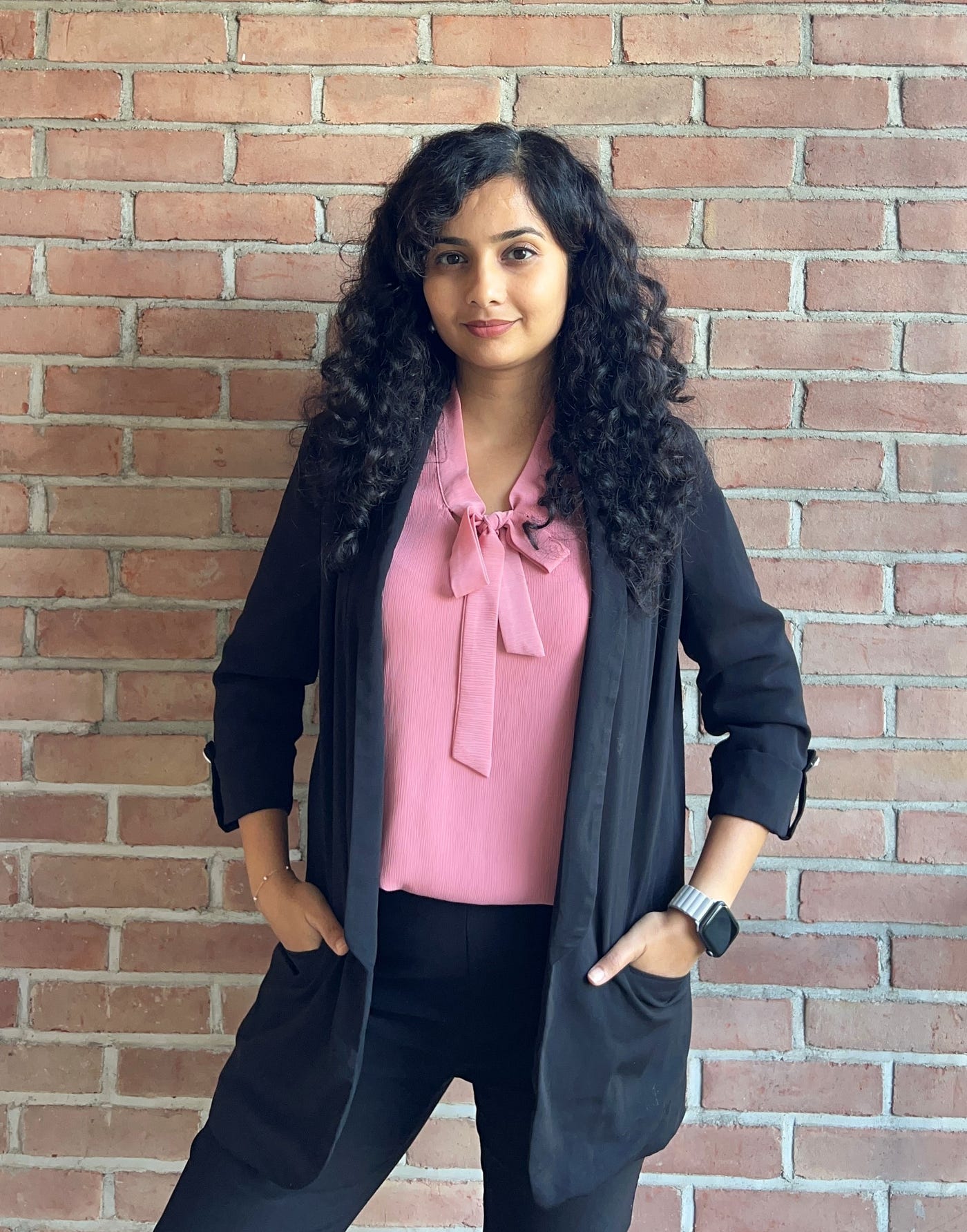
Kate McAndrew is a venture capitalist with a passion for investing in women-led startups. She is the Co-Founder and General Partner of Baukunst, where she is investing in companies at the frontiers of technology and design from their $100M inaugural fund. Kate is the author of The Goddess Guide to Branding.
Thank you so much for doing this with us! Before we dig in, our readers would like to get to know you a bit more. Can you tell us a bit about your “backstory”? What led you to this particular career path?
I’ve been a venture capitalist for over a decade, but I never planned it that way. I always thought I’d go into the arts. My college degree is in Art History and Cultural Studies. After I graduated, I was volunteering on a Habitat for Humanity job site in North Carolina and met a couple of angel investors who were also there to build the house. We hit it off, and they ended up inviting me to help them start their new accelerator program.
This was back in 2012 when Y Combinator was still fairly new. I was inspired by the idea that instead of paying an institution to go to Business School, you could receive an education on entrepreneurship through an accelerator program that was taking a bet on you and paying you to be there. I loved helping run the accelerator program. Two years later, I moved to San Francisco, slept on the floor of my friend’s community warehouse in SOMA with a bunch of startup founders who were also living there, and got my first real venture job at a fund.
While I didn’t end up pursuing a career in the arts, at my fund Baukunst (which I started with three phenomenal Co-Founders), we invest in founders who are leading with creativity, both in their perspective on design as well as in their approach to disrupting markets. My path has not been a typical one for VC, but it has been wholly authentic.
Can you share the most interesting story that happened to you since you began your career?
When we set out to raise our first fund, so many people told us it would be impossible to succeed. Embarking on this journey at the same time I was expecting my first child made it feel especially daunting. I’ll never forget receiving the email from my fellow General Partner at Baukunst telling me that we had inked the signature for our last $1M check, completing our $100M raise. When I got the email, I was driving through the mountains with my sleeping baby in the back seat. I immediately burst into tears. We had done what so many others had told us we couldn’t do, and I’d done it with a baby on my knee.
Can you share a story about the funniest mistake you made when you were first starting? Can you tell us what lesson you learned from that?
In college, I was so focused on art and its history. I was never in the Investing Club or anything like that. Early on in my first job in VC, I was sitting in a meeting and everyone started talking about NEA. I just assumed they were discussing the National Endowment for the Arts, but the conversation wasn’t making any sense to me. After the meeting, I quietly asked my new boss to explain the relevance of the National Endowment for the Arts for our business. He said, Oh no, we mean the venture capital fund NEA. NEA is one THE most famous venture funds, and I had no idea what it was. Thankfully, my boss was very sweet about the whole thing.
It took me a while to learn the language of Silicon Valley fluently. For this reason, whenever I use an acronym in a meeting, I take the time to also spell it out. I always want to be inclusive of people who might not speak the language.
None of us are able to achieve success without some help along the way. Is there a particular person who you are grateful towards who helped get you to where you are? Can you share a story about that?
I think investors and founders really take a chance on one another. In many ways, we give each other our big breaks. Back in 2018, I led the pre-seed round for Bobbie Baby, which is a direct-to-consumer infant formula company. At the time she pitched me, the founder Laura Modi was 8 months pregnant. Laura had been an early employee at Airbnb, which impressed me. She won me over with her vision to bring an organic baby formula to the US market that parents can feel good about and utilize a disruptive business model to do it. I took a chance on Laura, and she took a chance on me.
Our investor-founder partnership has hugely shaped my career. Bobbie has gone on to be a consumer breakout hit, and I still serve on their board. I work hard for Laura, and Laura works hard for me. I consider her to be one of my biggest allies. She also invested in Baukunst, which is a huge vote of confidence. To have a founder I backed come in and invest in my fund is deeply encouraging.
Is there a particular book that made a significant impact on you? Can you share a story or explain why it resonated with you so much?
I’m really into the magical and mystical. There’s an amazing book by Michelle Tea called Modern Tarot that I return to frequently. It’s an accessible, feminist romp through the world of tarot and offers a contemporary approach to the ancient art of self-reflection and storytelling. I started reading tarot in 2018 and it instantly became a way for me to connect with the women around me. I’m known for giving female founders their first tarot reading after I’ve invested in their company.
Do you have a favorite "Life Lesson Quote"? Do you have a story about how that was relevant in your life or your work?
My favorite line is Lemons ripen faster than pearls. In venture capital, we have to think in a minimum of 10 year cycles. It’s so easy to get drawn in by the like, or the click, or the paper markup. My partner at Baukunst, Axel Bichara, introduced me to this phrase and the powerful lesson within it. I’ve been working with Axel for over a decade now, and he always reminds me that we’re playing the long game. Our job is to stay focused on making the next best right decision as we build for the long term. This mindset helps me quiet the noisy world we live in and ask, What can I positively impact today?
How have you used your success to make the world a better place?
I believe every investment I make is a vote for the world I want to live in. I like to think of myself as a professional fairy godmother and when I wave my magic wand, a million dollars rains down on you. The capital I invest in a founder enables them to create their dream, to make it real. I am fortunate to work with people who are at the frontiers of their industries and who are motivated to reimagine whole aspects of how we live, work and play.
I wave my magic wand over founders who are building companies with a genuine sense of purpose that not only inspires the products they build but also, the way they treat their customers, their employees, and their broader communities.
Ok, thank you for that. Let’s now jump to the primary focus of our interview. According to this EY report, only about 20 percent of funded companies have women founders. This reflects great historical progress, but it also shows that more work still has to be done to empower women to create companies. In your opinion and experience what is currently holding back women from founding companies?
Lack of affordable childcare is currently holding many women back from becoming founders. When women don’t have access to affordable childcare, it’s very difficult to have the time, the space, the energy or the money to take the leap and start something new.
Another thing holding female founders back is that there are so few female VCs out there. Right now, only about 7% of investors writing venture checks are women. Many female founders want to build solutions to problems that primarily impact women. A female VC is more likely to intuitively understand the problem and see what a massive opportunity it would be to bring a solution to market.
I think a lot of male VCs right now are missing out on big business opportunities simply because they don’t have a grip on the problems women face. This lack of resonance, of course, also negatively impacts the female founders who are pitching these funds.
Can you share with our readers what you are doing to help empower women to become founders?
I am very active in magnifying the great work women around me are doing. I think it’s so important to tell each other’s stories and to celebrate one another. Women need to see the stories of female founders who are succeeding. This is one of the reasons I wrote The Goddess Guide to Branding with my sister Jane (McCarthy). In our book, we help entrepreneurs create an authentic and compelling strategic blueprint for their brand. We also share interviews with phenomenal female founders like Sallie Krawcheck of Ellevest, Georgina Gooley of Billie, Laura Modi of Bobbie (and so many more.) It’s truly a powerhouse collective of founders who came together in this book in order to help other women succeed.
The ecosystem of women who want to support other women is thriving right now. It’s a privilege and a joy to be part of this burgeoning ecosystem and to be contributing to it.
This might be intuitive to you but I think it will be helpful to spell this out. Can you share a few reasons why more women should become founders?
When women lead, extraordinary things happen. I have personally seen women build great companies in a way that is more collaborative than hierarchical, more regenerative than extractive, and is a force for co-creating the kind of future I want my child to live in. We need more women to be founders so that more companies like this are built. Since the status quo was built neither by nor for us, it’s inevitable that our presence at the helm will shift the center. This is important.
Ok super. Here is the main question of our interview. Can you please share 5 things that can be done or should be done to help empower more women to become founders?
If you can, please share an example or story for each.
1. Recognize that we are the ones we’ve been waiting for: No one’s going to solve our problems for us. Who will create the solutions that we need if we’re not calling the shots? We are the white knights we’ve been waiting for. We have the creativity, the intellectual capacity, the incredible drive, and the networks of support to build the products, tools, and services that we want in order to live more joyful and fulfilled lives.
2. Provide universal, high-quality childcare for all women with children who are not yet school age. I’ve personally seen so many women who are thinking of starting a company decide not to do it, because it’s too much of a financial risk in the expensive years when they have young children. These women often choose to stay in a reliable job at a big tech company that has good benefits. If these women knew they’d have free, high quality childcare available to them, I think many would make a different choice and decide to take the leap of becoming a founder. It’s time for the government to step up when it comes to childcare.
3. Increase the number of female investors. As someone who invests in pre-seed companies, which means I’m investing in brand new businesses, I know that so much of the decision-making at this stage is guided by the VC’s intuition. It’s based on the capacity of a venture capitalist to really connect personally with the problem that the founder is intending to solve. Not all, but many female founders are building companies with a female consumer at their center. With so few female VCs in the industry, it lowers the chances of female founders who are focused on serving women getting funded. Many male VCs simply don’t understand the problems women are facing and if they do, they may not be as personally connected or excited to fund endeavors that address these issues. It may feel like it’s too far out of their wheelhouse and therefore, not a great investor-founder fit. If we want to get more female founders funded, LPs (Limited Partners) need to fund more female VCs.
4. Give small business owners more financial incentives and support: Small businesses elevate our communities and meet the needs of women when they otherwise would go unmet. I love supporting women-owned businesses in my neighborhood in San Francisco, as well as online. We need women to feel they can leave salaried employment in order to take the leap and open the smoothie shop, or the car repair shop, they’ve been dreaming about. We need governmental action that contributes to the opening of more small businesses. This will positively impact all genders. I joined VCs for Kamala for many reasons, one of which is her plan to implement tax deductions and small business expansion funds that will allow more money to flow to entrepreneurs.
5. Keep championing other women & telling their stories: We need to keep lifting up other female founders and sharing their stories. Doing this will inspire more women to choose the entrepreneurial path. One of the reasons I am so thrilled to share The Goddess Guide to Branding with the world is that it tells the stories, in a very personal way, of a diverse group of female founders operating in a range of categories, some who bootstrapped and others who raised institutional funding. These founders talk about their victories and how they moved through setbacks; they share the somewhat messy and intuitive ways they’ve come up with brilliant creative ideas, as well as how they rode momentum all the way to acquisition. We need to share these positive stories so that the women around us who are thinking of starting something see that yes, they too can do it.
Kate’s Video “5 Things that Can Be Done to Empower More Women to Become Founders”:
You are a person of great influence. If you could inspire a movement that would bring the most amount of good for the greatest number of people, what would that be? You never know what your idea can trigger.
Giving mothers of young children access to free, high-quality childcare is the movement I want to see turn into legislation. Whether this gets done through a Universal Basic Income approach where the government deposits $3,000 in a mother’s account each month that she can put toward caring for her child in the way she sees fit, or we provide vouchers that apply to a multiplicity of childcare centers, a solution that is government-backed is in order. With this legislation in place and with more money flowing toward caregivers, I’m sure many female founders would innovate and create new solutions to serve the childcare needs of our communities.
Universal free childcare would totally transform the experience of parents and children alike. The Surgeon General just issued an advisory about the stress parents are currently under and how this is negatively impacting their mental health and well-being. We can and must do better for our families with young children in this country.
We are very blessed that some very prominent names in Business, VC funding, Sports, and Entertainment read this column. Is there a person in the world, or in the US with whom you would love to have a private breakfast or lunch with, and why? He or she might just see this if we tag them.
My dream lunch is with Laurene Powell-Jobs, because she’s my dream LP. She runs the family office, Emerson Collective, and I think they’re doing fascinating work with what they’re investing in. I’m very curious to learn what drives her as a human being and what her vision is for the world. I feel that she would deeply resonate with what we’re doing at Baukunst, how we’re focused on investing in creative technologists. I like to think that if I could sit down with her over risotto, there’s a good chance she might help us with what we’re building.
How can our readers further follow your work online?
I’m very active professionally on TikTok and LinkedIn. My sister and I just launched the Goddess Office, which is a platform for elevating women in business. If you’re curious to learn who your own goddess archetype is, take our free quiz.
Find me:
TikTok: https://www.tiktok.com/@kate_mcandrew
LinkedIn: https://www.linkedin.com/in/kateprestonmcandrew/
Goddess Office: https://www.goddessoffice.com/
Thank you for these fantastic insights. We greatly appreciate the time you spent on this.