I felt this was fundamental for a resilient future and this led me to an in-house role as Circularity Program Manager at Schneider Electric.
In our current economic model, we see a lot of waste and inefficiency. Products are designed, used, and then discarded, often creating environmental and economic burdens. The circular economy offers a solution by designing out waste and keeping materials in use for as long as possible. This shift can lead to innovative business models, sustainability, and economic resilience. How are companies making this transition, and what can others learn from their journey? I had the pleasure of interviewing Shreya Sonar.
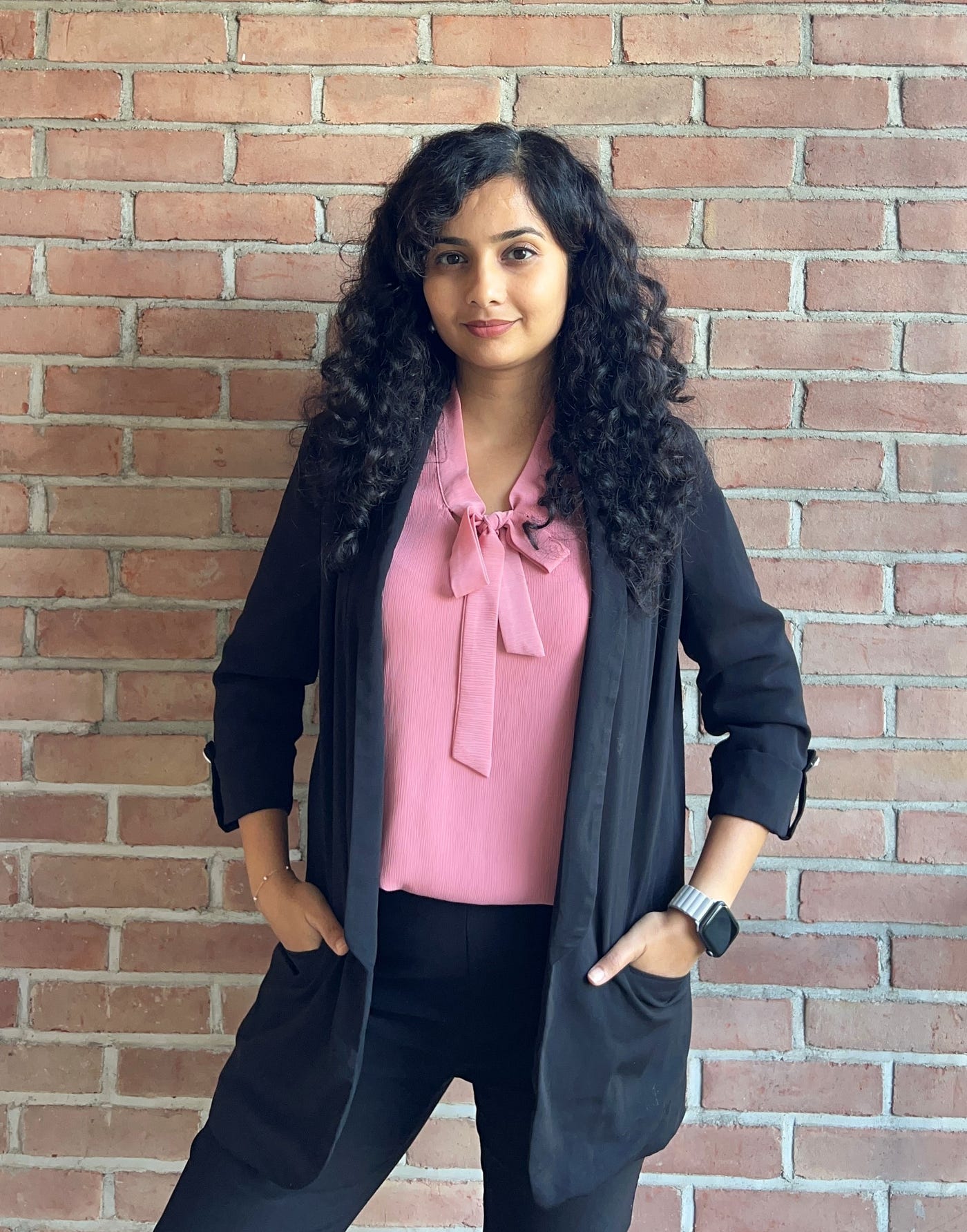
Shreya Sonar, serving as Schneider Electric’s Circularity Senior Program Manager, leads the charge in advancing end-to-end circularity by unifying ongoing activities into a cohesive framework and identifying areas for enhancement. Her efforts focus on embedding circularity across products and services, exploring innovative business models and partnerships, and establishing connections to decarbonization. She has a decade of experience in sustainability and holds a Master’s in Environmental Science and Management from the University of California, Santa Barbara.
Thank you so much for doing this with us! Our readers would love to get to know you a bit better. Can you tell us your “Origin Story”? Can you tell us the story of how you grew up?
I grew up in India with a strong sense of defending the Earth from pollution thanks to the cartoon Captain Planet and the Planeteers. The Planeteers are five young multi-cultural friends chosen to protect the planet from Eco-Villains who endanger the planet. Growing up, I really wanted to become a Planeteer, and this left a lasting impression on me, shaping my understanding of sustainability and circularity long before I even knew those terms.
My parents emphasized high quality of education, and we valued multi-cultural experiences as a family. So, when the opportunity arose to pursue graduate studies in Environmental Science at the University of California, Santa Barabara on fellowship, I took a leap of faith and moved to a country which I had never been to, nor knew anyone.
Could you share with us your journey and the pivotal moments that led you to focus on the circular economy within your business?
My professional journey began by quantifying plastic pollution. I quickly realized that it is much more expensive to deal with the consequences of pollution than it is to prevent it in the first place. And pollution prevention starts with designing out waste. So, I started making my way deeper into the core of how companies design, manufacture and sell products.
I dedicated the next five years as a consultant to developing sustainability strategies for companies of all sizes and maturity levels. While many companies invested in powering their operations with renewable energy, they often overlooked the significance of creating circular supply chains — transforming how products are manufactured and used. I felt this was fundamental for a resilient future and this led me to an in-house role as Circularity Program Manager at Schneider Electric.
A pivotal moment for Schneider Electric was introducing refurbished products during the pandemic. While the rest of the business faced unprecedented hardships due to supply chain challenges affecting the global economy, the refurbished business thrived since we were our own supply chain. This is not only sustainable environment-wise, but also business-wise! And now we’re working on scaling this.
What experiences in your background have shaped your understanding and commitment to sustainable business practices?
Moving to the US from India exposed me firsthand to social inequity and the dangers of overconsumption. And the Planeteer in me never became ok with it. Not many people know that we could fulfil people’s needs with only 70% of the materials we now extract and use by adopting a global circular economy, according to the Circularity Gap Report! So I became obsessed with using less. I started with changes in my personal life, and it expanded into my professional side as well.
When speaking with companies about switching to more sustainable materials, I started guiding them on reducing it in the first place. I firmly believe that eliminating unnecessary consumption is the first and easiest step to a sustainable future, for both companies and individuals.
Can you tell us about a significant challenge you’ve faced in your career that has influenced your approach to business and sustainability?
One of the main challenges is shifting business models to be able to take products back, refurbish, and resell them. First, you need to make an environmental case and a business case to convince the company to act. Next, you need to develop new business models and set up product take back infrastructure. Finally, you must incentivize behavioral changes in customers, and then …wait…wait till enough products come back until the system becomes a well-oiled machine. This is particularly challenging at Schneider Electric because the average lifetime of a product varies between 15–30 years. It really feels like a marathon and requires room for trial and error.
How has your company evolved to integrate circular economy principles, and what role have you played in this transformation?
Schneider Electric has started its journey into circularity in 2015 with a straightforward mission: to enhance business efficiency while positively impacting the environment, in the wake of its longstanding commitment to sustainability. Since then, we have implemented externally facing key performance indicators, shifted sourcing to sustainable materials, eco-designed products for efficiency, created a dedicated label for repacked and refurbished products, and reduced environmental impact.
My position was created to go further and lead the company on an end-to-end circularity transformation. In my role I unify existing circularity capabilities, identify gaps, and strategize how to fill them.
What does ‘closing the loop’ in the circular economy mean to you, and why is it important for businesses today?
A linear economy is amazingly simple. You extract resources, convert them into products. Use them and throw them in a waste bin.
A circular economy is about no waste. So, if you extract a resource, it needs to stay in the economy: that is closing the loop.
Now, a crude interpretation of this is to simply divert products from the waste bin to a recycling bin.
But for me, it is not enough. Closing the loop must always be coupled with maximizing value retention. And this should be done at each stage of the product’s lifecycle. For example, optimizing material use in the design and manufacturing stage is far more efficient than recovering materials from products at the end of their use and re-integrating them into the manufacturing stage. Or in another case, repairing a product before sending it to recycling means it retains higher value.
It is this creation of new loops which maximize value that makes a circular economy complex.
Therefore, closing the loop is important, but companies need to prioritize maximizing value retention.
Does designing products to be circular increase the cost of the product? What are the challenges of balancing cost with creating a circular product that has demand?
That’s a tricky question because the answer depends on where you draw the line. Let’s take a few examples.
Say you are eliminating unnecessary use of materials — that’s instant cost savings.
Or say you are designing for durability. Upfront, you may use more raw materials, but your sales volumes could go up since your products last for longer.
Realistically, there are parts of circularity where the infrastructure is still nascent today. Offering product take back is one such example where existing delivery and distribution systems are just not built to handle reverse flows in the same way as forward flows, so it could cost more upfront. But that is an investment to optimize your costs in the future.
Can you identify the 2–3 critical mistakes companies often make when transitioning to a circular economy model?
The top mistake is equating circularity to recycling. Now, don’t get me wrong: recycling is important, but companies should first prioritize maximizing value retention.
Secondly, companies should not wait till standards and regulations force them to transition to a circular model. Circularity is important for future business resiliency. It is one foot in business and the other in sustainability. My advice is to build a framework that works for your company, and just get started.
How does your company address the entire lifecycle of a product, from design to end-of-life, to ensure circularity?
To start its circularity journey, a company needs to thoroughly understand its upstream and downstream value chain and identify the top value maximizing opportunities for circular transformation. Typically, it follows four steps:
First, design and innovate with circularity at the heart of decision, making such that it will allow the product to use better materials, to be used longer and again. On average 80% of a product’s environmental impact is influenced by decisions made in the design stage! At Schneider Electric, we have developed a suite of software, called Eco-Structure, to extend the lifetime of our products by increasing reliability and maintenance. These steps must be embedded from the design get go.
Then, use better. Using optimal amount of materials and choosing sustainable materials that have been recycled or are sustainable is paramount. For instance, in 2023, we partnered with SDI, a green steel supplier of recycled steel, produced with renewable energy in an electric furnace, cutting emissions by 70% compared to normal steel. And this is important because steel alone represents 7% of global greenhouse gas emissions.
Next, use longer. Before ripping and replacing a product, consider options for repair and lifetime extension. Schneider Electric offers its customers a variety of services such as digitally enabled maintenance, on-site repair, and modernization, so customers can maximize their value retention.
Finally, use again. Recirculate products, parts and materials in the economy at their highest value as long as possible. Our take back services and dedicated repacked and refurbished label make this possible.
What innovative strategies has your company implemented to reduce waste and promote resource efficiency?
I’ll talk about an example which starts in ‘use longer’ and ends in ‘use again’. EcoFit is an equipment modernization service which enables customers to replace or upgrade only the necessary worn-out components of their equipment instead of replacing the entire equipment.
Further, instead of sending these components to recycling, Schneider Electric takes them back for refurbishment and sells the refurbished components to new customers under the same warranty as new.
This is truly innovative as it not only adds value to the customer, but Schneider Electric can shorten its supply chain and add a new revenue stream.
Our success with truly circular offers like these has paid off: Recently, we were recognized by the World Economic Forum as having one of the first three global Circularity Lighthouses in the built environment.
What role do partnerships and collaborations play in your efforts to close the loop and create a more sustainable business model?
We are all in this together and circularity cannot be implemented without collaborations between multiple stakeholders. Supply chain partnerships help provide the agility, speed, and space that Schneider Electric needs to achieve end-to-end transformation. Industry groups foster a pre-competitive arena for knowledge exchange and are grounds to consolidate purchasing power and commitments. And academia challenges the boundary of imagination.

What are your “5 Things You Need To Create a Successful Circular Economy Based Business”?
Number 1: Act now.
Over the last five years, nearly every global supply chain has broken down due to scarcity. In a circular business, extracted resources stay in the economy and scarcity is reduced. So, companies need to learn to become their own supply chain.
For example, the recent surge in demand for batteries will drive peak demand for mined minerals. The planet has a finite reserve of these minerals. So, manufacturers and regulators are proactive about bringing these minerals back into the supply chain as it is critical for energy security.
Number 2: Start with design.
You know, up to 80% of your product’s environmental impact can be influenced by decisions made in the design stage. Circular by design is not only about using better materials and manufacturing processes, but also about ensuring that products can be used for longer, and that they can be used again.
For instance, products need to be designed for disassembly in order to be serviced.
The good news is, there is a lot of innovation in the space. Start-ups can build custom micro factories that disassemble, refurbish, and reassemble your products at speed and scale. But only if the product was designed for disassembly.
Number 3: Expand your thinking beyond the point of sale.
Today, the default business behavior is: I sell something, and I walk away.
Now, we sell something, we want to bring it back, feed it into our production process and resell it. At Schneider Electric, we now offer a range of take back services and refurbished products.
Number 4: Prioritize maximizing value retention.
This is the core of circular thinking! Simply sending products to recycling should never be the default. A lot goes into making products, so it is logical to maintain them at their highest value.
For example, construction work is a big contributor to worldwide solid waste.. it’s about 30–40% which is unsustainable both financially and for the planet. Shifting away from demolition and new construction toward retrofitting is the path for a circular built environment.
Number 5: Understand that mindset transformation is key.
If your company wants to accelerate towards a circular model, the CEO must show leadership to implement it. Then your employees need to feel empowered to work cross functionally. And this needs to happen not only within your organization but across the value chain, from suppliers to customers to partners in between.
And remember: When we talk about circularity, I must always emphasize that it is not only about protecting the planet, but also about building resilient business models.
What is one actionable step companies can take today to move closer to a circular economy model?
Reducing overconsumption is key, so I’d advise identifying opportunities for reuse and second-life applications of your products.
Could you share a story of a business or leader who has inspired you in the realm of the circular economy?
I’m very impressed by Caterpillar ‘Cat Reman’ program which has been running for over 50 years. It helps the company, dealers and customers succeed by offering high-quality, cost-effective replacement parts made from genuine Cat components. They were one of the pioneers in the industry to launch circularity at scale and are still successful with the complexity of handling large and long-lasting products!
How can our readers further follow your work or your company online?
Check out our circularity thought leadership portal: https://www.se.com/ww/en/insights/sustainability/circularity/
Follow our Linkedin page: https://www.linkedin.com/company/schneider-electric/mycompany/
This was great. Thanks for taking time for us to learn more about you and your business. We wish you continued success!
About the Interviewer: Russell McLeod is an experienced business leader, social entrepreneur, and mentor. A champion of profit with purpose, the circular economy and of collaboration for positive progress.
Russell is the founder of Mightyhum a Toronto-based impact enterprise dedicated to supporting growing organizations. And, while it’s not a requirement, the Mightyhum team has a passion for collaborating with purpose-driven businesses. Mightyhum specializes in providing consulting services and turning hairy audacious concepts into achievable ventures & projects. The Mightyhum team work with C-suite executives and leaders, developing new product offerings, effective go-to-market strategies, building for profitability, and streamlining operations. Before Mightyhum, Russell was involved in the world of social enterprise as the Executive Director of ME to WE, one of Canada’s best known and most awarded social enterprises. While at ME to WE, the team demonstrated that being profitable and impactful was indeed possible. During his tenure, ME to WE delivered $20M in cash and in-kind to WE Charity, helping transform the lives of over 1 million people through access to clean water; the lives of 200,000 children with access to education; and 30,000 women-led businesses launched globally.
Russell’ personal mission is to inspire others that there is ‘a better way to do business,’ ‘that through business we can solve some of the world’s problems at the same time.’ You can follow Russell’s work at https://www.linkedin.com/in/russell-mcleod1/ or www.mightyhum.com.