When you’re in television broadcasting, video is an essential component. I was working with a new producer, and I was a young reporter and anchor. I was anchoring that day, and none of the videos were rolling, but my producer didn’t tell me.
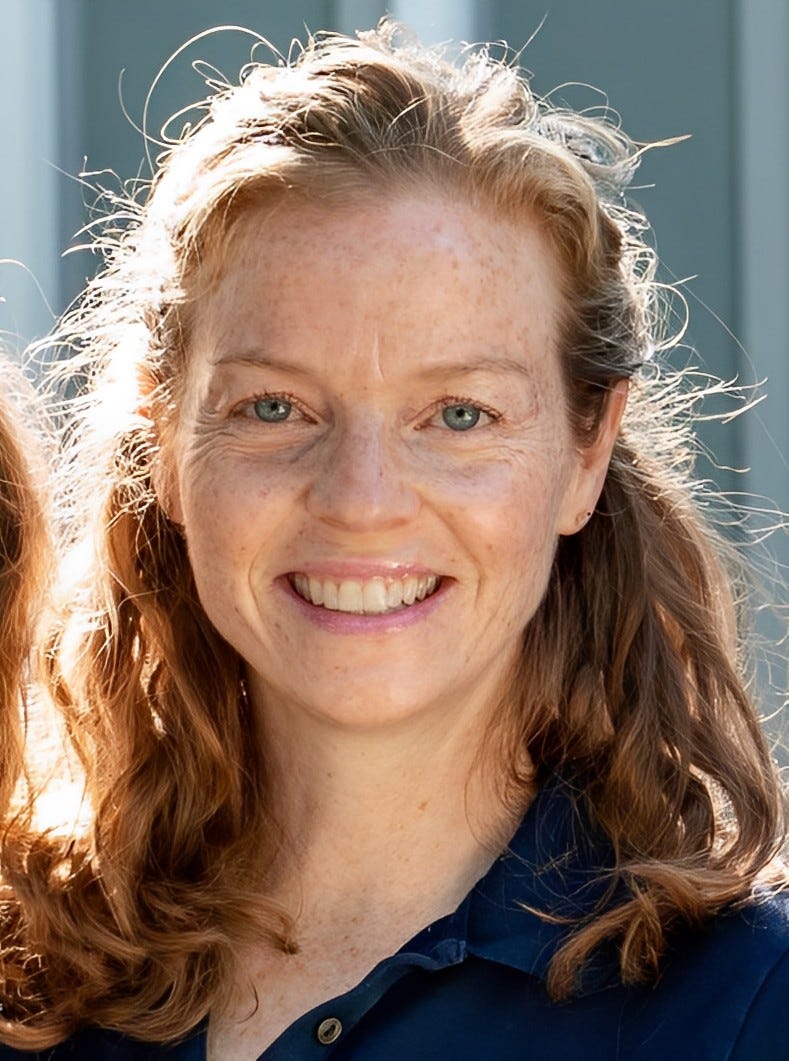
I had the distinct pleasure of talking to Paula Faris. Paula is the founder and leader of CARRY Media, an organization that champions, advocates, and celebrates working mothers through content, resources, and storytelling. She is an Emmy Award–winning journalist, speaker, bestselling author of “Called Out,” and host of The Paula Faris Podcast. With over two decades in broadcast television, Paula started her career with TV affiliates in Chicago, Cincinnati, and Dayton. She then worked almost a decade at ABC News, where she co-anchored Good Morning America Weekend, co-hosted The View, and launched the podcast Journeys of Faith with Paula Faris. She has reported on everything from politics, news, and entertainment to sports and faith, interviewing the likes of Reese Witherspoon, Tiger Woods, Kellyanne Conway, and now-president Joe Biden. Paula runs CARRY Media from South Carolina where she resides with her husband, John, and their three children.
Paula, it’s a pleasure to meet you. Thank you for joining us. Our readers would love to hear about your origin story. Could you share with us the story of how you grew up?
Igrew up in Jackson, Michigan, a small blue-collar town, in a lower-middle-class family. I was the youngest of four siblings and was raised in a Christian home. While we were initially Catholic, we later switched to the Lutheran Church, and I attended both Baptist and nondenominational high schools. Currently, I attend a nondenominational church, so I’ve experienced a bit of everything. My upbringing was in a conservative yet loving household, and my dad’s Lebanese roots were a significant part of our family heritage. We were a close-knit and loud family with imperfections, but it was an excellent environment to grow up in. Our backyard had a cornfield, and we enjoyed the wonderful small-town life in Jackson.
Overall, it was a great experience growing up.
Growing up, was there a book that inspired you to become a journalist?
I don’t think there was; it’s just how I was born. I came out of the womb asking questions and challenging people. Growing up, my nickname was “Paula 20 Questions”; you can imagine how annoying I was. I was always trying to get to the bottom of something, inherently and innately curious. It’s just how God wired me, truly.
It’s been said that sometimes our mistakes can be our greatest teachers. Do you have a story about a funny mistake you made when you first began your journalism career and the lesson you learned from it?
Oh gosh, I remember it well. It was just a mistake on all fronts. When you’re in television broadcasting, video is an essential component. I was working with a new producer, and I was a young reporter and anchor. I was anchoring that day, and none of the videos were rolling, but my producer didn’t tell me. So for about four awkward minutes, I was tap dancing and describing something that the viewers couldn’t see. It was definitely the most awkward four minutes of my life.
The lesson I learned from that experience was the importance of communication and improvisation. Sometimes, things don’t go as planned, and you have to make the best of a bad situation. Sometimes life gives you lemons, and you can’t change the situation, but you can control your attitude.
I decided to have a good time with it and make the best of the situation. However, I will never watch the tape because it was so uncomfortable.
That’s great. So let’s talk about your book. So can you describe how you aim to make a social impact with your book? What is the goal of the book?
Well, the book is called “You Don’t Have to Carry It All: Ditch the Mom Guilt and Find a Better Way Forward.” Many severe issues we face in American society are a direct result of two things: how we value or don’t value families and how we treat mothers in the workplace. I hope we can band together, men, women, single women, single men, mothers, and fathers, to figure out how to give working moms the support they need and deserve. We need everyone collectively to help in this process.
The book is helpful, hopeful, and also very revealing about how we got to this point in our society. It’s essential to look historically at how we got here and why it’s so hard to be a parent in the United States. Honestly, it’s more complex than anywhere else on the globe.
So I do a deep dive and talk to historians, sociologists, renowned thought leaders, and mothers from all different walks of life to figure out how we got here and how we can find a better way forward.
The book is very expository. We’re going deep, digging our way out, and finding a better way forward. I want it to be helpful and hopeful and show that it’s essential to value families. They’re our most incredible natural resource, regardless of whether or not you have children. They’re not valueless commodities. They are the future of our country, and they’re either the future, or they’re not.
So what can we do to raise this next generation and support mothers in the workplace who are in charge of being present and raising them along with their partners?
Is there a particular story in your book that is the most exciting or revealing? Can you share it with us?
There are actually several fun and revealing stories in my book. I try to keep it honest as a mother who doesn’t have it all figured out.
One of my favorite stories is about a case of mistaken identity. My youngest son once walked up to a woman at the pool and smacked her, thinking it was me. It’s a hilarious story.
But I also share more serious stories, such as losing my job at the beginning of the pandemic. This experience led me to start CARRY Media, which provides resources, content, and storytelling to help women and mothers navigate critical moments in their lives. I share both painful and humorous stories in my book, and I try to keep them authentic by not pretending to have a perfect life. I don’t try to paint a facade or put up a mirage that I have a perfect life, have it together, and have it all figured out. I don’t. But I ask many questions and know that we can get to a better place.
Was there a particular aha moment that made you decide, okay, this book is needed in the world?
There were two moments. The first was when I returned to work after my third child was born. I had previously taken maternity leave twice, so I was experienced in balancing work and motherhood. On my first day back at Good Morning America, an executive sent me an email after the show that read, “Not your best look.” I was hurt and furious because I didn’t feel good about myself, and I had just had a baby. I was still doughy. I realized that I was being held to an unreasonable and unhealthy standard. Why should mothers be held to these standards when they are the ones who make up our society? If women don’t have children, we don’t have a society. So it was at that moment that I determined that I had to change the game for moms. It’s an uphill battle. Mothers are facing burnout and mom guilt and the tension of never feeling like they’re good enough, and real systemic issues, like we’re paid 70 cents on the dollar compared to fathers, we’re passed over on promotions, we’re valued less and were scrutinized a heck of a lot more. So I felt we had to do something about it.
The second moment was in 2019–2020 when ABC chose not to re-sign me. I had two choices: to take the safe path, the expected path, and continue my career in broadcasting or to do something about the discrimination that mothers face in the workplace. I decided to form CARRY Media and become a founder/entrepreneur, which I know nothing about, but I know how to ask questions and get to the bottom of things. I am determined to change the game for working moms.
Can we talk about the solutions that you offered in your book? Please share a few things that the community, society, or the government can do to help address the root of the problem you’re trying to address.
Yes. It’s two layers. It’s attitudinal- your kid and your problem, and then it’s societal, cultural, and policy, where we lack support from a corporate perspective.
I think the main thing corporations can do, which is good not just for the parents on their payroll but it’s good for the entire work culture. Data shows that 95% of employees have wanted flex schedules since the pandemic, and four-day workweeks are more efficient and transformative for culture. Hybrid schedules are also desirable for 75% of employees, allowing flexibility in location. Not all industries can afford that, though. Doctors and nurses need to go to hospitals, and teachers must go to school. However, some schools are considering four-day weeks, which allow for flexible schedules.
Another solution is to offer childcare incentives. America only gives $500 in tax credits, which isn’t very kind. Other countries are providing tens of thousands of dollars. If we claim that we care about children and that they are our future, let’s invest in children through programs and funding. Children are our greatest natural resource. If we make it more difficult to have children, which we are doing, we will have fewer children, leading to a labor shortage and an economic crisis. Investing in children is not only the right thing to do but also good for companies’ bottom lines.
Another thing that corporations can do is advocate for parental leave policies and support employees in taking leave. Twitter’s former CEO, Parag Agrawal, was praised for taking paternity leave, but he only took a week or two when the policy allowed him several months. Leaders must lead by example, taking their entire paternity leave. Men must be part of this conversation. The greatest thing men can do for families and working moms is to take their paternity leave, taking all of it. Even if they don’t have it, they should fight for it.
Most importantly, we need mothers at the decision-making table. Being a mother has made me a better communicator, more efficient and courageous, empathetic and compassionate, a better leader, and a better visionary. I have grown in all these capabilities since becoming a parent and a mother. We lead uniquely, and policies won’t change unless we have a seat at the table. True systemic change happens at the decision-making table, where we aren’t expected to forsake our motherhood, and motherhood is valued and celebrated rather than scrutinized. Without children, we don’t have a society or a future, so please don’t punish us for it. Let’s start celebrating us, for it. True change happens when mothers are at the decision-making table. This isn’t a case against men; it’s a case for working moms.
At the community level, even if you don’t have children, or even if you do, ask someone how you can pitch in and help. We have this unspoken mantra in our society that we have to carry it all, do it all, and if we ask for help, we are weak or a failure. Ask someone to help. Or offer your friend and say, “I want to help you. What can I do to help you?” It’s not a sign of weakness but a sign of community. Other countries are interdependent on one another, their families, and their communities. That’s how they do life, that’s how they exist, that’s how they thrive. So let’s get back to living life together, doing life with community. Even if we don’t have family, even if we don’t have Children, we are part of this together; we’re a community.
That was a great answer. So, Paula, you’re a person of enormous influence because of the platform you’ve created for your fantastic work. If you could inspire a movement or spread an idea that would bring the most amount of good to the most amount of people, what would that be? Because you never know what your idea can inspire.
I want to change the game for working moms, and I think the best way we can do that is by making sure that moms have a seat at the table there, in the boardrooms, there at the c-suite tables. That they’re helping to influence policy, culture, and the attitude of our country. If we do that, we will have healthier families, cultures, and a healthier country.
This is our last question, what we call our matchmaking question. We’re very blessed that prominent leaders read this column. Is there a person in the world or the US who you like to have a power lunch with or collaborate with? Because we could tag him, and maybe we could connect you?
Well, Jesus, of course, but that’s not going to happen. But I’m in constant communication with him anyway. (Laughs)
But if you have any connections to Bono from U2…I mean, I love that man. I love his music. He’s an inspirational human. He’s just so talented and so gifted. I’d love to talk with him about his childhood and how he’s gotten to this point. He’s just a human who believes in doing the best and giving back to people. I’d love to talk to him about that because “to him who much is given, much is expected.” And the world would be much better if more of us had that attitude of giving back, servitude, and serving other people.
How can our readers purchase the book, and how can they follow your work?
The book, “You Don’t Have To Carry It All: Ditch The Mom Guilt And Find A Better Way Forward,” is available at most retailers.
You can also follow me on social media @PaulaFaris.
I have a newsletter that goes out every two weeks, where I share fun perspectives and some of my favorites. I also do fun giveaways.
If you want to support working moms, you can sign up for CARRY Media’s free weekly newsletter at carrymedia.com. As the founder of CARRY Media, I created this newsletter to give working moms the support they need and deserve. It goes out every Sunday and is a fun read that will make you laugh and learn while taking a load off your plate. It also provides some perspective on what life is like as a working mom.
Thank you for considering these resources. God bless you and your readers. It’s been an honor to talk with you today.
Thank you, Paula, for this really wonderful interview.