I didn’t want to create an album that portrayed immigrants only through suffering. I wanted to celebrate our strength, our stories, and everything we carry with us when we cross a border.
Pop Culture
Yeisy Rojas: Why We Must Stop Portraying the Immigrant Experience Only Through the Lens of Suffering
The GRAMMY-nominated violinist and composer discusses how her journey from Havana to Norway shaped her unique musical language and her mission to transform the cultural perception of the immigrant experience.
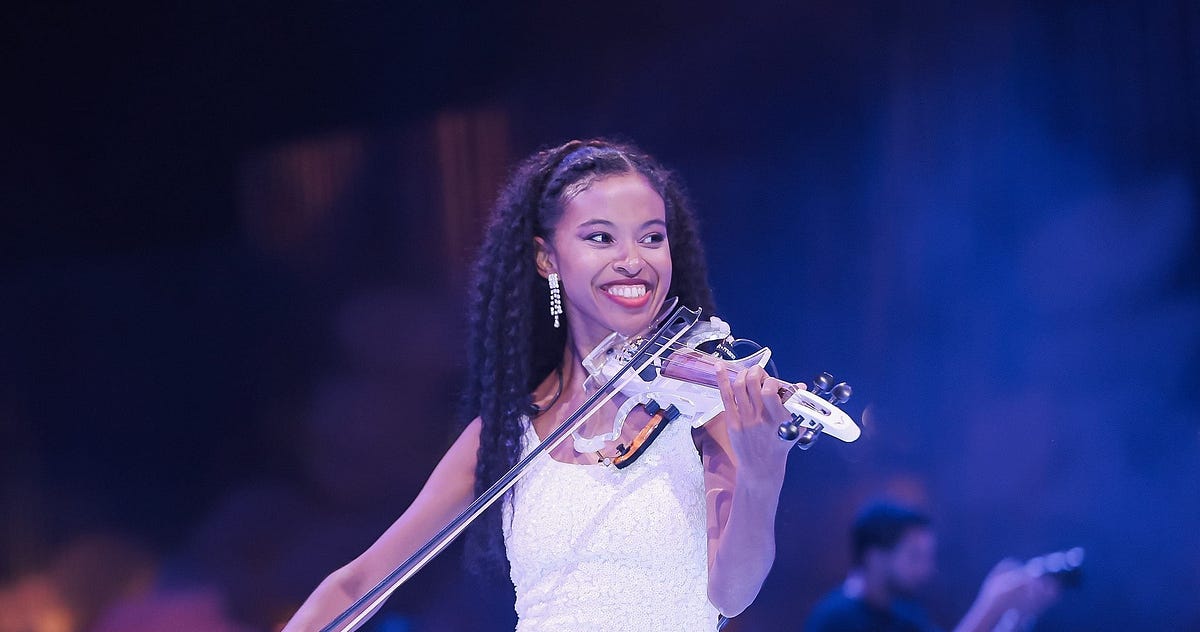
As a part of this series, we had the pleasure to interview Yeisy Rojas.
Yeisy Rojas is a GRAMMY® and Latin GRAMMY®-nominated Cuban violinist, singer, composer, and producer based in Norway. Her music blends Afro-Cuban rhythms with jazz, funk, and contemporary influences, creating a distinctive musical language deeply connected to her Cuban heritage. Rojas earned her first GRAMMY® nomination for her song Inmigrante y Qué? in the category of Best Global Music Performance at the 68th Annual GRAMMY Awards. The song also gained significant international attention after reaching №1 in Billboard’s New Music Latin weekly poll, where readers selected it as their favorite new Latin music release of the week with nearly 70% of the vote. Her debut album, A Mis Ancestros, received a Latin GRAMMY® nomination for Best Traditional Tropical Album in 2024. The project explores Rojas’ Afro-Cuban heritage and reflects an artistic journey shaped by identity, migration, and the connection between tradition and contemporary musical expression. Her work has also been recognized by international media. Rolling Stone featured Rojas in its Artists You Should Know series, highlighting her distinctive approach to Cuban music and the way her experience of living abroad led her to reconnect with her cultural heritage. Trained as a classical violinist in Cuba and later continuing her musical studies in Norway, Rojas has developed an artistic identity that moves naturally between cultures and genres. As a violinist, vocalist, composer, and producer, she brings together the musical traditions of her homeland with the influences she has encountered throughout her international journey. Through her music, Yeisy Rojas explores identity, migration, resilience, and cultural pride, while bringing Cuban music into conversation with a contemporary global sound.
Thank you so much for joining us in this interview series! Before we dive in, our readers would love to learn a bit about your “origin story.” Can you tell us the story of how you grew up?
I was born and raised in Havana, Cuba. I am an only child, and I was fortunate to grow up in a very close and happy family, where my parents supported my interest in music from a very early age.
I began studying violin when I was seven years old and received an intensive classical music education for eleven years. My childhood and teenage years were deeply connected to music: school, lessons, long hours of practice, rehearsals, and concerts. While other children may have had a more conventional childhood, for me it was completely normal to spend hours with a violin in my hands.
Looking back now, I realize that those years gave me much more than a musical education. They developed something in me that has become fundamental throughout my life: discipline.
What inspired you to pursue a career in music, and how did your journey begin?
From the time I was very young, I loved singing and watching music programs on television. I remember being about five or six years old and seeing a female violinist performing on TV. I thought, “One day, I would love to do that.”
I began studying violin at seven and continued my training for eleven years. At eighteen, I graduated and began my professional life in Havana. I worked as a violinist in the opera orchestra and also as an accompanist pianist at the National Ballet of Cuba.
It was a wonderful period of learning, but at the same time, I felt a desire to find my own voice. I loved performing music and accompanying other artists, but since childhood I had also dreamed of developing my own career, composing, and one day telling my own stories through music.
Eventually, I understood that I didn’t have to choose between all these different parts of myself. I could be a violinist, a singer, a songwriter, and a creator at the same time.
Can you tell us the most interesting story that has happened to you since you began your career?
I think one of the most interesting things has been seeing how a career can transform in ways you could never imagine when you first begin.
When I was a little girl in Cuba, my world consisted of practicing scales, concertos, and classical repertoire. Later, I began working professionally in opera and ballet. At that time, I could never have imagined all the paths that music would eventually open for me.
What began with a seven-year-old girl studying violin eventually became a journey to discover my own identity as an artist, singer, and songwriter. For me, that transformation has been one of the great adventures of my life.
It has been said that sometimes our mistakes can be our greatest teachers. Can you share a story about the funniest mistake you made when you were first starting? What lesson did you learn from it?
I’m not sure I could point to one specific mistake and say, “That was my big mistake,” because I’ve never really looked at my career that way.
Especially when you’re starting out, you constantly do things that, years later, you might approach differently. But that’s part of the process. What you consider a mistake today may have been exactly the experience you needed at that moment in order to learn something.
I’ve learned not to punish myself too much for decisions I made in the past. I prefer to ask myself, “What can I learn from this, and what will I do differently next time?” For me, that mindset turns mistakes into experience.
None of us are able to achieve success without some help along the way. Is there a particular person you are grateful to who helped get you to where you are today?
Without a doubt, my parents.
When you begin studying an instrument at seven years old, you’re not the only one making a sacrifice. There is a family behind you. My parents took me to school, supported me, and encouraged me to continue even when studying music was difficult and required countless hours of work.
When you’re a child, you don’t always understand the magnitude of that effort. You understand it much more when you become an adult and look back.
So much of the discipline and perseverance I have today began there, with them believing in me before I could fully understand how far music might take me.
What are some of the most interesting or exciting projects you are working on now?
I have just released my new album, Inmigrante, and it is probably one of the most personal projects I have ever created.
I had the opportunity to work alongside my husband, Torbjørn Kvamme, who is a pianist and producer, and to collaborate with extraordinary musicians including Brent Fischer, Manolito Simonet, Ricardo Amaray, and other artists whom I deeply admire.
Inmigrante explores the different emotions and stages a person may experience after leaving their country: nostalgia, uncertainty, and loneliness, but also resilience, pride, hope, and rebirth.
I wanted to talk about immigration from a different perspective. I didn’t want to create an album that portrayed immigrants only through suffering. I wanted to celebrate our strength, our stories, and everything we carry with us when we cross a border.
For me, immigrating doesn’t mean leaving behind who you were. It can also mean discovering everything you are capable of becoming.
Why do you think it is important to have diversity represented in music, film, and television? How can that potentially affect our culture?
For me, there are three fundamental reasons.
The first is that representation changes the way we see ourselves. When a child sees someone on a screen or on a stage who looks like them, shares their accent, their story, or their culture, they understand that this space can belong to them too.
The second is that diversity allows us to discover stories we might otherwise never hear. Art has an extraordinary ability to bring us closer to experiences completely different from our own. Sometimes a song can accomplish in four minutes what years of discussion have not: it can make us feel what another person is experiencing.
And the third is that culture becomes richer when different worlds meet. Many of the musical expressions we now consider universal were born precisely from encounters between cultures.
Diversity shouldn’t exist simply to fulfill a quota. It should exist because the world itself is diverse. And if art wants to honestly reflect humanity, it has to reflect all of those voices.
As a successful music artist, you’ve likely faced challenges along the way. How do you stay motivated? How do you overcome obstacles in your career?
I think one of the biggest misconceptions is believing that in order to build a career, you need to be constantly motivated.
I don’t rely too much on motivation. I rely on discipline.
There will be days when you feel incredibly inspired and others when you have absolutely no desire to do what needs to be done. If your entire career depends on feeling motivated, you’re in trouble.
Discipline is what makes you get up and keep going even on difficult days. Interestingly, it often works in the opposite way from what we imagine: you don’t necessarily need motivation in order to begin. You begin because of discipline, and somewhere during the process, motivation appears.
That’s something I learned as a child studying music, and it’s something I still apply to my life today.
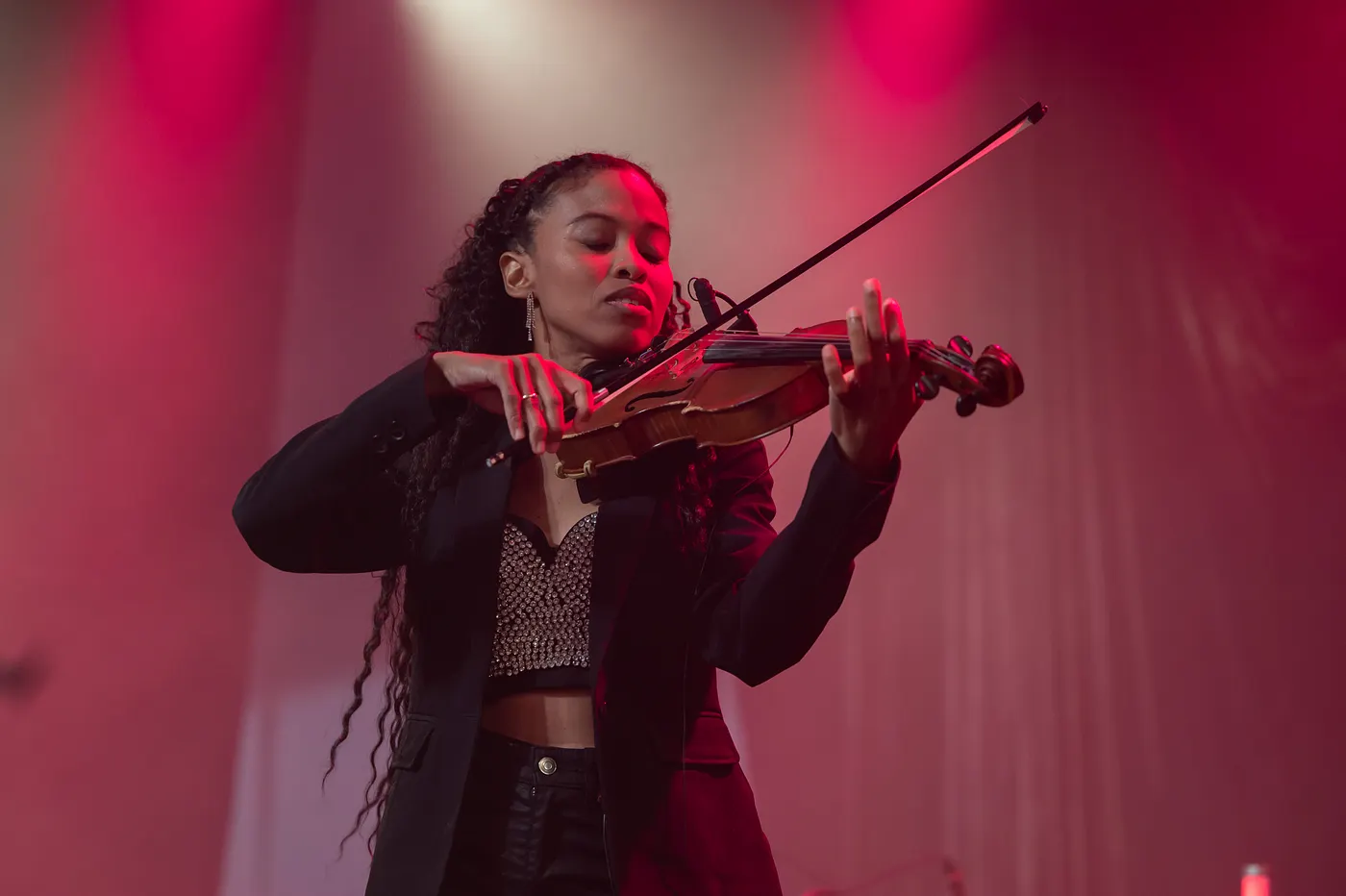
What are your “5 things I wish someone had told me when I first started,” and why?
If I had to choose five, they would probably be these:
1. Not every “no” means the road has ended.
In an artistic career, you are going to hear many “no’s.” An audition that doesn’t work out, an opportunity that doesn’t happen, a door that closes. Over time, I learned that sometimes it simply means you have to find another door.
2. Discipline is more important than motivation.
This is probably one of the lessons that has shaped my life the most. You won’t wake up inspired every day. Consistency is what builds a career.
3. You don’t have to fit perfectly into one category.
For a long time, it seemed as though you had to choose: violinist, singer, songwriter. Over the years, I understood that the combination of all those parts is precisely what creates my identity as an artist.
4. Your story is part of your music too.
For years, I studied how to interpret other people’s music. Later, I understood the value of telling my own stories as well. When I write about identity, immigration, family, or belonging, I’m not separating my life from my music; I’m using music to give those experiences a voice.
5. Enjoy the journey while you’re building what’s next.
As artists, we’re always thinking about the next project, the next concert, or the next goal. But sometimes it’s important to stop and recognize everything that has already happened. Some of the things that feel normal today were enormous dreams just a few years ago.
Can you share some insights into your creative process? How do you approach songwriting? How do you approach musical collaborations?
I usually begin with an idea or a message. Before thinking too much about production, I need to know what I want to say.
For example, when I began writing Inmigrante, I felt a very strong need to talk about immigration. I was seeing so much hatred and such a negative narrative surrounding immigrants, and I felt that I wanted to respond to that through music — but not with more hatred. I wanted to respond with pride, humanity, and love.
Very often, I begin by writing the lyrics in a notebook. Then I sit at the piano and allow the music to appear. I try not to force that moment too much.
When it comes to collaborations, I love working with musicians who have a strong identity of their own. If I invite someone to participate in my music, I don’t want them simply to execute exactly what I would have done myself. I want to hear what that person can bring from their own musical universe. That’s when a collaboration becomes truly interesting.
Your music has resonated with people in many different places. What do you believe sets your music apart?
I think it’s probably the combination of all the musical worlds I come from.
I have a very strong classical background, but I also grew up surrounded by Cuban music. I’m a violinist, I sing, I compose, and I’m deeply interested in bringing different sounds and cultures together.
I don’t sit down and think, “How can I make something different?” I simply try to make something honest. And when you’re honest about all the different parts of your story, the result inevitably begins to have an identity of its own.
How do you connect with your audience?
By always trying to be honest and showing myself as I truly am.
I think audiences can quickly sense when you’re trying to create a character that isn’t really you. I don’t want to show only the perfect moments of an artistic career. I want people to understand where the songs come from, why I wrote them, and what I was feeling.
In the end, the most personal stories often become the most universal ones.
With your busy schedule and demanding performances, how do you prioritize self-care and maintain a balance between your personal life and your career in the music industry?
Once again, I come back to the same word: discipline.
For me, discipline doesn’t mean only working. It also means understanding when you need to stop, organizing your time, and protecting space for your personal life.
Music can consume absolutely everything if you allow it to, because there is always something else to practice, produce, write, or solve. I try to remember that in order to have something meaningful to express as an artist, I also need to live as a person.
You are a person of enormous influence. If you could inspire a movement that would bring the greatest amount of good to the greatest number of people, what would that be?
I would love to inspire a movement centered around recovering our empathy.
We live in a time when it is very easy to turn another human being into a label: immigrant, foreigner, left, right, rich, poor, from here or from somewhere else. And when all we see is the label, we stop seeing the human being.
I would love for us to recover our curiosity about another person’s story before judging them.
In fact, that idea is deeply connected to what I try to do through my music. If a song can make someone see the world through another person’s eyes for just a few minutes, then I believe it has already accomplished something important.
Is there a person in the world, or in the U.S., whom you would love to have a private breakfast or lunch with, and why?
If I could choose anyone, I would have loved to sit down for lunch with Quincy Jones.
Sadly, he is no longer with us, but I would still choose him. Not only because of his extraordinary musical legacy, but because of the breadth of his vision. He was someone who could move across genres, generations, and cultures without ever losing his musical identity.
I would have loved to ask him how he maintained the curiosity to keep evolving throughout so many decades, and how he understood the role of music as a bridge between cultures.
I imagine it would have been one of those conversations where you arrive with a hundred questions and end up spending the entire lunch simply listening.
How can our readers continue to follow your work online?
They can find my music on all major streaming platforms and follow me on social media as Yeisy Rojas, where I share new music, performances, videos, and glimpses into the creative process behind my projects.
Right now, I’m especially excited to share Inmigrante, and I would love to invite everyone to discover the album and join me in this new chapter.
Thank you for sharing these insights!
About The Interviewer: Tavares Beverly ( www.tavaresbeverly.com ) is the Founder and CEO of Beverly Boy Productions, a national video production company that has helped organizations tell their stories through video for more than two decades. Over the course of his career, he has worked with everyone from Fortune 500 executives and healthcare professionals to politicians, nonprofit leaders, educators, and artists, gaining a unique perspective on the role communication plays in leadership, business, and human connection. A frequent contributor on topics including communication, entrepreneurship, leadership, and personal development, Tavares believes that the ability to communicate effectively is one of the most valuable skills a person can develop. His work is driven by a passion for helping organizations connect with their audiences and helping individuals unlock their potential through mentorship, perseverance, and meaningful relationships. To learn more, connect with Tavares on LinkedIn or visit www.BeverlyBoy.com . If you’re interested in using the power of storytelling and communication to grow your organization, strengthen your brand, or inspire your audience, he welcomes the opportunity to connect.
TB
Written by
Tavares Beverly
Executive Contributor · Authority MagazineTavares Beverly is an executive interviewer and contributor covering leadership, culture, and business for Authority Magazine.

Published inAuthority MagazineTop Lessons, Top Authorities · 42K Followers
Exclusive, curated interviews with the leaders and changemakers shaping tomorrow. Leadership lessons, industry deep dives, and executive profiles.
More from Authority Magazine
See all stories →
A
Authority Magazine Editorial StaffJasmine Badie: Professional Success Requires Mastering The Discipline Of Being Unneeded
Pop Culture25 min read
Y
Yitzi WeinerGavin Goudey: Internal Vulnerability Is the Primary Engine of Authentic Performance
Pop Culture22 min read
Y
Yitzi WeinerNate Bynum: The Paradox of Authenticity That Unlocks Peak Performance
Pop Culture20 min read
T
Tavares BeverlyMalek Hanna of RXM Entertainment: Creative Collaboration Requires Shared Intention Over Uniform Perspective
Pop Culture11 min read