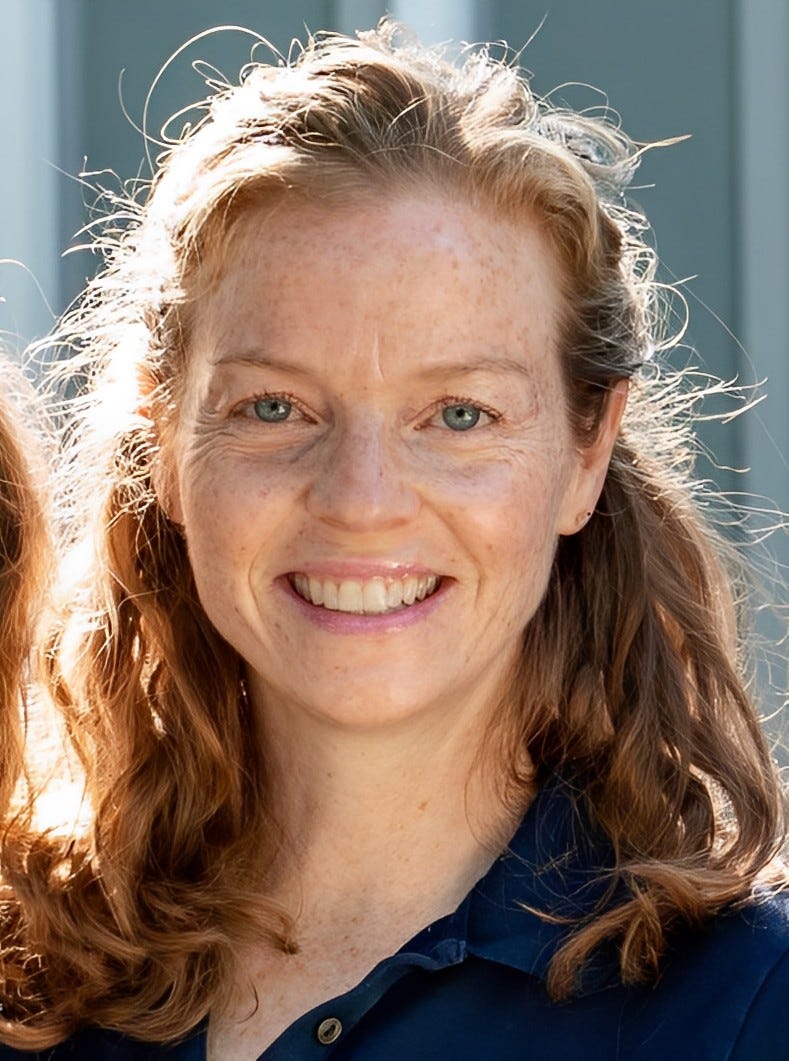
Growing up in such a diverse community inspired me to work on diverse projects. Frankly, If a project lacks diversity, and it’s just a whole bunch of white people, I’m not as interested in it because it doesn’t reflect the world as I knew it when I opened my door.
I had the distinct pleasure of talking with Claire Scanlon. Claire directed the 2018 hit comedy SET IT UP for Netflix. She most recently directed LOOT for Apple TV, ABBOTT ELEMENTARY and NOT DEAD YET for ABC, and the upcoming series MRS. AMERICAN PIE at Apple TV. On the features side, she directed the 2022 Amazon feature PEOPLE WE HATE AT THE WEDDING, starring Allison Janney, Kristen Bell, and Ben Platt. Her other directing credits include the entirety of the MAPLEWORTH MURDERS series for Quibi, and multiple episodes of NEVER HAVE I EVER; THE UNBREAKABLE KIMMY SCHMIDT; BROOKLYN NINE-NINE; THE LAST MAN ON EARTH; and GLOW, among others. Claire is originally from the editing world and won an Emmy Award in 2013 for editing the series finale of THE OFFICE.
Claire, thank you so much for joining us. Our readers would love to learn more about your origin story. Can you share with us the story of how you grew up?
I grew up in Boystown, Chicago, and my parents still live in the same house. I was born on Broadway and Belmont, so I had a very colorful and happy childhood in the 80s. My neighborhood was diverse, including a significant Jewish population. Although I’m not Jewish, I attended Temple Shalom and went to many bat mitzvahs, which I enjoyed for the gifts and parties. I wanted to have a bat mitzvah myself when I saw all the presents.
Growing up in such a diverse community inspired me to work on diverse projects. Frankly, If a project lacks diversity, and it’s just a whole bunch of white people, I’m not as interested in it because it doesn’t reflect the world as I knew it when I opened my door.
I actively seek out different types of stories, such as the recent project I did in England. My mother is an immigrant from England, and her criticism of her home country and love for the diversity and opportunities in the US also influenced my perspective. Although some anglophiles may view England as the “end all and be all,” my mother preferred the US because of its diversity. Her experience growing up in a low-income seaside town in England showed me that opportunities are more abundant in the US.
On my dad’s side, his parents are off the boat from Ireland, so I’m very much a child of an immigrant and married an immigrant filmmaker myself. So my children are children of immigrants too. I also think that probably explains why I’m more interested in many different stories than just the one I know.
I was also probably shaped a lot by growing up in a gay neighborhood during the 80s when the AIDS epidemic started to happen. I know I work in comedy, but I always try to find comedy that takes on hard subjects and finds the silver lining, way out or hope in those tough subjects. So whether it’s The Office, Blackish, Fresh off the Boat, or Abbott Elementary, they’re all tackling something. They’re all making statements about where we are in society today, but they’re finding the humor in it as well. I feel like after reading the news any day of the week, you’re just desperate for some kind of ray of hope or something that can keep you from going into the depths of despair.
I went to many different schools. At the University of Chicago, I interned with a gentleman named Bill Kurtis. Many people know of him because of Wait Wait… Don’t Tell Me! on NPR, but he also was a huge anchor person in Chicago in the ’80s and ‘90s.
I worked on a PBS show as an intern doing transcripts, and then I came out to Los Angeles by myself to go to graduate school for Film theory at USC. All my peers went on to get their PhDs, but I didn’t like academia. I thought it was very political, and I still do. Frankly, I find it more political and tough right now. With many things, I feel like teachers and professors are very handcuffed and have to be very careful these days. I’m glad I chose production and editing over academia. My peers, they’re amazing, and they’re doing great work. But it just wasn’t for me.
I went into assistant editing and edited under a great editor named Arnold Glassman. He’s known for so many films on film, ‘Visions of Light.’ The first one I worked with him on was Frank Capra’s ‘American Dream.’ It was the perfect documentary to come into this town working on the best of the best in the comedy feature world. I worked with him for 2.5 years.
Then I ventured out on my own and started editing documentaries, and then, from time to time to pay the rent, I did reality television and just unintentionally veered towards more documentaries on comedy. I didn’t even realize that that was my trajectory. I just was drawn to them and just kept getting them. I did one called ‘Cary Grant: A Class Apart’, I did one ‘Carol Burnett: A Woman of Character,’ And ‘Bob Newhart: Unbuttoned.’ Most of those were for a series called ‘American Masters’ on PBS.”
I was working on a show called Last Comic Standing when a friend of mine called and said, “Hey, I heard there’s going to be a spinoff of The Office. Would you put my name in the hat because I know you’re friends with Paul Lieberstein?” And I did. I called Paul and he said, “Well, what about you? Do you want to put your name in the hat?” And I was like, “I never thought about it, but sure.” Then it was a tough gig because I wasn’t just going for the spinoff. It was for the actual show The Office because, Dean Holland, the person leaving The Office, was moving over to be the head editor of Parks and Rec. So I took Dean’s job. He’s a wonderful director now too. Dean and Dave Rogers, both editors on The Office, had already set up a pathway to directing. So they paved the way for me to get my first directing gig on The Office Season 8.
And then, from there, that was a perfect diving board. The Office was a top-rated show, very well-respected in the comedy world. It was also a good time to be a woman director. This was in 2011 when I directed my first Office. Then when I directed my first Mindy Project in 2013 it was great because it wasn’t documentary-style. It showed I could do something outside of my family. And then that launched me differently, in a good way. So, I’m very grateful to Mindy Kaling for that opportunity and Paul Lieberstein and Greg Daniels for the opportunities they gave me on The Office.
You probably have a lot of fascinating and varied experiences. Can you share with our readers one or two of the most interesting stories that happened in the course of your career?
There was a show called Black Mirror Bandersnatch where you could choose the outcome of the show. I did a comedy version of that for a show called Unbreakable Kimmy Schmidt, and it nearly broke my brain because of continuity. So if you went one route or the other, I was like, “Oh, it’s the same lines, we don’t need that.” Or like, “No, the character Jane Krakowski is playing is holding a script page in this one if you choose the writer, but if you choose the costume designer, she’s saying the same lines but no script page.” And so that was just incredibly ambitious. It was a 23-day shoot, with a 170-page script. It had so many diverging forks in the road, and you had to keep them all in your head.
I had a wonderful script supervisor, and she was so helpful, but it was breakneck speed. It was lots of work, lots of pages. Thank goodness all the actors were so on point. The crew was a well-oiled machine. This movie was a way of wrapping all the previous four seasons up.
I was working with four writers on set, very smart, astute writers who all had thoughts and opinions on a very crunched-up day. And I had to be the bad guy and say “We are losing the light, and we can only do so many alts.” In comedy, you often play but sometimes it’s simply not as funny as what was thoughtfully written on the page. You can fall in love with ad-libs because you’ve heard the original script 100 times, but there’s a reason why it made the script initially.
So many people think that The Office was ad-libbed, but that’s actually not true. Very rarely were ad-libs used. It’s just that they were never as strong as what was written. Those writers were excellent. We all went to the University of Greg Daniels.
Since then, his tentacles have had far reaches. All of the writers and crew, including DP Matt Sohn and writer/director Jen Celotta, run in the same circles. We all do a lot of television work, and it’s delightful because we feel like family at this point.
People said that Abbott Elementary is like the new version of the Office. Do you agree?
Quinta Brunson is a massive fan of The Office. She is so passionate and was lucky to get Randall Einhorn from The Office, as the executive producer and director of the pilot and subsequently who is now producer/director of Abbot Elementary.
Randall understands that the mock-documentary format works particularly well for comedy. Talking heads work well in this format. Modern Family borrowed it from the Gervais/Merchant world, and so did The Office in the US.
Abbott Elementary is similar in this way. Quinta has assembled a fantastic team and she created this whole world. She’s writing what she knows. Her mother was a teacher, and the show is named after her mentor, Mrs. Abbott.
In The Office, Greg Daniels did something very similar. When he was stuck and didn’t know what Pam should do, he thought about what his wife would do. He might have asked himself, “What would Susanne do?” The Office is a love letter to Greg’s wife. Pam is the hero of the show, and she’s the moral compass of the show. She’s someone you want to aspire to be and do if you were in those same positions.
You mentioned writers being on the set. Is that a regular thing?
Yeah, it’s great. I just worked with Jordan Temple on Abbot Elementary, and I also worked on a show called Not Dead Yet, where Marc Firek was present as well. I love having the writers on set because having another pair of eyes paying attention and bouncing ideas around is so lovely. They can point out when something fell flat or when a performance wasn’t exactly what we wanted.
As a traveling director for hire, I’m not in the writer’s room, and I don’t have the backstory or necessarily know where the script is going or the arc of the entire season. But the writer does, and their presence on set helps immensely to understand where the story is going. It’s great to have that resource right next to me.
When you’re writing on the set, do you find that the actor’s character bleeds more into the character of the character?
That’s a great question. And I’m constantly debating that internally myself, like is that person just a brilliant actor or are they just being themselves?
As I get older, I almost think it’s impossible to distinguish. Very few people can completely melt away every part of their essence and not be themselves at all, even when they’re playing serial killers. Actors aren’t serial killers, but they must find something they can latch onto; otherwise, it would be disassociated from a grounded performance.
Most of the comedy I work on is grounded, meaning it’s heightened but still believable.
The only thing I’ve ever done that was a bit crazier was a show called ‘Mapleworth Murders,’ which was like ‘Airplane’ meets ‘Angela Lansbury in Murder, She Wrote.’ It was a crazy show, and the actors disappeared into those roles because they were so out there, even though they were not realistic characters in daily life.
But, I do think that there’s something to someone’s essence that they bring to a role. That’s why casting is so important, because you’re looking for that thing that a person has that you want to match with the character you’re trying to bring to life.
It’s been said that sometimes our mistakes can be our greatest teachers. Do you have a story about a funny mistake you made when you first started and the lesson you learned from it?
Yes. This is a very nitpicky mistake, but I think it’s essential. When I was an assistant editor for Arnie, we had to go the online. That’s where you put your show together at a high resolution, and you begin color-correcting it and everything. This is for television. And there’s something called drop mode and non-drop. Drop mode is for television; it has to do with engineering and the way that bandwidth works with sending signals out into the ether. If it’s a movie going to a video format, you use a non-drop frame, which is 30 frames per second versus 29.97, which is television. And there’s a reason for that 0.03, and that 0.03 makes it so that it can travel through airwaves, and you get it on your antenna, and you bring it in.
Now we’re all doing things differently but still, this is the standard, and this was before we were all on Apple TVs and things like that.
So, I made my edit decision list, but it was all in non-drop, and it had to be in drop, and it would shuffle everything off mathematically. And so I had to race back to the office, and online time is costly. You pay an hourly rate, and it’s not cheap. I had to race back to the office. I still needed to learn how to fix that problem. I called someone who knew more than me, and they gently walked me through it. It’s straightforward. You change a colon to a semicolon, and that’s it. I was like, “oh my God, I can’t believe how easy it was,” saved it, and raced back, and all was good. And the important lesson I will always keep is to remember the difference between drop and non-drop.
But another crucial lesson I learned was about keeping it together. You know, at that moment, I had made a colossal mistake, and it was a costly one at that. But I handled it well. I was in a crisis, but I kept calm. I kept my wits about me, and I fixed the problem. I think that’s such a good life lesson.
There’s no doubt in my mind that everyone will make a mistake. Sometimes those mistakes lead to extraordinary happy accidents. They can make something even better than what you had originally planned because you’re trying to fix the problem, and you actually fix it better than what your original plan was. But sometimes it’s just a mistake, and you own it. You say, “This happened. Now, what’s the fix? What’s the solution?” And what’s so great is not being paralyzed in the moment. You can’t just throw your hands up. You don’t have the luxury of doing that. It’s problem-solving, and problem-solving is very satisfying when you work through it. Everyone’s rooting for you.
It’s like when you go to a kid’s play. The whole audience is rooting for the kids to do well, even when they don’t, it’s still charming, you know? Like any audience, they all want to be entertained. So it’s the same thing. If you have a crew and you’re on a set, and there’s a massive problem, everyone’s going to rally together. If you keep your cool, have your enthusiasm, and a positive can-do spirit, you can overcome most obstacles.
You’ve been blessed with success in a career path that can be challenging. Do you have advice for those who want to follow your path but are intimidated by the concept of constant rejection?
That’s a tough one. It’s a strange person who wants to come out to a place built on fantasy and play make-believe all day. Like, you’ve already got to be peculiar. If you aren’t a bit peculiar or off-kilter in some way, there may be better choices for you.
But if you have that desire and you have something unique, non-conformist, and a story to tell, whether in front of the camera or behind the scenes, be true to yourself and never change. Don’t do what you think is mainstream or sell out.
Quinta Brunson is an excellent example of that. Nobody was going back to the documentary format, but she did it and is now sweeping through the awards season and the show has a great audience. There was such a groundswell of enthusiasm for the show she created. It wasn’t a repeat of anything else.
So for anyone asking for my advice, I always say, keep your voice. It’s what makes you special, and it’s what makes your story worthy of telling. Don’t try to be a copycat.
As for how to handle rejection, I would say get out into nature. I live in Los Angeles, where there are tons of hiking trails and the ocean nearby. So, get out in nature. It can ground you, recalibrate you, and give you strength in a way that reminds you that no one can tell you that you’re not good enough. It has to come from within, so no one can dampen your light.
Every industry iterates and seeks improvement. The entertainment industry has made significant improvements and advances over the past few years. What changes are you happy with? And what changes would you like to see moving forward?
Personally, I have benefited from being part of a hit comedy that started my directing career. However, I was thrilled when the #MeToo movement happened. Now, it is no longer an unusual thing for me to walk onto a set as a female director. There was a time when I was the only female director for an entire 22-episode show season. It was just me and 21 other men. It’s exciting to see more women and people of color directing, and to witness more diverse and engaging stories being told on camera.
It’s still tough, you know. I remember being a kid watching the Oscars and being like, wow, it’s so glamorous. Now, although we’ve had two women win best director in the last two years but no women are being nominated this year. It’s just hard when it’s 50% of the population. Like if women were 10% of the population, 90% men then Okay, I can get that. But it’s not of course.
It’s a little disheartening, especially when great movies were out there that didn’t get nominated. Like The Woman King, I thought was very strong, well told, and I was very disappointed to see that the director didn’t get nominated.
I can also undercut my argument because it’s like, how do you compare, Women Talking to an Avatar to The Fabelmans to Everything Everywhere All at Once. Everything’s different. It seems so childish to say, well, that art is better than that art. When I go to a museum, I don’t do that to the artwork on the wall; I’m like, it’s all great for me. No one at the Art Institute would say the Picasso is better than the Monet, you just aren’t doing that. And when you put it back into that perspective, it makes the whole thing seem ridiculous.
But I wish there were more opportunities. I know there’s a lot of lip service, and it’s getting better. It’s getting better slowly.
I just want to emphasize that in my particular case, I’m a little ahead of the curve because I started directing before all of this. So when that groundswell movement happened, it gave me even more work, which was great for me. So I don’t feel like I’m struggling work-wise.
But there are still situations, like only so many pilots are picked up this season, and almost of them were directed by white men. Pilots are something that people are always trying to do because if you’re a pilot director, it’s not only lucrative, but you’re also world-building and establishing a whole look that can go on for years. That’s what happened with the pilot of The Office. So that’s super cool stuff, and I’d love to see more opportunities there too.
Let’s talk about your work. You have so much impressive work. Can you share with our readers some of the exciting projects that you’re working on now and what you will be working on in the future,
There are a lot of projects that I’m really passionate about, but I’m not certain if they’ll come to fruition. It’s especially challenging in today’s world where you can have several projects in the works, but not all of them will come to pass. I can tell you that they’re all comedy-related. However, I don’t want to jinx them because some of them only exist in script form or as treatments. I’m currently trying to pitch them to buyers and studios.
It’s a strange time right now. There’s an imminent strike that will likely happen in May or June. If it does happen, it will bring production to a halt, as only projects that have already been written will be in production. You can feel a sense of hesitation in the industry, as Warner Brothers is taking projects they’ve completed and either shelving them or saying they’ll never air them for tax breaks.
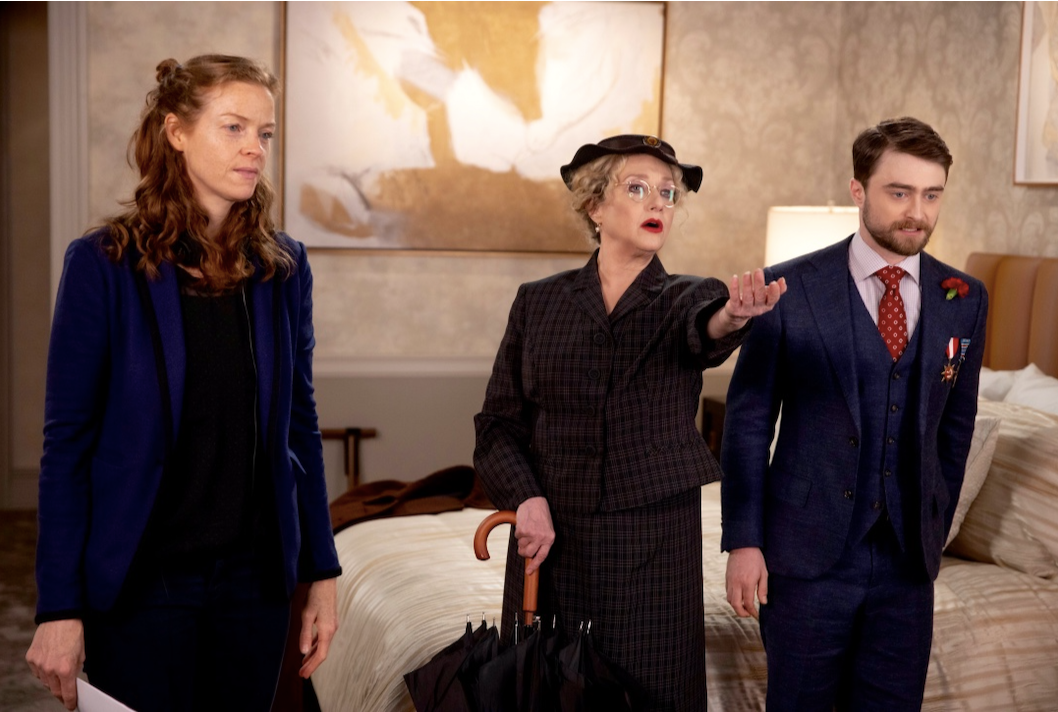
I did a show this summer called ‘Miracle Workers’ that I was proud of. It was season four, and in my opinion, it was the best season of all. It had great actors, including Daniel Radcliffe, Steve Buscemi, Geraldine Viswanathan, John Bass, and Karan Soni. Now, it’s on the shelf at Warner Brothers, and that’s frustrating. I’m not superstitious, but I also don’t want to jinx anything. Ok maybe I am a little superstitious. (Laughs) I would say that everything I love doing has elements of culture clash.
I love that stuff. I love it when you have a preconceived notion of somebody, and then it’s blown apart. I think that great comedy comes from that.
You know, the movie Trading Places is a great example of that. It’s a little misogynistic in retrospect now, many years later, but it was the eighties. Nevertheless, there are just really clever ways to make a social commentary. That movie is a total social commentary on poverty in America and on the super-rich. It’s just as relevant today as it was then. Eddie Murphy is capable of doing anything.
You’re probably most known from The Office and probably sick of hearing about it. So maybe I’ll talk about your movie Set it Up. It’s been among the highest-rated RomComs on Rotten Tomatoes. In your opinion, what was it that really captured people’s attention about the film?
That’s sweet. I also take this with a grain of salt. I think the movie Set It Up came out right when people were starving for rom-coms. Like, nobody had been doing it. Everyone thought the genre was dead. But To All the Boys I’ve Loved Before and Set It Up came out right around the same time and went off the charts at Netflix.
We did our call with Netflix, and they said, ‘We’re pleased; we’re beyond pleased.’ I think they were very, very happy with its performance, and ‘The People We Hate at the Wedding’ is doing great too.
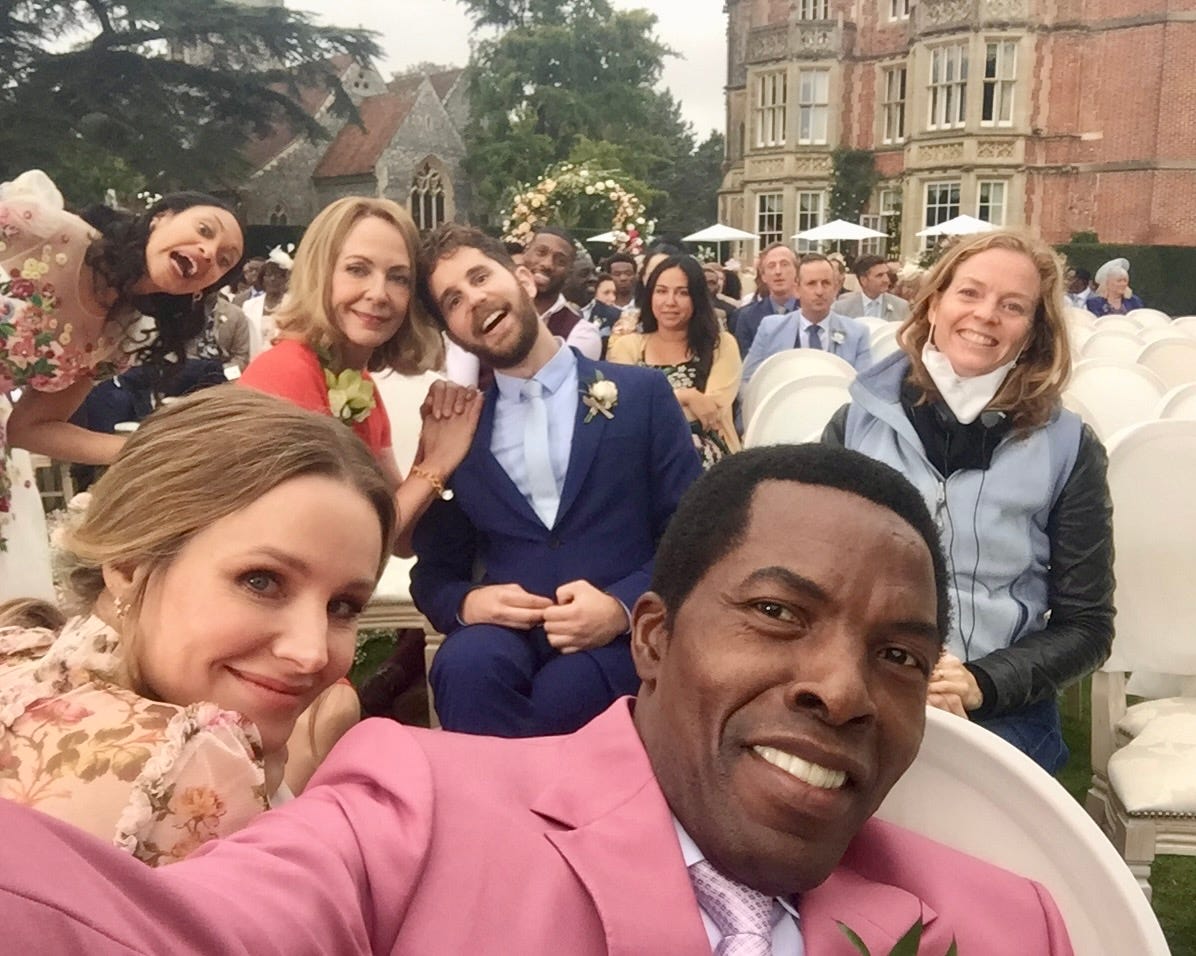
I think comedies rarely get the love they deserve in the moment.
Even The Office didn’t get the love that it’s getting now when it came out. Even if it was critically acclaimed, but still people were not watching it as much. The whole time I was working on it, I came on season five and worked for five years on it, and even then, you knew it was appreciated, but it wasn’t like it is now.
I don’t know where this love for it just blew up. Perhaps it was when it went to Netflix where people could binge-watch it. My friend’s kids were coming up and saying, ‘I love The Office,’ and I was like “You’re just a kid!”
I guess if you think about it, it is a microcosm of a classroom. You don’t get to choose the people you work with, you don’t get to choose who your teacher is or your bosses, but you have to figure out a way to make it all work and get through the day and get something out of it so that your days are rewarding. I think that that’s why people can relate so much to that particular show.
What lessons can our society take from the motifs of Set It Up?
For me, that story is about having empathy and accepting responsibility. It’s about someone who is scared to put themselves out there, scared to risk looking stupid, scared of trying, and instead of working hard and putting in the effort, she concocts a ridiculous plan. This is a big time-waster and messes with people’s lives as if it’s a chessboard. This manipulating doesn’t work, but there would be no movie if she were a responsible adult. You need conflict for things to come to fruition, and comedy to ensue. But once she does it, her best friend tells her to cut it out and sit down, and although she struggles through it, she comes out the other side and becomes more mature. As a result, the guy she was interested in is no longer as attractive to her because he is avoiding the fact that he does not really like venture capitalists. He is in over his head, and you can tell he doesn’t have the personality for that career right away. Once he finally makes his grand gesture of doing the right thing, he becomes worthy of her.
I also appreciate that New York is portrayed as a diverse city with a diverse cast, and I’m proud of that. Unfortunately, sometimes you have to fight for that, but I do push for it.
The movie is also joyful, and I had great empathy for the Kirsten — the Lucy Liu character — because she prioritized work over her personal life. I did that for a very long time and tried to be better about it, but it is a tricky thing. Our culture tells us that our ambition leads to success, but there is very little balance in the puritan work ethic. It’s essential to question what ambition we have and what our idea of success looks like. Not what the American version of success is, but our own version of success.
Looking back, what are five things you wish somebody had told you when you first started and why?
Firstly, ask questions. I would say that throughout my journey, everyone was very encouraging and rooting for me. I hate to keep bringing up MeToo , but when it was happening, I thought, “I never had anything happen to me like that.” I feel like all along the way, there was someone I could call, someone I could ask. I always asked questions when I didn’t know what I was doing. You can’t be expected to know what you’re doing. Asking questions is a great resource. People want to help you and give you answers.
Secondly, do informational interviews. You might not be able to get your foot in the door to talk to somebody and get a job, but if you say, “Hey, I’m not interested in a job; I’m interested in an informational interview,” everybody wants to talk about themselves at some point in time. If you ask nicely, odds are they’re going to say yes, and you can get a lot out of that. It might not lead to a job, but it begins the networking process. When I first came to this town, I knew no one, so having the opportunity to network and meet many people who moved from job to job was invaluable. Eventually, when I got my first assistant editing job, I worked hard, had a good work ethic, asked questions, and owned up to my mistakes.
Thirdly, remember to have fun. No matter what job you choose, enjoying life is vital for people who want to be around you. I was listening to the Smartless podcast, and everyone kept going on and on about who’s a good hang, who’s a good person. Are they a good hang-on set? The point is that half of the job is talent, but the other half is, do you want to spend 12 hours a day with this person? Are they annoying? Are they irritating? You don’t want to be that person. It is important to just be you, be a good person, and be a “good hang.”
Finally, tell the truth, and be true to yourself.
You write really great comedy. Are you a funny person?
I’m not a writer. I don’t write anything. Everybody represents their job. Ken Kwapis gave me some great advice. The audio mixer records the audio. Hair and makeup ensure the talent is represented as their characters. The DP is making sure everything is visually accurate, looks beautiful in the frame or not beautiful if that’s your intention.
But it’s my job to be the audience. I’m watching as an audience. I’m the first audience. I have to raise my hand and be like, ‘We don’t have it, like this isn’t working.’ Nobody wants to hear me. Everyone wants to get home, be done with their job, and go home to their kids, family, or whatever.
But I must be the tricky one to say, ‘I’m sorry, everyone, we don’t have this scene. We have to go back, and we have to rethink it. We have to rework it.’ I turn to the writers like, ‘We need something better. No one’s laughing. It’s not funny. We thought it would be funny, but we’re shooting it, and it’s not working.’
I love that kind of deadline. I love that electricity on a set. If you don’t get it that day, you never get it. You can’t fix comedy in post; it has to be funny.
This is our penultimate question. Because of the platform you’ve created and your fantastic body of work, you’re a person of enormous influence. If you could inspire movement or spread an idea that would bring the most amount of good to the most amount of people, what would that be? You never know what your idea can inspire.
One of the great things about watching shows and movies at home is that it creates a sense of intimacy with the characters. As a viewer, you’re placed in the shoes of people you might never have known or empathized with before. For instance, Lucy Liu, Janine from Abbott Elementary, or Darryl from The Office. You may think you have nothing in common with these characters, but suddenly you can relate to them on a personal level. This realization highlights how much we share in common.
Comedy is an excellent way to unite people, and my goal is to create a level playing field for everyone. We have much more in common than what separates us, and it’s frustrating to see how divisive society can be. There’s no need for it; we have plenty of common ground to build on. I hope this message comes across in my work, and my aim is to demonstrate that there’s always a solution to problems. We may not know the solution, but there are always multiple ways to approach it, and it’s okay to ask for help.
We live in a society where we should rely on each other and lean on our community members. That’s where we meet new people, and everyone is rooting for one another to succeed. There’s enough pie for all of us. There’s plenty for everyone, There’s not a finite number. You don’t have to tear someone down to get up the ladder.
This is what we call our matchmaker question. We’re very blessed that prominent leaders in entertainment and business read this column. Is there somebody in the world or the US you’d like to have lunch with or collaborate with?
Someone I admire tremendously is Issa Rae. I actually asked my manager to have her be in everything I ever do. I mean, not personally, but we share the same manager. She’s incredible. She’s just phenomenal, and I’m excited to see what she does next. I do hope our paths cross. You know, I put it out into the ether, and I do believe that when you put positive vibes out there, it comes back. I think she’s going to be a massive movie star. I can’t wait to see how she explodes. It’s inevitable, she’s so terrific.
How can our readers best continue to follow your work online?
IMDB is a great resource.
I mean, keep looking out for comedies. Hopefully, my name is under one of them.
Claire, thank you so much for this excellent, unique conversation. It’s been so thoughtful and uplifting, and I wish you continued success in everything.
I appreciate it. It’s my pleasure.