When my wife got pregnant, I knew I’d put the last three years into building this, and none of it would matter if I stopped now or let it stop us.
Starting a business from the ground up comes with its own set of challenges — limited resources, building a customer base from nothing, and navigating the uncertainty of uncharted territory. What does it take to succeed as a first-time founder? What lessons can new entrepreneurs learn from those who have been through the process? In this interview series, we are talking with startup founders who can share insights on the unique challenges of launching a business from scratch. As a part of this series, we had the pleasure to interview Patrick McEuen.
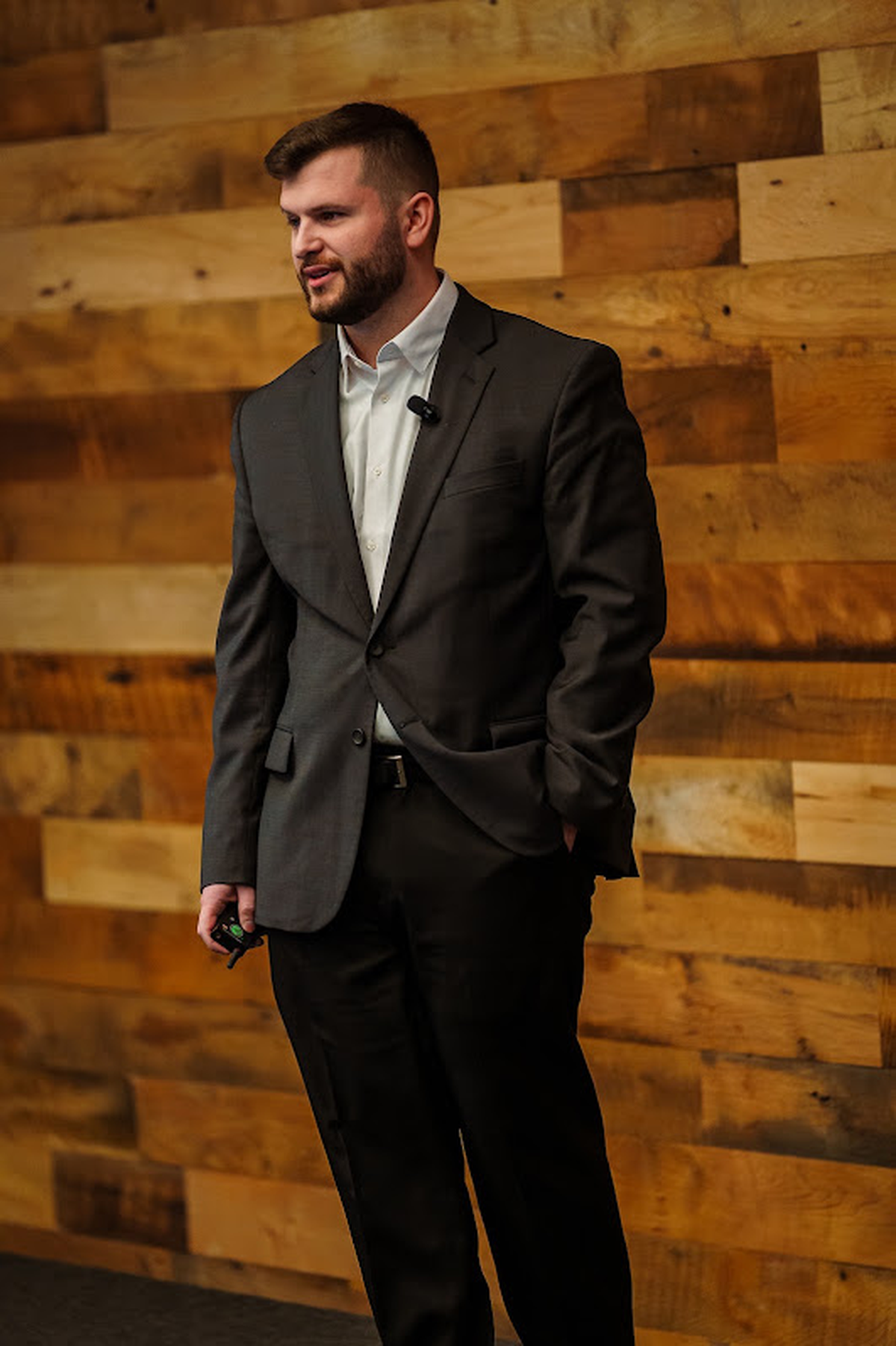
Patrick McEuen is the founder and CEO of Esquire Engine, a legal technology company that helps law firms own their data, marketing systems, and AI, and the Director of Operations & Marketing at Meyer Wilson Werning, a national investor protection law firm. A first-generation college graduate, Patrick joined Meyer Wilson Werning in 2021 as executive assistant to founder David Meyer, went on to run the firm’s operations and marketing, and founded Esquire Engine in 2023 to bring the systems he built and tested there, including its flagship platform Scraiquill, to other law firm owners. He speaks regularly on law firm operations, marketing, and AI at events including Mass Torts Made Perfect, PIABA, and the Ohio Association for Justice.
Thank you so much for joining us in this interview series! Can you tell us a story about what brought you to this specific career path?
Honestly, I had a pretty unusual college experience. I’m a first-generation college student and the son of blue-collar parents, so when I got to school, I had no idea what I wanted to do, what college was supposed to be like, or what any of it even meant. The one thing I knew for sure was that I had to make money. So, I got a job and worked all four years of college.
I got my bachelor’s degree in the sports industry and thought I was going to be an athletic director. Then I graduated and thought, “Oh my gosh, it turns out I need money.” I was coaching high school football at Upper Arlington, a powerhouse program here in central Ohio, and it became clear pretty quickly that as much as I loved it, it wasn’t going to provide for my family. I bounced around a few smaller administrative roles before leaving my job at an MRO distributor called Kimball Midwest.
I’d had a middle manager in that role who was taking credit for my work, so my attitude going into my next job was simple: work as closely with the owner as possible. The day after I left, I saw an ad for an executive assistant to David Meyer, the founder of Meyer Wilson Werning. They needed help with technology and the day-to-day operations, and I couldn’t see a better opportunity to just be a sponge, learn as much as I possibly could, and help David out.
My brother was over that day, and I joked with him, “Dude, this job ad might as well say they’re looking to hire Patrick McEuen.” I felt like I was that good of a fit. As fate would have it, I got hired the following week. Long story short, that’s how I ended up as David’s assistant, and it’s where everything since started.
Can you share a story about the funniest mistake you made when you were first starting? Can you tell us what lesson you learned from that?
Oh man. Anyone who starts a business has a million mistakes they could talk about. The first big one I learned was trusting people too early.
When I first started Esquire Engine, I started it with a guy I’d met online. We knew each other through Reddit and Discord, and he built the first couple of MVPs of my product. Rather than vet him further, I just blindly relied on the relationship we’d built over nearly a decade. To make a long story short, over the course of a year and a half, I caught him stealing and it set the company back for a solid year.
It taught me a tough lesson: with people you don’t see face to face every day, even when you feel like you have an established relationship, you might not have any idea who you’re actually talking to. I learned that the hard way, and it’s one of the many reasons I have so much empathy for victims of pig butchering scams. Sure, I didn’t think I was dating Lana Del Rey and sending her my life savings. But I did let someone into the most intimate part of my business, and he stole from me right underneath my nose. That’s a different form of vulnerability, but it’s vulnerability all the same.
Can you tell us a story about the hard times that you faced when you first started your journey?
The rough times are real; I could go on and on. Like I just mentioned, the fallout with the person I started Esquire Engine with was one of the first big, world-rocking things we had to survive. Thankfully, Joe Metz was on the team then, and we pivoted and did everything we could to make it work in the meantime. We got everything rehosted with new developers, and it was crazy.
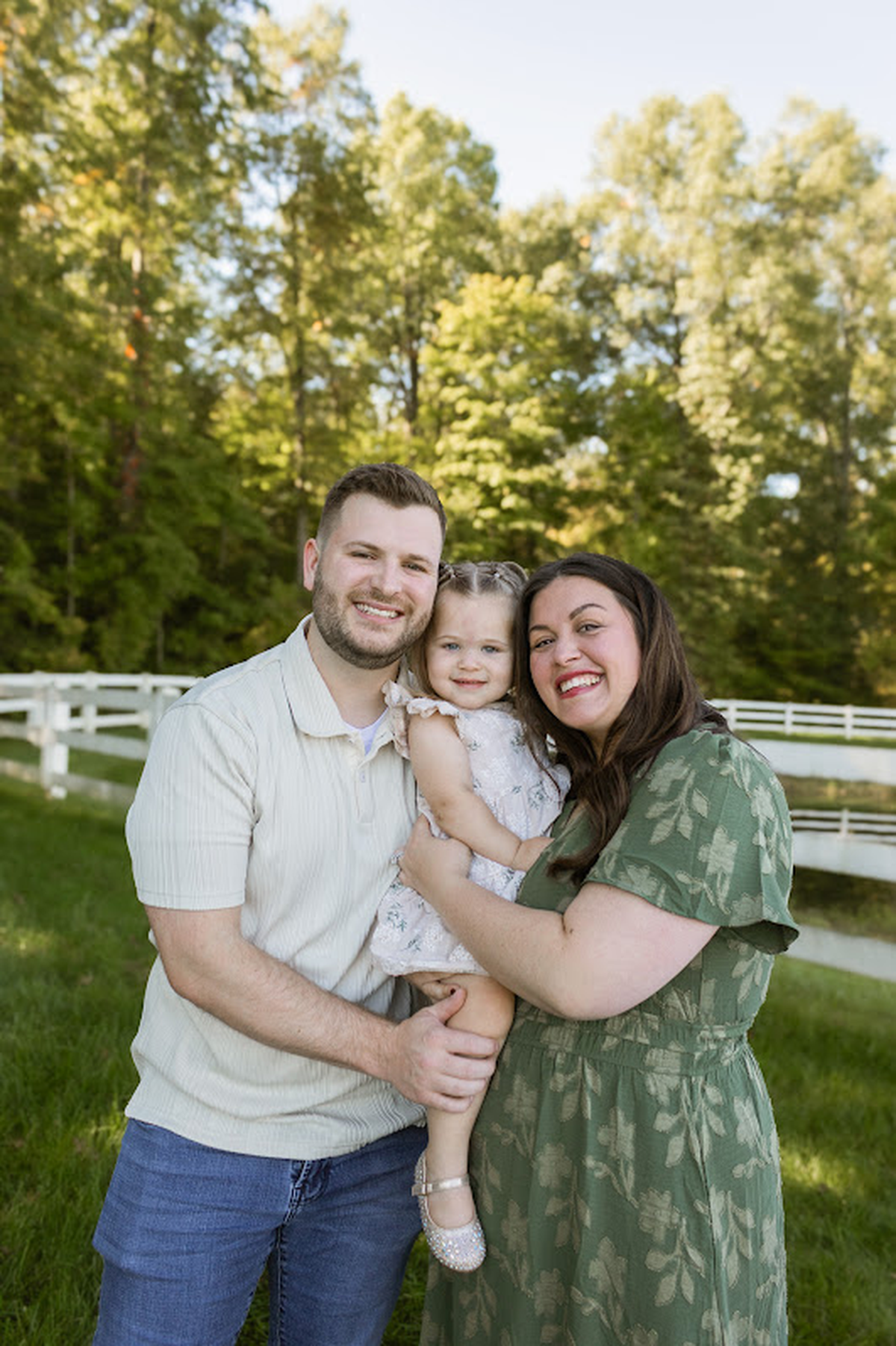
Right in the middle of that chaos, my wife got pregnant with my daughter. The company felt like it was unraveling; I was still doing my full-time role at Meyer Wilson Werning, and I was having gallbladder and wisdom teeth issues of my own. It ended up being a 16-to-18-month stretch of feeling like I was fighting for my life.
I think almost every entrepreneur has a story like that, where it seems like everything is going horribly and blowing up, and then it ends up being all right once you pull it together. If you grit your teeth and bear it, keep a positive face, and keep fighting, you’ll get there eventually.
Where did you get the drive to continue even though things were so hard?
Honestly, my daughter. When my wife got pregnant, I knew I’d put the last three years into building this, and none of it would matter if I stopped now or let it stop us. I want to be able to tell my daughter these stories someday. We really didn’t even have clients on the time, but I still didn’t want to have to tell my wife, my family, or even David, “Hey, I’m giving up on this.” So, no matter what, I was going to make this work.
I like to think of resilience as a skill. You’ve got to harness it, experience opportunities to develop it, and practice it daily. I am fortunate enough to say that my life has had a lot of different perks, but by far the biggest one is that my upbringing gave me an unbelievable amount of resilience. Others call it stubbornness but tomato, tomato. I think that carries through in my work every day and gives me the drive to also be a father, friend, and husband.
So, how are things going today? How did grit and resilience lead to your eventual success?
At this point, we support law firms all across the country with a variety of different services, and firms of a variety of different sizes. I’ve worked with some of the largest personal injury firms in the nation with over 100 people on staff and I’ve worked with solos.
The beauty now is that we’re continuing to grow. We’re over half a dozen people on staff now, and it brings me a lot of pride and joy to be able to help so many law firms. When I started, it was really just me learning the business and how to help David, trying to take some of the stress off him and give him the life he’d always been striving for as he scaled his firm. Now it feels like we’re democratizing that, turning it into something repeatable, and getting to share it with some of his friends and other law firm owners who are fighting battles of their own.
What do you think makes your company stand out? Can you share a story?
Uniquely, David and I are co-owners of this business. At a time in legal when a significant of the vendors serving law firms are backed by industry outsiders, I think there’s some reassurance in knowing that we use these tools inside our own firm. Every idea we get and build towards, we implement and test at Meyer Wilson Werning first, before we roll it out to our clients.
That also means we can see data and trends within our own firm ahead of schedule. As we add more firms into this shared groupthink, we keep getting more perspective from more practice areas, more projects across the country, and more strategies, and it just continues to get better.
Our holistic, consultative guidance and our tools are really about breaking your dependency on the lack of informational assymetry and using AI to bridge the gap to bring some of that in-house. Pay the expertise but pay for it when you have a team member who can capture it, learn from it, and put it into your tools, so you get compounding value over time and can eventually consider moving on if they’re not continuing to grow.
That’s really what I’m trying to build here, and I don’t think anyone else in the industry does that right now. I want to help law firm owners with every piece of how they grow and scale their firms, even if it means someday no longer needing our help. If I’m doing my job right, you’ll be begging to stay.
Can you share a tough decision you had to make as a founder that had a lasting impact on your business?
We’d seen a tremendous amount of success rolling these tools out internally at Meyer Wilson Werning, and over time we shared the results with a lot of friends and vendors. Following some of these conversations, two separate times I was inquired about opportunities to offer our products to a digital marketing agency.
Obviously, there would have been benefits for us, and a lot of great perks would have come up with that arrangement. But I wanted to keep this in-house, share it with as many firms as I could, and not risk some guy with a spreadsheet in New York telling me what I need to be doing in ways that make things worse for my clients.
And they’re my friends, by the way. I think that gets lost on a lot of people. My clients are people I hang out with, go to events with, present with, and spend quite a bit of time with. I have no interest in benefiting or experimenting with anything that could jeopardize that.
That’s a little direct, but I’m a direct guy, and I have no problem calling these things what they are. If you’re an owner who brought on investors and your product is getting worse and your clients are unhappy, you know exactly why.
What marketing or sales strategies were most effective in getting your first customers?
Hands down, word of mouth. Get out there and prove yourself to a couple of A-players in the industry, even if it means working for free for a year or two, and they will do all the marketing you need.
Especially in my niche, the majority of law firm owners are friends. They spend a lot of time together at conferences and events, and if you’re providing incredible results for them, they’re going to make sure they brag about you a little, because their success is your success. I jokingly tell every law firm we work with that they’re a billboard for me now. The best marketing in the world for Esquire Engine is just making sure they’re as successful as possible.
Which tips would you recommend to other Fresh Founders about how to develop the relentlessness and “stick-to-it-ness” needed to keep a new business going?
Honestly, stop chasing short-term benefits. When I think about this, I think about things like social media, anything that gives you instant gratification. I heard a comedian say once that a fortunate part of growing up is that you stop doing things for the happiness you can get today by taking from tomorrow, and you start paying it forward instead. Instead of asking, “What can I do in the next 24 hours to make today better?” you ask, “What can I do in the next 24 hours to make tomorrow easier?”
Changing your mentality to focus on the things that compound over the long term may or may not be the best way to be happy, but it’s definitiely the best way to run a business. If you’re worried about the next 30 to 60 days and you’re not looking ahead one, three, and five years when you’re running a company, you’re going to be in trouble. That long-term perspective, and the ability to stick at something day in and day out, is what prevents that collapse. Sometimes success just looks like survival.
But I’ve had that mentality my whole life. I was the first person in my family to graduate from college and the first to travel on a plane. A lot of things in my life have been first times, so I’ve been a bit of a trailblazer in my family. When you keep doing those things, you push yourself out of your comfort zone and get a feedback loop that says, “Hey, I can do this. It’s going to be hard, it might even be scary, but I’m going to do it anyway.” Do things that push you out of your comfort zone, you hear that a lot, but I can’t recommend that enough.
I also can’t be more grateful that David essentially sent me to the wolves. I was promoted to Director of Operations a year into my role with our consolidation into Litify and then added a limping Marketing department on top the year following. There was something uniquely terrifying about drinking from the firehose like that, but also exciting, because I knew I could always run back to him for assistance. I’m not naive to miss the fact that not everybody gets that. So, if you want the actual advice: get yourself a good mentor. Find somebody to learn under. I was 22 when I started working for David, and as much as I felt like I had a clue, I didn’t. Hell, I still don’t, he’s still teaching me.
None of us are able to achieve success without some help along the way. Is there a particular person who you are grateful towards who helped get you to where you are? Can you share a story?
The low-hanging fruit here would be David Meyer. I came into Meyer Wilson Werning as an executive assistant. I was grabbing coffees, picking up lunches, organizing his email, and doing ad hoc tasks on the side that I thought might put the firm in a better position. But David saw the aptitude I had for technology and was willing to let me experiment when I shared ideas.
What started as small things here and there kept expanding, and eventually I started asking for a budget to test whatver I’d come up with. For every one that went great, there was one that went horribly. I can’t be grateful enough to David, Matt Wilson, and Courtney Werning for their willingness to let me take over as director of operations and experiment, then take over marketing and experiment more, and keep helping the firm grow and expand its opportunities.
I could name a hundred people who’ve given me practical guidance since I joined the firm. I’ve even made a few LinkedIn posts about it, but when it comes down to it, David is the person who deserves flowers.
Can you share a few ideas or stories from your experience about how to successfully ride the emotional highs & lows of being a founder”?
This is kind of an unpopular opinion, but I wouldn’t be averse to occasionally leaning on things for the support you don’t feel like you’re getting. I know that sounds a little bizarre, because most people will tell you, “Don’t get used to having a sweet snack when you get home, or a smoke, or a drink, or whatever your vice is to survive, because you’ll develop an unhealthy feedback loop.” And boy let me tell you, I’ve heard that a ton.
I’m starting to get to a point where I have a little more time in my life. I’ve lost some weight (not as much as I want), and I’ve got my health a little more back in order with two much needed surgeries earlier this year. But having been on the other side of it, I can tell you I have completely disregarded my physical health, my fitness, and exercise building this company so far. Hell, even sleep has been hard to come by. There were long periods where I was getting five to six hours a night to get everything done. In a vacuum, I wouldn’t want to do that, and I wouldn’t recommend anyone to do it for fun. But if you’re chasing a dream, you have to be realistic that it’s going to require some kind of sacrifice. I’m not nearly talented or smart enough to not outwork everyone. And if hitting a vape or pounding Ben & Jerry’s is how you suffer through that sacrifice and survive to the other side, then it might be worth it. That’s just my attitude; once it works, you’re actually able to go to the doctor.
Many of our parents grew up smoking, drinking, and doing all the same things they advise us not to do now. And they’re right, once you get to 40 or 50, that stuff is going to hammer you, and it’s going to hurt in a way you’re not ready for. But when you’re in your 20s and 30s building a company, it’s alright if you come home and have a beer after a 14-hour day.
Since having my daughter, she’s become my fuel, my motivation, and my distraction. I can’t recommend everyone just going out and having a kid, though. But if it’s legal in your state, there are some cool gummies out there worth exploring when you need a good night’s sleep.
What are the 5 biggest lessons you’ve learned on this journey, and how did you learn them? Please share a specific experience or challenge that shaped each lesson
1. Trust is essential. I mentioned it earlier, but the person who helped me start this company, my technical partner at the time, turned out to have none of my best interests at heart. He was looking out for himself and undermining the company’s ability to grow. The best advice I can give is that you have to personally know, and be connected with, the people who help you run your company, emotionally, psychologically, whatever it needs to be. That’s especially true for people in management or development roles and learning that lesson was incredibly painful for me. I basically felt like I lost a friend, a business partner, and a whole year of development. Looking back now at how much those efforts compound, that still hurts.
2. Set boundaries. About three and a half years into this journey, I’d been consistently working anywhere between 60 and 75 hours a week, and I started having compounding health failures from neglecting my physical health. I wasn’t seeing my physician or even going to the dentist annually. Within the same month, I needed my gallbladder removed and my wisdom teeth out and well, I can’t say I’d recommend it. As much as you’re chasing a dream and want to be a successful business owner who makes everyone in your life proud, you also can’t die in the meantime. That was a painful realization because some of these things will kill you. You must take your health seriously, listen to your body, and take action when it’s time.
3. Ask for help and give it freely. Find people you can help and who can help you. I can’t tell you how many hours I’ve spent on calls with law firm owners, or someone on their team, helping them figure out an email, an automation, a Zapier push into their web forms, or an AI question, long before they were ever interested in my business or what I could offer. You need to be really comfortable helping other people with no expectation of getting anything back. Be generous with your time and help as often as you realistically can.
If you want to start a business with little experience, be prepared to do a lot of essentially free work to get your name out there, build relationships, and establish yourself as someone who knows what they’re talking about. If you only work from paid clients, it’s going to take a long time to build a book of people willing to say, “Oh yeah, that guy knows his stuff.”
For me, a lot of that came through speaking. I spoke at Ohio Association for Justice (OAJ) events, Mass Torts Made Perfect events, PIABA events, and anything David was asked about where he had someone in mind who could help. I started early, too. My first presentation ever was teaching basic Outlook automations and Office 365 best practices for law firms at the Ohio Association for Justice annual meeting in 2021. Compare that to this year, when Courtney and I presented companion sessions at OAJ called Below and Above the Waterline, covering everything a law firm needs in place to deploy AI internally, and then what it can do once it has. Pretty big difference, but you get the idea of how these things scale over time.
4. Hiring is everything. People say all the time that your network is your net worth. Having a team of A-players who have your back, who would run through a wall for you, and who you can also spend time with and have a great time with makes all the difference in the world. I’m a firm believer that you can have the best business idea and the best product ever, but if your team isn’t great, you’re not going to be happy, they’re not going to be happy, and you’re probably not going to be very successful.
I get to be as successful as I am because of the team we’ve assembled at Esquire Engine, and I’m forever grateful for each of their individual sacrifices to get us to where we are now. This is where I go a little against the grain; I wouldn’t trade any of them for anyone on the hiring market, I don’t care if they worked at SpaceX. Sure, we might have future positions open starting immediately, but this is my team. They’ve been ride or die for me, and I’m going to be ride or die for them.
5. Be careful with your focus. One of the biggest problems with entrepreneurs is that we have a lot of ideas, with a lot of different variations and avenues we could take on our projects. Steve Jobs put it well at Apple’s developer conference in 1997: “People think focus means saying yes to the thing you’ve got to focus on. But that’s not what it means at all. It means saying no to the hundred other good ideas that there are.”
One of the biggest things I fell victim to was trying to solve every problem at once. We were developing Scraiquill and Lakehouse, I was consulting, and I had two other product ideas I was piecing together and sharing with people. However legitimate some of them seemed, and they did seem like real opportunities, they weren’t a good fit given everything else I was responsible for at the time. They were distractions more than actual opportunities.
I can’t stress this enough for other new founders early in their journey like me. You’re always going to have shiny object syndrome, with something new popping up and getting your attention. But you have to stay locked in on your dream and your mission, because the second your focus turns away, you’re going to miss something, and someone else won’t.
How did you approach funding your business in the early days? Did you bootstrap, seek investors, or take another approach? Please explain why you took that course of action.
I had every intention of bootstrapping. When I started the company in 2023, it was after a conversation with David where I’d asked for funding for the idea internally. I usually have more ideas than sense, but a broken clock is right twice a day, and I knew this one was good; I could feel it. That heated debate ended with him saying something like, “Well, if it’s such a great idea, why don’t you fund it? If it’s guaranteed, wouldn’t you want to own it?” and well, I founded Esquire Engine LLC that evening.
Thankfully, David and I worked together over the next two years to see Scraiquill to fruition, implementing it at the firm and seeing the success continue, with the firm’s projected annual intake value growing more than 400% from 2023 to 2025. In the summer of 2025, David decided to jump on board. He came on as a co-owner with me, buying a percentage of the company.
Now we get to go to speaking events together and share this with other law firm owners, friends of his that he’s had relationships with for decades and roll it out in a way that helps them be successful, too. It also benefits our team, helps us reach other practice areas, expand our product offerings, and improves what we’re doing. Everyone wins this scenario.
I didn’t seek any other investors, and I didn’t try to fundraise at all. I don’t believe the technology companies that make a transformative impact on individual people’s lives are typically the ones with out-of-state investors they report back to. Given the rush to the market in legal tech, I felt that if I brought on an investor, I’d be taking on a lot of pressure from people who didn’t have my or my clients’ best interests at heart. I didn’t think any of that would be worth entertaining, so I never did.
What advice would you give to someone who is thinking about starting a business but is afraid to take the leap?
Honestly, at this point, what are you afraid of? With AI now, I genuinely believe there’s no excuse why anyone couldn’t become a consultant or an entrepreneur in whatever they were doing professionally before. There are enough tools out there now that running a business is easier than it’s ever been. You can run 90% of your company with Google Workspace and four or five additional tools, it’s crazy.
I think there’s going to be a lot of forced entrepreneurship because of the compounding pressure AI is putting on the hiring market and companies. A lot of people would benefit, sooner rather than later, from saying, “You know what? I’m out, I’m hanging my own shingle.” The risk is lower than it’s ever been; the opportunity is higher than it’s ever been, and it’s easier than ever been. I think more and more people are going to get that idea and take that leap as the market gets tighter and tighter, so it’s only getting more competitive from here. What have you got to lose?
You are a person of great influence. If you could start a movement that would bring the most amount of good to the most amount of people, what would that be? You never know what your idea can trigger. :-)
Working at Meyer Wilson Werning, I can’t tell you the rippling impact I’ve seen from pig butchering scams and crypto fraud. It’s not just happening to the American public. It’s an international problem all over the globe. If people stopped victim blaming, banded together, and actually worked to shut down these criminal organizations that are using CIA-grade manipulation techniques, we’d be in a much different place. But we’re not.
That’s probably the biggest thing I feel called to help impact.
How can our readers further follow your work online?
The best place to start is www.esquireengine.com, where you can see a lot of our work. There’s also a ton of content I’ve shared on my LinkedIn at linkedin.com/in/patrick-mceuen. You can find our MOLE OPS guides and videos on YouTube at youtube.com/@modernlegaloperations, and we’re on Reddit at https://www.reddit.com/r/MOLEOPS/.
This was very inspiring. Thank you so much for joining us!
About The Interviewer: Dr. Sangani (“Doc”) is a thriving cardiologist, business owner, husband, father and friend. His latest venture — LifeRx — is a community committed to helping growth-minded professionals create happiness through the pillars of health, wealth and connection.