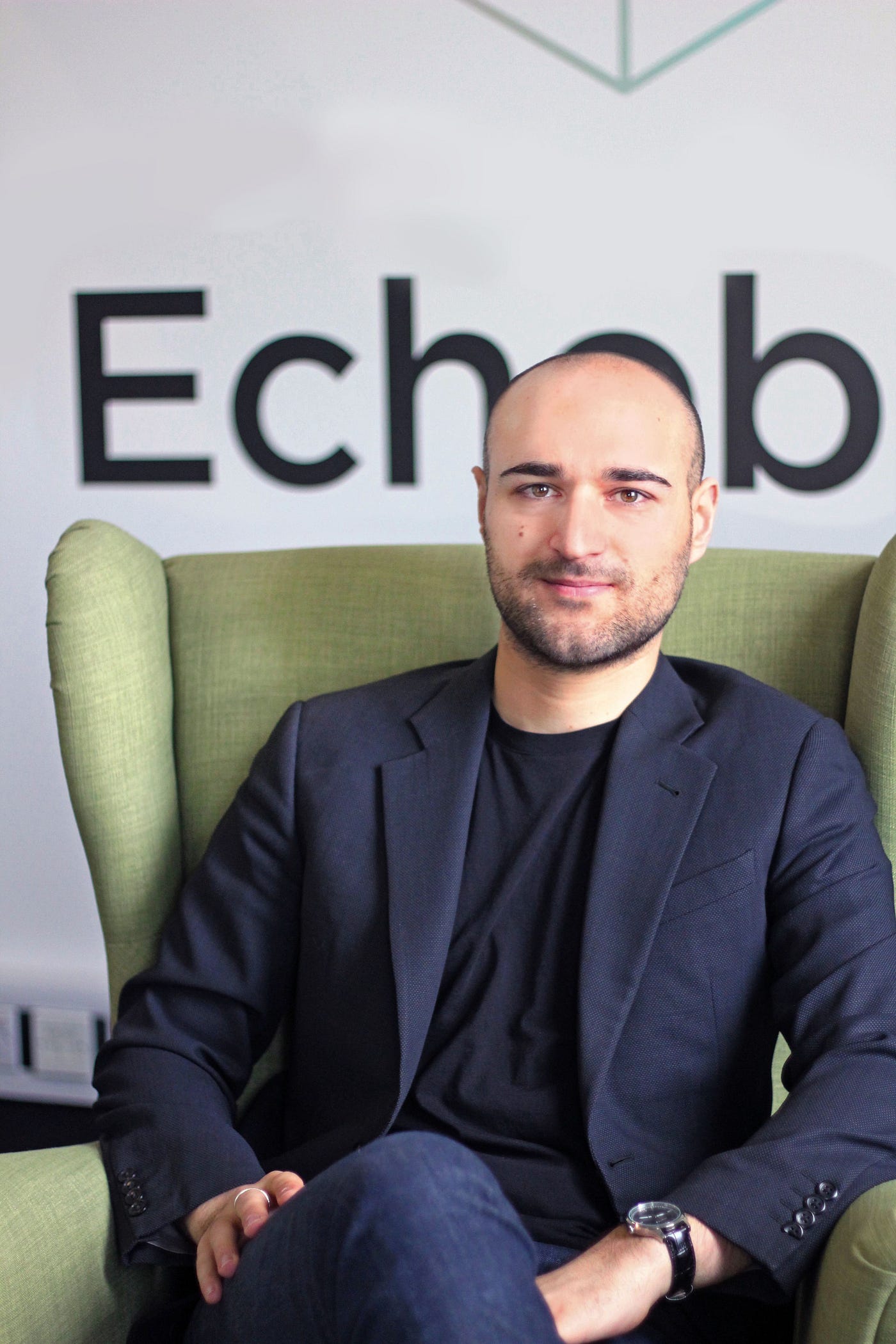
The real obstacle was a mismatch between what users expected and what the new product delivered.
As a part of this series, I had the pleasure of interviewing Pat Leonard.
Pat Leonard is the CEO of CorroHealth, where he plays a crucial role in transforming the healthcare industry with cutting-edge technology and innovative solutions for revenue cycle management across the healthcare continuum. His strategic vision and leadership have enabled the company to expand its reach and capabilities, particularly in streamlining and enhancing healthcare operations. Pat’s expertise in driving growth through mergers and acquisitions has successfully attracted multiple investors, consolidating CorroHealth’s position in the market as a comprehensive provider of innovative healthcare technology and solutions.
Thank you so much for joining us in this interview series. Before we dive in, our readers would love to learn a bit more about you. Can you tell us a bit about your childhood backstory and how you grew up?
I was born and raised in the Washington D.C. area. I have three siblings, including two sisters and a brother. I like to say that I was the favorite child, although I’m sure my siblings would have a different opinion. Being the third youngest child meant that I had the opportunity to learn from my older siblings, including what to do, what not to do, and sometimes how to do things better next time.
My father was a research chemist, and I knew pretty early on that science wasn’t for me. Instead, I had a knack for business and an entrepreneurial mindset. I had paper routes, and I even tried a little business selling trays and utensils made by my uncle’s manufacturing company.
As I grew older, I decided to become an accountant, as it seemed like the right choice at the right time, and in hindsight, it gave me a strong foundation for the work I’d do later in life.
Can you share the most interesting story that happened to you since you began your career?
One of the most interesting stories since I began my career would have to be my first business trip to Muscat, Oman.
After weeks of careful planning, I landed only to discover my luggage hadn’t arrived. I couldn’t find suitable replacements locally, so I borrowed clothes from my host, which added an unexpected challenge, as he was about six inches shorter than me and probably a hundred pounds heavier. For the next few days, I wore pants cinched tight with a belt, two sizes too big at the waist and far too short. They were unmistakably high-water pants.
It wasn’t the start I would have planned, but you learn to adapt. You do the work, find a little humor in the situation, and keep going. It will certainly be a trip that I’ll always remember.
You are a successful business leader. Which three character traits do you think were most instrumental to your success? Can you please share a story or example for each?
If I had to choose three traits that helped me most, I’d say determination, the ability to understand your audience, and humility.
Determination: I had major surgery when I was an infant. My family understandably looked out for me as I recovered. As I got older, I became determined to set my own path and do things for myself, and that drive has stayed with me.
Understanding your audience: I have worked in many different roles and organizations throughout my career, many of which changed through acquisitions and mergers. I sometimes joke that I’ve worked for five different companies without ever really leaving. Those experiences taught me that you can’t communicate the same way with everyone. A frontline employee and someone in the executive suite see different parts of the organization and most importantly, you have to understand what matters to each of them.
Humility: It’s easy to focus on what went well, but it’s just as important to think about what didn’t and what you learned. When I first entered healthcare, the company I joined was going through significant financial challenges. Within my first six months, there had been leadership departures, and I had to decide whether to leave or dig in. Staying and learning through that difficult period reinforced for me how important empathy and humility are, especially when an organization is under pressure.
Ok super. Let’s now shift to the main part of our discussion about “5 Things Health-Tech Companies Can Do To Shorten The Road From Innovation To Adoption.” To begin, can you tell us about your company and the healthcare problems your technology is designed to solve?
CorroHealth is a clinically led technology partner that supports hospitals, health systems, and health plans in strengthening their financial health and operational performance. We bring full revenue cycle management together on one scalable platform, pairing specialized solutions with AI technology.
We bring together clinicians, coders, and expertise to strengthen both the clinical and administrative revenue cycle, from clinical documentation integrity and coding to utilization, denials, and claims management. For health plans, our payer services deliver payment integrity, clinical claim review, and medical record retrieval/review, so every claim is paid right the first time.
The result is revenue that’s accurate, defensible, and right the first time for providers and payers alike.
What makes your technology different from other solutions already available in healthcare?
What sets CorroHealth apart is how we bring together proprietary technology, hands-on clinical expertise, seamless interoperability, and advanced data analytics to deliver measurable results in efficiency and financial performance. Our platform includes CorroHealth IGNiTE™, VISION Clinical Validation Technology®, PULSE Coding Automation Technology™, PRISM Enterprise RCM Technology™, CARAT®, and GLADYS™ Revenue Cycle AI Agent. CorroHealth IGNiTE connects directly with leading EHRs, including Epic and Oracle Health, through a FHIR-based data feed. That gives our downstream workflows a complete, near real-time view of the patient chart.
We’ve built our products specifically for the revenue cycle, across three areas, including patient engagement and front-end services, mid-cycle solutions, and back-end claims follow-up. On the front end, we focus on patient engagement and prior authorization. Automation can provide clinicians with immediate feedback when the information in the chart meets clinical criteria, helping patients get care more quickly. In the mid-cycle, our technology reviews medical charts, flags documentation gaps, and helps confirm that documentation is accurately coded and presented, work that can directly affect reimbursement and premiums. On the back end, we automate workflows to help teams resolve unpaid claims more efficiently and move them toward payment. Behind all of this is a secure, FHIR-based interoperability layer that connects with our partners’ systems.
Can you tell us the backstory about what inspired you to enter the health-tech industry and develop this particular solution?
I’m a CPA by training, and I started my career in public accounting, working across eight to ten different industries. That gave me a strong foundation in business and finance, but I realized early on that public accounting wasn’t where I wanted to be ten or fifteen years down the road. I went back to grad school, earned my MBA, and made a deliberate move into healthcare, as it was the one industry I hadn’t worked in during my time in public accounting. From there, I grew through revenue cycle roles supporting physicians, health systems, and payers, moving from customer delivery and operations into senior executive roles.
Today, I serve as the CEO of CorroHealth, a leading healthcare technology and revenue cycle management company. We help providers and payers improve their financial health and operational performance through seamless interoperability, intelligent technology, data-driven analytics, and clinically led expertise.
The idea for CorroHealth came together through a collaborative effort between me and our now CFO, Scott Tudor. We saw an opportunity to solve complex mid-cycle challenges, especially coding and clinical documentation, that have a major impact on reimbursement and premiums but weren’t being addressed in a cohesive way. We believed that solving those problems reliably and at scale could give us a real competitive advantage and create a platform for additional services, and we knew people alone couldn’t solve them. It would take three things working together: deep clinical expertise, advanced automation, and efficient global delivery. That combination, or as I like to say, the three-legged stool, is what we built the company around.
Can you share the story of a time a product you believed in stalled between “this works” and “people actually use it”? What was really slowing adoption down, and what finally broke the logjam?
That challenge, when a product stalls between “this works” and “people actually use it,” comes up more often than not, especially with new products or when migrating to a different platform. When you’re building something new or consolidating two similar products, it’s important to set the right expectations from the start.
There was a time when I was working on a new solution, and while the product worked technically, adoption lagged because I had set the expectation that it would be the same as the old one. That approach proved to be both unsuccessful and costly. The real obstacle was a mismatch between what users expected and what the new product delivered. What finally broke the logjam was a shift in strategy. I quickly learned that it’s far better to be honest that things will be different and help people see how the new product can address market gaps or solve problems in a better way.
One recent example is a product that our development team at CorroHealth created in a completely new service line for us. Rather than being constrained by existing expectations, we brought everyone together to envision how we wanted the product to work from the ground up. This fresh start allowed us to design a truly innovative solution, ultimately driving engagement and adoption as users recognized the unique value we were offering.
Many leaders assume that strong clinical evidence or regulatory clearance is the finish line. What is the biggest myth about how adoption actually happens inside a hospital, practice, or health plan, and what should health-tech leaders do instead? Please share an example.
This isn’t so much a myth as it is a reality. Adoption is rarely black and white. Clinical documentation can involve different levels of interpretation, and payer rules, whether they come from CMS or commercial payers, provide guidance but don’t necessarily determine exactly how a claim will be processed and paid.
You have to stay grounded in the evidence you’re seeking while recognizing that there will be some judgment at the health system or payer level. Forward-thinking leaders need to be clear about the evidence behind a product, but flexible enough to account for how it will be interpreted and used in practice.
Based on your experience, can you please share “5 Things Health-Tech Companies Can Do To Shorten The Road From Innovation To Adoption”?
1. Be open to new technology and new ways of developing products Automation, large language models, and other tools are changing how quickly products can be developed. We acquired a company with a coding automation product that its founders had spent years creating. Today, a similar capability might be developed in a much shorter timeframe. That changes the questions leaders need to ask, such as “Do we need to build every piece ourselves?” or “Could buying or partnering help us get to market sooner?”
2. Invest in product management You need a clear view of the market and competition, a roadmap tied to the strategy, and the discipline to make hard choices about what comes first. A roadmap is useful only if you can stick to priorities when new ideas and requests come in.
3. Manage the product portfolio as the market changes A product can be strong and still move into a more mature market. Our T System® is a market leader, but enterprise EHRs have added some similar capabilities. That doesn’t make the product irrelevant; however, it does mean that we have to think carefully about where further investment will have the greatest impact and where other products are growing faster.
4. Decide what you need to build yourself and where partners can help Some capabilities are core to your strategy, and you may want to own them so you can control your direction. For us, coding and clinical documentation are areas where we believe that ownership matters. In other areas, including some agentic AI capabilities, partners can help us scale and move faster. The point isn’t that one approach is always right, but rather to make the choice deliberately, with time to market in mind.
5. Reflect on what worked and what didn’t You should celebrate getting a product to market, but don’t stop there. Ask what took longer or cost more than expected, what worked, and what you would change next time. Those answers should inform the next roadmap, not disappear once the launch is over.
Who inside a customer organization most often makes or breaks adoption (the frontline clinician, IT, the CFO, or the patient), and how do you win that person over in the first 90 days? What metric tells you adoption is real, rather than a pilot that only looks good on paper?
In my experience, all stakeholders are critical because they may interact with the product in different ways. A CIO may focus on security, scalability, and interoperability. A patient may care about the user interface and ease of use. A clinician may be focused on workflow and whether the product creates distractions, such as whether false positives in clinical documentation add noise and interfere with seeing patients. The needs and expectations of each stakeholder are different, so it’s important to understand how each defines success.
To win them over in the first 90 days, there are different measures you could track for each. But the simplest question is whether people are using the product. Look at what share of the patient population or clinicians are using it, whether that’s 20%, 30% or 40%, and whether utilization increases over time.
What are some of the biggest challenges you have encountered when trying to introduce your technology into healthcare organizations, and how have you worked to overcome them?
One of the biggest challenges has been ensuring that a new product integrates effectively with the leading EHR environments, given their significant market share among health systems. To address this, it’s important to focus on demonstrating interoperability and clearly communicating the product’s unique capabilities, especially when engaging with decisionmakers like CIOs and CTOs, so they understand how it complements and enhances their existing systems.
Another major consideration is ROI. You need to be clear about what the product can do, the time frame for delivering results, and what commitment stands behind that. Proof points are especially important: buyers want to know where you’ve implemented the product in a similar environment and what results you achieved.
What is the biggest mistake you see health-tech companies making when trying to get healthcare organizations to adopt their products? What should they be doing differently?
The biggest mistake I see is scalability. A company can develop an interesting product that produces compelling results, but health systems may still say, “Looks great, but call me when you have some customers on it.” Other buyers may be looking for a product that’s more fully SaaS ready. The market has this tension between promising technology and demonstrated readiness to operate at scale. What’s built should be informed by the people who will use it.
At CorroHealth, clinicians, coders, and nurses help inform our product development, and we incorporate feedback from customers after launch, helping us build products that are more usable in the environments where customers need them.
How important are clinical outcomes, financial return on investment, and operational efficiency in driving adoption? What is the most effective way for companies to demonstrate their value?
Clinical outcomes, financial return on investment, and operational efficiency are all crucial in driving adoption. The most effective way to demonstrate value is by keeping the measures simple. It’s easy to come up with several ways to measure financial, clinical, and operational outcomes, but often those measures are all driving toward one core result.
For financial value, that’s ROI: “What did I invest” and “What did I get back in cost savings or revenue improvement?” Clinician satisfaction is important, but if people say they’re satisfied and nobody is using the product, that probably doesn’t indicate broad support. Operationally, look at throughput, ease of use, and efficiency. Ultimately, adoption is a useful test of whether the product is making a difference in people’s work.
Looking ahead five years, how do you think the process of adopting new healthcare technologies will change? What should innovators be doing today to prepare for that future?
In five years, I believe the adoption process will become easier. The time it takes to develop products is shortening, and more capabilities are becoming available in the market. As a result, organizations may be more willing to place a bet and test whether something works. That’s different from making a much bigger decision about a product that took two years to develop. The market is becoming more fluid, and trying more solutions could increase adoption and ultimately lead to better results.
If you could offer one piece of advice to a health-tech founder who has developed a promising technology but is struggling to get healthcare organizations to actually use it, what would you tell them?
If I were advising a founder with promising technology but struggling adoption, I’d say: don’t ask a customer to be the first person to trust an untested product. Build something useful but put it through its paces with your own team first. If clinicians, coders, or nurses will use it, involve them in shaping it and letting them test it in a real working environment.
Then, when you talk to a health system, you can speak from experience: here’s what we built, here’s how our own team used it, and here’s what we learned. Customers may be excited by new products, but most don’t want to be the first to find out whether one works.
How can our readers further follow your work online?
For more information about CorroHealth, visit https://corrohealth.com or follow along on LinkedIn via https://www.linkedin.com/company/corrohealth.
Thank you so much for joining us. This was very inspirational, and we wish you continued success in your important work.
About The Interviewer: Saul Marquez started out selling spine implants for Stryker and left an executive role at Medtronic to build Outcomes Rocket, a healthcare strategy and full service marketing agency. Twenty years in healthcare and 2,300+ interviews later, his conviction is simple: success in healthcare isn’t luck, it’s algorithmic, and it’s still a relationship game. Learn more at outcomesrocket.com