Instead of proving every word you write with a scientific citation, you have to project into the future with first-principles thinking, be creative, strategize, and conduct high levels of planning for the future.
Tech
Parmita Mishra of Precigenetics: Inside the Quest to Transform Healthcare Through Non-Invasive Cellular Imaging
The CEO and founder discusses her journey from computational biology at Penn to building an innovative biotech startup that merges engineering with foundational medicine.

As a part of our series about “Lessons From Inspirational Women in STEM and Tech”, we had the pleasure of interviewing Parmita Mishra.
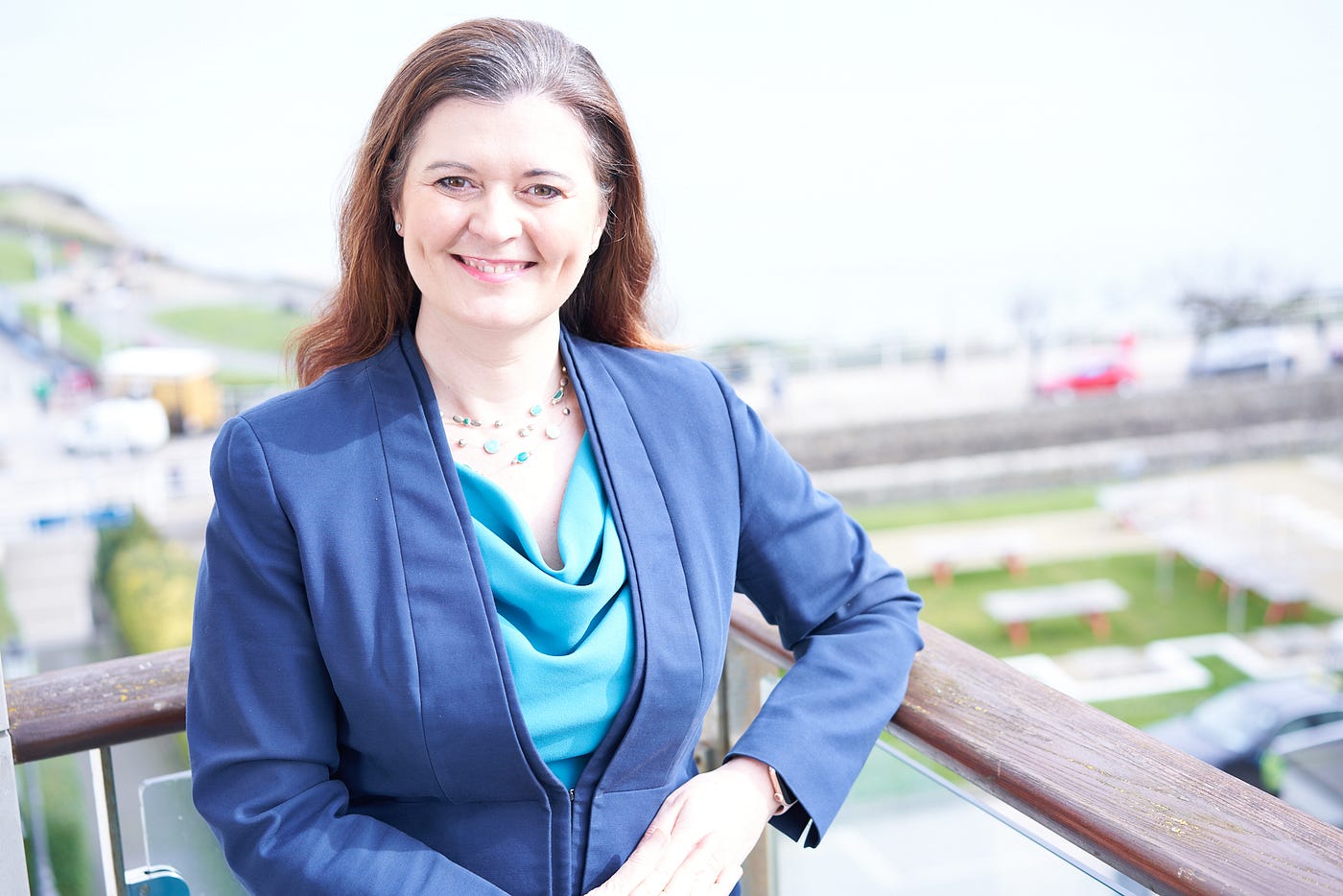
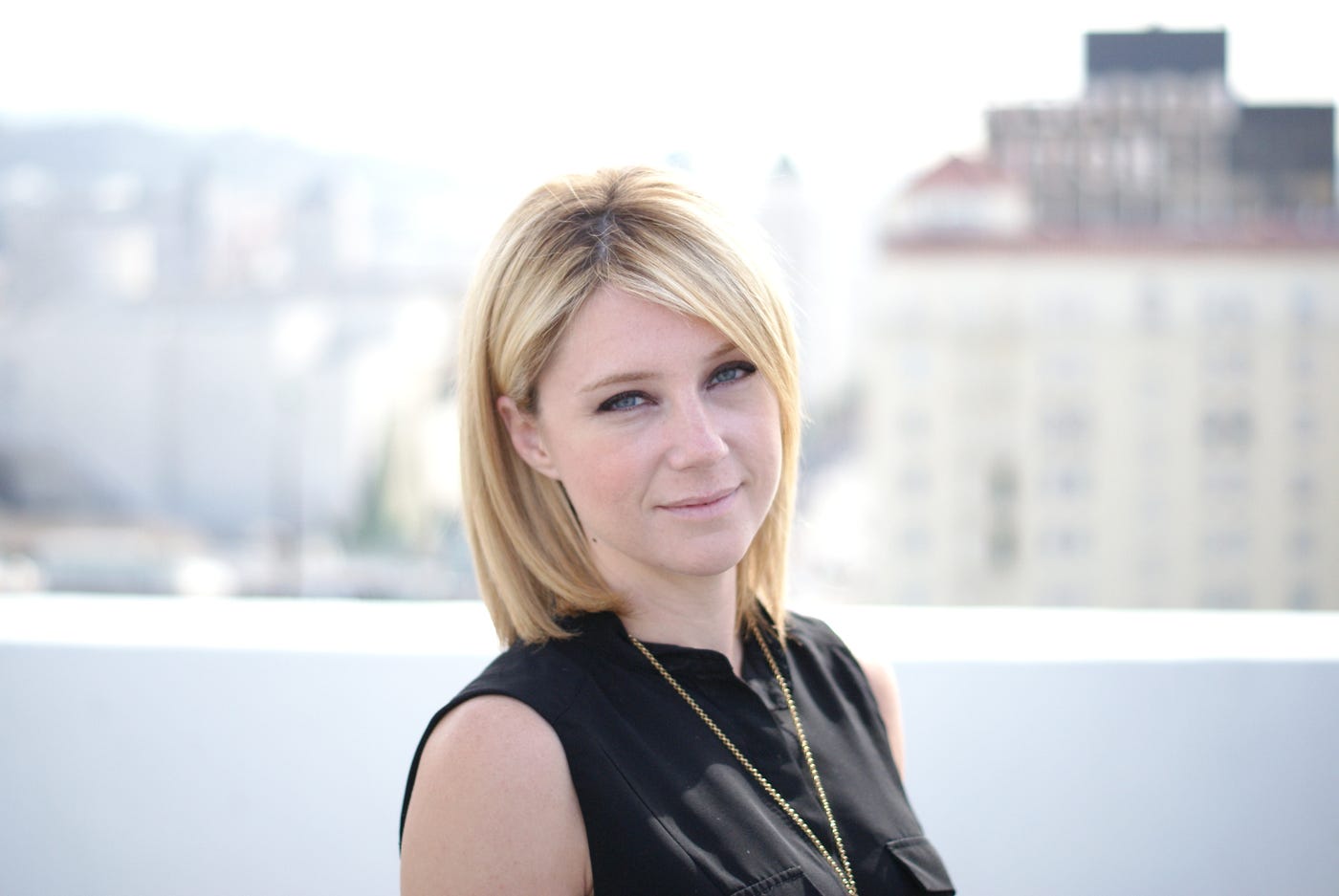
Parmita Mishra, CEO of Precigenetics, is a new biotech startup that uses non-invasive cellular imaging to transform healthcare. Integrating hardware and machine learning, her work offers unprecedented insights into disease progression. Parmita came up with this idea while studying computational biology and computer science at the University of Pennsylvania. She bridges the gap between engineers and biologists, advocating for technological advancements in medicine.
Thank you so much for doing this with us! Can you tell us a story about what brought you to this specific career path?
It’s quite interesting. Early in college we had to make a presentation for a specific topic. I chose marine biology, and ended up going down a rabbit hole, searching for microscopy images to visualize the concepts in the slides. I always knew biology is incredibly visual. This, however, was the first time I ended up being so fascinated by the beauty in front of me; I even started a small Instagram account called @epigene just to share these images. I already had a background in computational biology and machine learning at this point, and I could not stop thinking about how, using imaging, you can capture the dance of biology non-invasively. What if you can feed this into your machine learning algorithm? How much more would we be able to capture, when you make your data dynamic? A picture says a thousand words, so what if your computer can read this over time? The benefit of not killing your sample is that you can understand life using life, and over time. It is like going from looking at static images from a movie, to capturing a movie itself. I was always keenly interested in accelerating healthcare, thinking this would be done through health economics or medicine. But the minute I was able to see biology, I realized I will be doing this at the grassroots level — understanding foundational biology itself. I decided then and there that biology is nothing without our ability to see biology, and bought the domain for Precigenetics. Few years later was when ample scientific evidence met my initial suspicion; so I left everything to conduct my own research and make the mission come to life.
Can you share the most interesting story that happened to you since you began at your company?
As I said, I have had this idea since 2022, and in short…I gave up. But in January 2024, as AI started being able to process huge amounts of data, I decided to go all-in. The most interesting thing since then has certainly been having a short call with one of my favorite biologists of all time — Dr. Michael Levin at Tufts University. This company caused me to let go of all social anxiety in general. We had been following each other on X for a while. I had goosebumps when I entered the Zoom room, and if it weren’t for this company, I would never have the courage to actually message him and speak with him. While the conversation was short and simple, it was a dream come true to hear his thoughts, and certainly a highlight of 2024 for me.
It has been said that our mistakes can be our greatest teachers. Can you share a story about the funniest mistake you made when you were first starting? Can you tell us what lesson you learned from that?
Let’s just say — I am a book of mistakes. In fact, I hold my mistakes high up, and talk about them at length, leaving my ‘accomplishments’ and whatnot for people to figure out themselves. This way, I am never, ever worried about someone ‘figuring something out’ about me — I am never putting up a face to the world, I don’t claim to be anything but a person who makes mistakes and learns from them. Everything else is just a result of that ability.
With that said, perhaps the biggest mistake I made was trying to perfect a pitch memo for about 1.5 months, not seeking help from anyone external to our very technical team. The memo looked like a research paper, and was 40 pages long, bibliography et al. Then, I decided to seek help from an investor friend, who was genuinely speechless at the abomination we had collectively created. Lots of cool science learned, but never doing that again.
I started understanding that the dynamics of running a business are tremendously different from academia, and might just fit my personality better. Instead of proving every word you write with a scientific citation, you have to project into the future with first-principles thinking, be creative, strategize, and conduct high levels of planning for the future. This is still uncomfortable to me — as is anything not quantifiable — but my creativity started to shine when I started blending this scientific approach with the art of strategic decision-making. Now, we have created the grounds of an organization that is so alien to our current ways, yet so well-planned, that I believe this company will blossom into the next generation of life sciences as a whole.
What do you think makes your company stand out? Can you share a story?
We take an engineer’s approach to biology, and think from first principles. Inspired more by space research organizations and Tesla/SpaceX in our approach, we are trying to put biology back into medicine. This means a few things. For instance, we have highly technical founding members from hardware, all the way into machine learning, and bioengineers with a diverse engineering background. A funny story was when we wanted to create a business document, and had a fight within our founding team because my CTO wanted to use GITLAB and LaTeX code to write the whole thing, instead of just, you know, plain old Google Docs. Funny as it is, this is exactly the kind of CTO I dreamed of having. We build things from scratch, and are bringing ever-needed changes into biological sciences, with the aim of democratizing these changes over time. I like that our company is split — half of us are from a biotech background and the other half are deeply rooted in the world of hardware — because as long as you choose to have people who are fundamentally open thinkers, this approach of making people enter a brave new world is what inspires their creativity. Being in the same field for years is a sure shot way of getting lost in the way things already work, rather than boldly taking on new ideas. Believe it or not, great engineers are often primarily artists, and the blend between science and engineering leads to highly validated but fresh takes on biology. We also have a lean, first-principles-based focus in our scientific techniques, leaving us free to open every assumption in biology, to help build a brighter future. Finally, we don’t believe in incremental improvements over previously-tried approaches. We want to be highly specific, and make frameshift changes in how we approach the present model of the life sciences world.
Are you working on any exciting new projects now? How do you think that will help people?
Exciting projects? Everyday! How many of them can we share yet? A few. When you deal with life, you have to be measured, careful and responsible in your public dealings. That doesn’t mean you gate everything away, though. We want to create some parts of our data structures in open-source, and hope to use academic publishing to spread the word about our insights. Although we are certainly not a pure research organization, aiming to offer services and hardware as well as machine learning solutions (what could be called a ‘platform’ company), we want to responsibly share generalizable parts of our code. This will include many libraries, and hopefully some software, as well as free educational content on our website. The reason for this is simple: it is my firm belief that biology needs engineers. In every other part of the market, you see high-tech engineering paving the way for all sorts of products, but in biology, there is a balance needed between accelerating research, holding your company’s duties, and being responsible with data. We find that a lot of technology in the biotech industry is heavily gated and fragmented, and mainly academia leads the way for open-access engineering and education. This will not do much in the long run. We have already thought well past this zero-sum game in various industries, e.g. FAIR at Meta and Microsoft Research seem to be doing a tremendous job with open-source and responsible sharing of machine learning. To some degree, one can count DeepMind in that same bucket, albeit there are understandable restrictions. We need tools, from the ground up, to be more open access. So, there will certainly be some papers and repositories released as a part of Precigenetics, which would be free to use and host, as well as strategic partnerships with collaborative companies. It is a win-win situation; we are able to show our engineering prowess from day 1, and the world receives tools they should’ve already received to just keep building.
Ok super. Thank you for all that. Let’s now shift to the main focus of our interview. Are you currently satisfied with the status quo regarding women in STEM? What specific changes do you think are needed to change the status quo?
It is hard to say if there even is a general status quo in STEM. At 18, I was lucky enough to study at Penn, a university where I, personally, received a lot of equitable treatment from my professors and faculty. At a peer level, however, things were sometimes quite different. I remember being one of the only female teaching assistants for computer science classes with hundreds of students. I remember being the only female in many group projects. This was specifically true in more technical engineering classes, although the state was a bit more muted in life sciences.
At such a small degree of freedom, and at such a young age, coming from a completely different country, it was often hard for me to tell that actually, no, a certain treatment was not normal, and yes, I was being treated one way or another not blind to the fact that I am a woman. Many times, it is unintentional, and rather taboo for men to actually consider the odd-one-out’s perspective, and even harder to stand up for oneself when you don’t even know how you’d be treated if you were a man. All this might sound abstract, but it is general principles that have applied across the board for me. It is clear to me that I am an engineer at heart, with an immense passion for biology and healthcare. But I would often try to identify as less of an engineer, depending on the crowd, because I didn’t feel it was possible for me to enter that world as a woman. These aren’t thoughts inflicted by someone actively, these are all hidden plays of society at large. The way I dealt with this was to create an online presence on X. I crafted exactly who I am, from scratch, and it not only resonated with many people from various demographics but also allowed me to express myself. The beautiful thing about social media — why so many journalists enjoy it dearly — is that there are no barriers to entry. I remain firm in my belief that more people should responsibly allow their thoughts to be open, under their actual name and alongside their actual face. There might be a troll or two, but there should be no reason to hide the beautiful mess that each of our minds is. The more the women in STEM who just…exist and show who they are (and they’re often really cool), the more naturally we accept the true state of demographics, and inspire more people to be themselves in the process.
In your opinion, what are the biggest challenges faced by women in STEM or Tech that aren’t typically faced by their male counterparts? What would you suggest to address this?
Let me start with some research. A 2016 Harvard Business Review study revealed that women’s performance reviews frequently contained negative comments about their personality and tone, while men’s reviews focused more on technical abilities. Additionally, the study found that men were more likely to receive specific, actionable feedback linked to outcomes, giving them a clearer path for advancement; for example, “You need to deepen your knowledge on {X} subject”. In contrast, women often received feedback centered on their communication style, feedback like: “Her speaking style and approach can be off-putting to some people at times” which, while important, tended to overshadow their technical contributions. Now, a disclaimer. Statistics are statistics — they represent broad sweeps, at best, at understanding an inherent situation. That said, many of these points resonate with my personal experiences. I would add that a lot of these sex-based differences must be acknowledged as something both men and women are victims of — as patterns observed by a system, with no absolute blame on one individual.
With that out of the way, let me try to frame the root cause as I understand it. This disparity may come from unconscious bias, where most individuals are less likely to connect women’s contributions to business outcomes or acknowledge their technical expertise. The same holds true outside of this sample. Very often, we judge women on completely different bases, because we cannot seem to understand the inherent similarities amidst all human beings. We seem reminded of our last few experiences with women in the workplace, when talking to a new woman in the workplace, and the same with men. So, I ask the reader to introspect: if you feel differently about a man and a woman in your office, what is causing this? Is there a dominant experience in your memories, or a set of experiences, that may cloud your judgment? If you’re responsible for human resources and hiring-related practices at your org, are you not worried that illogical judgments could render practices in your organization obsolete in the rapidly advancing future ahead of us?
A few decades ago, we held similar, ill-formed beliefs about races. For instance, Samuel George Morton, an anthropologist from Philadelphia and a widely-controversial figure (especially at Penn), created a large dataset of skull sizes, aimed at comparing the brains of five racial groups. At the same time, German anatomist Friedrich Tiedemann conducted similar research, but without a racial bias. With roughly the same data, the former scientist’s work fell into obscurity, and the other’s is still being discussed a whole lot more. This is a great example of how unconscious biases which are, at the forefront, illogical, can cause similar work to grow obscure much faster.
In the long run, this harms the person holding such judgments, perhaps even more than it harms the demographic being judged. Therefore, it is not an overstatement to say that these biases are a lose-lose situation, and must be dealt with on both ends. From the perspective of the woman in the workplace, it is important to acknowledge such biases, and from the perspective of the reviewer, in this example, it is important to remember that such systemic biases are illogical and can be considered obscure. To address this, reviewers can develop a standardized performance review framework that focuses on specific and measurable outcomes, rather than subjective ones. This will ensure that everybody is evaluated in the same light, reducing the impact of bias. Also to establish clear and consistent criteria for what constitutes strong performance in both technical skills and leadership abilities, making it easier to provide objective feedback.
What are the “myths” that you would like to dispel about being a woman in STEM or Tech. Can you explain what you mean?
I have heard the myth that women inherently lack passion for technology, and that can’t be farther from the truth. Personally, I was always fascinated by science and technology as a little girl. I remember running to my microscope to examine everything I could find, and I wasn’t alone — many of the girls I knew were just as curious, often even more so than some of the boys. The challenge is that as we grew up, we didn’t have representation, we didn’t see women in tech, and it started to feel like it’s not a path meant for us. I was lucky to have that representation at home, but many girls lose that sense of possibility because they don’t see enough women in these roles as they get older. But the passion is there, women have been trailblazers in tech since its inception, think of Hypatia of Alexandria, Ada Lovelace, Grace Hopper, Rosalind Franklin, many of us are as passionate as one can be, but not all get opportunities. Times are changing, and it is certainly my mission to be part of the wave of women in STEM. I don’t think that it was ever a question that women belonged in STEM, but now, with technology and the internet, we hold the crucial ability to take back control of our own voices, and this will lead to the truth being upheld. I would not be surprised if the result is a massive increase in women in STEM in the coming decades.

What are your “5 Leadership Lessons I Learned From My Experience as a Woman in STEM or Tech” and why. (Please share a story or example for each.)
First and foremost, you need to be yourself. Might sound cliché, but it is so incredibly true. When you are entering fields you aren’t statistically supposed to belong in, there is nothing better than to get all prior impressions out. You are not going to be aping anyone — and it is a blessing in disguise. I cannot recount the number of times I have been the only person of my own demographic in a room, so it is hard to tie this to a singular story, but frankly, everyone other than me noticed. Me? I was just ready to provide value in my unique way. I never identify as one demographic, I do not even identify as Parmita. I am just a part of a unit, doing my best to make ideas happen. This, and nothing else, is my identity.
Secondly, cut the noise. People’s initial impressions of you are nothing more than just that — impressions. I remember when I was discussing our company with my cofounder, finding it hard to convey the utility of this grand idea to initial investors (it went much smoother than expected). He simply said: do you think you would’ve embraced the idea for Google if someone gave it to you, back in the 90s? Amazon? Of course not. It would’ve seemed like a smaller deal than it is. And I certainly agree. If you are worth something priceless, it is hard to price you. Initial impressions often have seeds of helpful insight. Sow those seeds, and then, cut the rest out, because as long as you are honest, they’re nothing more than initial resistance to get through. An ‘easy’ way to do this is to do something brave, for yourself. For me, this was scuba diving. Any time I am hit with challenges, I remember that I have gone underwater, unfazed, and due to my ability to handle stressors and measure things effectively, I have never had a single negative experience. When someone doubts me, I remember that I rely on my judgment and dive buddies every time I am underwater, and the rest just works itself out.
Thirdly, go by your gut. Yes, especially in STEM, you can use your intuition — as Rick Rubin says, creativity precedes discoveries in this field. Women, and men too, are gifted with divine intuition. In one of my tweets that went viral (I do not understand why), I wrote about ‘vibes’, how ‘vibes’ can be seen as an information processing system — that is, how you feel can tell you a lot about how you may be processing vast amounts of information, hard to describe in language. Check in with yourself, and leverage how you feel before and after an idea, conversation, project, to navigate the next steps in life. This, perhaps, is the only reason why I took such a huge leap and started my company. It has never felt wrong, only more right. Since the first day I had this idea, I stuck to it, talked about it with close friends, and have never felt more determined in my life to see something through.
Fourthly, be honest. In STEM, maintaining high ethical standards and integrity is crucial for credibility and trustworthiness. Always uphold these values in your work. Nevermind the additional days, weeks, years it takes to get there, because the minute you commit to honesty and integrity, no one can steal it from you. The best way to put your best foot, and face, forward, is to know deep in your heart that you thought through everything you could, acted with integrity, and never gave up on honest work. Trust me, it is the best streak you can have with your conscience — the honesty streak. I identify as someone who is happy to take the positives and negatives — whatever they are — that come with being honest, because they are worth it. In the book of time, the truth wins.
Finally, And this is truly the one piece of advice that has brought me here. If you are handed circumstances you did not want, you make it your life’s mission to make them make as much sense as possible. At least for me, this is the one thing that brought me to wherever I am. I remember needing surgery, after being misdiagnosed at the age of 19. I remember feeling despair, as an ‘overachiever’ as they call it, thinking I have to waste months of my life recovering. Funnily enough, I made it my life’s mission to never see this phase with regret, and ended up transitioning into computational biology (the only thing I could do remotely, from my laptop). I had no idea how to code, but I spent most of my days everyday learning it from scratch. I was not an engineer. Looking back, not only do I not regret this time, but I am actually grateful for it. In STEM especially, skills are skills — you can take leaps and bounds by learning, and doing, there is no redtape to cross through as long as your skill is your commitment. You can navigate just about anything with the right perspective, and dive into a flow state. The biggest misconception about STEM is that it is not an artful or creative set of fields. Wrong. It is nothing more than measured, tangible creativity, and you can create no matter what hand you’re dealt. Make the most of it.
None of us are able to achieve success without some help along the way. Is there a particular person who you are grateful towards who helped get you to where you are? Can you share a story about that?
I’ve been fortunate to have a family and mentors who are incredible role models who have shaped my personal and professional journey. Kailash Satyarthi, who won a Nobel Peace Prize, stands out as a major mentor. Rather than keeping the prize, he chose to donate it to the Indian government, which speaks volumes about his character and dedication to a greater good. Kailash ji’s work in rescuing hundreds of thousands of children from child slavery is a testament to his unwavering commitment to making a difference. I had the privilege of helping in some of his health initiatives. My parents, both doctors, dedicated their entire lives to saving children, instilling in me the values of compassion and service. My dad started off in a village, with a dream at the age of five to be a surgeon. Of course it was clear to me that anyone can create their own reality. Growing up surrounded by such selflessness had a profound impact on me. I’ve always felt that being raised by such extraordinary people gave me a deep sense of purpose and responsibility. Their influence has been a constant reminder to strive for meaningful impact in everything I do.
How have you used your success to bring goodness to the world?
The values instilled in me by my family have deeply influenced how I approach my work at Precigenetics. Having a doctor family, I have seen people escape the mouth of death and suffering, sometimes miraculously so. And I want to increase the odds of this happening systemically. Inspired by their dedication to helping others, I’ve committed to building a company that isn’t just focused on success in one region, but aims to impact the entire world. At Precigenetics, we are devoted to advancing precision medicine, ensuring that every individual has access to innovative technology. Medicine deserves advanced technology. Our mission is to leverage the power of science to make healthcare more personalized and effective. This is our way of using success to bring goodness to the world — by making a tangible difference in people’s lives through innovation and compassionate care.
You are a person of enormous influence. If you could inspire a movement that would bring the most amount of good to the most amount of people, what would that be? You never know what your idea can trigger. :-)
If I could inspire a movement that would bring the most good to the most people, it would be centered around the vision of Precigenetics: to make precision medicine accessible to everyone, everywhere. Imagine a world where healthcare is not one-size-fits-all, but instead tailored to each individual’s unique genetic makeup, lifestyle, and environment. This movement would ensure that everyone, regardless of their location or socioeconomic status, has access to the most advanced and personalized medical care.
The power of precision medicine lies in its ability to predict, prevent, and treat diseases with unprecedented accuracy. We could transform global healthcare, reducing suffering and improving the quality of life for millions, if not billions, of people. Now add to this the power of something we are all seeing unroll right now — artificial intelligence. It adds a level of autonomy to technology, allowing it to be more democratized. This vision is not just about technological advancements; it’s about equity, compassion, and empowerment. It’s about giving people the tools they need to live healthier, longer lives. I believe that by inspiring others to support and invest in this vision, we could create a ripple effect that would lead to a healthier, more equitable world for generations to come.
The core tenet underneath Precigenetics is simple — leverage compassion, not empathy. There is much suffering in the world today, and simply facing it empathetically leads to fatigue, not momentum. Compassion, on the other hand, is about seeing the state of someone — or the world at large — with an actionable eye. It leads to fire, and inspiration. In our case, this applies to precision medicine. In yours, it might apply elsewhere, and the best we can do is deliver on our goals, and inspire others’.
Can you please give us your favorite “Life Lesson Quote”? Can you share how that was relevant to you in your life?
I love a line that goes along the lines of ‘The best way to predict the future is to create it’. I am one of the privileged few, who failed enough times in going the traditional ways, to see the benefit in carving out your own path in life. The momentum is never handed to you softly. But it is the privilege you learn to adapt to. Everything in life other than what feels right did me wrong. I hold my intuition — my emotional compass — proudly, knowing that if something is laced with ‘wrong’ intentions, it is simply better to do nothing. It may not be easy to go your own way. But it is surely the best way to create the future. I have learned to mute the noise around me, to think with my head, to get the sand off my feet, and race towards a better future. This quote has stayed with me because it keeps on reminding me to never fear the race. To never keep looking for answers — but create them.
We are very blessed that very prominent leaders read this column. Is there a person in the world, or in the US with whom you would love to have a private breakfast or lunch with, and why? He or she might just see this if we tag them :-)
I would like to meet Dr. Manolis Kellis or Lex Fridman. I think Dr. Kellis is a pioneering force in computational biology, and is also a compassionate leader in the field of science, speaking out against practices such as bullying, and showing the world an example of an effective leader and communicator. Meanwhile, Lex has done a revolutionary job at allowing the world to listen to scientists. He does a great job choosing the right people to interview from around the world, and always asks the right questions.
Thank you for these fantastic insights. We greatly appreciate the time you spent on this.
About the Interviewer: Dina Aletras boasts over 20 years of expertise in the corporate media industry. She possesses an in-depth understanding of growth, strategy, and leadership, having held significant roles at some of the UK’s largest media organizations. At Reach PLC, the UK’s largest tabloid publisher, she served in various director capacities. Additionally, she held leadership roles at The Independent Magazine Group and DMGT. Her extensive knowledge spans editorial, digital, revenue, sales, and advertising.
Upon relocating to Switzerland, Dina took on the responsibility of managing and promoting the international section of Corriere del Ticino — CdT.ch pioneering the English page “onthespot.” She also was the Co-Editor of Southern Switzerland’s first official Italian and English bilingual magazine.
DA
Written by
Dina Aletras
Executive Contributor · Authority MagazineDina Aletras is an executive interviewer and contributor covering leadership, culture, and business for Authority Magazine.

Published inAuthority MagazineTop Lessons, Top Authorities · 42K Followers
Exclusive, curated interviews with the leaders and changemakers shaping tomorrow. Leadership lessons, industry deep dives, and executive profiles.