Police officers protect the thin line between good and evil. They witness the worst that Satan can give. It is a difficult job requiring the patience of a pastor, the wisdom of a judge, and the strength and stamina of a professional athlete.
Wellness
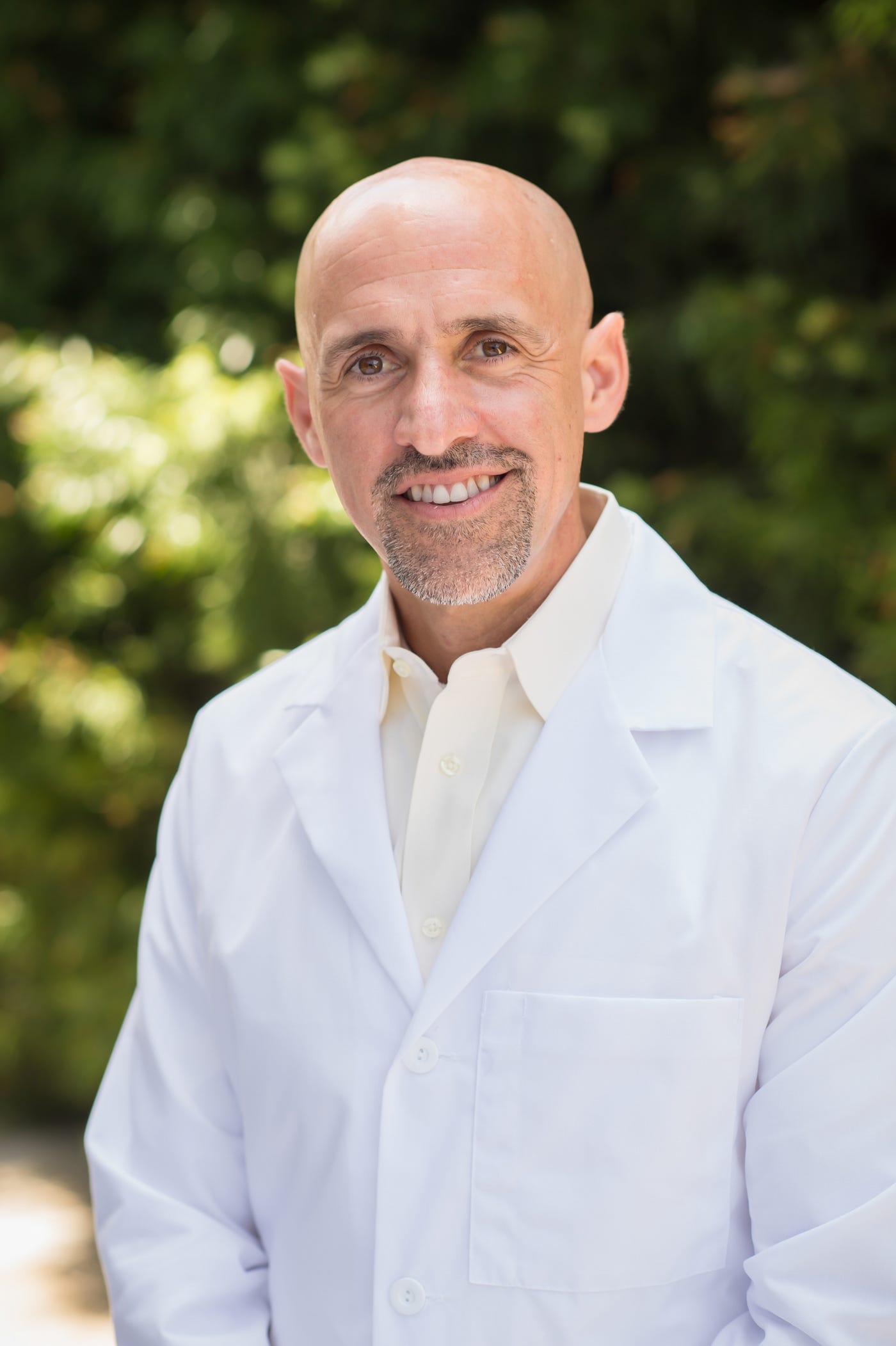
Norm Wielsch: Inside the Law Enforcement Culture That Drives First Responders Toward Unseen Trauma and Addiction
Former law enforcement commander Norm Wielsch shares his journey through physical degeneration, PTSD, and recovery to help empower others navigating major life transitions.
Many successful people reinvented themselves in a later period in their lives. Jeff Bezos worked in Wall Street before he reinvented himself and started Amazon. Sara Blakely sold office supplies before she started Spanx. Dwayne “The Rock” Johnson was a WWE wrestler before he became a successful actor and filmmaker. Arnold Schwarzenegger went from a bodybuilder, to an actor to a Governor. McDonald’s founder Ray Kroc was a milkshake-device salesman before starting the McDonalds franchise in his 50's.
How does one reinvent themselves? What hurdles have to be overcome to take life in a new direction? How do you overcome those challenges? How do you ignore the naysayers? How do you push through the paralyzing fear?
In this series called “Second Chapters; How I Reinvented Myself In The Second Chapter Of My Life “ we are interviewing successful people who reinvented themselves in a second chapter in life, to share their story and help empower others.
As a part of this interview series, I had the pleasure of interviewing Norm Wielsch.
Norm Wielsch was a law enforcement officer for over 26 years — 16 of those as an undercover narcotic agent. In 1998, he was diagnosed with an incurable neuro-muscular disease, and after more than 30 surgeries, he became addicted to opioids. Wielsch was diagnosed with PTSD, and then his daughter was diagnosed with a serious illness and given a poor prognosis. In a downward spiral, Wielsch made a series of bad decisions that landed him in federal prison.
While incarcerated, he obtained a master’s degree in Theology and Counseling, a Doctorate in Christian Counseling, and a Drug and Alcohol Counseling Degree. He currently works at a men’s residential treatment facility as a registered alcohol and drug counselor and pastoral care provider. He is a working credentialed chaplain who hopes to one day launch a first responder ministry.
Wielsch also has a master’s degree in Law Enforcement Management and is an expert in law enforcement tactics, criminal investigations, pursuit driving, high risk search warrant service, PTSD and the police culture.
Thank you so much for doing this with us! Before we start, our readers would love to “get to know you” a bit better. Can you tell us a bit about your childhood backstory?
I was an only child who grew up in a middle-class family. My father was an ex-military disciplinarian and my mother a stay-at-home mom. My father owned an auto repair shop, where I got my love of cars, especially classic and racing cars. My parents identified themselves as Christians, but like most only went to church on Easter and Christmas.
I remember going to a church service only ‘about two times’ because most of the time I stayed home. I still remember to this day a bed-time prayer my mom taught me in German. It’s funny what we remember.
I learned how to be a mechanic from my father. I worked with him after school and on Saturdays. After I graduated high school, I worked for him full-time. I built and raced cars at 19 years old. I began road racing on tracks like Sonoma Raceway and Laguna Seca Raceway. After a few years, I moved to NASCAR oval track racing. I raced all over Northern California.
When I was 21 years old my father retired, so I took over the business. My father was so proud of me following in his footsteps. I loved working on cars but I knew this was not what I was meant to do for a living.
I later became a police officer and my father sold his business.
Can you please give us your favorite “Life Lesson Quote”? Can you share how that was relevant to you in your life?
“It is not the traumatic event that keeps you oppressed; it is your sinful response to the wound that keeps you in pain.” –Norm Wielsch 2018
You have been blessed with much success. In your opinion, what are the top three qualities that you possess that have helped you accomplish so much? If you can, please share a story or example for each.
- Understanding that we have nothing without God
- Remember to serve others, stay humble
- Do everything as if you’re doing it for God
Let’s now shift to the main part of our discussion about ‘Second Chapters’. Can you tell our readers about your career experience before your Second Chapter?
I became a police officer in 1985. I was a police officer for 26 years. Sixteen of those as an undercover narcotic agent rising to the position of Commander of an elite multi-jurisdictional narcotic task force. I experienced many traumatic incidents during my career. I have investigated traumatic events from fatality collisions, shotgun suicides, child drownings, to fatal plane crashes to the murder of an on-duty police officer.
Police officers protect the thin line between good and evil. They witness the worst that Satan can give. It is a difficult job requiring the patience of a pastor, the wisdom of a judge, and the strength and stamina of a professional athlete. One minute you are driving a patrol car eating fast food or donuts, the next you’re chasing a burglar over fences. Very few people are able to endure the emotional stress and physical wear and tear on the body.
Many recruits are let go after a few months. Very few officers retire from a 20 or 30+ year career without many scars; internal and external. There is a very high rate of suicide for law enforcement officers, and even higher for retired officers. The job announcements for police recruits do not mention the likelihood of PTSD.
The birth of my second daughter was an overwhelming life event. When she was born, the doctors saw something immediately and took her away. They later diagnosed her with aplastic anemia. Her body was not producing white blood cells. Without white cells, the immune system cannot fight off illness.
They transferred her to three different hospitals finally arriving at the University of San Francisco Medical Center (UCSF). She required a bone marrow transplant in order to survive. She was in an isolation for three months. Due to my poor coping skills my marriage to my first wife suffered and we later divorced.
In 1998, I was diagnosed with an incurable neuro-muscular disease that caused the loss of feeling, mobility, and strength in my hands and feet. After 30 surgeries to stabilize my feet, I developed an addiction to opioids. My hands got so bad that I could not button my shirts or zip up a zipper. I found that I was having difficulty handling my duty handgun. I lost my sense of balance and required braces to walk. I was becoming unfit for duty. But the first responder culture prohibits seeking out help because in that culture, it is a sign of weakness.
You may ask why didn’t I retire? In the law enforcement culture, any sign of weakness is a career killer. Many officers work their shifts in dire pain from on-duty injuries because they do not want to appear weak. Even more officers work through extreme emotional distress and depression because they are afraid to seek out help that may cause them to appear weak. If an officer seeks psychological help, they are ostracized — no officer will work with them. Seeking help is the kiss of death.
I was later diagnosed with work-related PTSD, then the same daughter was diagnosed with a serious illness and required surgery at 22-years old. The doctors told us that there was a 50% survival of the surgery. This caused me to go into a downward spiral that I never recovered from.
I was being attacked from all fronts. First, the physical degeneration. Second, I felt responsible for my daughter’s illness. And lastly, the battle that was raging inside my mind. The negative emotions from PTSD were consuming me; I was losing the battle. My wife saw the changes in me and begged me to seek professional help. But I was too prideful, I could fix whatever this was on my own. I wish I should have listened to her. After a failed suicide attempt, I made a series of poor decisions that landed me in federal prison. As a result of my self-destructive behavior, I stole a pound of drugs from the secure evidence storage and gave it to an acquaintance to sell. I was sentenced to 14 years in Federal prison.
And how did you “reinvent yourself” in your Second Chapter?
This was my darkest hour, but it is always darkest before the dawn. One night, the telephone rang, it was a call that would change my life. The caller was Pastor Jeff Kenney from New Hope International Church. At that time in my life, I did not believe in God. Jeff was making sure I was alright and offered his counseling services, but I politely declined. He asked if he could pray for me. He prayed the sinner’s prayer. When he finished, he asked if I accepted Jesus as my Lord and Savior. Not wanting to be rude, I said “yes.” He then invited me to his church and hung up.
I joined my wife on the couch, she sensed something; she asked me what I was feeling. I felt better, it was like a heavy weight was lifted off my shoulders. She believed in God. But due to my beliefs, she did not talk to me about it.
We went to church on Sunday, everyone greeted us with welcoming hugs. Pastor Jeff’s sermon was uplifting. I felt comfortable there. I bought a Bible and began to read it. I didn’t understand much, but the more I studied, the more God revealed to me.
During one Sunday service, Pastor Jeff stopped the sermon and asked the congregation to pray for my daughter’s healing. About a week later, she had a biopsy. Two weeks later we went to get the results. The doctor placed the two scans up on a lite panel. He pointed to one scan that showed the tumors. He then pointed to the new scan that showed no tumors. The doctor could not explain it, then it hit me like a ton of bricks! God had healed her. I felt the filling of the Holy Spirit, a feeling of warmth, peace, and love. I finally believed and I have no doubt that God exists.
I pled guilty to the charges and was taken to prison. I was still suffering from PTSD. I saw a prison psychologist weekly with no healing. I worked at the chapel and learned God’s principles that heal emotional pain. I earned a Master’s Degree in Theology and using biblical teaching, God healed me emotionally and spiritually. I have been free of the negative emotions from PTSD for 12 years.
During the next few years, I obtained a degree in drug and alcohol counseling and a Doctorate in Christian Counseling. Based on my studies, I wrote a book, “Christ Centered Healing of Trauma: Healing a Broken Heart.” I also finished the companion Study Guide for a more in-depth study. I also pastored the inmate led Sunday services, taught bible studies and counseled inmates with past trauma. Due to God’s grace, I was released three-years early.
I am employed as an Alcohol and Drug counselor in a men’s residential treatment center and as a credentialed chaplain.
This will sound strange but if God were to come to me and allow me a “do-over,” to go back and not have been arrested and gone to prison, I would refuse the offer. Through the hardship and pain of all the things I endured in my life, it brought me closer to God. I am a changed person. God changed me from the inside out.
I still suffer with my physical illness; God has not yet healed my body. I now see my pain from God’s perspective — it has a purpose. If He does not heal me in this life, I WILL be healed in the next.
Can you tell us about the specific trigger that made you decide that you were going to “take the plunge” and make your huge transition?
The negative emotions were overwhelming and I could not continue enduring the pain.
Did you do to discover that you had a new skillset inside of you that you haven’t been maximizing? How did you find that and how did you ultimately overcome the barriers to help manifest those powers?
A belief in a higher power is the key to peace and joy. It doesn’t have to be the Christian God, but for me it is. With this belief, you can endure more pain and have hope for the future.
How are things going with this new initiative? We would love to hear some specific examples or stories.
I work as a counselor and I am blessed to be able to help people, serving is a key to a blessed life. I help people in the role of chaplain and I teach healing trauma in my church.
Is there a particular person who you are grateful towards who helped get you to where you are? Can you share a story about that?
I mentioned Pastor Jeff Kenney already. Another person is Ruben Palomares who taught me to study the bible in a more personal way instead of just reading — ask how this scripture apply to me?
Can you share the most interesting story that happened to you since you started in this new direction?
The testimony of how God called me, put people in my life to promote healing, sending me to places where He wanted me to go to school, and put it on my heart to write a book. God had a plan for me and he will complete it. Additionally, God allowed me to get out of prison 3 years early because of Covid and my previous illness.
Did you ever struggle with believing in yourself? If so, how did you overcome that limiting belief about yourself? Can you share a story or example?
I was a little discouraged while in prison missing my family for the 8.5 years I was incarcerated. But my faith in God helped me through.
In my own work I usually encourage my clients to ask for support before they embark on something new. How did you create your support system before you moved to your new chapter?
My friends and family were already supportive
Starting a new chapter usually means getting out of your comfort zone, how did you do that? Can you share a story or example of that?
I never believed in God because of all the evil, pain, and suffering on earth. I would ask, “How could a loving God allow all this pain.” I used to make fun of Christians. I became a Christian and experienced the scrutiny on Christians and was made fun of. This ridicule was out of my comfort zone.
What are your “5 things I wish someone told me before I started leading my organization” and why? Please share a story or example for each.
Its only me in my organization.
You are a person of great influence. If you could inspire a movement that would bring the most amount of good to the most amount of people, what would that be?
A worldwide trauma healing ministry. All people have experienced some sort of trauma or overwhelming life events. We are broken, I believe this is the cause of a lot of the problems with hate, violence, tribalism, addiction, and mental illness have a spiritual origin. Today’s society is running away from God, we need to return to spirituality.
Trauma can be a result of war, natural disasters, manmade disasters, being a victim of a crime, betrayal, divorce, child abuse — neglect, witnessing any of these events all can be labeled trauma.
We are very blessed that some very prominent names in Business, VC funding, Sports, and Entertainment read this column. Is there a person in the world, or in the US with whom you would love to have a private breakfast or lunch with, and why? He or she might just see this if we tag them. :-)
- Joel Osteen because he bridges, he gap between evangelicals and those who have not fully committed to God. Preaching a positive message and then relating to all people.
- Dale Earnhardt Jr — because I love car racing
- Jesus because He changed the world!
How can our readers further follow your work online
Web site: www.Christ-CenteredHealing.com
Facebook: @ChristCenteredHealing
Instagram: christ_centered_heal
Thank you so much for sharing these important insights. We wish you continued success and good health!
PJ
Written by
Pirie Jones Grossman
Editor & Journalist · Authority MagazinePirie Jones Grossman is a senior columnist at Authority Magazine covering Tech and Business, conducting primary-source Q&A interviews with founders, executives, and industry leaders.

Published inAuthority MagazineTop Lessons, Top Authorities · 42K Followers
Exclusive, curated interviews with the leaders and changemakers shaping tomorrow. Leadership lessons, industry deep dives, and executive profiles.