For me the biggest challenge came when we started to really scale. It was about letting go of control over things I had previously done myself and trusting the people we had hired to do their job.
Wellness
Dr. James Cotter of Sisu Clinic on Translating Surgical Training to Aesthetics and Scaling Multi-Nationally
The co-founder and Medical Director of Sisu Clinic discusses his transition from general surgery to aesthetic medicine, overcoming the challenges of rapid scaling, and building in-house training standards.
The global health and wellness market is worth more than 1.5 trillion dollars. So many people are looking to improve their physical, mental, and emotional wellness. At the same time, so many people are needed to help provide these services. What does it take to create a highly successful career in the health and wellness industry?
In this interview series called “5 Things You Need To Create A Highly Successful Career In The Health and Wellness Industry” we are talking to health and wellness professionals who can share insights and stories from their experiences.
In this particular interview, we had the distinct pleasure of interviewing Dr. James Cotter.
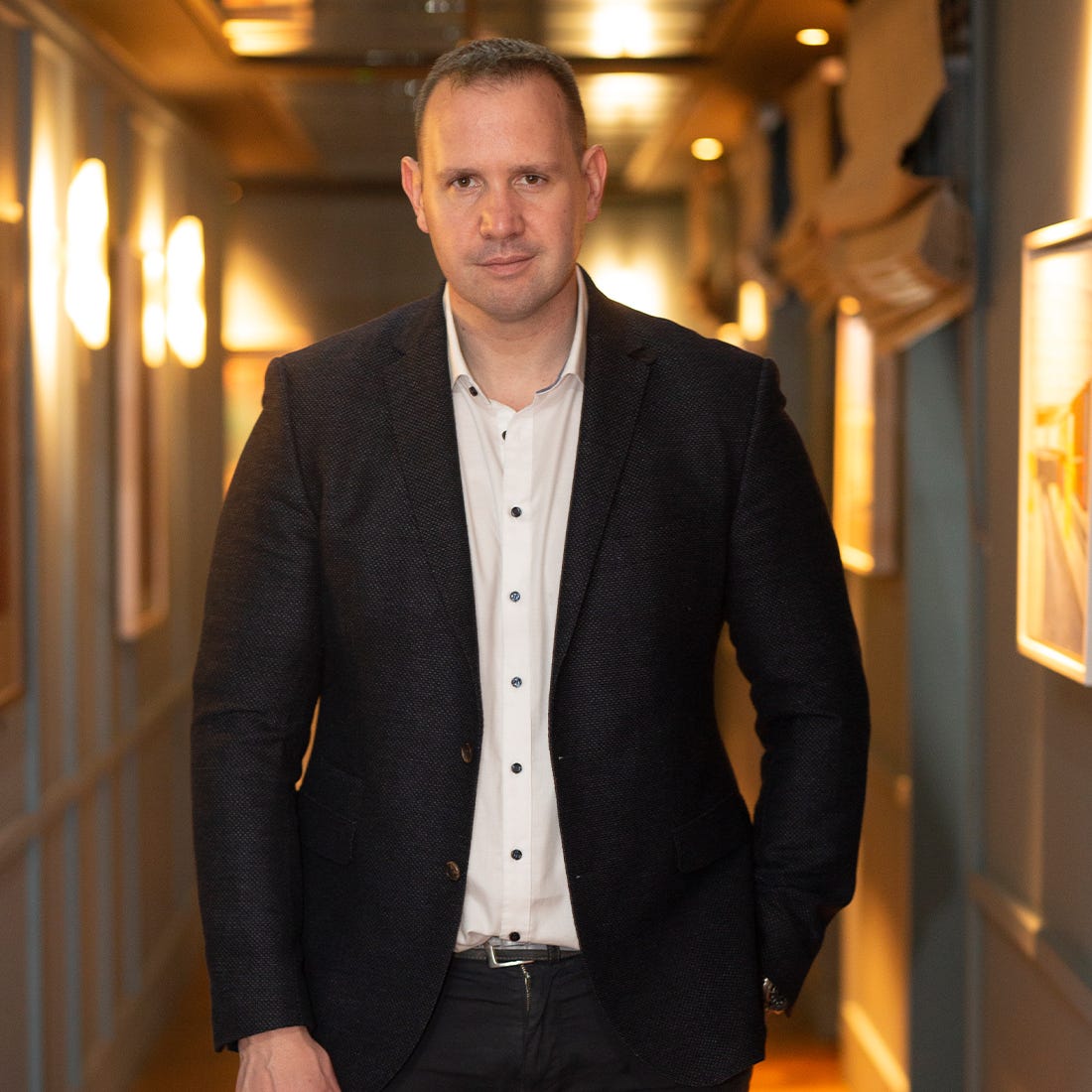
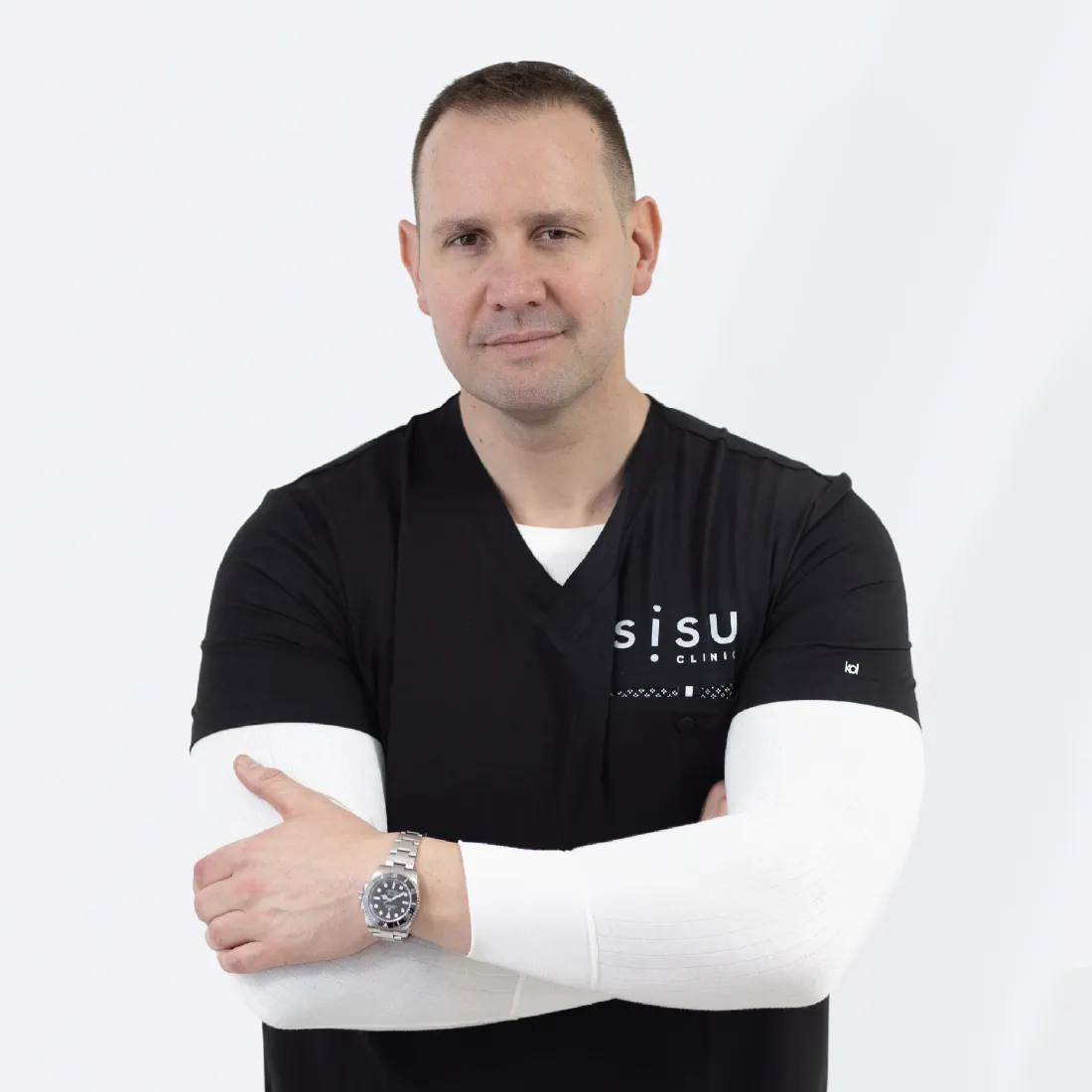
Dr James Cotter is the Medical Director and co-founder of Sisu Clinic. Dr James graduated with a degree in Medicine from Charles University in 2011, and he is a proud member of the Royal College of Surgeons in Dublin. Dr James has been practising aesthetic medicine since 2012. His goal is to ensure that patients across all Sisu Clinics receive the best quality and professionally delivered injectable treatments performed to the highest industry standards.
Thank you so much for joining us in this interview series! Before we dive in, our readers would love to “get to know you” a bit better. Can you tell us a bit about your ‘backstory’ and how you grew up?
I was born in Cork, Ireland. I studied Physics in University College Cork, and after completing my degree and working for a while, I decided at the age of 24 to go back to university and study medicine. I studied medicine at Charles University in Prague, Czech Republic. After graduation I returned and trained in general surgery, rotating through a variety of departments and sub specialties.
Was there a particular person or event that inspired you to live a wellness-focused lifestyle? Can you tell us about your main motivation to go all in?
I had accrued a large student debt in medicine school and ventured into aesthetic medicine was by way of trying to service and clear that debt. It was a necessity that developed into a passion over time, and I began to see that applying principles and practices from surgical training to non-surgical aesthetic treatments could be a differentiating factor from a lot of the other practitioners in what has been to date, and continues to be a largely unregulated and unstandardised industry.
Most people with a wellbeing centered lifestyle have a “go-to” activity, exercise, beverage, or food that is part of their routine. What is yours and can you tell us how it helps you?
I like to go to the gym and lift weights. I boxed competitively when I was younger and I try to keep my hand in there with training and sparring when my schedule allows. Like many doctors I’m a coffee addict.
To live a wellness-focused life is one thing, but how did it become your career? How did it all start?
In 2014 my brother Brian, also a doctor, and I started our own small aesthetic clinic after a few years of working for other people. It was called Visage Clinic and was on the third floor of an old building in the centre of Cork city. We were both working busy hospital jobs at the time and did treatments after work and at weekends. The business became a victim of its own success in a sense and what started as a part time job soon developed into a fully fledged business. The act of juggling both hospital work and our business was stressful to say the least. In 2017 we decided to scale the business with Pat Phelan. The business then stood at 3 clinics (one in Cork, one in Dublin and one in Killarney). We took on seed round investment in 2018, and we founded Sisu Clinic, then Brian and I left hospital medicine to focus solely on Sisu Clinic, and the rest as they say is history. We have expanded rapidly since then and now have 17 clinics, spanning Ireland, the UK and most recently our first US clinic in Miami. We open in Soho in NYC next month.
Can you share a story about the biggest challenges you faced when you were first starting? How did you resolve that? What are the main lessons or takeaways from that story?
For me the biggest challenge came when we started to really scale. It was about letting go of control over things I had previously done myself and trusting the people we had hired to do their job, and accepting that they will have a different way of doing things than me and the realisation that they might actually be better at a lot of things than I was. It’s a humbling and uncomfortable experience. In time it brings you to a much better place but it was definitely the biggest challenge and in ways it remains so.
Can you share with us how the work you are doing is helping to make a bigger impact in the world? Can you share a story that illustrates that?
You know people think that our patients at Sisu Clinic get these treatments for other people but the reality is that they don’t, not at all. They do it for themselves and they often come into the clinic because of something that’s seemingly insignificant to you but bothers them greatly and often has impacted their self confidence and self esteem. The ability to facilitate a subtle change in how a person appears and to see that change how they feel is amazing. Ten years later I still get a huge kick out of that. People always ask me “What do I need?” and the answer is nothing. Nobody needs these treatments, they are discretionary and elective, but if there is something that bothers you and it’s amenable to a non-surgical aesthetic treatment then we can facilitate that.
What are some of the most interesting or exciting projects you are working on now? How do you think that might help people?
There is so much exciting stuff going on in Sisu at the moment that it’s hard to pick. But for me it has to be the bespoke in house training program for our doctors. We have partnered with Acquisition Aesthetics, a training company in the UK, founded by Dr. Priya Chadha, a plastic surgeon and Dr. Lara Watson, a Maxillofacial surgeon. Acquisition Aesthetic has been voted best aesthetic training company in the UK & Ireland for the last two years in a row. Together we have created a unique training program that will distinguish us from every other provider in terms of the breadth and depth of knowledge and the skill set that it will provide our doctors with. It was vital that we moved this process in house so we can insure uniformity of training, best practice and deliver the highest standards in the industry.
You are a successful leader. Which three character traits do you think were most instrumental to your success? Can you please share a story or example for each?
Respect has to be earned and you earn it by giving it. Everyone looks at things through their own lenses and from the perspective of their experiences in work and life. Everyone is different and you can learn something from everyone. If you don’t learn how to appreciate that then you’ll never lead people. You’ll remain a boss and never be a leader. For me the most important thing anyone in a leadership position can do is to cultivate the ability to plant themselves firmly in the shoes of the other person in any given situation. Because it’s only when you can properly understand where people are coming from that you can understand their needs and what drives them.
OK, thank you for all of that. Let’s now shift to the main focus of our interview. Let’s begin with a basic definition of terms so that all of us are on the same page. Wellness is an incredibly broad topic. How would you define the term “Wellness”? Can you explain what you mean?
Wellness is a holistic approach to your health. It encompasses your physical and mental wellbeing. It’s everything from exercise to diet to mental health. Wellness is understanding the interconnectivity of these things and neglecting any of these aspects can’t be compensated by doing more of the other.
As an expert, this might be intuitive to you, but it will be instructive to expressly articulate this. Can you please share a few reasons with our readers about why focusing on our wellness should be a priority in our lives?
At the end of the day what everyone wants is to be happy, and that requires balance. There are times in our lives both personally and professionally that this will seem impossible to achieve but it’s worth remembering the latin maxim “Momento Mori”, remember you die. It brings perspective to so many of the things we worry about and helps to prioritise what is important and more importantly shows you what is not.
Since the COVID-19 pandemic, there has been an increasingly growing understanding of the necessity for companies to be mindful of the wellness of their employees. For the sake of inspiring others, can you share steps or initiatives that companies have taken to help improve or optimize their employees’ mental and physical wellness?
This is an area we were really remiss in as a startup, our focus at the start was all about expansion and progress and speed, it was a case of what needs must be. I think COVID-19 has had a profound effect on everyone one of us, whether we realise it or not. It forced people to reexamine their priorities and work life balance. Since Geraldine Mangan joined the group as Head of Operations she has been really working hard on developing a corporate culture. We didn’t have that before, we didn’t have the time or resources to foster it. Geraldine has been absolutely fantastic when it comes to creating a work environment where people feel valued and appreciated through initiatives with the staff and in the workplace. I think you can never underestimate the effect of positive feedback for a job well done and effort put into it. There are so many ways to show that but it’s the mindset and culture in the company that is at the core of all those things. If that’s not there then you can have all the nights out and dinners you want and they’ll just amount to a set of platitudes.
Ok super. Here is the main question of our interview. What are your “5 Things You Need To Create A Highly Successful Career In The Health and Wellness Industry”? If you can, please share a story or an example for each.
Hard work, discipline, passion, patience and the ability to know when you are wrong and admit it. The story of Sisu Clinic and it’s journey from start up to an emerging global corporate entity is an example of the first four and the last one, which is probably the most important one, is something one needs to be vigilant about on a daily basis.
You are a person of great influence. If you could start a movement that would promote the most wellness to the greatest amount of people, what would that be? You never know what your idea can trigger. :-)
Consider yourself as someone whose wellbeing you’ve been asked to look after, someone you really care about, and treat yourself accordingly. Generally speaking most people don’t view themselves in that way and you’d be surprised about the impact it can make on your life if you start to do it.
We are blessed that some very prominent names in Business, VC funding, Sports, and Entertainment read this column. Is there a person in the world, or in the US with whom you would love to have a private breakfast or lunch, and why? He or she might just see this if we tag them.
I’m a huge Lex Fridman fan, super interesting guy — I love his podcast, he has the most some of the most interesting guests from mathematicians to political scientists, and being Russian but growing up in the States, has a foot in both worlds, and that different perspective on things that we spoke about earlier.
How can our readers further follow your work online?
Check out www.sisuclinic.com to find out where you can find us and follow our journey.
This was very inspiring. Thank you so much for the time you spent with this. We wish you continued success and good health!
LK
Written by
Luke Kervin, Co-Founder of Tebra
Columnist & ContributorAuthority Magazine Columnist & Contributor

Published inAuthority MagazineTop Lessons, Top Authorities · 42K Followers
Exclusive, curated interviews with the leaders and changemakers shaping tomorrow. Leadership lessons, industry deep dives, and executive profiles.