I love it when a leader learns to motivate and inspire their employees, teammates, and customers naturally and effortlessly. The Return on Investment in Leadership Coaching makes a substantial difference in individual and team performance which we all know.
As part of our series about the “Five Things You Need To Be A Highly Effective Leader During Turbulent Times”, we had the pleasure of interviewing Michael Sipe.
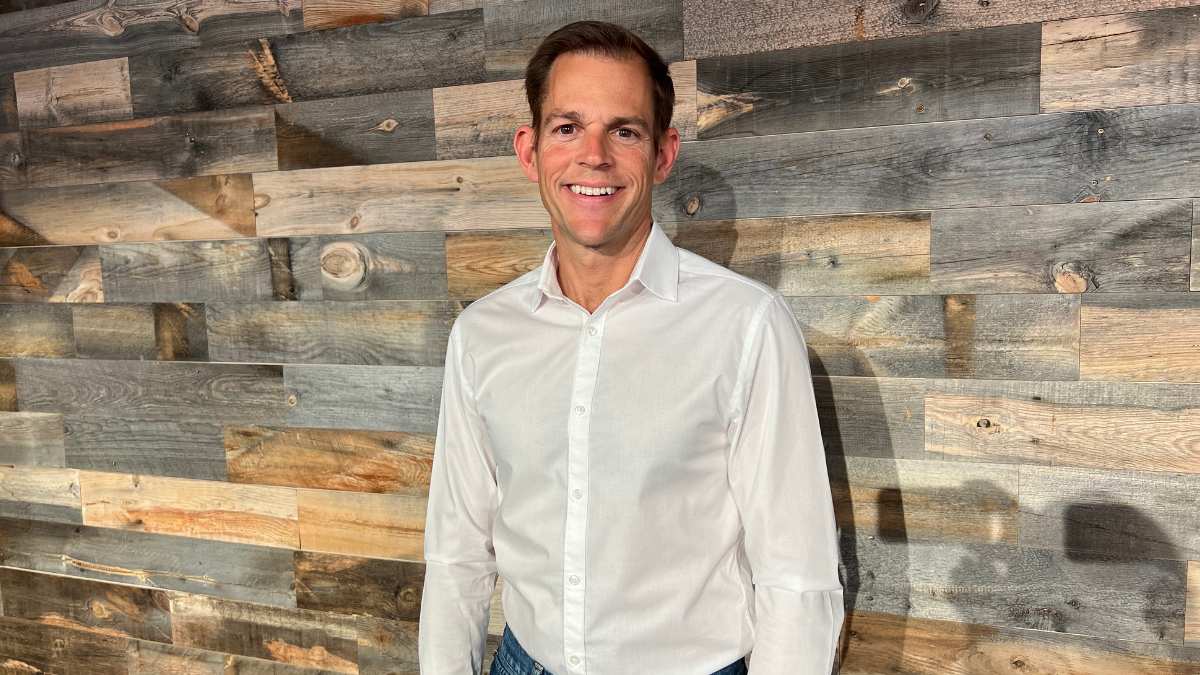
Michael Sipe is COO of the Strategic Advisor Board, which helps small businesses scale rapidly, giving CEOs confidence from the guidance of SAB’s 10 CEOs. Michael is often referred to as a Business Vitality Catalyst and specializes in helping senior management and C-Suite leaders go from being good to great leaders. The primary life mission that brings the most fulfillment to him is guiding leaders to create a workplace filled with enthusiastic and empowered employees who feel connected and valued so that they innovate and achieve more profitable results.
Michael’s methods focus on helping leaders understand how their personal energy directly affects their effectiveness and then redirecting that energy into more elevated forms of mindset and consciousness. He is a best-seller author, public speaker and is the CEO of Sipe Coaching and Consulting. His professional background includes being a former Navy and airline pilot, working in the investment industry, leading corporate and government disruptive innovation endeavors, and integrating joint technology ventures. He is a spiritual guru and master meditator.
Thank you so much for your time! I know that you are a very busy person. Our readers would love to “get to know you” a bit better. Can you tell us a bit about your ‘backstory’ and how you got started?
Ihad been in charge of a large innovation project valued just under $1B that had been struggling because the stakeholders contributing their hardware and software didn’t really care about the other stakeholders on the project. One day, I finally got buy-in from everyone and broke the development log jam to make some real progress. As I was walking out to the parking lot to my car (one of the last ones in the lot) at the end of that long day, I felt really, really great about our accomplishments that day. It was an emotional high. I had the thought “if only my dad could see me now.” My dad had been in the engineering and testing world in the 50s and 60s and had long since passed on from my life. In a way, I was doing what he had been doing but at a much larger scale. So, it was fitting that he would have appreciated the magnitude of what we were accomplishing under my leadership. But then something strange happened. In the very next moment, I realized deep down, sort of at a soul level, that I was still following my dad’s footsteps and it wasn’t fulfilling nor was it aligned to my purpose and talents. I went from a huge high to a bit of a low. From that point on, I completely shifted careers into the business world to help executives and senior managers become master leaders of the most valuable resource we have on this earth — people! I love it when a leader learns to motivate and inspire their employees, teammates, and customers naturally and effortlessly. The Return on Investment in Leadership Coaching makes a substantial difference in individual and team performance which we all know. But I wanted to take that coaching expertise I had to the next level and really help small businesses accelerate and leave a bigger footprint because they don’t have access to the deeper pockets or talents pools larger companies have. To break that advantage I teamed with Jason Miller the CEO of the Strategic Advisor Board and 8 others to create a team of 10 CEOs with the experience to help the smaller companies realistically achieve a 10X growth in revenue without charging what the larger consulting firms charge. To me that’s fulfillment. I’ve often felt the underdog at stages in my careers and to be able to help the little guy in small business means a lot to us. Small business is the backbone of the economy and I’ve found a great way to leave an impact helping the economy and humanity with a better standard of living.
Can you share a story about the funniest mistake you made when you were first starting? Can you tell us what lessons or ‘take aways’ you learned from that?
Oh my gosh, probably my funniest moment was when I had picked up a coaching client and didn’t know a whole lot about them. Being the type of individual that wanted to do well out of the gate in my coaching career, I Googled him and tried to find out all I could. I got a lot of information about his profession and career and a little about who he was and what the challenges were in his consumer electronics industry. I spent a number of hours preparing for my first call. When I got on the call, I quickly found out he wasn’t the guy I had researched, it was his son with the same name. His son had none of the experience and actually wanted to talk about becoming a professional motor-cross racer. I sat there in stunned silence wondering where the heck do I go with this? Eventually, it worked itself out but talk about getting thrown off guard from an assumption, that was sure funny in hindsight!
None of us are able to achieve success without some help along the way. Is there a particular person who you are grateful towards who helped get you to where you are? Can you share a story?
Over a decade ago, I entered into a position where I was in charge of an Innovation unit and was looking for some guidance. Dr. George Ka’iliwai was a wise and powerful executive at the military’s US Indo Pacific Command as a VP-equivalent in charge of resources and capabilities. He was well respected and provided continuity and stability in the top military organization that owned and ran all the different military services in the Pacific and to India. It was the Pentagon of the West. He was my mentor and taught me that when starting out on an innovative or new product or service that you absolutely had to get a small win first. What he meant was don’t spend all your time perfecting the ultimate outcome, just get the first thing close, maybe an 80% solution. In the procurement world, there’s a lot of pressure to develop and provide the final solution so naturally there’s a lot of perfectionism mindset and actions that lead to breakdowns and delays along the way. Two magical things happen when we get a small win first. One, a product or service is delivered and the end-user or customer gets something that meets one if not more of their needs. They then develop an attraction or affinity for that initial result and want more. The second thing that happens is the initial success starts MOMENTUM across all the team members and leadership. They’ve already had success early on and it motivates everyone because they see the value and impact of what they are doing. Basically, he taught me and I’ve instituted it ever since “get a win quickly” don’t wait for perfection.
Extensive research suggests that “purpose driven businesses” are more successful in many areas. When your organization started, what was its vision, what was its purpose?
Our vision was to help the struggling CEO of a small business where they had plateaued in their growth. We’ve all had setbacks or moments when things stall. Small business is no exception and when you look at the 5 year 90% failure rate, it’s pretty discouraging to even start a business. So we thought and still strongly believe that there’s a power and purpose to providing seasoned, experienced business owners to help guide and advise those small business owners and CEOs to not only avoid closing the doors but actually to accelerate and grow revenue.
Thank you for all that. Let’s now turn to the main focus of our discussion. Can you share with our readers a story from your own experience about how you lead your team during uncertain or difficult times?
It’s important to be aware of our surroundings while still keeping an eye on the vision or goal. Quite often in setbacks, the thoughts and emotions of team members shift to a more destructive or catabolic mental state. As leaders, we have to sense and know what kind of effort the team is putting in towards achieving our goals. When I was a Navy jet pilot in charge of operations for our training squadron, we had fallen significantly behind in production rates for students. I came up with an innovative way to mix and match events in the training syllabus that would catch us back up. I pushed the limit scheduling my fellow pilots in an agressive flight schedule. It was all legal and honored the crew rest requirements. We were making some really good progress. Until one day one of the quietest and humblest guys came into my office irate and really ticked off. I had missed that the physical and emotional toll of my accelerated schedule of flying was crushing morale. For this guy to come in and complain really gave me pause. On paper, everything looked awesome but I was burning out my team. Fortunately, no one was killed from fatigue but it could have happened very easily. That’s why I learned to always keep a pulse on the attitudes of one’s team. Today, I use an energy or attitude leadership assessment tool with my clients so they can know themselves and their employees’ proclivity for executing the goals and visions they lay out.
Did you ever consider giving up? Where did you get the motivation to continue through your challenges? What sustains your drive?
Sure, there were moments. We all have setbacks or things don’t go the way we want them to. We used a marketing service that would generate clients and had a history of performing quite well. In fact, the marketing landscape changed and we got very little out of that service. It was a big letdown and we were falling short of our goals. One of the things I’ve learned is that our thoughts, emotions, and actions constitute our personal energy. We absolutely need to be mindful of just what we are thinking and feeling. Quite often when we do this we are able to ask, did I make an assumption about this situation that is really true? Did we interpret something incorrectly? Is there an actual opportunity for us to move in a better direction? When we reframe and look at why we are acting and feeling the way we do, we can catch those negative thoughts and habits and see opportunity from the challenge or setback. When we do this shift, we actually raise our energy and experience a much better outcome. Not only does it have an effect on our physiology but it helps boost performance and productivity of teams.
I’m an author and I believe that books have the power to change lives. Do you have a book in your life that impacted you and inspired you to be an effective leader? Can you share a story?
I have many favorites like Napoleon Hill, Wallace Wattles, Jack Welch but there’s one that gives practical and useful advice for leaders today. The book is Trillion Dollar Coach about Silicon Valley’s legendary Bill Campbell. Basically, he said don’t lose your sense of humanity at work. Love, care, and be proactive in your employees’ and co-workers’ lives. With all the crappy isolation we went through during the pandemic, people are wanting to feel connected again and when they don’t feel valued at work, they leave. Yes, pay is important but a sense of fulfillment is even stronger a value and Bill Campbell created that environment wherever he went.
What would you say is the most critical role of a leader during challenging times?
Keeping employees motivated and cohesive. We survive challenges with a collaborative environment. Go it alone and failure is much more likely. A leader needs to tap into the wisdom and enthusiasm the employees bring and make that a central aspect to how they find their own motivation.
When the future seems so uncertain, what is the best way to boost morale? What can a leader do to inspire, motivate and engage their team?
Know who they are and what makes them tick. When I was director of a large corporate headquarters I had about 60 employees. Within the first week I had interviewed every one of them to learn about their families, their interests, their career goals and what they thought of the organization. I got a real good sense for who was in my organization and what we did. But the biggest thing was that I was able to use what I learned about my employees from my interview to ask them about their work or lives later on. I was blown away at the loyalty I had gained from them. Their willingness to offer solutions or be more of a team player was truly notable and I loved that assignment simply because of the people.
What is the best way to communicate difficult news to one’s team and customers?
That can be a tough one but if you’ve created an open environment with good two-way communication then it’s pretty easy to be open and share the news with them. They will understand and want to help. I’d rather have a team trying to help me than trying to figure it out on my own.
How can a leader make plans when the future is so unpredictable?
It boils down to customer needs. If a company can provide a product or service that the customer needs, then it’s much easier to create a collaborative energy amongst stakeholders and employees. When the economy throws a curveball like the supply chain disruptions, a cohesive unit will find ways to adapt. They may get off course for a while but it is human nature to persevere. A leader needs to create that environment where everyone knows their place and what they can give to help persevere. They know what the customer wants and needs and they will naturally strive to make that happen.
Is there a “number one principle” that can help guide a company through the ups and downs of turbulent times?
Be aware that pivots will need to be made but we won’t know when or where to pivot if we don’t believe and know deep down that challenges are opportunities for growth in a way we can’t always imagine yet. Having that frame of mind to know that there will be a solution allows us to see the pivot needed.
Can you share 3 or 4 of the most common mistakes you have seen other businesses make during difficult times? What should one keep in mind to avoid that?
- Management doesn’t communicate intent.
- Management tries to solve problems behind closed doors and ignores the resources employees can bring.
- Management focuses only on the bottomline .
- Management doesn’t understand all the steps needed to achieve the goals or vision.
Instead, while everyone has different skill sets or talents, each person in the company has something usable and valuable. If management knows what those are they will use them and avoid these problems.
Here is the primary question of our discussion. Based on your experience and success, what are the five most important things a business leader should do to lead effectively during uncertain and turbulent times? Please share a story or an example for each.
1. Recognize that not only you but your employees are dealing with challenges not seen before.
Most people know their roles and their job duties well. Yet, people react to the change when a challenging or disruptive event happens. Those changes can be so dramatic to people because they’ve never experienced or seen them happen before. Change can be beneficial when people are provided with the resources to deal with change. But most often, when the changes are so dramatic, they can be pretty paralyzing or highly disruptive. By recognizing how the challenges from change affect employees, managers are now aware of their employees’ emotions, thoughts, and actions. Energy awareness is always the first step to take. It creates a higher, wiser consciousness.
2. Acknowledge challenges openly (town hall, memo, email, etc.).
Hiding from challenges or ignoring them is detrimental. What’s even worse is giving in to hopelessness. That emotion tends to evoke withdrawal. These types of responses are more negative, catabolic energy levels of responses. It means a manager is holding everything inside themselves and dealing with it internally. This internal action subconsciously creates a sense of separation. That separation can be from advice, access to solutions, or even senior leaders who could offer alternatives. In flatter organizations, it can mean separation from even more ideas of support and options to deal with the challenges at hand.
That’s why having open communication about the challenges that leaders, managers, and the company faces is vital. To do so requires getting the issues out to the company or group at large via whatever mass communication tools are needed. Some companies have a regular Monday morning update for the company where participation is expected and encouraged. These venues can be fantastic for bringing up the issues. Some meetings can be a town hall format that encourages employees to comment and speak up. A leader communicates about the challenges they face openly in whatever the venue can reach the most audience.
3. Empower employees to solve new challenges.
Nine times out of ten, there is a solution to a problem. Having open communication allows for multiple people to contribute to solutions. A higher energy level is one where people feel encouraged to collaborate. If collaboration is the norm, then during challenging times, they are much more likely to collaborate to find solutions. Leaders become less burdened by challenges because they know their subordinates are eager and willing to tackle challenges.
4. Share solutions to challenges to create a mindset across the company that the new challenges are solvable.
When adversity strikes and people struggle to cope and be productive, they lose the likelihood of feeling inspired by solutions. Yet, they become inspired if they hear and see how other teams have adapted and overcome solutions. This inspiration is a higher energy level. Leaders should share how each other’s teams deal with challenges to inspire the whole business.
5. Be transparent about how management selected the best course of action.
Employees can resist change in policies or processes. That resistance can stagnate the shifts needed to adapt to the changing markets. A leader knows that transparent decision-making is essential when it induces a dramatic change from challenging situations or trends. By being open about how the decisions were made, employees will understand why the change was made and be much more likely to adopt and follow through on the changes needed.
Can you please give us your favorite “Life Lesson Quote”? Can you share how that was relevant to you in your life?
“Treat others like you would want to be treated to create connection and fulfillment.” When I started my career in the Navy and then as an airline pilot, I was focused just on my own advancement and the future. When we have high self-worth, we pay less attention to ourselves and instead focus on the whole picture around us, which includes the lives and professions of the people around us. We go from being a taker to a giver and making a better business and a better economy. I started learning this in my mid-30s and it has made all the difference in being truly successful and content as a person.
How can our readers further follow your work?
I host my own episodes of the Strategic Advisor Board Podcast under the name of Energy of Business Moments on the SAB website, strategicadvisorboard.com and all major podcast platforms. They can also follow our blog posts through the SAB website, strategicadvisorboard.com, my videos and blog posts on sipecoaching.com, and finally people can subscribe and become a member of my coaching group for free on my website.
Thank you so much for sharing these important insights. We wish you continued success and good health!
Thank you for the opportunity to share my thoughts on leadership in today’s day and age.