I spent 10 years in the restaurant industry, which helped me to learn about Emotional Intelligence, because at this point, I had virtually none to speak of when it came to work. Instead, I earned the nickname, “The Hammer,” because I was a complete and total jerk to the people who worked for me.
Title: Emotional Intelligence: What It Is, Why It Is So Essential, And How We Can Increase It
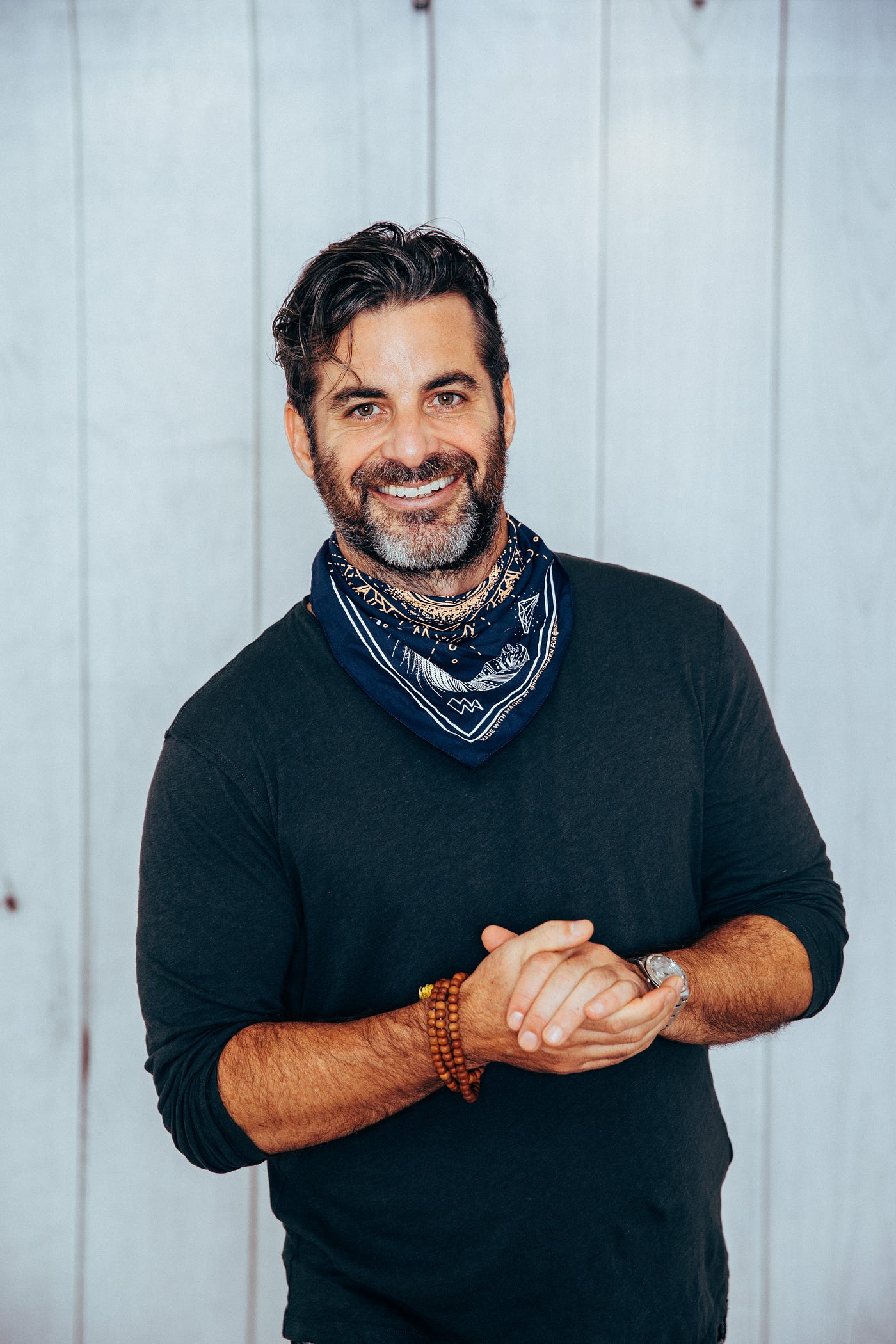
As a part of our series about “Emotional Intelligence, I had the pleasure of interviewing Matthew D. Anderson!
Matthew D. Anderson’s passion is to be of service to others—his mission is to help others to do the same! After a COVID-influenced layoff, he thought a lot about what he wanted to do next. With the opportunity to do anything, he decided to combine his skills, abilities, passions, education, and experiences to build a company he wished he had available to him earlier in his leadership journey. And with that, Leadership Coaching for Results was born, where he and his team help individuals to become the Leaders that they need and want to be.
Thank you so much for joining us in this interview series! Before we dive into the main focus of our interview, our readers would love to “get to know you” a bit better. Can you tell us a bit about your childhood backstory?
Absolutely! I’d love to. But first, thank you for the invitation! I appreciate the opportunity to share and hope that this interview inspires the readers to use Emotional Intelligence to behave as Leaders for those around them. Our world will be a better place tomorrow than it is today, with more people behaving like Leaders.
I was very fortunate as a child to grow up in a home that prioritized Emotional Intelligence. I can’t say that my parents ever used that phrase specifically, but they understood the core tenets of the concept, and raised us to be empathic toward others. We were regularly challenged to think about how others feel in given situations, to be kind and respectful to those less fortunate, and to use our words to describe how we felt. This was particularly helpful for me, as I was not so naturally inclined to consistently demonstrate empathy until adulthood.
When I was 7, my best friend’s brother was messing around and threatened to throw away the homework I had just turned in. He was just being obnoxious, but it triggered me, as I was proud of the work I had completed. I warned him not to throw it out as he dangled the paper over the garbage can. He dropped it gently—no harm was done at all. That didn’t matter to me in that moment. I grabbed his ears and bashed his head against the cinderblock wall behind him.
Later that year, I had numerous run-ins with the elementary school administration that likely would have resulted in my expulsion today. Kicking a kid in the face was truly an accident but breaking a different kid’s ear-drum as he held me in the air by the neck was on me for being blatantly rude and disrespectful. By rights, I was actually a pretty good kid, but I had a serious temper problem, and was on track to potentially have real problems in the future.
Supposedly unrelated to my behavioral issues, at the end of 3rd grade, my parents told me that they would begin homeschooling my two younger siblings and me the following year. That same summer, my best friend since kindergarten moved from Michigan to Minnesota. I never saw him again.
It was a summer of loss in my mind. I had never experienced the death of someone close, so losing my best friend and school was a very real and difficult experience for me. I remember sitting on the kitchen floor one night with my dad, as I sobbed in his arms. He was gentle and patient and asked me all sorts of questions that would help him to truly understand the root cause of my pain. I shared that I was worried I’d lose other friends, or that I might even lose my dog or family. In a moment that was an epiphany in my 8-year-old mind, I realized my biggest concern was that I’d lose my parents. I asked him to never leave me. He promised he never would. And if it isn’t explicit enough, this was a wonderful demonstration of his Emotional Intelligence.
I didn’t love homeschooling for the first couple of years, but I did enjoy the freedom of being able to work when I wanted, how I wanted. This led to my learning my best learning styles, best time of day to work, and how to increase my efficacy as a learner. By 16, I was working from 7-11:30 p.m. at least four nights a week, doing my schoolwork or writing a 100,000-word fiction novel from midnight-2 a.m., sleeping until at least 11 a.m., and enjoying my afternoons doing whatever I wanted. I graduated with a 3.8 GPA and tested beyond the scale for incoming students at my local community college. Fun fact: I have two master’s degrees, but since I was homeschooled, I don’t technically have a high school diploma.
Homeschooling was also useful for me, as it gave me the opportunity to have direct supervision when I was angry or frustrated. I had far fewer opportunities to hurt others when my mom was constantly observing our behavior. She also had lots of opportunities to coach me through how to express myself more effectively. I still have a very intense personality, but fortunately I’ve learned how to self-regulate and manage my emotions in a healthy way. My parents played a big role in that.
What or who inspired you to pursue your career? We’d love to hear the story.
I completely fell into leadership coaching by accident. But man, I’m glad it’s where I landed.
When I was 5 years old, my kindergarten teacher taught us that we can become anything we want to be when we grow up. I just found the picture that was taken this day because we made macaroni necklaces. I got home and was excited to show my mom the necklace. She asked what I had learned, and subsequently asked if I knew what I wanted to be when I grew up. I shared, “I might be an astronaut, or a dinosaur bone digger…Or maybe I could dig up dinosaur bones on the moon!” My mom smiled and sent me to hang my new craft up on my bulletin board in my room while she made me a snack.
As I stood in my room looking at my bulletin board, I remember thinking, “If I can become anything I want when I grow up, I could even become the President of the United States.”
When I was 15, I decided to go into restaurants because I knew that politicians often needed to have money of their own to inject into a campaign. I knew that if a restaurant was successful, it could be replicated, and I’d have the resources necessary to run for office. I studied Hospitality Business at Michigan State University, which is regularly ranked as one of the best hospitality schools in the country, and occasionally even ranked among the best in the world, as it was while I was there.
I spent 10 years in the restaurant industry, which helped me to learn about Emotional Intelligence, because at this point, I had virtually none to speak of when it came to work. Instead, I earned the nickname, “The Hammer,” because I was a complete and total jerk to the people who worked for me. I wasn’t intentionally a bully, not by a longshot, but I also had no regard for the feelings, emotions, or personal issues that my employees faced. I was very much on a mission to achieve results, and I succeeded on every objective. The challenge with that was that I saw all my people as a means to an end, not as the most valuable asset they really were.
This attitude helped cause a vicious cycle of reinforcing my aggressive attitude and the staff fearing me, and I ended up becoming the restaurant’s chief disciplinarian. My colleagues did not enjoy writing people up or firing them, as they felt bad and lost sleep over it. I didn’t enjoy it, but I also didn’t lose sleep over it, so they asked me to fulfill that function for them. I was good at it, and even got so good that a guy once thanked me and asked if he could hug me after I fired him. This didn’t change the fact, though, that I had the old attitude of “check your baggage at the door.” It wasn’t until I left the restaurant industry that I learned how to change my behavior.
In college I had been the Vice President of my church. The President and I spent an exorbitant amount of time together and became friends. His name is Rich. Rich and I would get together for lunch every year when I came back to visit for MSU’s Homecoming. One day, Rich asked me, in quiet a few more words, if I would like to buy his company. He wanted to grow the business for about 5 more years, then broker the sale with someone he trusted—me. I knew absolutely nothing about the professional trades or heating and cooling, but I knew that I wanted to be a business owner so I could eventually run for political office, and I knew that selling anything is basically like selling anything else, so after talking with my wife, I agreed.
I rebranded his 70+-year-old company and grew the sales revenue by 19% every year I was there. It was an incredible learning experience. The best learning experience, though, came when I was forced to figure out how to work with someone I would have previously written up and fired without a second thought. The problem was, this guy sold half of the annual sales for the company, so I couldn’t realistically replace his productivity. He was untouchable for his performance, even though his attitude was toxic, disrespectful, and explosive.
One night, I bumped into an online ad for the Dale Carnegie Course. I had heard of the program in the past but was basically unaware of what it would do. I saw “leadership” as one of the focuses, and it stuck out to me. I knew that I had been a leader in college, and I knew that I wasn’t behaving like a leader in my professional work. I had hoped that I would learn how to work with the guy that I wanted to fire, and I did. I also had a lightning strike moment of epiphany when I realized during the class that I made my mother cry, and my wife, and my brother, and virtually every person who had ever worked for me. I realized I was a jerk. I realized that I didn’t need to focus on being a leader, but that I need to change how I communicated with others. I realized that I needed to treat people like people instead of like human cogs.
I shifted my behavior, and immediately had new outcomes. People started coming to me for counsel! I liked how it felt to be perceived by others as a leader. I also knew that to achieve mastery of any subject, a person needs to be able to teach it to others. With that, I decided to become a Dale Carnegie Trainer, and in 2019, they recognized me out of over 3,000 trainers as their #1 Corporate Trainer in the World.
By that point, I had fully embraced the power of Emotional Intelligence, and was leading a mental health nonprofit. COVID hit and I had to lay myself off. I spent a lot of time thinking about what I wanted to do next. I knew that I wanted to be of service to others. I knew that I wanted to help others who were currently struggling with things that I had long-since overcome. I knew that I was very effective as a coach, and that I had done several things to have credibility in the market. With all this true, I decided that I would start a virtual coaching business to help individuals to become the Leader that they need and want to be.
I capitalize “Leader” when talking about individuals who exhibit the behaviors of motivating, inspiring, and empowering those they are charged with serving. Sounds a lot like Emotional Intelligence, huh?
None of us can achieve success without some help along the way. Was there a particular person who you feel gave you the most help or encouragement to be who you are today? Can you share a story about that?
In 2014 Matthew McConaughey was recognized with the Oscar for Best Actor. During his acceptance speech, he shared about how, as a teenager, a person he admired asked him who his hero was. After much thought, he shared, “Myself in 10 years.” 10 years later the same person asked him, “Are you your hero yet?” He laughed and said that his hero is him 10 years from that point, and so on.
I guess I never really thought about this until you asked this, but the one person who has been driving me all of these years, pushing me to do things that other people can’t or wouldn’t choose to endure, the person who holds me accountable to making choices that I won’t cringe at or regret, and the person who inspires me to give everything I have to those I serve, is the vision of myself in the future serving in public office and serve at the top of the executive branch.
I don’t know if I’ll ever achieve that ambition, or if I’ll end up being worthy of having folks vote for me to be of service to them and our incredible country. Maybe they’ll elect me to a lower office and leave me there, or they’ll decide that I’m not cut out for politics and will never vote for me at all. To be honest, none of that really matters, because by God, I have made every important decision in my life based on that hero, and I’m not going to let him down now.
Can you share the funniest or most interesting mistake that occurred to you in the course of your career? What lesson or take away did you learn from that?
When I earned the nickname The Hammer, I thought that was cool. I didn’t realize at first that it wasn’t a nickname of endearment. I had no clue that I wasn’t a leader. I thought being an effective manager made me a leader. I thought turning around a failing restaurant and getting it approved for a $2M expansion or moving a bar ranked #45 / 45 nationally to #1 meant that I was a leader. I thought the ends justified the means, even when the means were dismissive and disrespectful. I didn’t realize how incredibly wrong I was. If I had the opportunity, I would apologize to my former employees for the way I treated them.
When I learned that employees have feelings, it was the dumbest A-Ha! Moment ever. I suspect virtually all the readers understand that employees have feelings, but I truly didn’t think that way. I expected people to perform at work and nurture their feelings when they left work. I was the opposite of Emotionally Intelligent.
Fortunately, I learned a better way, and have used my mistakes as lessons for others to avoid similarly causing the pain I’ve caused. I now keep an official replica of Thor’s Hammer from the Marvel movies in my office. It reminds me not to be The Hammer and serves as a great prop when I share this story with my clients.
The road to success is hard and requires tremendous dedication. This question is obviously a big one, but what advice would you give to a young person who aspires to follow in your footsteps and emulate your success?
Don’t.
I am the best me that will ever be. You are the best you that will ever be. Even if you spent 100% of your time trying to be me, I’ve got almost 40 years of experience being me—you’ll never be as good at being me as I am, just like I’ll never come close to being as good as you at being you.
That said, I encourage *everyone* to choose to behave like a Leader. Every. Single. Person has the ability to behave like a Leader. It isn’t magic, and it doesn’t take spending a decade in a restaurant as an asshole until one day realizing a new way to behave—it’s a choice.
When I started Leadership Coaching for Results, I knew that I needed to make a couple of foundational pieces of content that were easy to remember and meaningful touchstones for those I would serve as a coach. One of them is this: Leaders REST.
It’s a double meaning that advocates for self-care, white space for creative thought, and effectively giving others the opportunity to take things off our plates so they can grow; It’s also an acronym.
Leaders
[Give] Respect
[Demonstrate] Empathy
[Are of] Service
[Build] Trust
As a Leader, we don’t demand respect or say that it must be earned—we give it freely.
As a Leader, we demonstrate empathy by behaving like a human with other humans. This is essentially Emotional Intelligence in a nutshell.
As a Leader, we are of service to others. There’s no such thing as a “Servant Leader.” You either are a Leader who is of service or you’re just a manager.
As a Leader, we build trust. Nothing gets done without trust. Trust is foundational to achieving results, and there are a whole bunch of ways we can help others to trust us and themselves.
If anyone wants to emulate what I’ve done, that’s the shortcut right there: Leaders REST. Do that. Even if you don’t want to emulate my success, do it. We’ll all be happier and better off if you do. But don’t try to be me—do this while being you.
Is there a particular book, film, or podcast that made a significant impact on you? Can you share a story or explain why it resonated with you so much?
I wish I could say that something fun was formative for me, but the reality is, 9/11 was much more significant in my life.
I had just turned 16 when the Twin Towers fell. I remember telling my parents that I had thought about it, and I was planning to lie about my age so I could enlist in the military and become the sniper that would take down Osama Bin Laden. Instead, I wrote about it.
I was a website journalist for first-person shooter computer game at the time, so I planned to make this a short story that would draw more traffic our way. I planned for it to be 5-7 pages long. I spent the next couple of months writing almost every night. It became my way of processing what I had witnessed. After I would do my schoolwork, I’d stay up until 2 a.m. or later writing about this near-future war story. By Thanksgiving, it was 85 pages long. When I went through for an editing draft, it ballooned to over 325 pages!
I never published it. It’s still rough, and clearly written by a teenager. But that experience made me into the writer that I am today. That experience gave me the ability to communicate effectively, gave me the ability to write papers in school very easily, and gave me the confidence to expand my thesis into a book. There’s No Such Thing as Right and Wrong makes the case for understanding those who think differently than us so we can choose collaboration instead of division and will be released in January of 2022.
I wish I had a fun story to tell, but 9/11 really played a significant role in shaping my life.
Can you share your favorite “Life Lesson Quote”? Why does that resonate with you so much?
I have three children, ages 3, 5, and 7. There are two words my kids hear me say more than “Clean up your toys,” or “I love you.” Those words are, “Respect,” and “Responsibility.” If you were to ask my kids right now what their responsibility is, they would say, “to be respectful.” If you were to ask them what my responsibility is to them, they would say, “To keep us safe and teach us to be respectful.”
Respect is critically important to achieving collaboration and is foundational to being a Leader. If I teach my kids nothing else, I will ensure that they learn to respect others, and that they behave with the expectation that others will respect their personal boundaries.
Responsibility is the other big word. I learned the importance of that one from my dad as he was coaching me. He didn’t even remember this story when I told it to him a few years ago, but it resonated with me deeply, and has been a core value in my life.
I was 11 years old, mowing our lawn. It was late spring, and it had been raining for about two weeks. The lawn had grown out of control, and the lawnmower, which needed to be pushed, couldn’t handle the volume of grass it was cutting. It kept conking out, full of damp clippings. I had probably only mowed two or three lengths of our backyard before I become too frustrated, knocked over the lawnmower, and stormed inside to say that I wouldn’t finish the job.
My dad, ever patient, helped me to calm down and then reminded me, “You said that you wanted to mow the lawn to earn money. This is your responsibility now. When we have a responsibility, we have to finish what we start.”
For whatever reason, that just stuck with me. To this day, I always make sure to execute on my responsibilities, and now I’m teaching that behavior to my children. So be careful parents: Sometimes the throw-away lines become the most important lessons we teach our kids.
What are some of the most interesting or exciting projects you are working on now? How do you think that might help people?
I’m fortunate to have two cool opportunities that I’m working on in addition to serving clients through my work at Leadership Coaching for Results.
Prior to having children, my wife and I would visit at least one new country each year. While traveling, we would purchase a piece of art from a local artist. We have filled our home with beautiful items from cultures all over the world. We had our first child in 2014, and the travels slowed significantly. In 2015, I had a desire to do something that was completely for me. I was walking through the hardware store and saw a big sheet of particle board that looked like it would make a cool canvas. I had it cut into a few pieces, bought a bunch of cans of spray paint, and made my first three paintings. In 2020 I was recognized as Best in Show for a juried exhibit in Connecticut. I have been exhibited all over the country and have a permanent residency in a business incubator.
The cool project that I’m working on is a new painting that will be featured in ArtPrize in the fall of 2021. “Music is Art” is a painting series that visually represents the notes played in a particular song. For ArtPrize, the featured artwork from this series honors the Red Hot Chili Peppers, and their song, “Especially in Michigan.”
This art series is inspired by the perceptual phenomenon, synesthesia, which is experienced when an individual “sees” sound, “tastes” colors, or otherwise has an overlapping sensory experience. I personally experience synesthesia, having the involuntary ability to “smell” things that I see, like a hotdog on a billboard, or a cigarette from far away. This unusual experience inspired me to create a holistic sensory experience for the viewer of this artwork, and I’ve done so in a variety of ways.
First, the song was selected for its representation of Michigan and Grand Rapids, the hometown of the band’s lead singer, Anthony Kiedis, and the home of ArtPrize. Next, colors were associated with each note played in the song. The colors were selected to represent regional food items from around the state of Michigan: Deep Bright Blue to represent Lake Michigan Water; Tan to represent Michigan Winter Wheat; Fudge Brown for Mackinac Island Fudge; Dark Red for Traverse City Cherries; Cream to represent Detroit’s Stroh’s Vanilla Ice Cream; Cinnamon to represent the Upper Peninsula’s Cinnamon Trenary Toast; and Coal to represent a smoky Campfire Marshmallow.
The art of mathematics is represented and plays a critical role in ensuring each note is appropriately sized to fit within and fill the canvas. Finally, a special beer pairing has been developed in collaboration with Atwater Brewery, which is also hosting the art, to match the colors represented by the foods unique to Michigan. By choosing to view this piece while enjoying the accompanying beer, you can essentially see, hear, smell, and taste the various elements of this painting and song. While individuals shouldn’t touch it, that sense is represented through the use of oil paint, which creates a textured finish to the piece.
The other project I’m working on combines my passions of personal leadership, conflict, politics, and art. It’s the book I previously referenced, There’s No Such Thing as Right and Wrong.
Our beliefs, values, and opinions are based on our context and worldview. In the book we explore the moral and ethical implications of our perceptions, exploring a series of topics that tend to have moral “camps,” and are the source of perpetual dyadic conflict, including abortion, gun control, drug use and legalization, federal and state-level responses to COVID-19, LGBTQIA+ rights, killing others, the media, and more. In the end, we discover that none of these topics truly have a universal moral hard line, that hard lines are moveable over time, and what this means for society if everything we believe to be true is only true for ourselves, or that collective “truth” may only be true for a fleeting moment in history.
The central argument of book is not to suggest that all behavior is permissible, that individuals should change their opinions, or that we should all conform to the beliefs of others to avoid conflict. In fact, the book doesn’t advocate for any of those things. It specifically does not advocate for changing your opinions—your opinions are formed by your lived experiences, and you believe them based on those experiences. However, this book strongly advocates for behaviors that allow the learning and understanding of the *why* behind why others believe things differently than you. Sounds like Emotional Intelligence, doesn’t it?
The intention is of the book is to challenge the notion of “right” and “wrong,” and to challenge the reader to think about their own beliefs and behaviors. Whether we have ever rationalized it in our own minds or not, we live in a world where “right” and “wrong” are not universally absolute. Our upbringings, experiences, socio-economic status, nation of origin, gender, faith, current station in life, current external forces, among countless other variables, all impact our behaviors and our concept of what is “right” and what is “wrong” in any given moment.
And to make it extra cool, the cover art is one of my paintings.
Shameless plug—you can pre-order the book at www.MatthewDAnderson.com It will be released in January of 2022. You can also check out ArtPrize in person from September 13–October 6th, or you can see the painting on www.ArtPrize.org/70651.
OK, thank you for all of that. Let’s now shift to the core focus of our interview. Can you briefly tell our readers a bit about why you are an authority about Emotional Intelligence?
The more I learn, the more I realize that I have so much still to learn. I struggle to call myself an authority on anything, but that’s one of the realities of the culture of Western Society—we suck at holding ourselves up for our accomplishments. People will say that success doesn’t come until some major milestone is achieved, like a degree, award, or closed deal. The problem with that is that it doesn’t honor the hard work that takes place between starting and finishing something. And even then, those same people will say, “Yeah, but don’t talk about your achievement too much, because that’s bragging.”
Here’s the reality: Those people aren’t Leaders, and they aren’t Emotionally Intelligent.
I’m proud of the fact that I earned an MS in Conflict Management and an MBA. I’m proud of the fact that I was ranked as the #1 Corporate Trainer in the World by Dale Carnegie. I’m proud of the fact that I have clearly and definitively played a role in saving numerous people’s lives, marriages, relationships, and careers. I’m proud of the mundane things that I get to do that no one recognizes or appreciates, because they allow for all these other things to be possible.
And this is Emotional Intelligence from a different angle. This is being Emotionally Intelligent with ourselves. Because you and I are frickin’ awesome, and not enough people tell us that we are. When we hold ourselves up for the seemingly inane things that we do every day, the things that no one else cares about but we know took real effort, we start to indoctrinate ourselves into being aware of small successes. And when we can do this for ourselves, we can begin to do it for others. When we hold others up for their trivial accomplishments, it shows them that we see them, and honor them, and care about them. It shows that we are paying attention, that we’re engaged, and that we focus on others. It demonstrates empathy.
So, I guess I’m an authority on Emotional Intelligence because I’m nice to myself, and I teach other people to be nice to themselves, too.
For the benefit of our readers, can you help to define what Emotional Intelligence is?
This is a fun question, because there are so many different definitions of Emotional Intelligence that include terms like, “self-awareness,” “social awareness,” “self-management,” “relationship management,” “self-performance,” “self-regulation,” and a litany of other terms that are meaningful to those who understand them, and borderline inaccessible for those who don’t.
The theory of Emotional Intelligence was developed by two research psychologists, Peter Salovey and John D. Mayer. They stated that Emotional Intelligence is, “The ability to perceive emotions, to access and generate emotions so as to assist thought, to understand emotions and emotional knowledge, and to reflectively regulate emotions so as to promote emotional and intellectual growth."
Let’s break this down:
“The ability to perceive emotions.” This is also known as empathy.
“Access and generate emotions so as to assist thought.” This is the foundation of motivating others.
“Understand emotions and emotional knowledge.” Once again, this is empathy.
“Reflectively regulate emotions so as to promote emotional and intellectual growth.” This is the root of behaving in an inspirational way.
So instead of having lots of acronyms or terms that only students of Emotional Intelligence will understand, I simply say this: Emotional Intelligence is the ability to demonstrate empathy. Taken one level further, to the world of Leadership where I spend much of my time, I would restate it to say, “Emotional Intelligence is the ability to motivate, inspire, and empower those we serve.”
How is Emotional Intelligence different from what we normally refer to as intelligence?
I’m a member of Mensa, the International High IQ Society. So, while I wouldn’t, I suppose you could call me an authority on intelligence, too.
Intelligence is something you’re born with. There’s very little the average person can do to improve their IQ more than a couple of points. Your brain is like a muscle. You have a baseline for the muscles in your arms and legs—they’re always there, but you can grow them if you work out. If you stop working out, they go back to baseline. Your IQ is similar. It can be worked out and improved by a few points while you’re intentionally training it, but if you stop training, it will return to the baseline. Therefore, your IQ is relatively static.
But what’s more important to know is what intelligence means: almost nothing.
Being a very intelligent person does not actually make one smarter or better than anyone else. In fact, the typical person with high IQ is an absolute failure in Emotional Intelligence. Being an intelligent person only means one thing: You’re effective at problem solving.
Emotional Intelligence, on the other hand, can be learned, exercised, improved, and can be the difference maker in the lives of those we serve.
Can you help explain a few reasons why Emotional Intelligence is such an important characteristic? Can you share a story or give some examples?
The focus of my work is on Leadership, so that’s the context that I use to approach this question. Others from this interview series will answer differently and will also be completely correct, or even more articulate with their garnering the buy-in of the readers. I hope that’s true.
At Leadership Coaching for Results, we have an incredible product called The Leadership Mastery Program. In it, we start with a module that explorers the differences between managers and Leaders. Managers are important and play critical roles in our organizations. But I am not so generous as to say that managers are Leaders—they aren’t. They can be, but they aren’t automatically.
Management is about managing people, processes, goals, KPIs, and achieving results. These are important things. They’re also very basic and expected items that we see on any management-level job description. Essentially, management is a job.
Leadership, on the other hand, is about motivating, inspiring, and empowering those we are charged with serving. These things are very specific and unique to each individual. They also do not come with a job description—anyone can do these things if they behave in such a way to make it possible. So, if anyone can do them, that means being a Leader is a choice.
Management is a job. Leadership is a choice.
The biggest thing separating the two is Emotional Intelligence. Giving respect, demonstrating empathy, being of service, and building trust. When we do these things, we are using Emotional Intelligence. When we do these things, we are choosing to behave as a Leader. That’s why Emotional Intelligence is important.
Would you feel comfortable sharing a story or anecdote about how Emotional Intelligence has helped you in your life? We would love to hear about it.
Yeah, totally. I’d be a hypocrite if I weren’t comfortable sharing the hard parts of my story.
I was clinically depressed and suicidal as a 19-year-old. I felt trapped in a toxic and manipulative relationship. To be honest, I’m not sure the other person truly knew how I felt about the relationship, but I was miserable and didn’t know how to end my misery without ending my life.
When the relationship finally ended, my mother encouraged me to go to counselor to talk about what I was processing. He was the perfect person for me in that moment. Not because he held my hand, or told me that everything would be okay, or because he became my ally and damned the other person for their behavior. Instead, he asked questions. He listened. He shared pain he had endured that was similar. And he told me stories that helped me to see parts of myself that I couldn’t see without that context.
In late 2018, I was feeling “strange.” I wasn’t depressed, but I wasn’t excited about anything. Nothing was specifically bad in my life, but I was feeling empty, exhausted, and lacking joy. As a result of the pandemic, we now know this feeling to be described as “languishing.”
At this point in time, I was already a highly effective coach, and knew how to help someone who was in the situation I was facing. The troubling part, though, was that I couldn’t solve my own problems with the tools I would use to help others. I decided to go to a counselor then, too.
While this was a different counselor, it was again the perfect person for me at exactly the time that I needed him. He asked questions, listened, and shared stories that made me see parts of myself that I couldn’t otherwise see. I realized while I was working with him that I truly did not desire to hold political office, and I was wrangling with envisioning a future where I ran a company for the rest of my career and lived happily ever after. I had coached enough politicians to know that I didn’t want to put myself or my family through all of that. I also knew that I felt a compulsion—some would say a “Higher Calling”—to serve our country.
Through our work together, I was able to come to peace with myself and the ambiguous nature of if I would eventually run for office. I was able to hold myself up for the big difficult things I had previously done and understood that I no longer aspired to be a politician. I was also able to decide that if others called on me to serve, I would be ready and willing. Not for me, but for our country.
I share these stories because what both counselors did for me shows how easy it can be to be Emotionally Intelligent. All you must do is step outside of yourself and your priorities for a moment, humble yourself, and be human with another human; ask hard questions, but with care; share parts of yourself, and stories that you’ve learned along the way; and honor the other person for the good things they have done, can do, and will do.
Picture the person you would go to first if you needed comfort and support. Being Emotionally Intelligent means behaving like that person.
Can you share some specific examples of how Emotional Intelligence can help a person become more successful in the business world?
We all have unconscious biases that inform how we look at the world. One of my biases is that I believe Emotional Intelligence is the singular differentiator between a person reaching their potential as a great manager or finding limitless potential as a great Leader. Note, I capitalized the word “Leader.” I’m not using the word casually and interchangeably with “manager.” I’m very intentional about when I call someone a Leader or not. People earn that title when they are committed to motivating, inspiring, and empowering those they serve. In other words, you can only become a real Leader if you are Emotionally Intelligent.
Think of your favorite boss, mentor, or aspirational figure in your life. They almost certainly had one of two things: An advanced skillset that you admired, or Emotional Intelligence. If that person was senior in their role, they likely had both. Few people rise in the ranks and become more successful without a strong competence in their vertical. Similarly, few people rise in the ranks and become more successful without Emotional Intelligence.
It is my opinion that Emotional Intelligence is the key to tangible and noteworthy success in both business and life.
Can you share a few examples of how Emotional Intelligence can help people have better relationships?
I was once providing executive coaching for a gentleman who had just been passed over for a promotion. By rights he had earned the promotion based on the company’s metrics. He was angry that he didn’t get what he felt he deserved, so he hired me to coach him to get the promotion, and if we weren’t successful, he was going to quit and go somewhere else.
After a couple of months of weekly 1-on-1’s, we had shifted some behaviors, and I could see that there were other things to work on, but nothing was so egregious as to justify his not getting promoted. I was starting to get as confused as my client as to why he was passed over. It was then that I asked, “How’s everything at home?” He responded by saying that he and his wife were contemplating a divorce. I asked if he wanted one—he didn’t. I asked if his wife wanted a divorce, to which he replied, “Not really.” At that point I told him we weren’t going to talk about work anymore and wouldn’t start again until we resolved this issue. I said, “We’re going to focus on your marriage, and you’re going to decide if you’re going to get divorced or not.”
We spent the next few months talking about his relationship, the ways he felt slighted, and his role in the negative state of the relationship. I shared with him, “Regardless of what she’s done, you can’t change her. You can only change you. Similarly, you can’t make her own anything she doesn’t choose to own, but you can choose to own your part.”
He chose to apologize for the pain he caused. He chose to change behaviors. He chose to be open about wanting to work on the relationship. And amazingly (to him), she reciprocated! The two of them started working intentionally on their relationship, decided they didn’t want a divorce after all. Once they fixed their relationship, he immediately got promoted.
You see, our personal lives directly impact our ability to be fully present at work. That’s a big reason why we’re seeing employee engagement falling through the floor because of the pandemic—people have been forced to juggle caring for their children, being quasi-educators, working from a foreign environment, constantly bombarded with external stressors from the media, and are likely facing some form of financial insecurity due to a partner being laid off, or some form of a salary reduction. There’s lots of stuff going on that can distract us from being the best versions of ourselves, and until we focus on ourselves, we can’t overcome the distractions.
In The Leadership Mastery Program, we focus on helping individuals to become the Leader that they need and want to be. There are lots of great programs out there, and different programs for different needs. What makes this program unique is the focus we have on the personal side of a person’s life. We dig in really deeply on helping individuals to understand why they think and feel certain ways, so they can choose to acknowledge and hold up those behaviors or change them for better results.
Emotional Intelligence starts with our relationship with ourselves. When we love ourselves, care for ourselves, and take time to fix the things that make us unhappy in our lives, then and only then can we find success in influencing our personal and professional relationships.
Can you share a few examples of how Emotional Intelligence can help people have more optimal mental health?
I love that you’re asking this question. Mental health has been a big part of my personal journey, and my professional journey, as I was the executive director of a youth mental health nonprofit before COVID.
A fantastic example of Emotional Intelligence and mental health is Simone Biles at the 2020 Olympics. Ms. Biles knows that she can perform virtually anything she wants to when it comes to gymnastics. She understands her body and mind in a way that most people will never experience. Part of knowing your body and mind is knowing their limits. Stress, health, diet, environment, and countless other variables can impact those limits. Ms. Biles understood that, while she very much wanted to compete, she simply couldn’t perform at the level she knew she needed to. Had she attempted to ignore those limits, she may have caused herself and her teammates undue harm.
Evaluating her physical and mental state, and saying, “No,” when everyone else expected her to say “Yes,” is a demonstration of Emotional Intelligence focused on herself. Choosing to stay in the arenas and cheer on her teammates was a demonstration of Emotional Intelligence focused on others. Even though she knew she couldn’t do what she had spent years working towards, there was nothing stopping her from encouraging and holding up those she serves as the Leader of Team USA.
I’m running a program right now with a group of individuals from all over the country. In our first meeting together, I asked them each to share a challenge they were each facing and helped them to see how they already have the power within them to overcome it. At the end of that first meeting, a woman was in tears as she realized that her biggest challenge wasn’t that she was too busy, but that she wasn’t respecting herself enough to say “No,” when someone asked her to join a board or take on a new project. It was a monumental epiphany for her that will have dramatic implications for the rest of her career and life. And her epiphany led to others realizing that they are also guilty of not setting personal boundaries. We closed that discussion together by having everyone practice saying out loud, “No!”
We are all humans. We don’t become superhumans or robots when we start working and go back to being regular humans when we stop working. We’re humans all the time. Humans have limits. Everything breaks when too much pressure is applied—even us. Understanding and honoring our limits is the most compassionate thing we can do for ourselves and our mental health. In that regard, Ms. Biles should be a role model for all of us.
Ok. Wonderful. Here is the main question of our interview. Can you recommend five things that anyone can do to develop a greater degree of Emotional Intelligence? Please share a story or example for each.
We said earlier that Emotional Intelligence is different from intelligence in that we can increase our ability to exhibit Emotional Intelligence through intentional effort and practice. Those I’ve coached have also found that life is so different and improved after adopting this new behavior, that they would never want to go back to the way they were before. It may feel foreign, uncomfortable, or weird at first, but think about that person that you would call in a time of need—that’s the kind of person you can be for others when you commit to making yourself Emotionally Intelligent.
Here are five things I recommend you do to be Emotional Intelligent. What’s really cool about them is that they work whether this is something that you’re learning and practicing, or if you’re already a pro and want to keep strengthening your skillset. It’s easy to remember, too: Leaders REST!
Give Respect
Some people will say, “respect must be earned.” Those people aren’t Leaders, and those people aren’t Emotionally Intelligent. Respect can be given freely, even if you feel like the other person doesn’t really deserve it. The reality is, they’re a human being who has done lots of good things. You may not agree with them or like them, but you can respect that they are driven, passionate, knowledgeable, committed, or a litany of other traits. It’s a choice to give respect freely. If you choose this, not only does it demonstrate Emotional Intelligence, but it also leads to reciprocated respect.
Demonstrate Empathy
Emotionally Intelligent individuals know that life is hard, and that shit happens.
Other people will fail, miss deadlines, and forget to do things, giving you lots of reasons to be a jerk to them. You may also feel like it’s more important to focus on results instead of people. That will just make you like me back when I was The Hammer. Instead, try being compassionate, present, listen to understand rather than respond, and be a human with other humans. When you do this, you’ll find that when something bad happens in an employee’s life and they don’t deliver at work, they won’t fear you, but will instead seek you out for counsel and support.
Be of Service
I firmly believe that there is no such thing as a Servant Leader. You either are a Leader who is of service, or you are just a manager. Leaders, again with a capital “L,” motivate, inspire, and empower those around them. They do this by genuinely caring about those that they are charged with serving. They do this be asking questions, learning about those they serve, and showing how organizational goals align with individual goals. Being Emotionally Intelligent means being others focused. Being others-focused means being of service.
Build Trust
Trust is finicky. It’s slow to develop and easy to lose. Unless it isn’t.
Emotionally Intelligent individuals know that they can choose to trust others, even when it’s uncomfortable or hard. They know that failure will occur, and that it’s okay. They know that by exhibiting trust, trust is reciprocated. They also know to be congruent with their words and actions, and to have an extremely high standard for their own person integrity. When we do these things, we are demonstrating our ability to behave as a Leader, and to be Emotionally Intelligent.
Trust Yourself
You’ve been successful at LOTS of stuff in your life! You’ve been less successful than you would have liked on several occasions, too. You’ve learned from all these experiences. You’ve been new to things before and can remember that you weren’t an expert at your job on Day 1. Emotional Intelligence is the same. Whether this is new to you or not, you’ve had lots and lots of interactions with others throughout your life. Some have been incredible and memorable, and others have been embarrassing or painful and you wish you could forget them. All these experiences are in your toolkit, and give you the power to be successful, if you Trust Yourself.
Do you think our educational system can do a better job at cultivating Emotional Intelligence? What specific recommendations would you make for schools to help students cultivate Emotional Intelligence?
Absolutely. As we’ve already explored, Emotional Intelligence and mental health are tightly aligned. Prior to the pandemic, mental health in schools was already approaching terrifying levels. I worked in the schools with high school students in a mental health program—I know this to be true. The data is only starting to be produced now regarding the impact of quarantine and ad hoc online learning for young people during the pandemic. Investing in mental health for young people is critically important, or the next crisis we’ll be facing will be the fallout of not addressing this issue.
I want to be very clear, because some readers may have an attitude that the conversation around mental health is for, “a bunch of sissy snowflakes who need to pull up their big boy pants and get some tough love.” For those individuals, I say this: Mental health is just as real and important as physical health.
Don’t believe me? Let’s talk about the Vietnam Veteran who never talked about what they experienced in the jungle. Let’s talk about the abuse victim who reacts viscerally to surprising stimuli. Let’s talk about the kid who was told they don’t have the grades to pursue their dreams—by a teacher.
Mental health challenges real, and significantly impact a person’s quality of life. Battling with one’s mental health does not make them weak and speaking out to ask for help is truly a sign of strength. Expressing the need for help is REALLY hard. It was the last thing I wanted to do when I was depressed and suicidal. I wanted to stop living more than I wanted help to keep living. And the scary part is, enough people belittle the conversation around mental health that it makes some feel bad about feeling bad.
If schools were to invest intentionally into programming that proactively improves a young person’s mental health, by teaching them things like we’ve discussed here about Emotional Intelligence, we would have a lot happier and healthier kids. Fortunately, I believe that the tides are turning. As I met with a series of politicians in early 2020 to advocate for exactly this type of work on behalf of the mental health nonprofit I led, virtually all of them understood the importance of focusing on improving mental health. Hopefully they move from understanding it to prioritizing and funding it.
Until then, what we can do is show a little Emotional Intelligence toward those who are struggling. All it takes is one person to say or do the right thing (or the wrong thing) to change the direction of a person’s life. You and I have the power to help those who are struggling if we choose to.
Ok, we are nearly done. You are a person of great influence. If you could inspire a movement that would bring the most amount of good for the greatest number of people, what would that be? You never know what your idea can trigger.
I believe deeply and truly that the biggest problem we are facing as a society is a lack of respect toward “the other.” As a people, we are currently more apt to damn “the other” than we are to ask, “why does that person think and feel differently than I do?”
When I was 17, I was extremely homophobic. I’m embarrassed by my behavior now, but I used slurs, made derogatory statements, and believed things like, “they’ll all burn in Hell.” I also didn’t know a single gay person.
A short while later, I started working in the restaurant industry and was surrounded by a bunch of individuals from the LGBTQIA+ community. It was the early 2000s, and the conversation around homosexuality being a choice or a trait at birth was being hotly debated. I had become relatively close with a gentleman, and asked him one evening as we were closing the restaurant, “I know you won’t judge me for asking this, and I genuinely am curious: were you born gay, or do you choose to be?” He responded with an answer that transformed my way of thinking.
He said, “I felt like I was different as far back as being a toddler in diapers. I believe I was born this way. I also know that I’m happier being a relationship with another man. I don’t know if I was born gay or not, but I know that I’m happier this way. If that means that I’m choosing to be gay, I don’t care. I’m choosing to be happy.”
Choosing to be happy. Who doesn’t want to be happy? That statement was like an earthquake in my mind. I suddenly realized that people are living their lives for themselves, not for those around them. You are living your life for yourself. You make choices every single day that point you in the direction of living a happier life. Who cares about what someone else does to make their life happy?
I immediately stopped my own homophobia, because I understood “the other” wanted to be happy, just like me. That meant that they weren’t different from me at all, and we found common ground. My new understanding left me no choice but to respect those that I had once condemned. With this newfound respect, I made countless friends in the LGBTQIA+ community, including one of my very best friends who is a colleague at Leadership Coaching for Results.
If I could inspire a movement, I would inspire a movement of individuals seeking to understand those who think differently than them. I don’t believe that anyone should change their beliefs or opinions unless they feel that they want to. With that said, I do believe that we’d all be better off if we understood those who think and act differently than us. When we do this, we can’t help but to show the other person respect. And with respect, we can choose to collaborate with one another instead of perpetuating this divisiveness that has become so prevalent in our society.
What people don’t understand is they don’t have to personally agree with others to respect them. We don’t have to change the opinions and beliefs that have been informed by our decades of lived experiences. However, we do have a choice to respect those that we consider to be different from us. Those people who are different from you have lived a different life than you—what’s right for you and what’s right for them doesn’t have to be the same thing. The cool part is, regardless of the way we lead our lives, we are all searching for the same goal: happiness.
Hopefully I will be able to inspire a few folks to change how they behave. This argument is the whole premise of my upcoming book, There’s No Such Thing as Right and Wrong. And you’ve been kind to give me the platform to share this message with your readers, which I very much appreciate. I truly believe that we can make our world better tomorrow than it is today if we follow this path.
We are very blessed that some of the biggest names in Business, VC funding, Sports, and Entertainment read this column. Is there a person in the world, or in the US, whom you would love to have a private breakfast or lunch with, and why? They might just see this, especially if we both tag them :-)
This is such a fun question! I love the fact that through this question you’re working to create connection points and a greater web of support and engagement. Thank you for asking this.
Three individuals immediately come to mind for three unique reasons:
I respect Malcolm Gladwell for his approach of curiosity toward diverse topics. He is a master of seeking to understand those who think differently than him, while maintaining his own beliefs until the point that he finds it appropriate to adjust his beliefs—which is Emotional Intelligence.
I respect Simon Sinek for his passion towards empowering individuals to understand their purpose—their Why. He is a master of self-reflection and encouraging individuals to follow what they are passionate about—which is Emotional Intelligence.
I respect Justin Amash for his conviction. Standing up for what we believe in, even when it’s unpopular or will cost us our job, is admirable and rare. He is a master of understanding what he believes, why he believes it, and how those beliefs could benefit others—which is Emotional Intelligence.
If any of these three individuals would like to meet for a private meal, in person or virtually, it would be an honor.
How can our readers further follow your work online?
I welcome connections directly via email at Matthew@LeadershipCoachingForResults.com.
I invite everyone to check out my website at LeadershipCoachingForResults.com
Leadership Coaching for Results has a Facebook page at Facebook.com/LeadershipCoachingForResults
I’ve recorded 100 short leadership lessons from my experiences coaching others. They are all 3-5 minutes long and each has an actionable take-away. You are invited to enjoy them and encouraged to share them with others. You can find them at www.youtube.com/channel/UC_Tl0fmWg9J9EQgcqCMvrow
You can also find me on LinkedIn at LinkedIn.com/en/andermd
Thank you for these excellent insights, and we greatly appreciate the time you spent with this. We wish you continued success.
It’s been my pleasure. Thank you for the opportunity to share parts of my story. It is my hope that each reader found value in this interview, and that they each share it with at least one person whom they believe will also find value in it.
To you, the reader, if you take a moment to share this message, you will help to influence positive change in our world. More people will choose to start practicing Emotional Intelligence. More people will start loving themselves and holding themselves up for the great things they do every day. More people will be understanding of those who are different than them. More people will be respectful to those around them. More collaboration will take place, which will yield unknown benefits. More kindness, compassion, and support for others will be prevalent in our world. More people will feel seen, heard, and respected. More people will be happy.
You have that power within you. Go help our world.
**** If you would like, you can include a video of yourself, sharing your “five things that anyone can do to develop a greater degree of Emotional Intelligence”.
Video Link: https://youtu.be/dvcVdhmzC_w