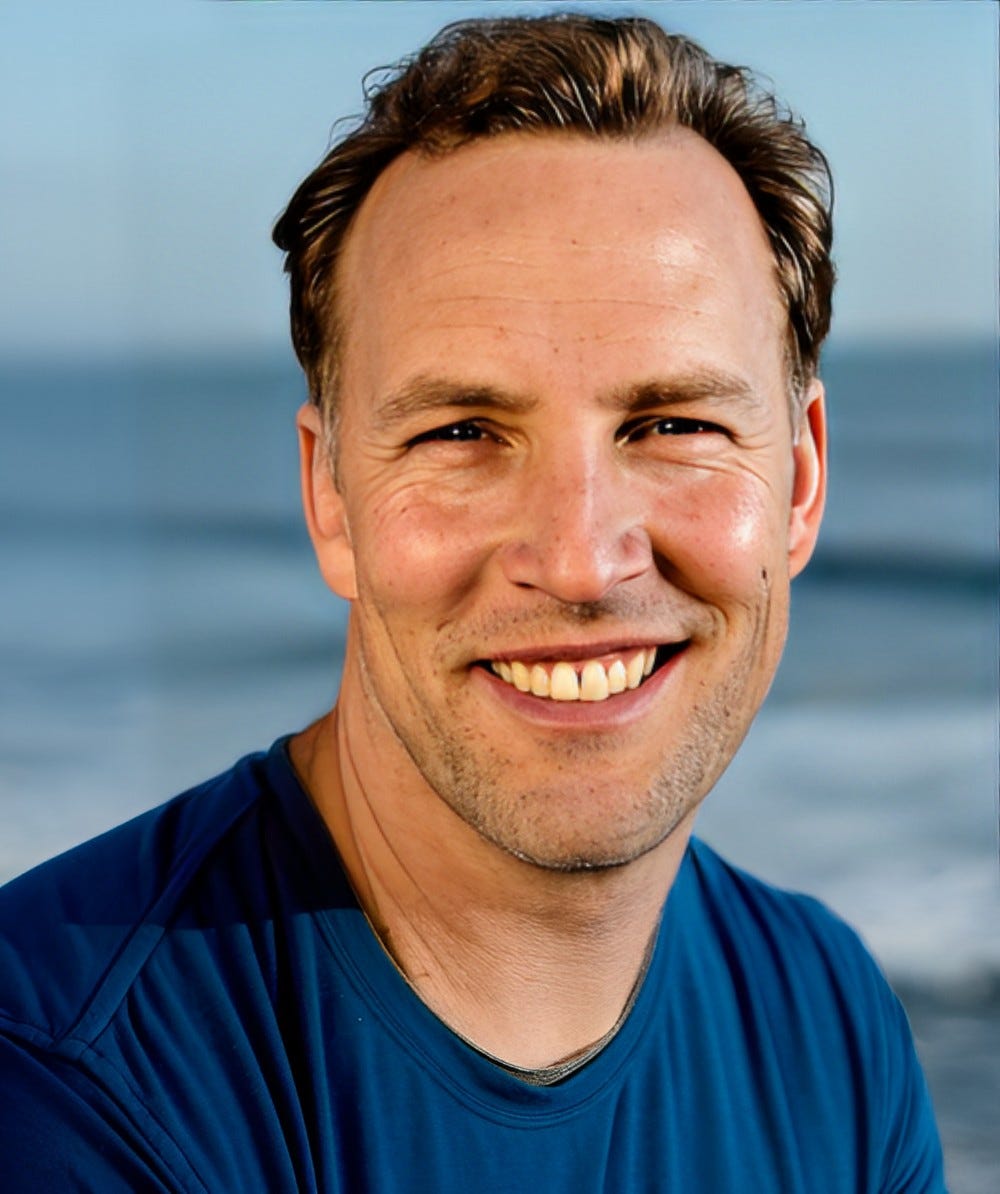
My favorite life lesson quote would have to be, “Be like water my friend” by the famous Bruce Lee!
Lee Holden On The 5 Things You Need To Do To Achieve A Healthy Body Weight, and Keep it Permanently
So many of us have tried dieting. All too often though, many of us lose 10-20 pounds, but we end up gaining it back. Not only is yo-yo dieting unhealthy, it is also demoralizing and makes us feel like giving up. What exactly do we have to do to achieve a healthy body weight and to stick with it forever?
In this interview series called “5 Things You Need To Do To Achieve A Healthy Body Weight And Keep It Permanently” we are interviewing health and wellness professionals who can share lessons from their research and experience about how to do this.
As a part of this series, I had the pleasure of interviewing Lee Holden.
About Lee Holden:
Lee Holden is the CEO + Founder of Holden QiGong and is a world-renowned Qigong Master who brought Qigong, an ancient, Chinese practice into the modern world. Holden is the star of a highly successful PBS show called “Your Fountain of Youth” which has reached millions of people through his warm, interactive approach to movement and healing. Through online and in-person courses, Holden teaches the transformative power of Qigong, a practice that improves the energy life force of individuals by activating dormant energy through a series of breathing and meditative exercises. Qigong is currently the most popular exercise in the world with over 50 million people worldwide practicing Qigong every single day.
Thank you so much for joining us in this interview series! Before we dive into the main focus of our interview, our readers would love to “get to know you” a bit better. Can you tell us a bit about your childhood backstory?
Looking back, the field of health and wellness has always been a large part of my childhood. My mom was a neurolinguistic programmer and yoga instructor who had studied psychology and fitness for most of her life. Both of my parents were into wellness and self-help and when I was 15 years old, they encouraged me to try meditation to help with the stress of school and sports. Once I started practicing meditation, I began to feel relaxed and more energized, and that was my introduction into discovering my “qi”, which is “life force energy”. Thus began my curiosity in learning more about Chinese medicine and pursuing the practice of Qigong.
What or who inspired you to pursue your career? We’d love to hear the story.
A significant event that inspired me to pursue my career in Qigong was a soccer injury in college. I played D1 competitive soccer at UC Berkeley and suffered a pretty severe injury involving a broken tailbone which left me unable to walk. After seeing several doctors and trying out different methods that didn’t work, I was finally introduced to Qigong by my acupuncture doctor. Qigong was a powerful part of my recovery and after a few weeks of sessions, I had fully recovered. This life-changing experience inspired me to look into the practice of Qigong more.
None of us can achieve success without some help along the way. Was there a particular person who you feel gave you the most help or encouragement to be who you are today? Can you share a story about that?
One of my main influencers and greatest inspirations is Master Mantak Chia, the founder of the Universal Healing Tao System. Meeting him in Thailand during my youth was life-changing and I am forever grateful for his mentorship and guidance. Mantak Chia believed in me and gave me opportunities, even though I didn’t have the experience to perform the roles bestowed upon me. He believed in me when no one else would. To him, it was about seeing the potential in someone else and watering the seeds that were already there, even if I didn’t even recognize the potential within myself at the time.
Can you share the funniest or most interesting mistake that occurred to you in the course of your career? What lesson or takeaway did you learn from that?
When it comes to teaching Qigong and being a teacher in general, I feel mistakes are bound to happen, but I don’t view them as mistakes. Rather, I view them as learning opportunities to grow and improve as an individual and in my case, as a teacher overall. I define myself as a teacher of Qigong, but I am also a lifetime learner. When I teach my Qigong classes, sometimes the strategies I teach may not be effective or accepted by a particular group of students. In cases like that, I would gauge the class and try to read the room. Then I try to modify my teaching to be adaptable to that particular group of students, and often times utilizing different teaching methods for various groups of students is very effective in helping them learn. In my 30 years of teaching Qigong, I have learned that it is important to be adaptable and flexible in all situations. Don’t be rigid in your ways, be open-minded to change and improving yourself intellectually and emotionally.
Can you share your favorite “Life Lesson Quote”? Why does that resonate with you so much?
My favorite life lesson quote would have to be, “Be like water my friend” by the famous Bruce Lee! Basically, this quote means that it’s great to get in touch with our authentic truth. Metaphorically speaking, when you pour water into the cup it takes the shape of the cup. When you run your fingers through it it’s soft, but when you stand in its way it’s powerful. Water moves cohesively and is connected, and Qigong mirrors the movements of water and the principle of “flow”. When you stand in the way of water, it’s powerful and water sinks to the deepest places. Thus, this quote teaches us that it’s important to get in touch with our authentic truth, to just go with the flow and not fight what is to come.
What are some of the most interesting or exciting projects you are working on now? How do you think that might help people?
Some exciting new projects I’m currently working on include a Teacher Training program for future Qigong teachers. I’ve currently enrolled over 1000 people in my teacher training course, which is a 16-week self-paced online training course with live components. Once the students complete the course, they are qualified to go out and teach Qigong in their communities. Qigong is helping empower people and teaches people how to activate the healing powers of their own bodies and minds, to sleep better, to lower stress and to lead a healthier lifestyle overall. My Qigong Teacher Training program teaches other people to teach Qigong and to spread the word about this practice because it’s so effective.
In addition to my teacher training program, I am also hosting live workshops this year in several states across the country to help people learn Qigong. Additionally, I am working on a book about the process of slowing down- I’m still working out the details on the title but basically, the book is about how slowing down gives us access to our own inner strength and power. It’s about the principle of “slow” and how it’s helpful in productivity, health, exercise and relationships. The book will incorporate the principles of Qigong, and the different ways to slow down with mindful practices and movement. When you take time to slow down, it’s very effective in yielding positive results to improve your physical, mental and emotional health.
For the benefit of our readers, can you briefly let us know why you are an authority in the fitness and wellness field?
I hold a 4-year university degree in Chinese Medicine and am a licensed acupuncturist and Chinese Medicine practitioner. I’ve gone on 12 trips to Asia to study Qigong, and have studied for many years under the mentorship of Master Qigong Expert Mantak Chia. I was a ghostwriter for 10 years for Mantak Chia, who is considered to be one of the world’s foremost authorities on Qigong practices. Additionally, I have been teaching Qigong practices for over 30 years.
OK, thank you for all of that. Let’s now shift to the main focus of our interview about achieving a healthy body weight. Let’s begin with a basic definition of terms so that all of us are on the same page. How do you define a “Healthy Body Weight”?
All of us have different body types and it’s about finding the healthiest weight for your body type. We’re not all designed to be rail thin and all look the same. “Healthy” means that you are energized and vibrant, have lots of vitality, and can move your body with ease. You also sleep well and are emotionally balanced. You have a healthy relationship with food (you’re not overeating and not undereating). You eat at the right times of the day, you’re managing cravings, and have a healthy emotional relationship with food (i.e., eating when you’re actually hungry and not just stress eating or overeating). Qigong allows you to have tremendous listening abilities to your body. When you do Qigong practice you allow your body to slow down and you become more mindful of the signals your body is telling you, especially when it comes to food. A key to a “healthy body weight” is having the right balance of reduced stress, good sleep, and getting the nourishment you need at the right time. Qigong allows your body to give you important signals so you’re aware of what’s going on inside your body, thus creating a healthy environment for your body to thrive in.
How can an individual learn what is a healthy body weight for them? How can we discern what is “too overweight” or what is “too underweight”?
A good way to learn what a healthy body weight is for us and to know if we’re overweight or underweight is to pay attention to the signs our body is giving us. Too often we are seeking approval and validation from others when it comes to our appearances but we should learn to listen to the wisdom of our own bodies. For example, do you have a lot of energy or do you feel sluggish? After you eat, do you feel tired or energized? The answers to these questions can provide the clues to what your body is telling you- to see if you’re on the right track to being healthy or not.
This might be intuitive to you, but it will be instructive to expressly articulate this. Can you please share a few reasons why being over your healthy body weight, or under your healthy body weight, can be harmful to your health?
When we are over our healthy body weight, we are often carrying around too much weight and it creates a lot of sluggishness in our movement. In Qigong, we call this phenomenon “still qi”, when we’re not using our energy efficiently. In Chinese Medicine, if energy is circulating through your body efficiently, it’s like walking on a well-paved pathway- it’s seamless and easy to get to where you need to go. If you’re overweight, it’s like hiking through a swamp, even if you’re not walking long distances or have to try hard, it feels quite challenging to get there. If you’re underweight, you often don’t have enough energy (enough fuel in your “tank”) to get to where you need to go.
In contrast, can you help articulate a few examples of how a person who achieves and maintains a healthy body weight will feel better and perform better in many areas of life?
When we are at a healthy weight, we look and feel better. When we look and feel better, people around us tend to respond more positively to us. What being at a healthy weight really means is that we’re full of “life force energy”. We have enough energy to get what we need to get done in an efficient and productive way. A healthy body leads to a healthy mind. It allows us to be focused, creative and productive. Several studies have shown that people who are at a healthy weight can get better get job opportunities and are often more respected overall. This all comes down to people perceiving you in a positive way because when you’re at a healthier weight, you tend to carry yourself more confidently.
Ok, fantastic. Here is the main question of our discussion. Can you please share your “5 Things You Need To Do To Achieve a Healthy Body Weight And Keep It Permanently?”. If you can, please share a story or an example for each.
One of my past career opportunities was working at Weight Watchers and during my time there, I discovered 5 things to maintain a healthy weight by having a great relationship with food and eating:
1. Listen to your body and only eat when you’re hungry- Try to listen to the signals your body is telling you and only eat when you’re feeling hungry. Don’t eat out of stress, boredom or convenience. For example, when you’re at work and someone brings in donuts, you may feel inclined to take one because it’s convenient and you also want to feel included in the office culture. However, if you’re not hungry at that time, you’ll be overeating which is not great for a healthy weight. Try to avoid snacking, and instead do other things that can relax you such as taking a “breathing break” (i.e., with Qigong breathing exercises or meditation).
2. Eat slowly- Try to really take the time to slowly chew your foods instead of taking big bites. If we eat quickly, we often overeat and that will eventually create unnecessary weight on our bodies. Your metabolism starts in your mouth and if you chew more slowly, you will bring more saliva into your food which gives your body a chance to send signals to your brain letting it know that you’re full.
3. Manage your stress levels- If you’re stressed out, your body stores food which becomes fat and will make you eventually gain weight. If you are less stressed, your body will “rest and digest” which allows your body to transform food into energy, which you will burn off throughout the day, thus helping you lose weight.
4. Move your body in different ways- Don’t just go to the gym once a day for an hour and then sit for eight hours a day at work. That won’t be effective in helping you maintain a healthy weight because your body is not getting the movement it needs throughout the day. Find ways to move throughout the day to create flow and movement through your body. You can get up from your desk periodically and do simple stretches and breathing exercises to get your blood flowing. Breathing techniques are a great way to lose weight. When you breathe deeply, your diaphragm moves to massage your internal organs and helps everything flow smoothly. In Qigong these are known as “qi breaks” and they help your body to kickstart its metabolism.
5. Improve your sleep- When we don’t sleep well, we tend to crave sugar and excess carbohydrates. If we are able to sleep well, we don’t need that false sense of “food energy”. In order to achieve a healthy body weight, we want to have energy that’s more substantial. By sleeping well, we strengthen our metabolism. Improving sleep is one of the biggest factors in maintaining a healthy weight.
The emphasis of this series is how to maintain an ideal weight for the long term, and how to avoid yo-yo dieting. Specifically, how does a person who loses weight maintain that permanently and sustainably?
To maintain your weight loss, it’s all about creating lifestyle changes and not just going on a diet temporarily. When we go on a diet, it’s often temporary and we tend to go back to our old habits and gain the weight back. An example of a positive lifestyle change would be to not eat late at night and not overindulge on sugar. A lifestyle change allows us to become more permanent in changing our habits. Studies have shown that it takes at least 21 days to develop a new habit, and that could not be more true. The other thing to do would be to listen to the wisdom of our bodies. If our bodies are telling us we’re full, we should stop eating. Too often than not, we tell our bodies what to do, but we don’t listen to our bodies in return.
What are a few of the most common mistakes you have seen people make when they try to lose weight? What errors cause people to just snap back to their old unhealthy selves? What can they do to avoid those mistakes?
The most common mistakes I’ve seen people make when trying to lose weight are not addressing the underlying issues of weight gain, not improving sleep quality, and not listening to the signals our bodies are giving us. If we incorporate important lifestyle changes, we will develop a healthy habitual relationship with our bodies. It’s always important to listen to your body and don’t ignore those signals. Try to breathe slowly and deeply while you’re eating and chew slowly, and this will improve your metabolism overall.
How do we take all this information and integrate it into our actual lives? The truth is that we all know that it's important to eat more vegetables, eat less sugar, etc. But while we know it intellectually, it's difficult to put it into practice and make it a part of our daily habits. In your opinion what are the main blockages that prevent us from taking the information that we all know, and integrating it into our lives?
It’s no secret that we all live busy lives and always feel like we’re in a rush. However, we should try to build in time to slow down and practice some mindfulness. For example, every time you sit down for a meal, try to slow down and have a moment of contemplation. Another thing you can try is listing your goals and reviewing them each morning before you start your day. Your goals could be healthy eating goals and fitness goals for the day. You can do this by taking mental notes or writing them down in a journal. Having a clear “know” of what we want and how to get there can help us maintain the highest and healthiest version of ourselves.
On the flip side, how can we prevent these ideas from just being trapped in a rarified, theoretical ideal that never gets put into practice? What specific habits can we develop to take these intellectual ideas and integrate them into our normal routine?
In order to take ideas and make them a reality as part of our everyday routine, we need to have a set plan and hold ourselves accountable for sticking to it. Try to choose a movement practice like attending a class. I offer several Qigong classes that are fully online and self-paced so you can attend them whenever you want on your own schedule. Schedule times of movement on a daily basis to promote a healthy mind and body. You can also try meal prepping and plan out your weekly healthy meals in advance. Habituation is hard to fight against but when you’re able to stick to a routine, the new habits go on autopilot and it becomes second nature.
Ok, we are nearly done. You are a person of great influence. If you could inspire a movement that would bring the most amount of good for the greatest number of people, what would that be? You never know what your idea can trigger.
I would love to host a huge event where large groups of people are doing Qigong and meditation at the same time. A big dream of mine is to book a whole stadium or concert hall where there are tens of thousands of people doing Qigong movements together simultaneously. Everyone would be able to share in the amazing experience of Qigong movements and can develop positive intentions and peaceful thoughts. It would be a Qigong concert!
We are very blessed that some of the biggest names in Business, VC funding, Sports, and Entertainment read this column. Is there a person in the world, or in the US, whom you would love to have a private breakfast or lunch with, and why? He or she might just see this, especially if we both tag them :-)
If I can choose anyone in the world to have a private breakfast with, I would definitely choose professional basketball player Stephen Curry. Not only do I admire Stephen Curry’s amazing performance on the court, but I feel that he’s got a great “flow state”! I often think we can live more in the zone like a professional athlete, especially Stephen Curry, who always seems so relaxed when he’s playing basketball. I was a former athlete myself and I love studying body movement, so I think Stephen Curry is the perfect person to have breakfast with to talk about sports and the importance of keeping our bodies moving. Also, Stephen Curry does a lot of good in his community so not only do I admire him as an athlete, but as a person as well.
How can our readers further follow your work online?
The best way for readers to follow my work online would be to visit my website www.holdenqigong.com for all updates regarding my classes, events and workshops. Sign up for my 2-week free trial classes to try out Qigong for yourself and see the benefits it can provide! Also, sign up for my email newsletters and we will keep you updated on all the exciting new things happening in the near future.
Thank you for these really excellent insights, and we greatly appreciate the time you spent with this. We wish you continued success.