As a consultant shaping and advocating AI lead growth- there is well rooted negative pattern pertaining to governance and it shows up in two ways.
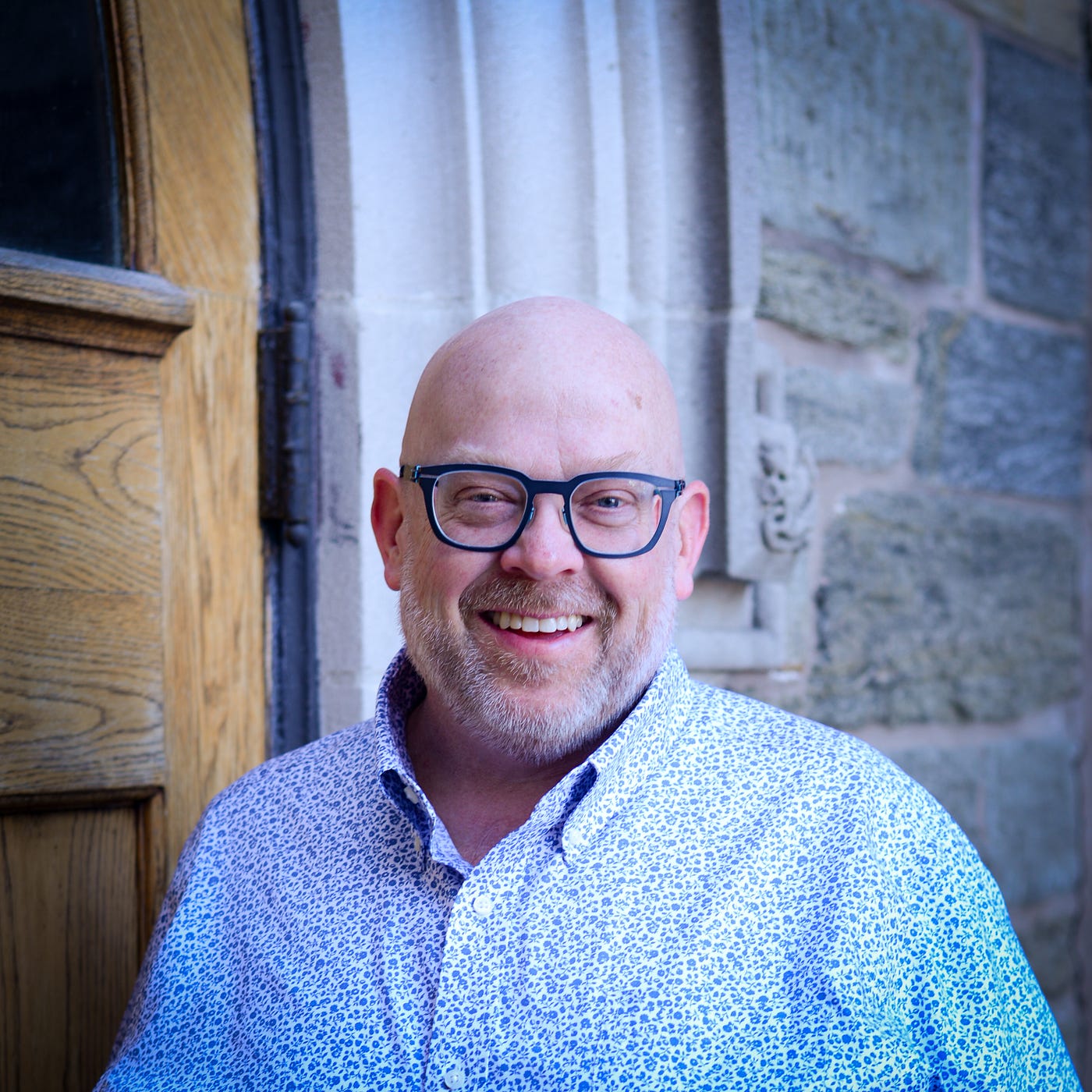
Matthew Wood, Sr. Director Fintech AI, Tavant is a seasoned instructor, public speaker, moderator and presenter. Throughout his career, he has successfully created digital businesses through participatory consulting and design and is recognized for his success in advocating user experiences, practical problem solving and guiding complex mergers and acquisitions.
Wood has been instrumental in growing his clients’ portfolio of businesses through cost saving automation, increasing marketing effectiveness and conversion and by improving the end-user digital experience by focusing on simple, yet sophisticated designs.
Q1. Can you tell us a bit about your childhood backstory and how you grew up?
My childhood was deeply loving yet also quite hard. My mother faced the nearly insurmountable task of raising seven children while caring for my father, who suffered a traumatic brain injury at age forty. As the sixth of those seven, I learned early what hard work really means, the quiet discipline of going without, the value of staying playful amidst difficulty, and above all, kindness.
Helping care for my father wove an empathy and kindness into me that I will never lose. It's part of the very stuff I'm made of, and it still shapes how I approach people and problems today.
Q2. Can you share the most interesting story that happened to you since you began your career?
One evening keeps returning to me. The CEO of my former company invited me to dinner. Knowing me well, he ordered the terroir menu — insuring good food and a full evening together. We spent the hours talking about work, careers, and life.
When I asked what was challenging him, he walked me through the issues an intricacy of striking a new capital structure for the company. As he recounted the lessons he'd learned, I felt a sense of pride in what he has accomplished and a sense of pride in my part in building the company. At the same time, I was humbled considering the learning curve he'd just traveled and the ones still ahead of me.
On the drive home from the city, it came to me- progress is punctuated by learning curves. Where knowledge is genuinely applied, outcomes follow — year to year, challenge to challenge.
Q3. Is there a particular person you are grateful towards who helped get you to where you are?
I am grateful toward two of my older brothers, Ben and Sam. Ben has been a powerful mentor in both my personal and professional life. This past October I was unsettled and worried over a decision, so I flew out to see him, and we spent an evening in the kind of conversation that still echoes for me today.
Sam, as with Ben, is one of the most charitable, giving, and intelligent people you could ever meet. Work often takes me to his city, and almost every visit I learn of a new program he's stood up or another person he's quietly taken care of. Because of its deep practice, his generosity seems effortless. Intelligence and generosity are the shoulders I stand on.
Q4. Can you give us your favorite "Life Lesson Quote" and how it was relevant to you?
"True compassion does not look down or away," (attr. Roshi Joan Halifax). Compassion's presence reaches across the whole of our lives — at work, at home, on the street, and within the universe that is the self.
As we rush headlong, sometimes blindly, into our technological futures, I want us to stay present to the suffering and need we pass by- to not look down or away. When we meet need with strength of heart, the fear of what's coming recedes, and the choices that actually may make things better become clear and within reach.
Q5. Which three character traits were most instrumental to your success?
Synthesis, commitment, and empathy.
Synthesis is bringing ideas and principles together into a new whole. It shows up most vividly in the UX portions of our projects — moments of real creativity born from carefully gathering and recombining the realities of a project. That feeling of "fit," when the journey is right and the customer's choices and context align, is genuinely delightful.
Commitment is a fortitude forged from character, body and mind. Commitment is the demand to see things through. It is the confidence to stay true to value sustaining a project. It is the stubbornness to be the first in and last out. A steady hand has turned more than a few projects back onto their true course.
Empathy is seeing from another person's first-person point of view. Looking at a problem through someone else's lens informs, tempers, and improves how I respond. I've found that when a conversation is going to be difficult, empathy gives me a position of strength — often opening the door to shared understanding.
Q6. Share the story of what inspired you to start working with AI.
On one hand, there wasn't a single moment — the need to work with AI was obvious and apparent. On the other hand, there really was a day I woke up and said, today I build my workbench.
In the natural progression of things, our company has been at the forefront of transforming the mortgage lending process — automating it first programmatically, then with machine learning, then with LLMs and agents. That's a natural extension of the design ethos that was already well in play.
On a more personal level, the real accelerator came when I was preparing for four consulting engagements at once and needed AI to help me carry the load. That pressure turned curiosity into daily practice.
Q7. Describe a moment when AI achieved something you once thought impossible.
I have two answers — one big, one small. In the big picture: when I heard that Google DeepMind had folded its first protein, I understood it as one of those moments in the history of humankind that genuinely changes things. It reshaped my whole view of scientific advancement and convinced me that the real near- and long-term benefit of AI is going to come in the health sciences.
In the small picture: being able to do something so quickly that an effortful routine becomes nearly effortless is its own small miracle. I mean drafting a block of content and editing it down into a presentation swiftly — and having that presentation be genuinely good for use. There are limits today; much of what AI produces lies short of excellence. But for the routine work of daily business, it's a remarkably good fit, and it frees my judgment for where it matters.
Q8. Talk about a challenge you faced when working with AI. How did you overcome it?
As a consultant shaping and advocating AI lead growth- there is well rooted negative pattern pertaining to governance and it shows up in two ways. At times there is a reluctance to green light an AI project because of skepticism hiding behind worries of governance or regulatory compliance. The second form this negative pattern takes is when the leaders are AI enthusiasts, using consumer grade AI in their businesses yet do not see the need for investing in governance. Both issues come to concern of correct governance.
How to manage the skeptic and enthusiast alike? Bring them to an understanding of the actuals of governance. As a team, we demystify what governance is and what is required. Keeping close to the use cases, we build a shared understanding from the actuals of the data in motion, the models in action and the outputs in use. Keeping close to the use cases enables clarity of purpose and transparency of action.
Q9. Share an example of how your work with AI has had a meaningful impact.
My role is multifaceted, and one way I work is with our product team on how we take products to market. I've seen firsthand AI's ability at solving hard, intractable problems in the mortgage space. Consider this: the cost to produce a single loan runs north of $11,000 — and for some outliers, $13,000 or more. It costs more to originate a mortgage than the raw materials to build most cars.
AI-enabled outcomes are profoundly automated— so much so that they generally demand new operational realities. This is especially true of the mortgage space.
The work of leading AI is creating new modalities that make sense while retaining the business value and integrity of the company using it. It's exciting to watch this come to fruition in mortgage, traditionally one of the laggards in adoption, where we now see genuine progress towards cutting cost per loan by half or more.
Q10. "Five Things You Need To Know To Help Shape The Future of AI"
1. Know your models. When a new model comes out, understand why it matters: how it differs from the one you're using, and what it can do that your current favorites can't. This takes research and trial and error, but what you get back is an organically rich, working knowledge of the models in the market.
2. AI's value is specific, not general. AI doesn't create generalized value; it creates value against particular use cases, specs and outcomes. Chase general benefits and you'll founder and squander time; chase specificity and you'll get efficient outcomes.
3. Learn by doing, but don't go at it alone. Look to the people around you who are succeeding with AI and ask them, let them coach you. Stay hands-on: you're the one at the keyboard, the one in conversation with the model. Take the help, and you'll move faster.
4. Truly understand and comprehend the difference between data, information, knowledge, and wisdom. In AI today we constantly confuse these. To succeed at applied AI, understand where each begins and ends — where AI ends and you begin. AI can be a wellspring of information nourishing knowledge and even wisdom, but it cannot replace them.
5. Play. Playfulness is one of the joyous parts of this work. Practice shaping the puzzle pieces. Practice bringing them together.
Q11. When you think about the future of AI, what excites you the most?
Thinking two and three years out, what excites me most is the tremendous value locked up in legacy software systems. It's clear to us — and to many companies at the forefront of AI — that transformation is now obtainable for almost any customer, at timelines and price points that are economically viable and business-relevant.
The work we do at Tavant is the work of enabling futures; it's what we've always done. As I look at the Tavant platform — how we approach AI-enabled projects and outcomes for our clients — it's clear we're part of an exciting future that will quite literally rewrite the legacy systems opening a vast field of potential and possibilities.
Q12. What advice would you give to other entrepreneurs who want to innovate in AI?
A friend of mine runs a young private-equity firm, and when we talked about the AI startups in his portfolio, one thing was common to all of them — and it applies maybe more so to established companies: focus of purpose.
If you can say clearly what you do and why you do it, without hesitation and with a real grasp of the implications, you're on a good track. If you have an idea but can't put it into the words of action, then for now it's only an idea. But if you can articulate the action, the value, what it means, the focus, and why that focus is part and parcel of your go-to-market and positioning — then you're onto something good.
Q13. Is there a person with whom you would like to have a private breakfast or lunch, and why?
I'd love to spend time with Holly Herndon — and if her husband, Mat Dryhurst, can make it, the two of them together. They're among the most interesting minds working at the intersection of art and AI.
With Starmirror (June 2026), Herndon’s and Dryhurst’s current exhibition is at once a listening and recording space creating an embodied human-AI collaboration. The songbook for the resulting AI choir is the 12th century text “Ordo virtutum” by Hildegard. The genius of this exhibition is to how it lays bare the layers of transformation between human and AI, AI choir and song. The hierarchies of protocol are made experientially visible along with a growing intuition of how technical protocols actively shape our lived experiences.
I'd love to hear how they see things accelerating, the ethics of AI as expressed in art, and what that might tell us about where AI goes in the next four or five years.
Q14. How can our readers further follow your work online?
The best place to follow me is LinkedIn. Look for matthewcarterwood across all platforms.