Once this group of middle managers developed a B State Picture of Success, one member of the team said, 'This is great that we are all aligned, but the Executive Team should be doing this process.
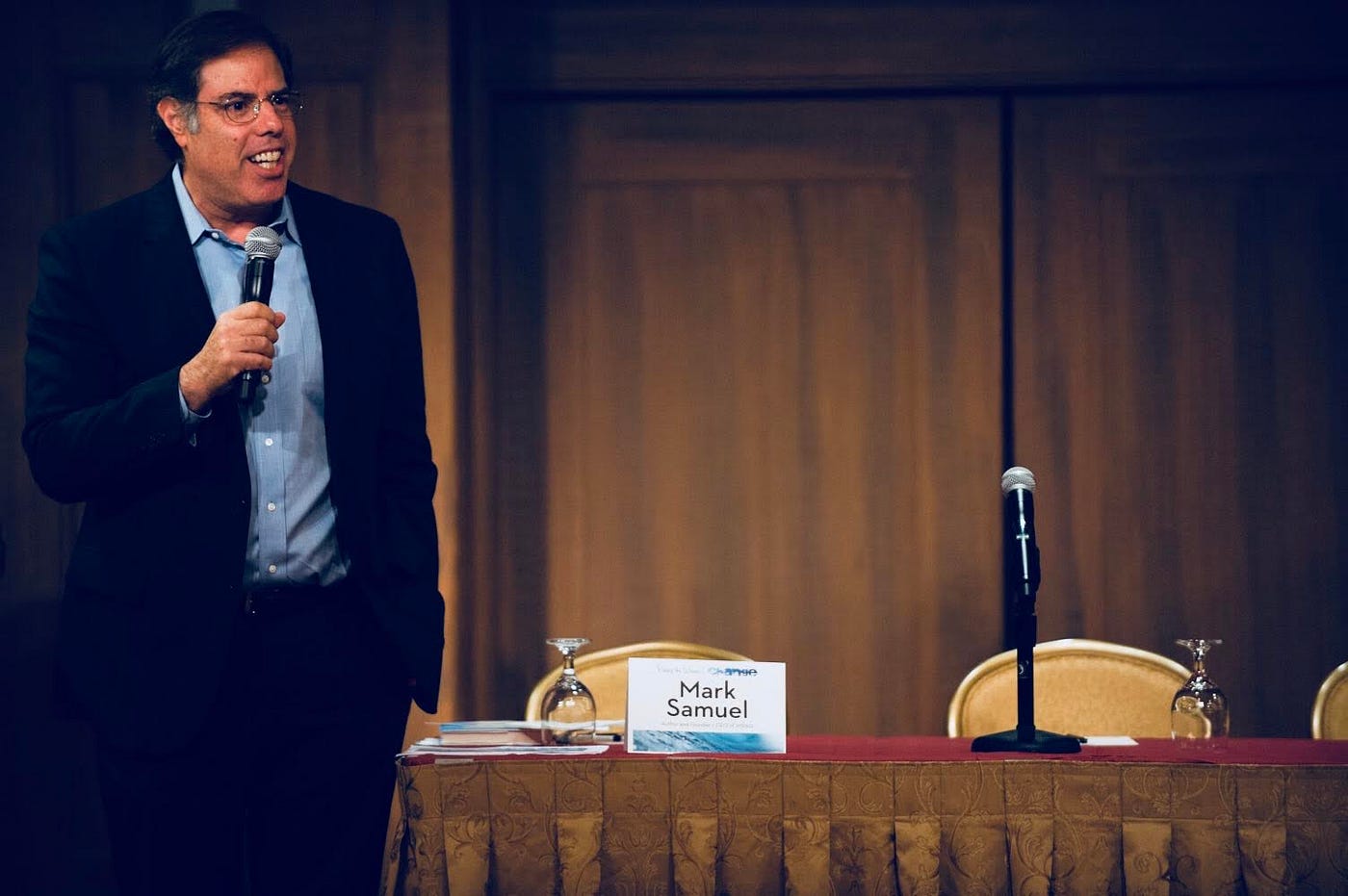
A few more points about Mark Samuel:
1. After two years of failure, he helped Michelin centralize their 2,000-person worldwide IT organization within nine months instead of the projected 18 months, while increasing morale, customer satisfaction, reducing costs, and improving KPI’s by 50 percent. This was done by creating a B State Middle Management Team of 60+ people.
2. He assisted Baxter Regional Medical Center to survive as a rural medical center by decreasing unnecessary costs, improving leadership effectiveness, and increasing morale. Not only did building a B State organization significantly reduce the need for travel nurses — improving reimbursements by increased quality care—but it also positioned them to become Magnet Certified.
3. He assisted an eleven-year old boy who was told by school administrators that he needed to be removed from school due to his failing grades in math and several other subjects in school. Within one year, the boy not only achieved an A in math, but within the next year achieved straight A’s, eventually took an Advanced Placement curriculum, and went to the university of his choice.
What is your backstory?
Igrew up with the aspiration of either being a professional baseball player or professional musician. While neither of those dreams came to fruition, I was fortunate to play on winning baseball teams and recorded music that was played as a radio station’s theme music. This experience led me to the realization that the current books on execution don’t really address “Collective Execution” or the need to develop “Team Habits of Collective Execution” that are fundamental to any top performing athletic team or music group. It is simply missing from most organizations except the military since they practice Team Habits of Collective Execution before sending their soldiers to war.
Can you share the funniest or most interesting story that occurred to you in the course of your career?
I left my graduate degreed education in Organization Development being a firm believer that significant change, especially culture change, had to be a top-down process. I will never forget facilitating a middle management team in a traditional management training program where this myth was dispelled.
Once this group of middle managers developed a B State Picture of Success, one member of the team said, “This is great that we are all aligned, but the Executive Team should be doing this process.”
Another team member said, “We don’t need them to do this process, why don’t we adopt this for ourselves and start leading the organization to B State?”
While that wasn’t my plan, it soon became my agenda and this group became my first B State Middle Management Team. The results were amazing…they were able to get the Executive Team to adopt a decision that had been tried several times previously. And, they were the first group of Middle Managers who proposed their annual budget as an entire team based on the strategic plan rather than in isolated silos.
Because my belief in top down change management was so strong, I tested this model for three years with various groups in multiple industries. During that time, I told all of the members of my team to keep this completely confidential — not because I was afraid of the idea being stolen, but because I thought that others would think we were crazy!
What are some of the most interesting or exciting projects you are working on now?
My most exciting projects involve the transformation of healthcare world-wide. Healthcare is at a major crossroads due to the rising costs of delivery, new technology to make healthcare in the home more realistic, companies like Amazon entering the healthcare space as a less expensive delivery system and the use of predictive analytics which is controversial but effective.
The UK system is doing more to integrate several care institutions including children’s care, mental health, traditional medical centers, cancer care, hospice and others. In the Netherlands, they are developing a new version of home healthcare called Nursing Districts involving self-managed teams of nurses with specialized skills in mental health to serve their aging populations within 10 to 15 minutes of their patient.
Both countries are emphasizing preventative health, keeping people at home as long as possible and allowing the first responder to be a home health nurse that will coordinate the care for their patient with specialty services in medical centers and clinics as appropriate.
Which people in history inspire you the most? Why?
John F. Kennedy, while not being perfect, was able to mobilize the world with inspirational messages of hope, personal responsibility, and care for all people.
Martin Luther King delivered powerful speeches and inspired the US to not only promote the respect of the African American citizen, but to also pave the way for demonstrating respect of all races, nationalities, and people.
Stephen Covey, author of the Seven Habits of Highly Effective People, lived his principles with his family and in his business. I loved hearing the stories that his son David Covey shared about his father and what it was like growing up as a very young boy, with the high standards and loving of his father.
Which literature do you draw inspiration from? Why?
1. Power versus Force by Dr. David Hawkins. It is a very clear description of different levels of consciousness and the impact on behavior. It’s wonderful for understanding human reactions and dynamics, as well as the process of growth and evolution, while explaining human history.
2. Loyalty to Your Soul by Drs. Ron and Mary Hulnick. Another very practical book on living life from the perspective of us as Soul having a Human Experience.
3. The Age of Paradox by Charles Handy. This book represented out of the box thinking in a way that was practical and guided me in developing many of the concepts in B State thinking.
4. From Good to Great by Jim Collins. A great description of the levels of effectiveness for organizations and bringing forward the concept of “being on the bus.”
5. Leadership Jazz by Max DePree. One of the best books describing effective leaders from a higher consciousness and emotional intelligence.
How do you think your writing makes an impact in the world?
I often get feedback on my previous books that people found my strategies and tools to provide a unique perspective but are very practical and common sense.
My newest book, B State, is a book of stories that people will related to and see themselves in — regardless of age or position. It also shares my imperfect story of how B State was discovered and my trials and tribulations.
Besides offering a refreshing perspective with clear strategies and tools, readers will find the book very relatable and practical.
What advice would you give to someone considering becoming an author like you?
Start it, have fun and don’t worry about how people will receive your book. Enjoy your own discovery process and allow the book to have its own voice. Three quarters of my book I wrote without being clear on what kind of book was being written. I had fun, but couldn’t see the vision of its completion. I “listened” for the book to guide me on what was to be written and I followed until I understood. Then, I continued the same process, but with greater clarity about the desired outcome.
How have you used your success to bring goodness to the world?
I love volunteering my time and service to organizations that have a clear purpose to help others, but don’t have the money to support their vision. I also like to offer assistance to young professionals seeking guidance about their career path or more experienced professionals in a career transition. I love directing people to their natural “gifts” and their passion to make a meaningful difference.
What are your “5 things I wish someone told me when I first started,” and why?
1. “Before starting your own business, take a job with another consulting organization, so you can learn the business from them.”
A colleague friend learned the business by working for someone else before he started his own business. Instead of learning from “trial and error” he knew how to set up his business and get it started even before leaving his full time job.
2. “Instead of hiring technical experts, hire people who have good skills but will be a good fit for your culture.”
At first, I hired experts and gave them too much autonomy to soon. They started making decisions that were counter to the organization’s culture and direction. It almost cost me my business.
3. “Be patient!”
I was always in a hurry to grow my business and spent lots of money to build the business instead of accepting the slow and natural growth of the business. I spent way too much money on efforts that didn’t produce results, which made my business a struggle in the early years.
4. “Have fun and enjoy the process of building your business, rather than comparing yourself to other successful business leaders and coming up short.”
I spent way too much time judging myself as not being an effective leader, or good business man by comparing myself to other consulting organizations that had more sales. Those comparisons led to a lot of negative thinking and self-doubt, that didn’t keep me focused on enjoying my business.
5. “Let your inspiration come from being purpose-driven in service to something greater than your business.”
While I always wanted to be of service to my clients, I lacked a clear purpose that drove me. My purpose was building a successful business by doing great work for my clients and that wasn’t enough. Today, my purpose is to help clients and individuals create a B State Transformation that not only impacts their business, but also their personal life in ways that exceed their wildest desires.
Is there a person in the world whom you would love to have a private breakfast or lunch with, and why?
1. Magic Johnson — After being one of the best athletes in Basketball, and overcoming Aids, he built a business empire and supporting the African American community at the same time. He demonstrated B State thinking, servant leadership, and lived his dreams.
2. Oprah Winfrey — Overcoming adversity and leading such a successful business while surrounding herself with uplifting people and enhancing her Spiritual Evolution is so inspirational. I would love to know more about how she became such an effective leader.
3. Esther Hicks — One of the leaders of Personal Transformation, she built a business on Practical Spirituality, continues to evolve in her own journey, and conducts her workshops on cruise ships attracting a thousand participants per cruise. She mastered having fun while providing a great service and serving her mission at the same time.
4. Alicia Keys — One of the most centered, peaceful, joyful and service oriented musicians. Her sense of balance and loving is profound.
5. Stevie Wonder — Not only a great musician, composer and producer, but an inspirational and creative writer.
6. Paul McCartney — A genius composer and musician that can play almost every instrument and balances lighthearted fun with inspirational music.