Seeking achievement became a major source of validation and identity for me — an effort to overcome those feelings of not being worthy or having emotions that weren’t accepted.
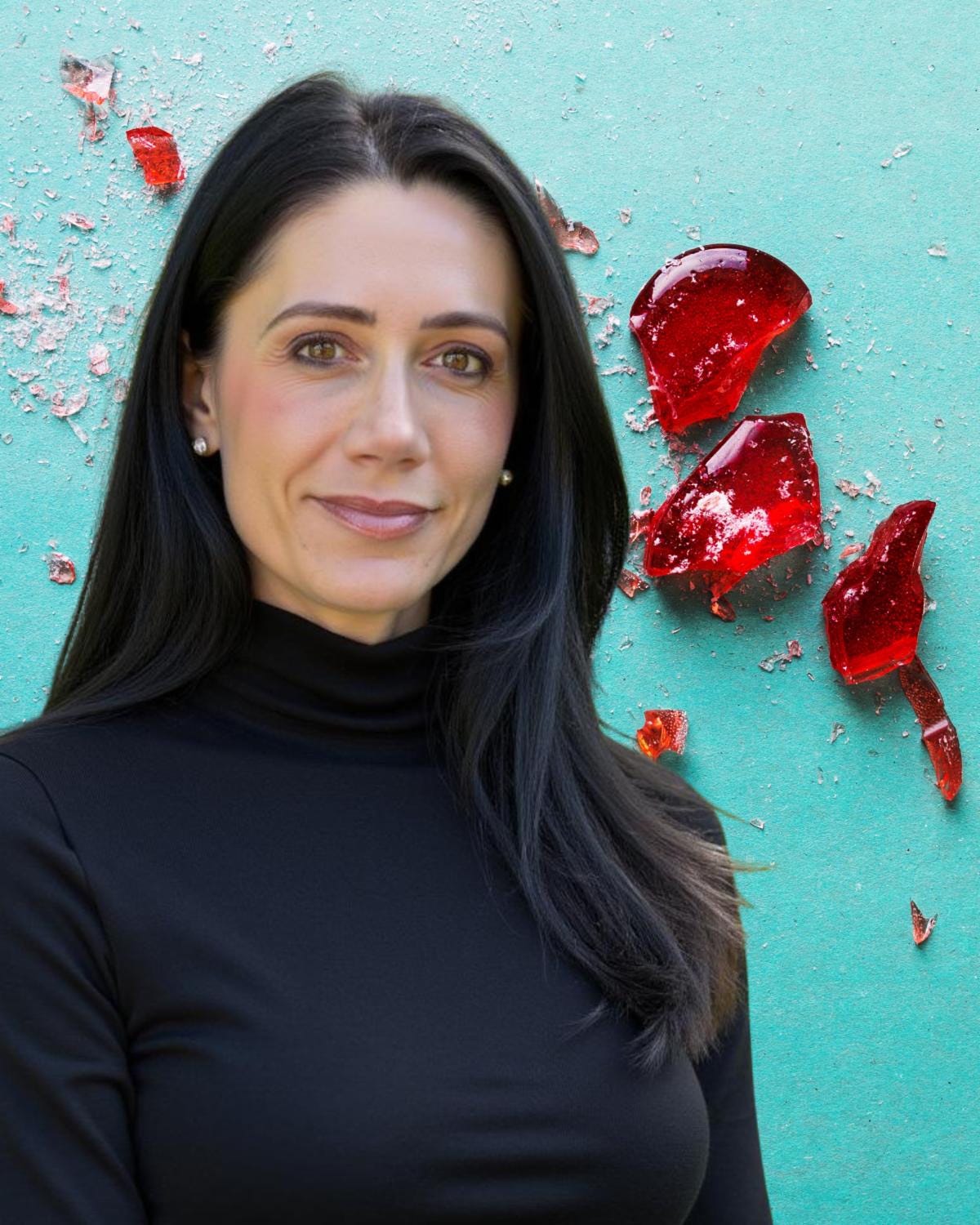
I had the pleasure of talking with Louise Barnett, whose story is, in many ways, about the exhausting distance between appearing fine and actually being fine. In 2019, after a year of dating the man who would become her husband, Barnett finally told him something she had spent years learning how to conceal. She had bipolar disorder. She expected the disclosure to threaten the relationship. Instead, he answered, “Louise, I already know,” and then told her, “I just need you to let me inside.” For Barnett, the exchange cracked open a possibility she had rarely allowed herself to consider: that she might be loved for the whole of who she was, rather than for how convincingly she could perform success.
That performance had been under construction since she was a teenager. Barnett says she first experienced depression at 15, growing up in a home led by two Zimbabwean immigrant parents at a time when mental health was simply not part of the family vocabulary. She became adept at burying difficult emotions and presenting herself as capable, eventually making achievement a source of identity and validation. The pattern worked, at least from the outside. She graduated high school early with high honors, later graduated with high honors from a top liberal arts college, completed an MBA in half the usual time, and rose into leadership at a Fortune 500 company. “On paper,” she recalled, people saw someone who was “doing everything right.” Privately, she was struggling.
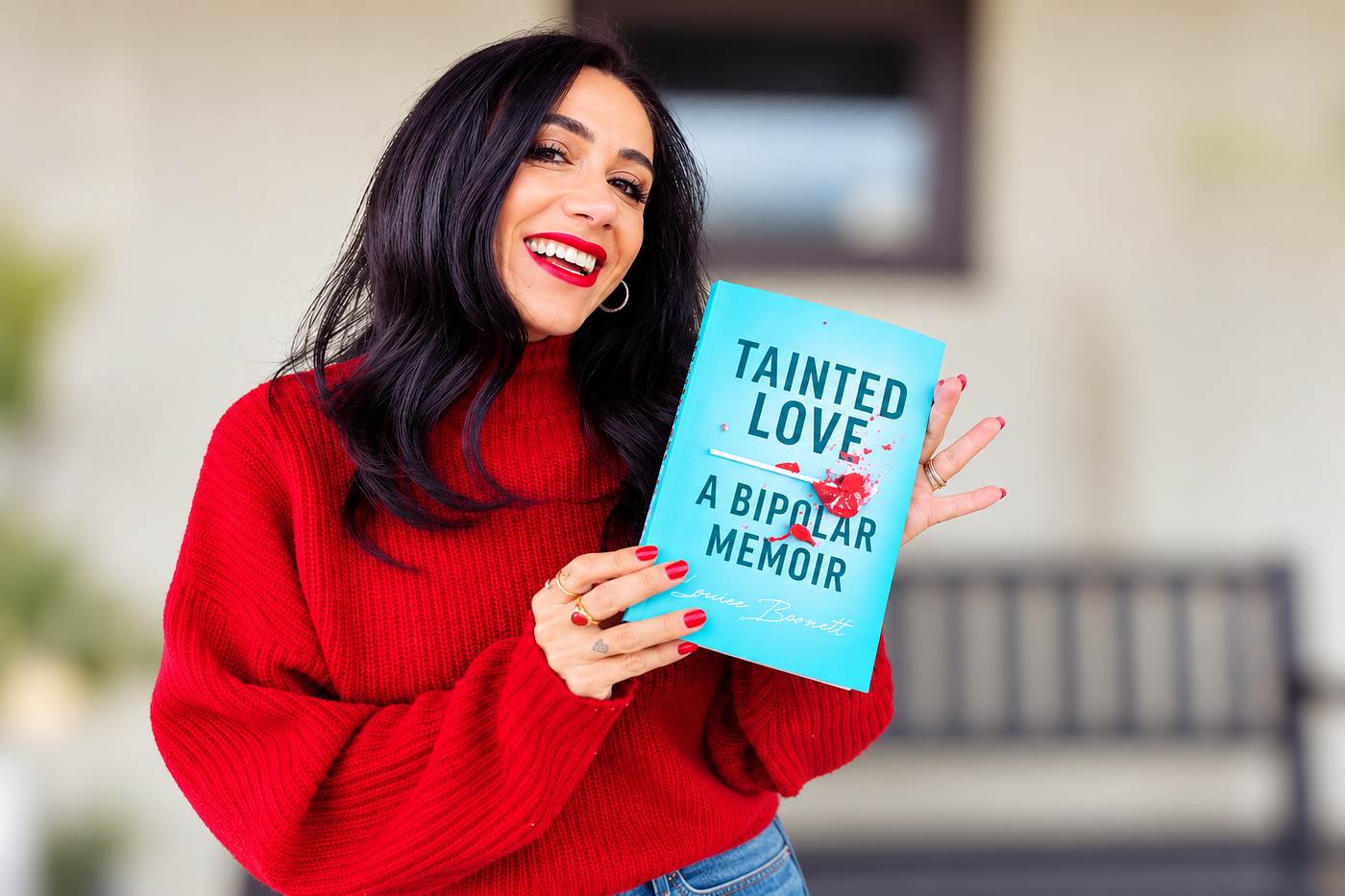
The contrast is central to Barnett’s forthcoming memoir, Tainted Love, and to the public work she now does around serious mental illness. She pushes back against the familiar picture of psychiatric illness as something that must always be visible from across the room. A person can advance professionally, raise a child, maintain relationships, and collect impressive credentials while experiencing something far more serious beneath the surface. Barnett knows that contradiction intimately. For years, she was raising her daughter Lily, building a career, and appearing highly functional while, in her words, “drowning.”
By 2015, the extremes had become impossible for her to dismiss. During one manic episode, Barnett traveled across the country impulsively with her eight-month-old daughter. Later, in Dallas, at the bottom of a devastating depression, she found herself standing near an overpass while Lily sat nearby in her stroller. Barnett remembers a gust of wind moving her back just enough for her to notice that Lily had dropped a cherry lollipop and begun to cry. She rushed to her daughter and held her. Barnett is careful not to make Lily responsible for her recovery, but she says that moment helped her ask for help. She entered inpatient psychiatric care and, at 32, received a diagnosis of bipolar I disorder.
Diagnosis, however, was not resolution. Barnett initially resisted it. She mismanaged medication and was not fully honest in therapy, choices she says contributed to further destructive episodes. Over time, she came to understand acceptance less as a breakthrough than as a process. The conversation with her future husband in 2019 was one turning point. Sobriety in 2021, after two decades of struggling with drugs and alcohol, was another. Then came a third surprise: in 2024, despite sobriety, medication, therapy, and disciplined attention to treatment, Barnett fell into an eight-month depression. The experience dismantled another assumption, the idea that recovery meant eventually reaching a place where the illness could no longer reach her.
It was during that depression that Tainted Love began to take shape. Barnett started with journal entries, revisiting parts of her past without trying either to excuse her behavior or bury herself beneath shame. The resulting book is organized, on its surface, around four former relationships. But Barnett came to see that the deeper subject was a fifth relationship: the one she was slowly building with herself. “I didn’t set out to write a book about four exes,” she said. Those relationships became a framework for tracing how bipolar disorder unfolded across years of love, ambition, addiction, motherhood, and attempts to locate self-worth outside herself.
Today, Barnett refuses the tidy language of being fixed. Her stability rests on practices she treats as ongoing rather than temporary: medication, therapy, careful management of sleep and daily routines, emotional regulation, nervous-system work, and active sobriety. Dialectical Behavior Therapy has become an especially important part of her life, and in 2022 she launched the I’m Bipolar, Now What? podcast to create the sort of candid conversation she never had growing up. At home, she says, mental health and addiction are discussed openly with her husband and her now-teenage daughter.
What makes Barnett’s perspective compelling is that she does not ask understanding to replace accountability. She is explicit that a diagnosis may explain behavior without excusing every decision. Her interest now is in what can happen when people tell the truth about experiences usually buried beneath secrecy and shame. “Creating survival guides through shared stories,” is how she describes the movement she would like to build. Those stories do not have to be told from a stage or written in a memoir. They can begin in a journal, a peer group, or a conversation with one trusted person. For Barnett, the point is not to present a perfected version of recovery. It is to make room for a more honest one, in which a meaningful life can coexist with an illness that has not simply disappeared.
That is the tension running through both Tainted Love and Barnett’s life today: the woman who once depended on achievement to prove her worth is now trying to build a life around a much quieter proposition. “You are enough,” she tells people confronting a new diagnosis. Her own story suggests how difficult it can be to believe those words, and how much can change when a person finally begins to.
Yitzi Weiner: Louise, it’s an honor to meet you. Before we dive in deep and talk about your amazing work and your book, our readers would love to learn about Louise Barnett’s personal origin story. Can you share with us a story of your childhood, how you grew up, and particularly the seeds of all the amazing creativity that has come since then?
Louise Barnett: Yeah. It’s funny. I’ve been thinking about dying since 1999. I was 15 years old, and seemingly overnight my mind just turned against me for the first time. I experienced depression in my teen years before there was even a larger understanding of mental health.
I never had language for mental health growing up. I was raised by two Zimbabwean immigrants, obviously from a different generation, so culturally and generationally, mental health just was not part of the conversation. We swept things under the rug. That’s how we handled mental health.
At a really early age, I became extremely skilled at burying emotions and feelings, presenting instead a version of myself that was extremely capable. Seeking achievement became a major source of validation and identity for me — an effort to overcome those feelings of not being worthy or having emotions that weren’t accepted.
That pattern from an early age really carried me through adulthood: in relationships, in my professional life, and really in everything that I did. It was this strange dichotomy of being able to appear extremely successful while privately struggling.
Yitzi Weiner: Let’s dive in a little bit. You mentioned being extremely successful. Tell us a bit about that story. Tell us about high school, college, and your first career path.
Louise Barnett: It’s funny, because depression was my first symptom, and I never recognized the highs as a warning sign or a red flag. It didn’t feel like part of the illness. For individuals with bipolar disorder, it’s quite common to take about 7 to 10 years to receive an accurate diagnosis, largely because we often present in different ways at first.
For me, what that looked like was graduating with high honors. I actually graduated high school early; during my senior year, I didn’t even have to attend. I graduated with high honors from a top-50 liberal arts college, earned my MBA in half the time usually required, and eventually started climbing the corporate ladder, ultimately reaching a leadership position in a Fortune 500 company.
Externally, I was completely validated. On paper, everyone thought, “She’s crushing it. Look at her; she’s doing everything right.” Internally, I justified the lows because I had all of these accolades and achievements going on.
It wasn’t until 2015 that I finally had a name for my bipolar disorder, ultimately because the highs became too high. They became catastrophic, life-changing, and dangerous, while the lows became too low. I was admitted into an inpatient psychiatric unit in 2015. Although I had been in medical care for a long time, that was the first time a psychiatrist took a zoomed-out perspective, looking at the entire timeline of my life rather than evaluating each individual incident in isolation. I was 32 years old when I finally received my bipolar 1 diagnosis.
Yitzi Weiner: Did you feel comfortable sharing that story?
Louise Barnett: I do now. I didn’t for a long time, but I do now. It’s who I am.
Yitzi Weiner: When you were first diagnosed, did you tell people, or did you hide it? How did you process that?
Louise Barnett: I wish I could say that getting a diagnosis was an aha moment or tied up my life in a big red ribbon. Truthfully, I didn’t want my diagnosis when it was given to me. Denial is super common for people diagnosed with bipolar disorder. I wanted to keep living my life the way I was living it.
Unfortunately, that led to mismanaging my medication and not being honest in therapy, which resulted in another series of absolutely catastrophic events for me.
Ultimately, acceptance of bipolar and understanding what a diagnosis can do is a process. It’s not a one-time thing. I like to think that I had three major turning points.
The first was in 2019, four years after my 2015 diagnosis. I sat down to have a conversation with my now-husband. We had been dating for a year, and I thought he was about to break up with me because the relationship was going terribly. I told myself, “Louise, just lay it on the table. Tell him your truth.” I divulged my bipolar disorder, and he said two things to me: “Louise, I already know,” and “I just need you to let me inside.” That conversation cracked the door open for me to consider the idea that I could be loved for everything that I am, not just for the things I achieve.
The second turning point was in 2021 when, after a long battle, I finally found my sobriety. I had struggled with drugs and alcohol for 20 years prior to that. Sobriety was a major turning point, not because it fixed the bipolar disorder, but because it created a clarity I had never experienced before. That clarity allowed me to see myself, my disorder, and my needs in a much clearer way.
The third turning point arrived in 2024, when an eight-month depression hit me seemingly out of nowhere. I was sober, taking my medication, attending therapy, and completely dedicated to my treatment — and then, boom. That experience redefined the concepts of recovery and stability for me, helping me view bipolar disorder as something that will always be a part of me.
Yitzi Weiner: I really appreciate your bravery and your honesty in sharing this. I don’t know if I would be able to do that.
Louise Barnett: Thank you. Interestingly enough, that depression is where the book began. I started writing journal entries as a way to look at things honestly — reviewing my past without excusing my behavior or drowning in shame, but processing everything in a way I had never done before.
Yitzi Weiner: Did I hear you correctly that your partner was with you for four years before you divulged your diagnosis?
Louise Barnett: Not quite. We met in 2018.
Yitzi Weiner: Okay.
Louise Barnett: We had been together for one year when that conversation happened. That relationship really started to blossom once I got sober as well.
Yitzi Weiner: There is a lot of misunderstanding and general fog around what bipolar is and how it presents. You noted that your husband knew before you told him. Could you pull back the mask a bit and share how it presents, and how someone might recognize that they are struggling with it?
Louise Barnett: You are so right. There is the Hollywood version of bipolar that we frequently see. I could probably spend the entire interview talking about this, but I’ll focus on a few key points.
Serious mental illness does not always look like someone is visibly falling apart. Life can continue: achievements can be made, careers can progress, and children can be raised, all while something very serious is occurring behind the scenes. Bipolar often made me appear capable and successful. I was a single mom raising my daughter Lily until she was almost five years old, right up until I met my husband. Throughout a huge portion of that period, I was drowning.
Another common misconception is that mania is simply a big, happy, energetic experience — the Hollywood version. While that can be part of it, mania often enters a very dark territory for many people. It is multifaceted.
On the flip side, depression is not always sadness. It can manifest as anger, irritability, and rage. Furthermore, being depressed doesn’t necessarily mean staying in bed 24 hours a day; people often still manage to push through.
If I could highlight the most critical point: receiving a diagnosis and taking medication does not cure bipolar disorder. Bipolar disorder does not have a cure. Medication helps manage it. As someone who is medicated, rather than experiencing mania on a scale of 11 and depression on a scale of minus one, I now experience those shifts on a manageable scale of three to six or three to seven.
Stability does not mean never experiencing symptoms again. I speak with many families and loved ones of individuals with bipolar disorder, and there is a common misconception that treatment means the person will never experience mania or depression again. That simply isn’t true. Bipolar is part of who we are, and it evolves over time.
A diagnosis can explain behaviors, but it does not excuse every decision. Taking personal accountability while seeking forgiveness for myself and others has been a central piece of my work over the past several years.
People living with bipolar disorder and serious mental illness can build meaningful careers, maintain healthy relationships, and raise families. We don’t have to cross some arbitrary finish line of perfection before we are allowed to live our lives.
Yitzi Weiner: Please tell us about your book. Can you share two stories from the book that stand out most in your mind?
Louise Barnett: The first took place in March of 2015. On a catastrophic manic high, I traveled cross-country on a whim without telling anyone, accompanied by my eight-month-old daughter and a convicted felon. That high eventually crashed into an absolutely devastating low.
When my daughter was 18 months old, I was walking her in a stroller in Dallas. We were near the crossroads of the Dallas North Tollway and Mockingbird Lane. I parked the stroller on the sidewalk and inched closer and closer toward the overpass. In that moment, I knew I no longer wanted to live that Jekyll-and-Hyde existence. I had endured it for 15 years, it was escalating, and I couldn’t do it anymore. I remember looking up and thinking, “Is there really nothing else for me?”
As I felt the gravel slip beneath my feet, a sudden gust of wind pushed me a couple of inches back. It was just enough for me to catch sight of my daughter in her stroller. She had been licking a cherry lollipop, dropped it on the ground where it shattered, and started crying. I raced over, pulled her out of the stroller, and held her close in my arms. In that instant, I knew that the love of my life had just saved my life.
I am very careful never to place the responsibility of my recovery on my daughter, but that moment allowed me to finally ask for help. That led me to reach out to a family member, enter an inpatient facility, and receive my diagnosis. That was a major turning point.
Yitzi Weiner: I appreciate you sharing that. I hope I didn’t provoke any painful memories by asking.
Louise Barnett: Not at all, thank you. It’s remarkable what surfaces when you write — what you realize you had suppressed. Writing the book was a long process supported by intensive therapy. Pulling back those memories allows me to process them with a completely different meaning today. It isn’t all negative; a great deal of growth comes from it.
Yitzi Weiner: Is there another story from the book — perhaps a more positive one — that you can share?
Louise Barnett: Yes. In 2024, when that deep depression hit, I had already left my corporate career, earned my certification as a Jay Shetty life coach, and radically restructured my lifestyle around sobriety and recovery. We had relocated to Colorado in 2022, which is gorgeous.
When the depression hit, I felt outrage: “How could this happen to me? I am doing everything right.” That experience forced me to strip away the performance pressure, production demands, and achievements, and simply exist as myself.
For the first time in my life, without the noise and busywork, I discovered a deeper purpose. I realized that everything I had walked through — the highs, the lows, the chaos, the depression — shaped me, broke me, and pieced me back together.
It was a cathartic realization that brought me to what I didn’t even know I was looking for: the simple truth that I am enough. I used to think finding stability was like reaching the Emerald City — that if you just followed the yellow brick road and checked every box, you would arrive. This experience taught me that stability is about leveraging tools and resources daily. It’s about waking up and asking, “What do I need today?” rather than “What is wrong with me?”
Yitzi Weiner: How are things going today now that you have your diagnosis and management routines? What does life look like on the other side?
Louise Barnett: I am very careful not to present my story as a neat, happily-ever-after narrative tied up with a bow. Bipolar is part of me. I have days or weeks where I struggle to perform, and other days where I feel ready to summit mountains and accomplish incredible things.
Coming out of that 2024 depression, I identified six pillars that support me best. While this isn’t a universal prescription, these six practices sustain my stability:
- First is medication.
- Second is consistent therapy.
- Third is lifestyle management — protecting my sleep, structuring my schedule, maintaining good nutrition, and exercising.
- Fourth is emotional regulation. This was a continuous struggle for me, but when I achieved sobriety, it became clear how much work remained. Dialectical Behavior Therapy (DBT) has become a cornerstone of my care plan.
- Fifth is nervous system regulation. I engaged in intensive neurofeedback therapy to help reset my nervous system. When you experience decades of neurological chaos and trauma, your nervous system requires intentional support to recover.
- Sixth is active sobriety.
Today, my life is grounded in the present. I determine what I need and what to focus on today, and tomorrow I do the same. I am supported by my 13-year-old daughter Lily and my husband. We maintain an open, honest home where we talk candidly about mental health and addiction, making sure we are consistently supporting one another.
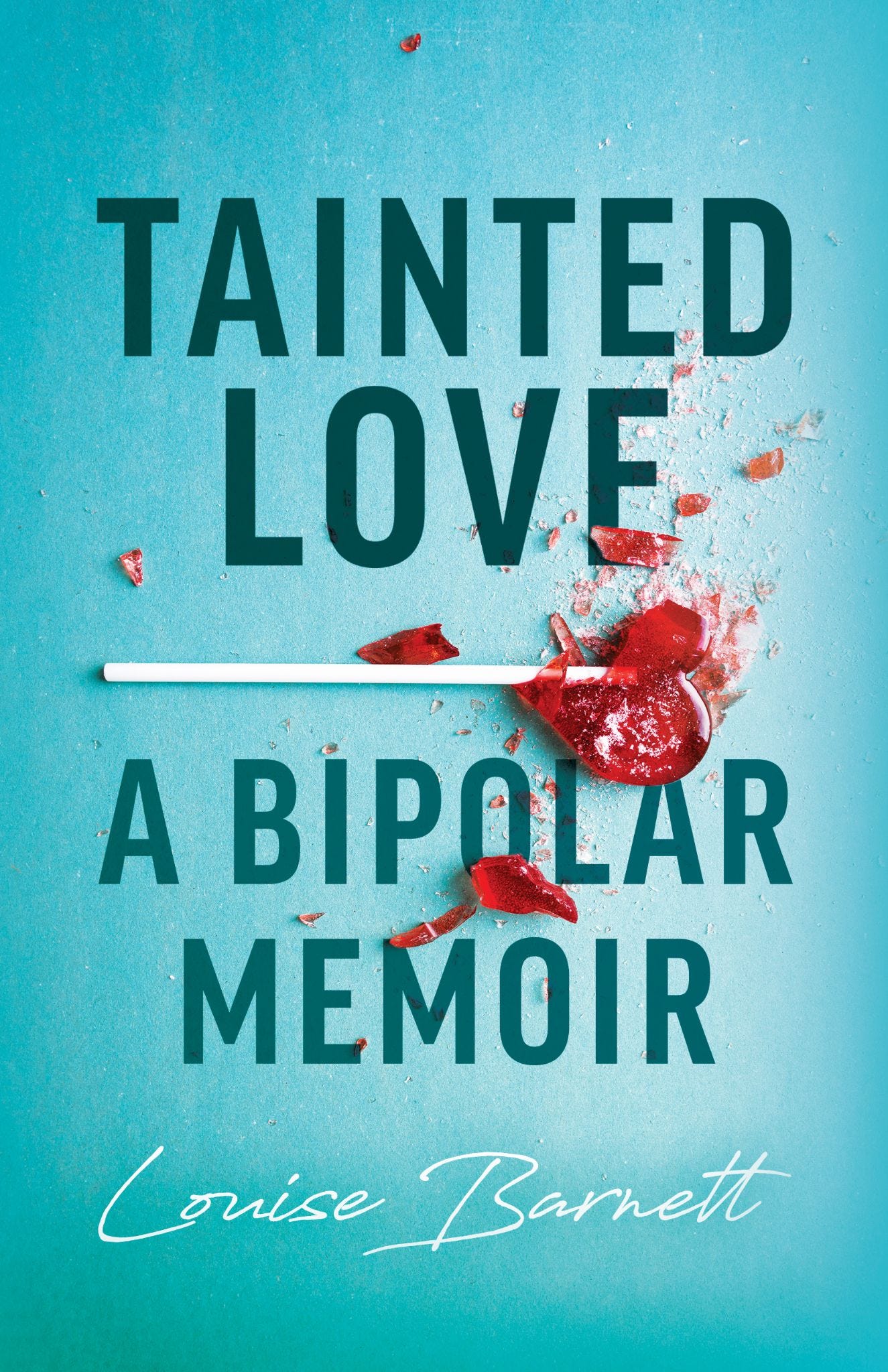
Yitzi Weiner: Tell us about the title of your book, Tainted Love. It might not seem immediately connected to the journey you’ve described.
Louise Barnett: I always laugh because I didn’t set out to write a book about four exes. When people pick up Tainted Love, the narrative initially appears structured around four past relationships. For years, I pursued self-worth through external validation and romantic relationships. I love fiercely, which comes through in those stories.
As I wrote, I realized the book isn’t truly about those men or those relationships; it is about the relationship I ultimately forged with myself. Bipolar is insidious and progressive — it doesn’t appear out of nowhere. Tracing a 15-year timeline across those four relationships became a way to illustrate the nuanced progression of the disorder.
Yitzi Weiner: Looking back, what message of hope can you offer to those who are just beginning to come to terms with their own mental health struggles?
Louise Barnett: First and foremost: you are enough. An early diagnosis can feel terrifying and overwhelming, but it also provides context for experiences that previously felt inexplicable. A diagnosis gives you the language to reshape your narrative. Instead of asking, “What is wrong with me?” you can ask, “What do I need?”
You don’t need to instantly understand where you end and where your diagnosis begins; that understanding comes with time. Most importantly, you don’t have to wait until you are “cured” or perfectly stable to deserve love, motherhood, professional success, or a meaningful life. I wish someone had told me early on that I didn’t need to fix myself before being worthy of a beautiful life.
Yitzi Weiner: Earlier you used the phrase “a Jekyll-and-Hyde life.” Does that feel like an accurate description of bipolar disorder, or is it an exaggeration?
Louise Barnett: That description captures my personal lived experience. It isn’t phrasing typically used in clinical advocacy, but when I was undiagnosed, unmedicated, and battling addiction, there was no middle ground. Life swung between catastrophic highs and devastating lows.
Having grown up in musical theater, that imagery of a radical, abrupt transition resonates with me. For me, it describes the extreme emotional weight rather than a literal split personality.
Yitzi Weiner: People often think of Jekyll and Hyde as representing good versus evil. Did it feel that way to you?
Louise Barnett: Both mania and depression contain elements of light and dark. It isn’t as simple as mania being “good” and depression being “bad” — that is a common misconception.
What felt true was the sense of never being enough. Regardless of how hard I worked, what accolades I earned, or what salary I made, it never felt sufficient.
Yitzi Weiner: Do you think that feeling is more pronounced in people diagnosed with bipolar disorder, given that most people experience self-doubt to some degree?
Louise Barnett: Everyone experiences that to a degree. The distinct danger for a bipolar brain is that when it slips into mania or depression, that feeling is magnified to dangerous extremes.
Yitzi Weiner: The word “mania” is often used casually in conversation, but clinical mania is very different. Can you describe what true mania looks like?
Louise Barnett: If you look at the DSM-5 or search online, you’ll see common symptoms: racing thoughts, grandiosity, hypersexuality, excessive spending, hyperproductivity, and lack of sleep. Those are all accurate.
What is less discussed is the irritability, rage, and potential for danger. Mania has a distinct progression. It often begins as hypomania, which is what many people associate with the condition — the energized, productive state. From there, it can escalate into full-blown mania, which characterizes bipolar 1 disorder.
Full-blown mania causes severe disruption to a person’s life, often leading to hospitalization or dangerous situations. In severe cases, it can progress into psychosis and hallucinations.
Because bipolar disorder manifests uniquely in every individual, my experience of mania will not look identical to someone else’s. That variability is precisely why it can be so difficult to identify and diagnose.
Yitzi Weiner: What advice do you have for loved ones of individuals with bipolar disorder? How can they be supportive partners and family members?
Louise Barnett:
Three things:
- First, keep loving them without judgment.
- Second, learn with curiosity. Don’t simply read diagnostic manuals; learn how the condition specifically presents in your loved one, because it looks different for everyone.
- Third, and most importantly, take care of yourself. You cannot pour from an empty cup. I have spoken with many mothers who ran themselves into the ground trying to save their loved ones. It took me until age 32, after a great deal of destruction, to pick up the phone and call my mother. Recovery had to be my own responsibility; no one else could do that work for me. Protect your own well-being.
Yitzi Weiner: What are 5 things you learned from your journey that you think other people navigating life with mental illness would benefit from knowing?”
1. I AM ENOUGH.
For much of my life, my worth was connected to productivity, chasing love, chasing titles, and achievement. Mania reinforced that because my extreme productivity was often praised. Then, during my eight-month depression in 2024, much of that external identity fell away.
I was forced to exist without production or achievement to cloak me. Stripped of the pressure to perform, I discovered a deeper purpose. I found what I hadn’t even known I was searching for: the simple truth that I am enough.
2. HEALING ISN’T ABOUT DEFEATING MY DARKNESS.
The battle was never mine to win. I spent years treating recovery almost like another achievement. If I could just do this, then I would get that. The goal became conquering depression, controlling mania, and eventually reaching some permanent state of balance.
Eventually I realized Bipolar I was not a battle I could simply “win.” It’s woven into my very being. It will always be a part of me, and symptoms will return. Healing has become less about fighting myself and more about learning to respond to myself with awareness and compassion.
3. I DON’T NEED TO BE “FIXED.”
I don’t offer a neat before-and-after recovery story. I’m sober, medicated, in treatment, and incredibly proactive about my mental health, and I still experience symptoms. My eight-month depression in 2024 was proof of that.
My life still contains difficult mornings, tears, symptoms, and periods when I need significant support. And at the exact same time, it contains love, creativity, summiting mountains, motherhood, purpose, and joy.
A beautiful life doesn’t have to be a symptom-free one.
4. THE LOVE I’VE BEEN SEARCHING FOR HAS TO INCLUDE MYSELF.
Tainted Love initially appears to be a story about four men and four defining relationships. For years, I chased worth and identity through romantic love. I searched for it through achievement and alcohol, too.
But the deeper realization was that none of those things could give me something I didn’t believe I deserved internally. That’s why the deepest love story in Tainted Love ultimately isn’t romantic. For so long, I lost sight of the love that had been waiting for me all along: my own.
And ultimately, it comes back to that same simple truth: I am enough.
5. MY STORY DOESN’T END WITH MY DIAGNOSIS. IT’S JUST THE BEGINNING.
My diagnosis wasn’t the ending. Neither was sobriety. Neither was a suicidal crisis. Neither was another depression. I’ve learned there is no single finish line called “recovery.”
This is who I am now: bipolar, through and through. It isn’t a chapter I can close or a battle I can surrender. It’s woven into my very being, carrying me into a tomorrow that holds its secrets tight, with mysteries I cannot predict or tame.
My diagnosis explains part of my story. It doesn’t get to write the ending. And that’s why I wrote Tainted Love.
Yitzi Weiner: Can you share some of the self-care routines that help your mind, body, and heart thrive?
Louise Barnett: My care team is foundational. I believe in consistent therapy; my therapist will be on speed dial for the rest of my life, even when things are going smoothly. I see my psychiatrist two to three times a year as needs fluctuate.
Dialectical Behavior Therapy (DBT) is another practice I rely on heavily. It focuses on emotional regulation, distress tolerance, mindfulness, and interpersonal communication. It provides practical tools that stay with you permanently. My daughter and I even practice those skills together at home.
Neurofeedback therapy played an important role in helping reset my nervous system. Additionally, when I got sober in 2021, I immersed myself in recovery communities, literature, and podcasts. Jim Rohn spoke about becoming the average of the people you surround yourself with; finding community is one of the most effective ways to dismantle shame.
In 2022, I launched the I’m Bipolar, Now What? podcast to foster transparent conversations about mental illness. Tainted Love also includes an extensive resource guide in the back compiling the tools that helped me. Sharing our collective stories allows us to build survival guides for one another.
Yitzi Weiner: Because of your platform and work, you have an opportunity to make a broad impact. If you could inspire a movement to bring about the greatest good, what would that be?
Louise Barnett: Creating survival guides through shared stories. Living decades in psychological chaos produces intense shame and guilt. While we cannot dictate when others will forgive us, we have full agency over taking personal accountability and forgiving ourselves.
The most effective way to dismantle shame is through vulnerability, and storytelling is the vehicle for that work.
Yitzi Weiner: When you say storytelling, do you mean sharing personal experiences?
Louise Barnett: Yes. That might look like speaking publicly, writing in a personal journal, opening up to a single trusted friend, or participating in a peer community. There is no single prescribed path. Sharing our experiences, one story at a time, is how we collectively dismantle stigma and heal from shame.
Yitzi Weiner: Louise, it has been a true pleasure speaking with you. I wish you continued success, health, and blessings, and I look forward to doing this again.
Louise Barnett: I would love that. Thank you so much, Yitzi.
Yitzi Weiner: Have a wonderful weekend.
Louise Barnett: Thank you. You too. Goodbye.