When a customer can get a swimsuit that has been tweaked to suit their shape, they are more likely to wear it more often and for longer.
Linda Aitken from Young Squad On Why They Are Embracing Slow Fashion and Renewable Consumption
(If you are unable to download it, please click File-Download)
Please answer the questions, and leave the questions formatted as they are in the document. We may schedule a follow-up call or skype to round things out.
INTERVIEW QUESTIONS:
As 'slow fashion' grows in popularity, more fashion companies are jumping on the bandwagon. Renewable consumption has been gaining popularity for a while, as people recognize its importance, and many fashion companies want to be a part of this change. In this interview series, we are talking to business leaders in the fashion industry to discuss why they are embracing slow fashion and renewable consumption. As a part of this series, I had the distinct pleasure of interviewing Linda Aitken.
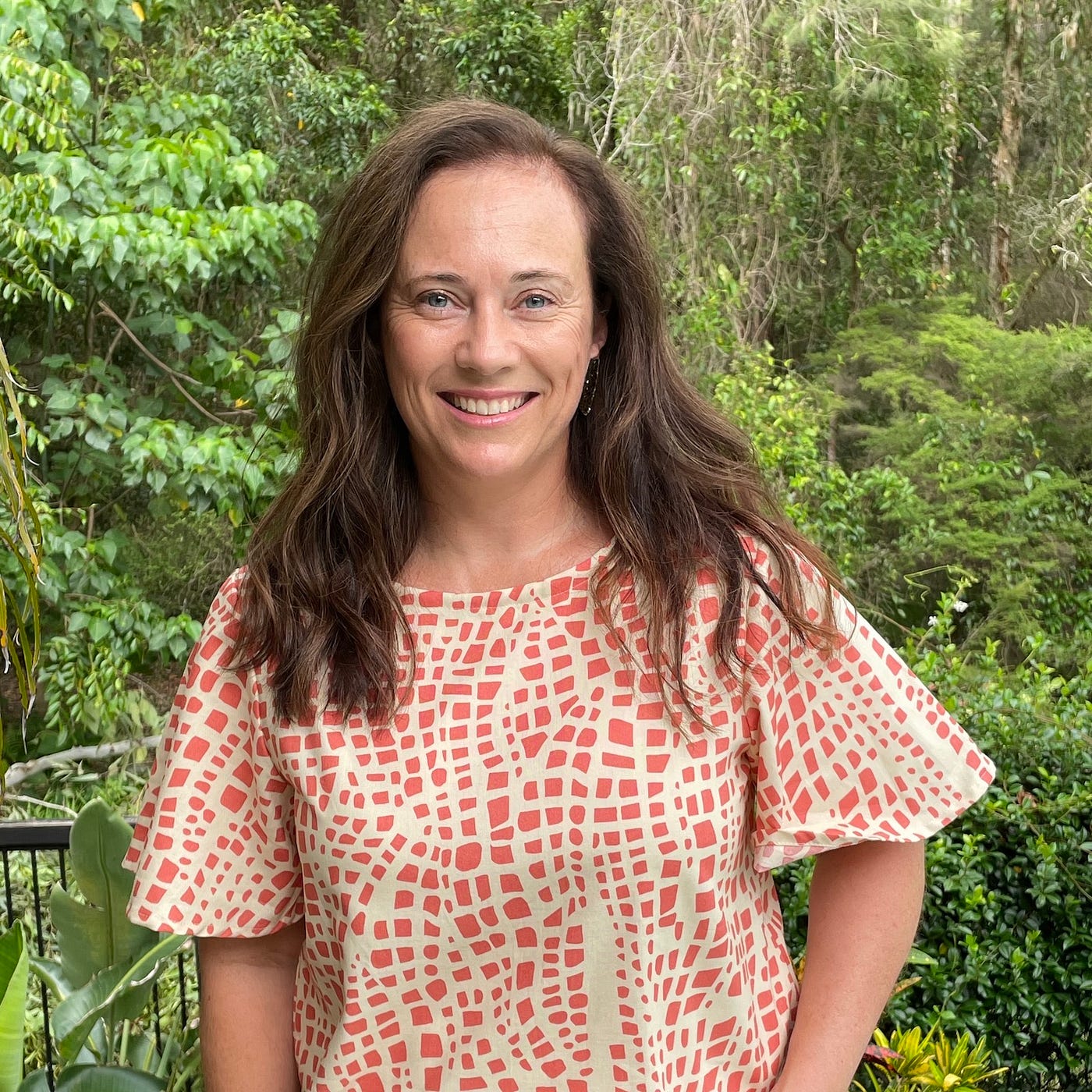
Linda is the proud owner of Young Squad, a sustainable swimwear label based in the beautiful beach town of Gold Coast, Australia. With her passion for slow fashion and sustainability, Linda has created a brand that reflects her values, as well as her love for the ocean.
Linda's commitment to sustainability is reflected in every aspect of her business. She believes that creating swimwear in small quantities, making to order, and printing to order, are all important steps towards reducing waste in the fashion industry. Additionally, Linda has made a conscious effort to use eco-friendly fabrics, ensuring that her products have a minimal impact on the environment.
Thank you so much for doing this with us! Before we dig in, our readers would like to get to know you a bit more. Can you tell us a bit about your childhood “backstory”?
I grew up in Brisbane, Australia as one of 2 kids. Brisbane is a warm place, so we spent a lot of time outdoors and playing sport. We also lived about an hour from one of Australia’s most iconic beach towns, the Gold Coast so we spent many holidays going to the beach.
During my younger years our family didn’t have a lot of money. We weren’t poor there just wasn’t a lot spare after cost of living etc. so my mother used to make my sister and my clothes. Mum was a good sewer as she had learnt from my grandmother. She also used to let my sister and I use the sewing machine sometimes. This is where my love of designing and making clothes started.
My mum was also very socially and environmentally conscious at a time when it wasn’t very fashionable. Growing up in the 70’s and 80’s there was a growing movement towards consumerism, and she tended to buck that trend. I have no doubt it’s my mum who instilled in me the desire to be more sustainable and eco conscious.
Can you tell us the story about what led you to this particular career path?
Initially I started my working life as a nurse. After leaving university I embarked on several nursing jobs that eventuated in me working as an ICU nurse. I worked in that role for many years but the constant stress led to burnout. As a way to cope with the stress and shift work I would lean on my creativity.
Once I had my children and decided to leave nursing I had more time to focus on creative endeavors. This led me to starting my own fashion business which then led to swimwear. Having always been socially and eco conscious it seemed only natural to incorporate those principles into my business.
Can you share the most interesting story that happened to you since you began your career?
Probably the most interesting thing that has happened to me was being chosen to do a large collaboration with several other slow fashion brands. The collaboration was the brainchild of a local surface pattern designer. She brought together makers from around Australia who used her designs for their products and sold them under the one banner called Girt Squad. It ran for 4 weeks once a year and we did 5 seasons.
Girt Squad was the most amazing experience. I was working with slow fashion brands that had so much more experience than me at the time. I got to see firsthand how to manage a big launch from photoshoots, social media and marketing strategies through to nurturing customers post sales.
Girt Squad was such a huge success. Opening night on our 3rd season saw us make 370 order in 17 mins with several makers selling out in that time. It created somewhat of a mini slow fashion revolution in Australia and no doubt introduced the concept to a wider audience.
You are a successful business leader. Which three character traits do you think were most instrumental to your success? Can you please share a story or example for each?
Problem Solving - Running a small business means you are constantly dealing with suppliers, staff, deadlines etc. All these components need to run smoothly but when they don’t it can lead to problems. It’s important to have good problem solving abilities. The recent pandemic is a good example. I found it was important to have a list of suppliers in case my main suppliers were unable to get stock due to freight time blowouts etc. I also had a couple of seamstresses get sick with COVID and therefore needed to find replacements or other alternatives to ensure I could still meet deadlines.
Resilience – there are a lot of ups and downs to running a business. Sometimes things go well and other times it seems like it’s all falling apart. It’s important to be resilient and realize that this journey is a rollercoaster. I have always enjoyed the highs but never let myself get too down about the lows. There have been times when I’ve felt like it’s all too hard. The best way I have found to deal with that is allow myself a little time to wallow then ask myself “ok, what do I need to do to change this? get a better result? What can I do differently? Etc.”
Be adaptable – it would be great if you could run your business exactly how you wanted. If you could get the exact fabric you want at a great price, have an abundance of people who love your vision exactly the way you see it and so forth. But unfortunately, that doesn’t always happen. You must learn to be adaptable. I run my business as largely made to order but not all seamstresses like to work like that. Many prefer “production” work. I’ve had to learn to be adaptable when it comes to this so when my regular seamstresses are away or, (like what happened recently) looking to retire I can still run my business without too much interruption.
What do you think makes your company stand out? Can you share a story?
There are 3 things that I feel make my company standout. Firstly, the fact that most of my products are made to order. A lot of slow fashion brands will carry stock albeit in much smaller quantities than regular brands. Making to order has allowed me to create high quality pieces without having to carry vast amounts of stock which if it doesn’t sell can be problematic.
In line with making to order I also do a lot of “print to order”. As my fabric printer is local it allows me the opportunity to print my fabric on demand thereby reducing waste and still meeting my turn around times. Having a local printer also decreases carbon emissions etc. from long haul freight.
Making to order also allows me to offer custom made and customization of my designs to suit customers’ specific needs. This is probably the biggest difference between my business and most other swimwear brands on the market. When a customer can get a swimsuit that has been tweaked to suit their shape, they are more likely to wear it more often and for longer.
Do you have a favorite “Life Lesson Quote”? Can you share a story of how that was relevant to you in your life?
My Mother always said, “Comparison breads discontent.” and that has always stayed with me. It’s normal to compare ourselves with others but often we compare ourselves unfavourably. As a result, we end up feeling disheartened. This spills over into the fashion industry as well. We’re constantly bombarded with images of certain body types, the latest fashion trends, hairstyles etc and are made to feel if we don’t look like that or have those items we aren’t “fashionable”.
If we don’t compare but rather stay true to ourselves, we can make choices that suit us and what we value.
Who is your fashion hero or heroine? Why?
Lizzo is my absolute favorite. She is unapologetically herself. I love how she wears whatever she wants and pushes the boundaries when it comes to plus size perceptions. She is such an icon for body positivity.
Why did you decide to create and use a sustainable business model for your fashion brand?
The fashion industry, as we are learning, is a huge contributor to environmental pollution and social injustices such as poor working conditions, substandard wages etc. As someone who has always been socially and eco conscious starting a fashion business that only encouraged these practices was counterintuitive. The fact that I also live in an incredible part of the world, near fabulous oceans and unique rainforests motivated my desire to be as sustainable as possible. Even though I was a small brand I felt it was important to play a part in protecting these amazing ecosystems.
At the time I started my business people were also becoming more aware of sweat shops and the working conditions of those who worked there. This was not something I wanted to buy into. It made me more determined to use local seamstresses who could have control over their wages and work conditions.
This initial desire quickly evolved into a passion for supporting local economies and as a result I now purchase 90% of my supplies from local or Australian businesses.
What are three things we should all know about "slow fashion"?
Slow fashion doesn’t mean poor quality. I think there is a perception that slow fashion = handmade which for some can mean poor workmanship. In fact, many slow fashion brands take pride in the quality of the fabrics they use and the workmanship. Many of these brands, including my own, produce in small quantities meaning there is more time to focus on how they are constructed and quality control.
Slow fashion is too expensive. Yes, slow fashion is more expensive than fast fashion in part because items are made in smaller quantities and workers are paid fair wages. The reality is that because the quality is better these items tend to last much longer meaning you don’t need to buy as often. My swimwear can easily last several years even with regular use.
Slow fashion requires mindfulness – to properly embrace slow fashion consumers need to be mindful not only of what, and how much they purchase but why they are purchasing. Are they making emotional purchases? Are they buying it purely because it’s on sale? As consumers we also need to be mindful of the tricks advertising plays on us to make us spend. Once we are more aware of our motivations and those of others, we can make better decisions.
Can you please explain how it can be fashionable to buy less, wait a little longer, or even repair clothing?
Firstly, buying less is fashionable because it's seen as a way to simplify and declutter your wardrobe. Many people are embracing minimalism and capsule wardrobes, which involve owning a limited number of high-quality pieces that can be mixed and matched to create different outfits. This approach emphasizes quality over quantity and encourages people to invest in pieces that they truly love and will wear for years to come.
Waiting a little longer for clothing can also be fashionable because it creates a sense of anticipation and excitement. Many brands are now producing limited runs of clothing or releasing new collections at a slower pace, which means that customers have to wait for the items they want. This can create a sense of exclusivity and desirability, making the clothing even more fashionable.
Finally, repairing clothing can be fashionable because it shows that you value and care for your clothes. Wearing repaired or mended items can also add character and personality to an outfit, and can create a sense of nostalgia or sentimentality. In some cases, repairing clothing can even be seen as a form of customization or personalization, which is another trend that has become popular in recent years.
Thank you for all that. Here is the main question of our interview. What are your "5 Things You Need To Lead a Successful Slow Fashion Brand”. Please share a story or example for each.
1 . Patience – people are still learning about the benefits of slow fashion. We’ve been conditioned to think we need to buy the latest trends, have a full wardrobe, and are enticed by low prices. This behavior takes a while to change but I feel we are moving in the right direction. As people become more aware their attitudes and choices will change. The more slow fashion brands can educate shoppers on the benefits of buying sustainably the quicker that change will come about.
2 . Transparency – as slow fashion becomes “fashionable”. There’s a tendency for some of these bigger brands to “greenwash” their products. Green washing is the process of brands making misleading claims that their products are more environmentally friendly than they really are. As more attention is bought to this practice it’s important that any slow fashion brand is as transparent as possible about their sustainability claims. This not only creates consumer trust but acknowledges everyone involved in the supply chain.
3 . Strong Brand Identity - By building your brand around a commitment to sustainability and ethical manufacturing customers then understand the values and ethos of the company and are loyal to your brand. This loyalty allows a brand to maintain higher prices, which in turn allows them to invest in sustainable materials and ethical labour practices.
4 . Collaborate – as the saying goes, “there’s strength in numbers.” Taking a collaborative approach and working with other slow fashion brands means you not only learn from each other, but you help to promote the sustainability message. Building strong relationships is also important to help weather the ups and downs of small business.
5 . Customer Engagement - a successful slow fashion brand needs to engage with its customers. For example, I am about to start a platform where customers can sell their second-hand Young Squad gear. This program not only encourages customers to recycle their purchases, but it also creates a community around my brand. By engaging with customers, my brand can build a loyal customer base that values sustainability and quality.
You are a person of great influence. If you could start a movement that would bring the most amount of good to the most amount of people, what would that be? You never know what your idea can trigger. :-)
As an Australian I would love to be able to highlight Indigenous culture a lot more. Not only through their art but also through their knowledge of the land and the sustainable practices they use. I would also love to be able to create a social media platform just for slow fashion. A place where truly sustainable brands can showcase their brand, highlight their practices, and connect with likeminded people without getting drowned out by the noise of regular social media.
How can our readers further follow your work online?
You can best follow my work on my website www.youngsquadonline.com.au where you can also sign up to my newsletter for updates on new launches, sales and exclusive promotions. I am on all the social media channels as well under @youngsquadaus .
Thank you for these fantastic insights. We greatly appreciate the time you spent on this.
About the Interviewer: Monica Sanders JD, LL.M, is the founder of “The Undivide Project”, an organization dedicated to creating climate resilience in underserved communities using good tech and the power of the Internet. She holds faculty roles at the Georgetown University Law Center and the Tulane University Disaster Resilience Leadership Academy. Professor Sanders also serves on several UN agency working groups. As an attorney, Monica has held senior roles in all three branches of government, private industry, and nonprofits. In her previous life, she was a journalist for seven years and the recipient of several awards, including an Emmy. Now the New Orleans native spends her time in solidarity with and championing change for those on the frontlines of climate change and digital divestment. Learn more about how to join her at: www.theundivideproject.org