That question cut me to my core and started my healing journey. The next day, I happened to meet master life coach Rhonda Britten, founder of the Fearless Living Institute.
INTERVIEW QUESTIONS.
(If you are unable to download it, please click File-Download)
Please answer the questions, and leave the questions formatted as they are in the document. We may schedule a follow-up call or skype to round things out.
As a part of my series about the strategies that extremely busy and successful leaders use to juggle, balance and integrate their personal lives and business lives, I had the pleasure of interviewing Charis Santillie.
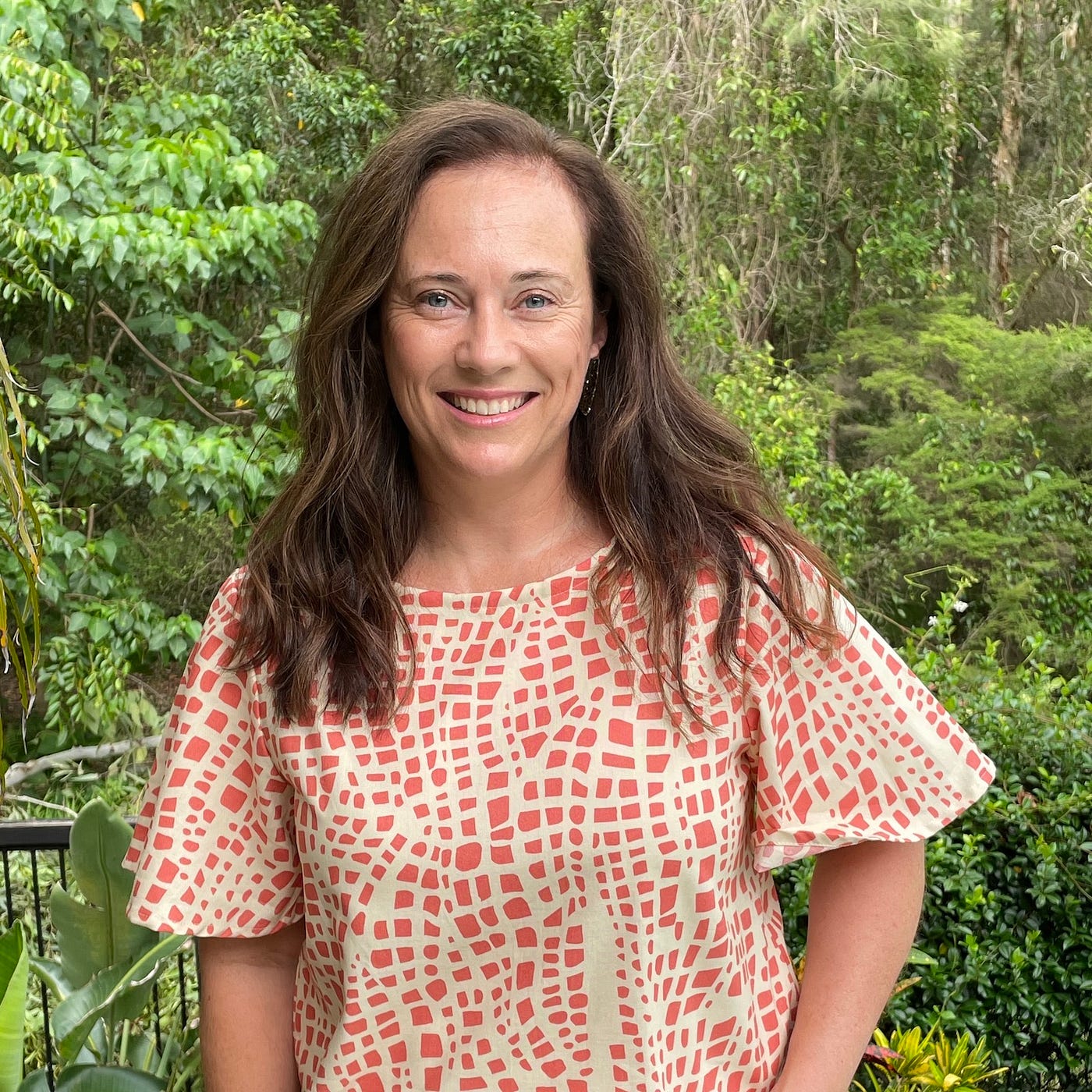
Charis Santillie is a Life Balance Coach and host of the Charis Your Life™ podcast. She also is a Certified Fearless Living® Coach, Certified Fearless Trainer, and Positive Intelligence® Trainer and has been an entrepreneur for over twenty years. A hot air balloon accident when Charis was nineteen left her Dad paralyzed with a broken neck and led her Mom to become an alcoholic. Charis managed her internal crisis by staying ridiculously busy. She now helps high achievers go from Busy to Balanced™ and find lasting inner satisfaction and peace of mind when their external accomplishments leave them unfulfilled. Visit her website here.
Thank you so much for doing this with us! Our readers would love to get to know you a bit. Can you share with us the "backstory" behind what brought you to this particular career?
I grew up in an entrepreneurial household, watching my parents work hard to achieve “The American Dream.” Work life and family life were closely woven together as they built a business from scratch that started in our kitchen. The pivotal moment that ultimately led me to become a Life Balance Coach was nearly 30 years ago, the night we celebrated my Dad’s 50th birthday. I was just nineteen years old, home visiting from college for the summer. We went for a beautiful hot air balloon ride, but something went horribly wrong when we came in to land. The balloon basket hit the ground and violently bounced. My Dad was thrown out, and a rope got wrapped around his ankle. He was suspended in the air, hanging upside down below us, and was dragged through rows of farm fields. The crash landing left my Dad paralyzed with a broken neck and led my Mom to become an alcoholic.
I coped by staying impossibly busy, which seemed much more manageable than facing my feelings. Yet, about ten years ago, I realized I needed to do some inner work to free myself and live a better life. I immersed myself in various personal development and healing modalities, and that journey led me to become a certified life coach.
We all experience painful events. I know from personal experience and the work I’ve done with my clients – that despite what life brings you – there is always a way to find an inner peace that brings you internal balance so that you can live a fulfilled life on your terms.
Can you share the funniest or most interesting story that happened to you since you started? What lessons or takeaways did you take out of that story?
I’ve kept journals sporadically throughout my life, and last year, I happened across an entry I wrote right after going skydiving with my husband when we were dating back in 1995, which was barely a year after my family’s hot air balloon accident.
How this relates to my current career is that I ended up recording a podcast episode of me reading that journal entry for the first time 27 years later. It may sound crazy that I jumped solo out of a plane less than a year after the accident, yet, ironically, it was one of the most tranquil experiences I’ve ever had. It was amazing to share that experience about overcoming fears with my podcast audience. And it turned out that there were some poignant life lessons in the journaling of 20-year-old me, including this snippet: “I feel like I've gained a little more peace with myself. It's so confusing and frustrating to try to decide when, where, and how to take risks…So, I guess we have to play along and trust ourselves to know when to play our cards, hold a hand, bluff, or choose another card.”
What does leadership mean to you? As a leader, how do you best inspire others?
As a coach and trainer, leadership means guiding others to make changes in their lives so that they feel better and enjoy their lives more. I inspire others best when I’m the most “me” I can be — in other words, when I show up authentic and vulnerable as I share real-life stories along with the life lessons they offer.
None of us are able to achieve success without some help along the way. Is there a particular person who you are grateful towards who helped get you to where you are? Can you share a story?
I was introduced to life coaching 13 years ago. I had just launched a successful product and was at a business conference. I felt like I should have been on cloud nine, but I wasn’t and I didn’t understand why. One evening, I told my story to a stranger who happened to have the same name as my father. He responded, “Charis, I understand your Dad being paralyzed for nearly 20 years, but why are YOU paralyzed?” That question cut me to my core and started my healing journey. The next day, I happened to meet master life coach Rhonda Britten, founder of the Fearless Living Institute. She helped me overcome my inner challenges, and eventually, through her coaching program, I learned how to help others find their own freedom.
Ok, thank you for that. Let’s now shift to the main core of our discussion. This is a question that nearly everyone with a job has to contend with. Was it difficult to fit your life into your business and career? Can you articulate what the struggle was?
Yes, the first few decades of my adult life were heavily impacted by my entrepreneurial endeavors and addiction to my work. I plowed through those years believing that extreme working hours were what was needed for me to be successful. Eventually, I realized that my definition of success required an overhaul. I found myself facing a lot of health issues, both physical and mental. Body aches, chronic back spasms, extreme menstrual symptoms and irregularities, heavy anxiety, and panic attacks piled on as my body desperately called for me to wake up and make profound changes.
In order to give greater context to this discussion, can you share with our readers what your daily schedule looks like?
During one of my most extreme periods of overworking, my schedule revolved around work, work, and more work. I had no boundaries around my work as it flooded all hours of my day. I would agree to meetings at any time, including weekends. I wouldn’t make time for exercise and only really unplug when I went on a dedicated vacation, maybe once a year.
My daily schedule is completely different now. I love having quiet time in the morning to tend to various tasks, listen to podcasts, or write, so I purposely structure my days so that I don’t have any calls before 10 am and only on certain days of the week. I don’t have calls after 4 pm, so I have time to wrap up my day and spend the evening with my husband, including working out in our home gym. I am an introvert and have found that too many calls or meetings drain me, so I regularly utilize short videos to communicate with my assistant. Each day I review my tasks in my project management system and determine the top 2-3 things I want to focus on that day. What works best for me is to look at any deadline-specific tasks and then notice what else my gut is nudging me to focus on.
Did you find that as your success grew it became more difficult to focus on the other areas of your life? Can you explain?
External achievements encouraged more overworking, and then that became a vicious cycle. What started as a coping mechanism became a hard-wired habit I eventually needed to change.
What was a tipping point that helped you achieve a greater balance or greater equilibrium between your work life and personal/family life.
The main tipping point was the story I shared when a stranger at a business event 13 years ago asked me a question that made me realize I was emotionally paralyzed and needed help. I’ll never forget how I felt that night and the next day. It was as if the train to my new life suddenly left the station, and I was on it, even though I had no idea where it was heading.
Ok, so here is the main question of our interview. Can you share five pieces of advice to other leaders about how to achieve the best balance between work and personal/family life? Please share a story or example for each.
Link to Charis’ 5 Things Video on YouTube: https://youtu.be/UowXRZZGuS0
There’s a quote by Harvey Mackay that I love:
“Time is free,
But it’s priceless.
You can’t own it,
But you can use it.
You can’t keep it,
But you can spend it.
Once you’ve lost it
You can never get it back.”
I find it interesting that when we consider life balance, we commonly talk about “managing time” and how to do that more effectively. In reality, it's more that we need to learn how to manage ourselves more effectively, which means becoming very aware of all aspects of ourselves.
Pay attention to your words. Words have tremendous power and tell us a lot about how we feel about something. For example, I once pointed out to a client how she kept using the word “crazy” to describe many aspects of her life, and we looked at how that knee-jerk label tagged onto so many things was disempowering her. As she gradually stopped using that word, she felt so much more in control of her life.
Pay attention to your thoughts. Don’t give in to the sabotaging voices in your head telling you that you need to work more and work harder. If you’re reading this, you are likely already putting in more than the average number of hours. The urge to work more is easy to give into because 1) at this point, it is likely a well-established habit, and 2) our culture praises people who “work hard.” I want to remind you that it is possible to change your habits. And I also want you to ask yourself, do you want your eulogy to be about what a “hard worker” you were, or would you rather it be about how much you enjoyed your life and the people around you?
Pay attention to your emotions. They tell us a lot, and if you’re anything like I used to be, one of the reasons you may be staying so busy with your work is that it helps you avoid feeling your feelings. Trust me; the truth is that those feelings you’re avoiding are keeping you from living your best life. Avoiding feelings by stuffing them or bypassing them is just burying them somewhere to cause havoc later. Feelings will move through us quickly IF we let them. Neurologists have found that the physiological lifespan of an emotion in the body and the brain is 90 seconds. In other words, the chemical response that results in the sensations you have, such as adrenalin, heat, throat tightness, or rapid heartbeat, is only 90 seconds long. If you can honor the emotion and allow it to move through you, another emotion will replace it after just 90 seconds.
Pay attention to your body. It will give you valuable feedback about how you are living your life. Has it been trying to get your attention, and have you been dismissing it and powering through despite it? I know what that’s like, and I also know that when you finally start to use your body's innate wisdom to guide you in how you live your life, you will find more lasting joy and peace of mind.
Pay attention to your waiting. Here’s what I mean by that; I want you to consider what you are waiting for. Have you ever felt inconvenienced by needing to schedule personal appointments like a routine doctor’s appointment, a car service, taking care of things around the house, or taking care of something for your partner, parents, or children? I remember feeling so busy that I didn’t have time for these things. If it were something that needed to be done right away, I would often do it with a feeling of resentment and annoyance. I remember thinking, ‘I’ll wait and get to it in a few months because I don’t have time now.’ Yet a few months would come around, and nothing had changed. And if it were something for me, I often would say to myself, ‘Next year is when I’ll find time for me.’ I had to stop waiting and start choosing differently so my life would change and I would feel better. And the new choices were usually about many small things, just one at a time. Get curious about yourself and ask what are you waiting for? Are you waiting for the right time? Are you waiting for your kids to be a certain age? Are you waiting until the new year? Are you waiting for a sign? Are you waiting for someone to save you? In reality, are you really even waiting for anything? Or do you not know how to change your patterns?
If you’re willing to be wrong and if you’re willing to practice new things one step at a time, it is totally possible for you to increase your awareness of all these aspects of yourself and choose differently so that you say yes to yourself and better life balance. I did it, and so can you.
Can you please give us your favorite "Life Lesson Quote"? Can you share how that was relevant to you in your life?
One of my favorite quotes is by Confucius: “We have two lives, and the second begins when we realize we only have one.” I feel like I’ve rediscovered myself over these past ten years, and in doing so, I now live my life by following what lights me up.
You are a person of great influence. If you could inspire a movement that would bring the most amount of good to the most amount of people, what would that be? You never know what your idea can trigger. :-)
I’m on a mission to inspire people to trust themselves so that they make new choices and start to cherish every aspect of their lives.
What is the best way for people to follow you online?
You can follow me on social media @charisyourlife, and I’m the most active on Facebook, Instagram, and LinkedIn.
Thank you so much for these fantastic insights!