When I learned to drive, I’d get in my car and say, “And now I will die.” Later, when I took my kids to school and watched them walk through the doors, I believed I would never see them again.
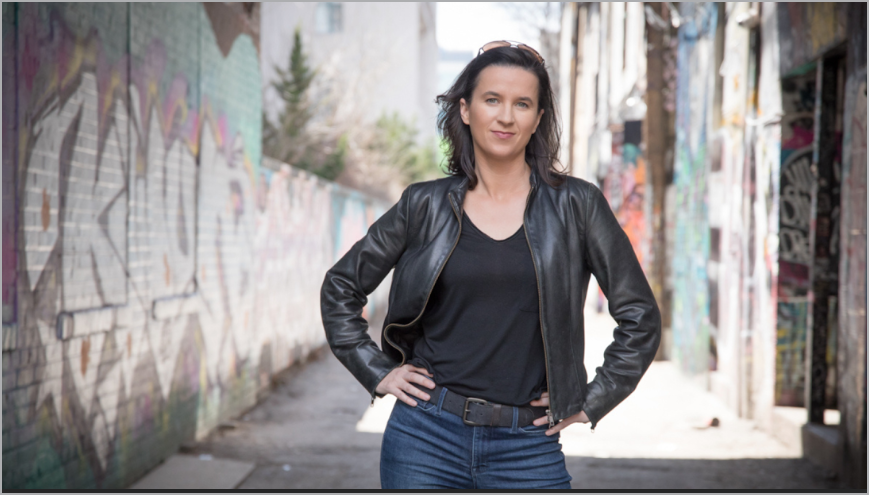
As part of my series about “authors who are making an important social impact”, I had the pleasure of interviewing Rebecca Mountain.
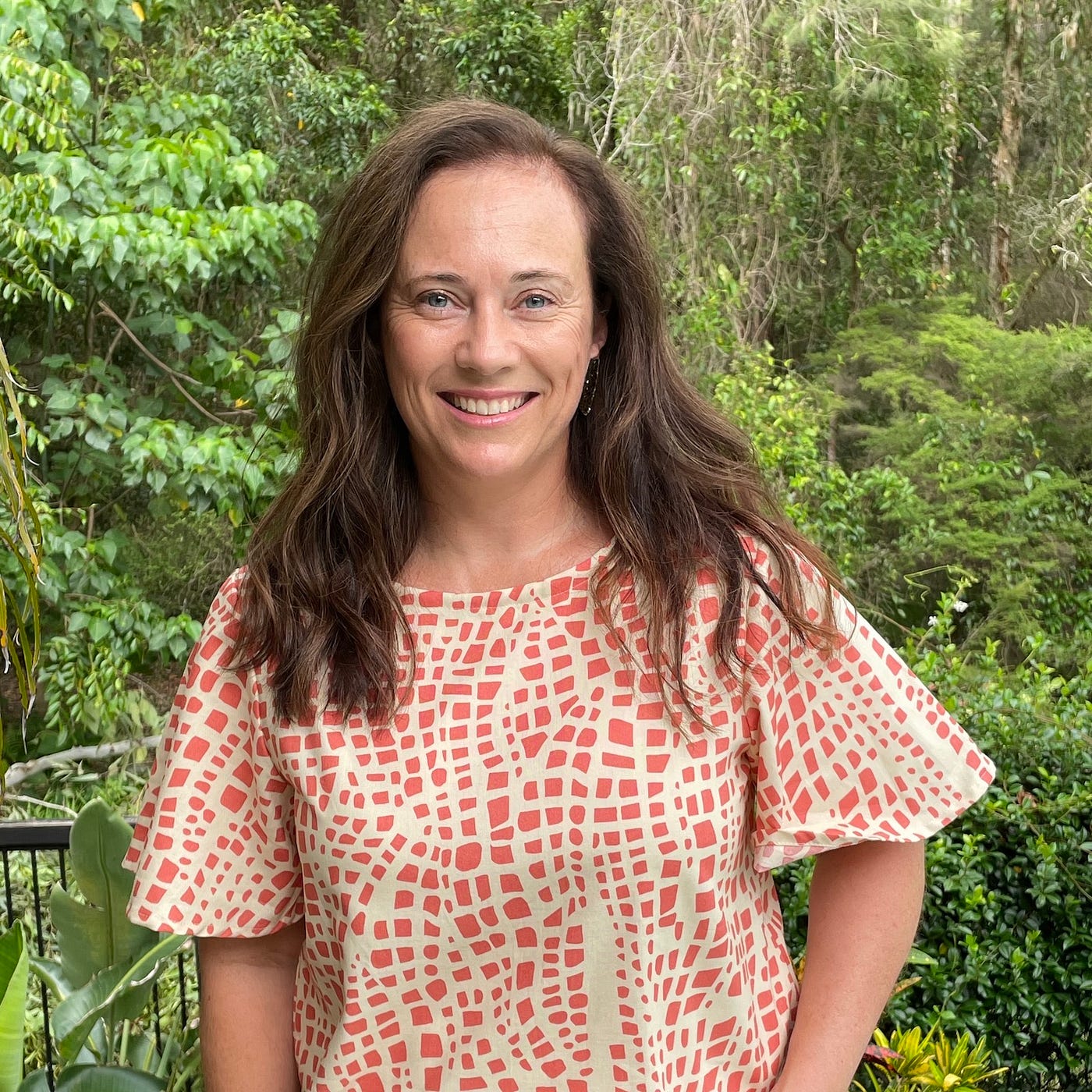
Rebecca is a two-time international best selling author, keynote speaker, high performance coach and cult survivor. Starting over after a near-fatal car accident, she chose to stop blindly following what others wanted for her, or what society dictated as being “acceptable”, and began writing her own story, living a life that is fulfilling, happy and with wealth beyond just the size of her bank account.
For more information, go to www.rebeccamountain.ca
Thank you so much for joining us in this interview series! Before we dive into the main focus of our interview, our readers would love to “get to know you” a bit better. Can you tell us a bit about your childhood backstory?
Ispent my early formative years like any normal kid, second oldest of four with my parents in Canada’s Midwest. But when I was 8, my mother, unhappy with the churches she was attending, found “The One True Way” — and thus began what I call my “dark” years.
This Christian fundamentalist group, which falls under the definition of a cult, set down rules that would change the trajectory of my life. No movies, no TV, no radio, no friends at school, no parties, no dancing, no jewellery. I had to grow my hair long and never cut it, wearing skirts below the knee. The judgment was swift and cruel if you broke the rules, to the point where if I was in pants when someone visited I literally dropped what I was doing and ran. There was no Christmas or Easter celebrations, and we attended church 3 times a week.
The main epithet of the cult was “the more you suffer, the closer you get to God” and I took it literally. I sabotaged myself with cruel self-talk, and ran on assumptions that I was unlovable and unwanted. I would never be good enough at anything, for anyone. As adults, my parents were able to discern between the ridiculous and the real, but as a child I did not have this filter so everything I was told I believed to be true. I believed that if I wasn’t “good” that I would be left behind, while everyone in my family would be rewarded in heaven. I believed that if I put myself down, or “died to myself”, I would find salvation. I searched out ways to suffer, being ridiculed at school or getting fired at work, cursing the slightest success as being “prideful” and therefore bad, wishing it away. The cult leadership terrified us by saying that if we ever thought about leaving the group, we’d die in one of 2 ways: cancer or a car crash. They had examples. I believed it all.
When I learned to drive, I’d get in my car and say, “And now I will die.” Later, when I took my kids to school and watched them walk through the doors, I believed I would never see them again. It took nearly a decade to erase this early programming, because as a child you internalize everything, particularly from those who are supposed to lead and guide you to salvation. In the end, they were wrong about everything.
When you were younger, was there a book that you read that inspired you to take action or changed your life? Can you share a story about that?
When I was 13, I read Atlas Shrugged by Ayn Rand. It’s about “takers” and “producers” and I loved the main character, Dagny, so much my father used that as one of my nicknames. Dagny tried to keep the world together as all of the “producers” disappeared one by one, working harder and harder, and striving to thwart the efforts of the “takers” who wanted everyone else to work, but get paid for doing nothing in return, feeling as if they were entitled to it.
Atlas Shrugged gave me big dreams. I felt my heart swell at the opportunity that I might have to do the same as this incredible main character. But this became a problem for me, because according to cult limitations for women, I wasn’t supposed to be like Dagny. I wanted to have her freedom and drive so very badly, but cult rules superseded my desires and so I thrust down this ambition and replaced it with good behavior. It was not until I left the group that I could finally be the Dagny I wanted to be.
It has been said that our mistakes can be our greatest teachers. Can you share a story about the funniest mistake you made when you were first starting? Can you tell us what lesson you learned from that?
When I first left the cult and began to struggle to figure out how the world worked, I reached out to some old high school acquaintances. Having not been allowed to have friends at school (except for one brave soul who my parents approved), and not connecting with people at work, I had zero social life post life-explosion. I arranged dinner and drinks with one guy from those long-ago days, thinking innocently that this is how it’s done. This is how you connect and make friends!
Dinner was lovely and drinks were fun, as the night wore on and the stories kept coming. My mistake was in not understanding how the rest of the world looked at a woman asking a man out for dinner and drinks. He interpreted it with strong “this relationship has a future” vibes and then I didn’t know how to let him down nicely. I dodged and weaved and avoided his calls for a while, awash in the guilt I was so familiar with, and not understanding what was going on or how to extricate myself.
Soon after I met my (now) husband, and we started dating. That was my out! I had Marc help me craft a simple yet unequivocal message that I was now off the market, and despite his evidently crushed heart, we all moved on.
From them on, I took things incredibly slowly, attempting as best I could to not misinterpret signs, or create situations that would get me in trouble. Marc still helps me craft messages when I feel lost, which has been a saving grace.
Can you describe how you aim to make a significant social impact with your book?
I wrote “The Dragon and the GOAT” because I was searching for the answer to a question that plagued me and the clients I was working with as their High Performance Coach: “Why, when people know what they should be doing, do they not do it?”
What I found was a war that is raging within each of us: on one side (the Dragon) is working hard to pull us back into safety and security, to what is familiar even if familiar is not good. On the other side is our GOAT — our Greatest of All Time — which is the life we want to lead, by our design, and by our own rules.
Part of this book is borne of my past and the strategies I have used to come back from the brink of helplessness and pain, and into a life of true, authentic happiness and success. These tactics can help anyone who has suffered from any type of traumas and oppression, to find light again, and take control of their lives.
In the book, there are a dozen strategies on how to “shrink” our Dragon. It’s not “slay” because the Dragon is our limbic system or “lizard brain” (Dragon just sounded better), where our amygdala hangs out. This part of our brain controls our comfort zone, fight/flight/freeze/fawn (i.e. people pleasing). It’s where the contrast effect kicks into high gear, causing us to compare ourselves to others, analyzing where we’re at in the pecking order of life, business, kids and bank accounts. Our most painful and emotionally-charged emotions are housed here, ready to wash us in the same powerful emotions today as if the original situation were happening all over again, even if it occurred years or even decades ago. Our Dragon wants us to stay small, safe, make no big moves, and to stay alive.
But this wars against our innate GOAT desire for more — more richness in life (and our bank accounts, make no mistake), better health, and more loving relationships. We desire to do work that lights us up, that makes us feel like we and our work matters, that we’re making significant and memorable contributions. We long to make up our own rules, to discard the confines of society and just do things our way. We admire and long to be like other GOATs, who eschew tradition and just go at it. We believe, for infinitely small periods of time, that we can do this…before our Dragon crashes the party and drags us, limp with dismay, back to its lair.
I wrote this book not only for adults, but also for kids who are tasked with making massive decisions about what to do with their lives at such a young age. With four children of my own ranging from late teens to mid twenties, I’ve seen the pain and confusion first hand, and it wasn’t (and still isn’t) pretty. How do you make up your mind about what you “love to do” when you’re only 18? How do you battle the demons that want to push you to take the “safe” route, even if that means a slow, painful ride up an unsteady corporate ladder?
I aim to show people a path out of darkness, pain and suffering and into the light that they can generate from within themselves. We know what we should do, we know our next step, we have all the answers we need — but if we are blind to these opportunities we will never see them.
Can you share with us the most interesting story that you shared in your book?
The pivotal moment in my life that started to turn everything in a new direction was when I crashed my car on a 6-lane highway. It was March 17, 2008. I was late for a morning meeting and I careened down the 4-lane road, gunning to get to the highway and hopefully arrive in time. It was 6:30am and in Canada (I live outside Toronto), it’s still cold. But whatever. I was late, and I sped up some more.
As I entered the on-ramp to the highway, I failed to see the glisten of black ice. I rocketed through the ramp and about halfway in, my back end started to slide. I’d been driving at breakneck speeds for years in all conditions, and had just paid off my 9th speeding ticket (that year). This didn’t feel like anything new, so I remained calm.
Having been in slides before, I let go of the wheel and took my foot off the gas, expecting the car to right itself. Except it didn’t. My back tires hit the gravel shoulder, spinning me around 180 degrees. I continued to speed towards the edge, now facing oncoming traffic.
I don’t know if you’ve ever caught air in a car, but it goes deadly quiet. I careened over the edge of the 30-degree embankment, still traveling at about 50 km/h, and slammed down at an odd angle, exploding my tires and flipping my car. I crashed onto the highway upside down, glass exploding around me and crushing me against the steering wheel. I spun, scraping along the pavement, straining to hold my face away from the rocks, glass and debris that showered the inside my car.
The spinning continued what felt like forever, and yet it was over in an instant. In the quiet that finally settled over the car I had one thought: “They were wrong.” I did NOT die in the car crash, even though I’d spent the last few years thinking seriously about leaving the cult. I had tested fate and it answered with, “Not today.” I was not dead. The leadership of my cult, that terrified me with stories of ex-cult members dying horribly in car crashes, were wrong.
I exited my new skylight, which used to be the passenger door and hopped down onto the road, tactfully avoiding eye contact with everyone that now had to crawl along the shoulder to get past my wreck. “They were wrong,” I thought again. “What ELSE were they wrong about?”
My world unravelled before my eyes that day. I’d striven my whole life to be good, to stay in line, to not make waves and I realized that all this did was bring me pain. The suffering I endured was not necessary and I decided, right then, that it was over. I faced my Dragon for the first time, and said, “I do not want you in my life anymore.”
By August I’d left the cult. By October I was separated, and divorced by December. In January, I was fired (I worked for people in the cult and let’s just say they did not take my side). This was the beginning of my real life and though it would take another 12 years to really face down and beat my Dragon, I was on my way.
What was the “aha moment” or series of events that made you decide to bring your message to the greater world? Can you share a story about that?
There was no real “aha” moment when I decided to go public with my journey, but rather a quiet acceptance that being silent and pretending it didn’t happen wasn’t going to help anyone. When I initially began to write, coming out with my first book in February 2020, and my second book three years later, it was with the understanding that books lead to stages, and to get my message to as many people as possible, I needed a bigger audience than just the clients I was helping one at a time.
Whether people suffered through an oppressive religion like mine, or relationships, organizations or situations in which they were told to be small or were forced to live within a set of rules that were cruel and confusing, I could supply strategies to reprogram and recondition mindsets and provide paths to lives with intention and joy.
Talking with my coaching clients, and then through my research findings, I realized that the sheer depth of suffering in the world was huge. I decided that if I could even help one person to feel in control of their lives, hopeful, happy and fulfilled then that would be my legacy. It was worth the effort and terror of putting my message out into the world — including to my parents, who are still in the cult. I risked ultimate rejection from my family, and survived.
I’ve had the privilege of speaking to tens of thousands of people since 2020 about my story and my comeback strategies. All I want to do is continue to spread this message of power, peace and happiness that most people, like the “old me”, can feel is as far away as the moon.
Without sharing specific names, can you tell us a story about a particular individual who was impacted or helped by your cause?
When I first started working with my client, she felt a complete lack of confidence in her work and her role in the community. A real estate broker in a small town in Wisconsin, she saw how desperate the housing situation was in her town and knew she could make a difference.
But she held herself back, crippled by the fear of what other people would say about her, either directly to her face or behind her back. It was a small community and word traveled fast. Her penchant to play the small game would mean that people who needed a place to live would have to go elsewhere. She needed to speak up, but how, when her voice was so strangled by this anxiety?
We started working together, unraveling where this fear originated and reprogramming her from needing the approval of others to focusing entirely on her own nascent value — how she defined “excellence.”
Within a year, her personal real estate business went from a volume of $17M to $33M, and she took on the “old white male”-dominated boards, garnering increasingly prominent roles to effect change. Traveling nurses during COVID found space to live close to the hospital and a famous clinic in the center of town. Families moved into better built homes, and she spearheaded fundraising for one good cause after another.
She has since become a force to reckon with, not by force but by a deep, loving devotion to helping all those who have a need in her community, and tirelessly working to bring people together to make it happen.
At the start, my client couldn’t even pave her driveway for fear of how people might think — that she was uppity, to big for her britches, or thinking that she viewed herself as better than everyone else. Today, not only is that driveway beautifully paved, she bought the Cadillac she always wanted and installed a billboard declaring to the world that she was was now the #1 brokerage in town.
She faced her Dragon, shrank it to nothing, and brought her real GOAT-ness into the world. She’s now in the process of writing a book and bringing her own journey to the big stages, in hopes of propelling even more people into the super-stardom that can be theirs.
Are there three things the community/society/politicians can do to help you address the root of the problem you are trying to solve?
If there were three things that would change everything, I’d suggest the following.
First, take a hard look at the education system — from elementary school through all levels of university. Early education was designed to spit out factory workers, order takers and robots that would follow instructions and ask no questions. The “because you have to” has been the de facto response to “why do I have to do this?” for centuries, and breeds nothing but confusion and frustration, teaching our children not to strive for what they really want, but rather conform to what is already out there. If, by contrast, children, teens and young adults were taught to find their super powers and to understand their wiring, they would be able to narrow down the options that suit them best. They’d make the right choice, instead of wallowing in self-doubt and fear of not living up to the standards and trajectory that they feel society compels them to follow.
Second, a fundamental training needs to be included in education, workplaces and communities that teach emotional regulation. If we cannot control how we feel, or give a name to the sensations that course through our bodies on a daily basis, we cannot achieve clarity on what to do, where to go, and how to relate to each other.
Emotional regulation is not becoming an automaton; it’s about engaging all levels of our brains, from emotions, to thoughts to logic, and never becoming overwhelmed. Four big emotions have the greatest tendency to derail us: fear, anger, aggression and stress. At anytime, we are at risk of an “amygdala hijack”, which is when one or more of these emotions become so great that they take over, eliminating all brain activity in the thinking and logic parts of our brains. With regulation, this would never happen.
Finally, as a society, we must encourage everyone to see the power that they have to affect change. We vote with our presence, with our participation, and with our voices. If we are not sure of something, ask. Question whether our thoughts are “fiction” — dramas we create about the future that we erroneously believe to be true (when in truth we’re wrong 99% of the time) — or “fact.” If we aren’t sure, we must feel safe to ask, to question or seek understanding. If we relied solely on what is true, things like fake news, conspiracy theories and a thousand things that are over-stated and over-reported will not be accepted blindly and without question. In a world of deep fake videos and AI everywhere, this is more important than ever.
How do you define “Leadership”? Can you explain what you mean or give an example?
There have been tomes written about different types of leadership, so coming up with a singular definition is tricky.
For me, “leadership” is seeing people for precisely who and what they are, understanding the difference between “recognition” and “appreciation”, and leading through a combination of modeling, coaching and emotional regulation (yes, it comes back to that).
Some of the most prominent leaders in the world meditate regularly, taking the time to slow down so they don’t over-rev their brains and lose focus and attention on the details that matter. They lead by merit, not by entitlement, so that “takers” are kept at the bottom of organizations or in areas in which they can do no harm, and those that produce and contribute are given opportunity to add more to the health and progress of the organization.
Leaders have tough but necessary conversations, and are kind — but not nice. Nice people enable “takers” to continue to plague the organization. But if you are kind, you will see them for what they are, and find a new place for them (often somewhere entirely different). That is not unkind. Leaders know that unkindness is subjecting others to toxicity and having people in the organization with mismatched ambitions and goals.
What are your “5 things I wish someone told me when I first started” and why? Please share a story or example for each.
A big reason I wrote my books, particularly my second book, The Dragon and the GOAT, was to put to paper the advice I wished I’d had when I was younger.
The most impactful advice I would give myself would be as follows:
- Become crystal clear on how to describe how I feel — about myself, the world, my relationships, my work, and my future. I have been overwhelmed and overcome by powerful emotions of shame, guilt and anger to the point where I felt like I was surrounded by a vicious vortex and one wrong move would rip me to pieces. With clarity on how to define how I feel, and the ability to process the physical manifestations through exercise, breathing and meditation, I’d never feel this way again.
- Challenge all my false and self-sabotaging stories. I used to whisper to myself, “I’m so stupid” so much that my second husband finally told me that I wasn’t allowed to talk to his wife that way. This made me realize just how many self-defeating thoughts I’d allow to roll around in my head, causing me to retract and flinch away from opportunities. Thoughts, thought often enough, become our belief system and it is through this belief system that we see the world. If I told myself “I’m too stupid for this project” then I’d find all the proof in the world that that was true. Changing my thoughts allowed me to start to reprogram my brain, and allowed me to see the future I really wanted as possible, not a pipe-dream.
- Chllenge all assumptions. Similarly to self-sabotaging stories, my false assumptions became my dream-killers. These are thoughts I had about things outside of myself — people, opportunities, etc. My client in the earlier story worried so much about what others would think or say about her that she didn’t even finish her driveway. I used to think that no one would ever want me, to the point that I told my (new) husband for three years after we were married that it was okay to leave me, since I was “such a handful.” I learned how to simply replace my fear of the future with “let’s see how this goes”, and I have a lot more energy, and take more time to do some advanced planning so I can be ready for anything. People are three times more likely to say “yes” than we think…so if we challenge our belief that no one wants us, no one will listen, and nothing is out there for us, our brains will respond by showing us proof of the existence of these opportunities.
- Define for myself what I am worth. For most of my life, I depended on others to tell me what value I had to offer. And yet I could not control what goal posts people were setting for me, and they changed on a dime leaving me with an constant feeling of an impending ambush that I could not escape. Over time I realized that if we set our own standards of excellence and what it means to be happy and successful, no one can ever take that away. That feeling of high self-worth contributes to our ability to be consistent, and to actually do the work we should be doing to get the life, business, career and relationships that we truly want.
- Finally, set, communicate and fiercely protect my boundaries. I had no boundaries whatsoever when I was younger. Even as little as 4 years ago, I had no sense of what was okay or not okay, and let people take advantage of my time, energy, money and emotional wellbeing. It wasn’t clear and I was buffeted by strong emotions I could not control every time someone set of a land mine in my “not okay” bucket.
What I was slow to realize is that if we do not articulate to ourselves and those around us what is okay and what is not okay, then we are doomed to frustration and victimization. Boundaries can be about time, energy, our physical space, emotions, social media and the news. They can also be about specific people or groups in our lives — family, friends, kids, romantic partners, coworkers and clients. When we clearly lay out for people what we will and will not accept, we bring clarity into our lives and a sense of calm that we are firmly in the driver’s seat. If you’re new to boundaries, people may try to knock them down. Stand firm, explain them again, and hold the line. Over time, these people will either leave or respect your limits.
Can you please give us your favorite “Life Lesson Quote”? Can you share how that was relevant to you in your life?
I’ve lived by a motto ever since I blew up my life and started over: we are never stuck. We always have three choices:
- Live with it
- Change it
- Leave it
That the choices are not always easy is not the point. Rather, it is that in nearly all cases, there is a way out, a way to change, a way to break free and find your own path.
There have been several occasions where I’ve tried something new only to find that it didn’t work out. In those situations, I chose one of the three things from that list: Can I live with it? If not, can I change it? And if it’s no again, then I have to leave it.
The question is, “Where to?” The answer becomes clear when we articulate to ourselves what truly inspires and enthrals us, and then narrow down the options…and try again.
Is there a person in the world, or in the US with whom you would like to have a private breakfast or lunch with, and why? He or she might just see this, especially if we tag them. :-)
I’ve had a brain crush on Mark Cuban since forever. I met him once in Vegas at a bar where he was quietly watching the World Cup of soccer (until I ran up to him, babbling senselessly, and demanded a picture. I’m sure he remembers it fondly.) He is gracious and kind, but thoughtful in the deals he makes, how he spends his money and time, and how he works through problems.
If I were to have the opportunity to spend time with him, I’d want to know his opinion about how to change the way society pressures people to conform, fit in and play small. What would he suggest as a path to help people find and live their GOAT lives? And I’d be delighted to be challenged by him to continue to grow, expand and be more of what I already am.
How can our readers further follow your work online?
All my work is housed on my website, with links to my books, free worksheets, coaching, videos and more. You can find it all at www.rebeccamountain.ca, or follow me on Facbeook (@rebeccamountaininc), Instagram, Pinterest, LinkedIn, and Twitter (@bexmountain on all of them).
This was very meaningful, thank you so much! We wish you continued success!