What I learned over time was that just because it is working for someone else does not mean it will work for my situation.
Some writers and authors have a knack for using language that can really move people. Some writers and authors have been able to influence millions with their words alone. What does it take to become an effective and successful author or writer?
In this interview series, called “5 Things You Need To Be A Successful Author or Writer” we are talking to successful authors and writers who can share lessons from their experience.
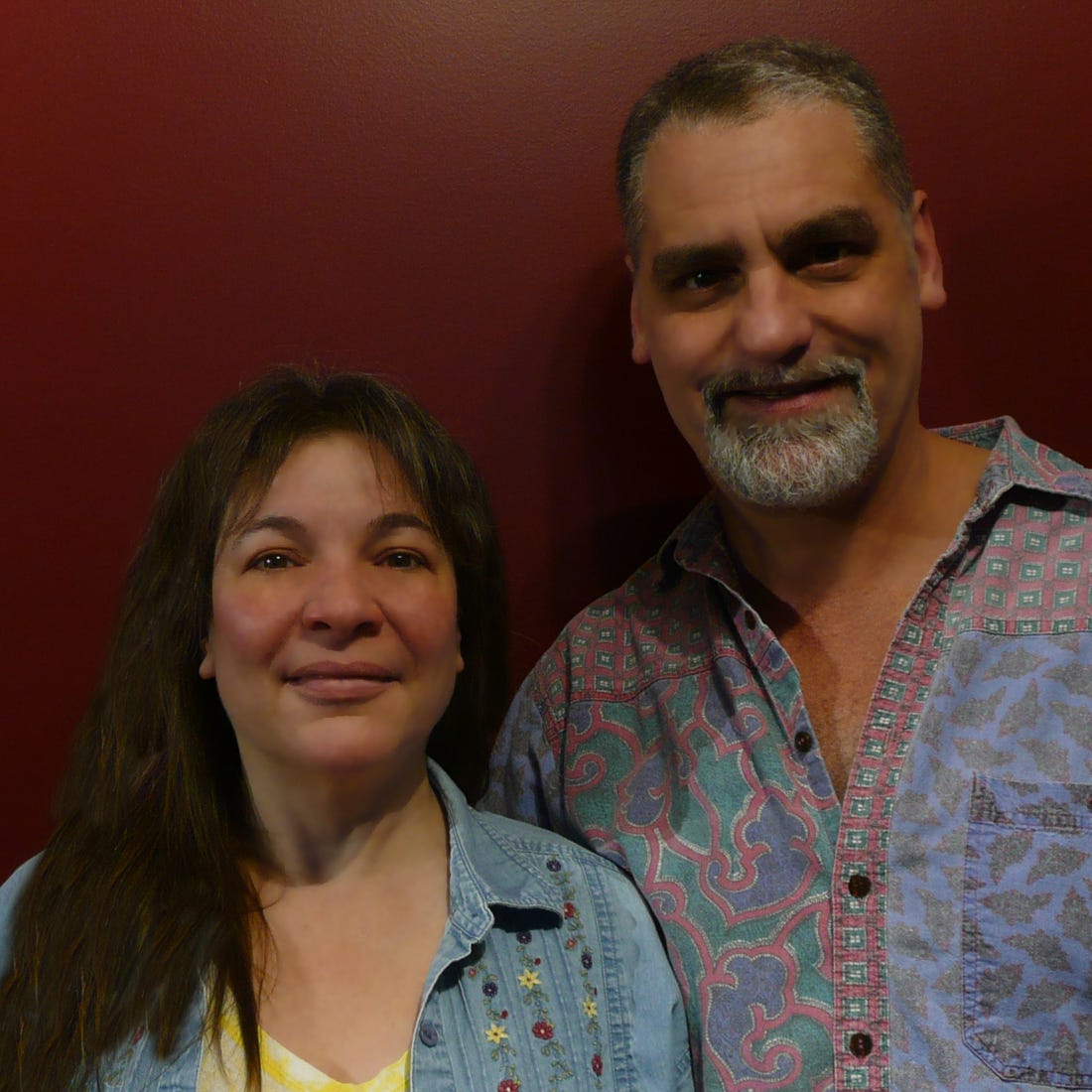
As part of this series I had the pleasure of interviewing Lillian Brummet
Lillian and her husband Dave are the team behind Brummet Media Group, high-fiving cheerfully as they pass each other on the way from checking off one item or other from their long to-do list. Their business includes Dave’s music studio and percussion accessory products and graphic design work. The award-winning pair has 6 books available, with 3 more coming out this year and another coming out in '23, and run 2 popular blogs as well. www.BrummetMedia.ca
Thank you so much for joining us in this interview series! Before we dive in, our readers would love to get to know you a bit better. Can you tell us a bit about your backstory and how you got started?
I have worn many hats in the world of writing and media since I began this journey in 1999. I began as a freelance writer, ended up as a staff writer and assignment writer and columnist within a few years. By 2004 Dave (husband/co-writer) and I had published our first book - which was based on a successful column published internationally and has since developed into a 2-book green-living series: Trash Talk - It's Easy To Be Green. Since then Dave and I have written 6 other books, the most recent being a cookbook and a revised edition of our guide for authors. Our books can be found HERE. We are currently working on a trilogy, celebrating Dave's late-father's lifetime collection of poetry, memoirs, articles, short stories and photographic works.
In the past, I ran a popular online talk radio show titled Conscious Discussions - it ran 3x per week, for about 7-8 years with about 30,000 listeners per month. Some of the archived episodes can still be accessed. I also briefly ran an online podcast titled Authors Read - featuring authors reading from their works; it was a 1/2 hour - 1x/week show that ran for a couple years. I no longer host programs like this, despite loving it, because my schedule is just too tight to allow for the time it takes to host a radio show. Our main blog, Brummet's Conscious Blog began in 2004, was moved over to BlogSpot in 2008 and since then it has grown substantially (140,000 - 400,000 visits/month). Dave and I created the Drum It With Brummet blog specifically for musicians, with a heavy slant toward percussionists and drummers.
Can you share the most interesting story that occurred to you in the course of your career?
Back in 1999, the world of writnig was much different. Looking back the vast array of changes that we have learned to adapt to have been astounding. Back then the literary specialists were crying wolf about "new" technologies like Publish On Demand and E-Publishing; desite the resistance everyone is using that technology today. Advice should always be taken in consideration, but I've learned to try them out and choose those that suit my unique situation best. For instance, a traditional publisher we once worked with told that having a newsletter was an absolute must. What they didn't say was how much time managing the publication of that newsletter would involve, attaining lists of contacts to send it to, finding content, giving people a reason to read it and working with a lead time. I did, of course, follow the advice - put out the Brummet's Muse newsletter for several years with a bi-weekly publication schedule. Honestly, I found the return on investment with this project wasn't paying off, I could do more with social networking sites. However there are people out there who found this particular marketing tool (newsletters) is just the right tool for them. What I learned over time was that just because it is working for someone else does not mean it will work for my situation. I did learn a lot from the experience and I am of course glad to have published the newsletter, but I was also grateful to let it go to make room for other activities in my schedule. This taught me that I don't have to do everything, what I do need is to find the most effective tools for my unique situation at this moment in time.
What was the biggest challenge you faced in your journey to becoming a writer? How did you overcome it? Can you share a story about that that other aspiring writers can learn from?
Lack of courage and self-love were my main obsticles when it came to entering this career. Despite the desire to become a paid writer I doubted my abilities in social circles, I doubted the value of adding my voice to the clammer of information out there. For me, writing became a mission in life - one where I could make a positive difference, add some momentum to the existing wave in society moving us all toward a sustainable, conscious global culture. That's why I started my career with the Trash Talk series - when the original articles were published, I'd hear from readers how inspired they were to participate in recycling programs, to compost, to reuse or rent or borrow or repair instead of buying new, to reconsider when shopping - looking for more sustainable products and packaging, to shop local and grow gardens. Hearing their voices telling me they dropped into the volunteer center after hearing me on a radio show, or reading one of our articles... That they are playing archived radio epsiodes when the family is sitting around the dinner table. This is really powerful stuff! It is this feedback that encouraged Dave and I to run the former newsletter, and brave hosting the former radio shows for nearly a decade. Today our time is spent managing the 2 popular blogs and the music studio, marketing 6 books and writing new ones. Marketing eats up a great deal of time and involves appearing in the media over a hundred times per year.
Can you share a story about the funniest mistake you made when you were first starting? Can you tell us what lesson you learned from that?
Being human, we make mistakes all the time. The nice thing here is that once we are aware of it, we can fix it. Today's technology allows authors to edit books that are already published without any issues at all. So if a reader discovers that your recipe said that it yeilds 19 and it actually only yeilds 9, that typo can be easily edited out without having to republish the book. Despite having anguished over a book mansucript, one can always find errors. The experts say there isn't a book out there without any errors at all, it just doesn't exist. Editors, proof readers, beta readers - they all play a valuable role. Reading the completed manuscript out loud can help too. But if you do discover an error or want to change out a book cover - the industry is ready for this and it is super easy to do. My biggest mistake was on an assignment back in 2007 - I was assigned a project and the magazine publisher gave me 3 articles to glean from and told me that the authors had given permission to use them. So I'm taking bits and pieces of the information and creating something new, did a bunch of research and submitted the article, which was published. The authors, apparently, didn't actually give permission and they were not happy that I referenced the content. I felt terrible and apologized to them myself, and they were gracious about it. I learned to always get permission in writing, being clear about what you are actually requesting.
In your opinion, were you a “natural born writer” or did you develop that aptitude later on? Can you explain what you mean?
In elementary school, I learned that writing impacts others in surprising ways. Even as a child I would observe and feel compassionate empathy for other people, and this was shown by a short story I wrote about an elderly woman, alone - perhaps widowed, who dressed in gaudy bright-colored clothing, had big silvery-hair and wore heavy, colorful make-up as a way to brighten her day. I wrote as if watching her get ready, having memories as she dressed and put on make up and then went out on the street, where people pointed and gestured and giggled. It made my teacher cry and that freaked me out! I didn't know what to do with it and I became a little frightened of writing for a while. Later, in high school some of my poetry and writings were submitted to some school thing or other but I tried to ignore the whole situation because it was too much for me to process at the time. As a young adult, my poetry won a few contests, were published here and there... but it wasn't until after I was in a car accident in my late 20's, which led me to reevaluate my life, that I turned to writing in a serious way. I have always felt compelled to pick up a pen and start writing. Writing lists, crafting poetry, writing out things that I am studying to learn them better... picking up books to help me face challenges, learn new skills or escape from reality. So when writing came up for me as a career choice, the fear of writing itself was not a concern... the issue for me was gaining the self-confidence. Knowing the articles I wrote actually inspired people to implement changes that improving their experiences, helping them make a positive difference or bettering their daily life - this gives me the courage to share, write and publish more.
What are some of the most interesting or exciting projects you are working on now?
I have 2 manuscript projects on the go right now. This spring we will be publishing the first 2 books in what we hope to be a trilogy of Dave's late-father's lifetime collection of written and photographic works. The first book is a collection of nearly 300 poems. The second is a collection of short stories and family memoirs. The third book in this trilogy will be a collection of photos... but we have not yet begun that manuscript. The other project I have on the backburner for next year is a backyard gardening book - featuring the lifetime knowlege of my late-mother, a master gardener who ran the small market garden family farm, and of ourselves - adding another 30 years of gardening experiences into the mix. If I live long enough (she laughs) I hope to publish a collection of our short stories as well.
Based on your experience, what are the “5 Things You Need To Be A Successful Author or Writer”? Please share a story or example for each.
1) Offer more than what you are asking.
The worst thing one can do when querying members of the media is to communicate in such a way that it basically reads: "I have a book out, can you promote it for me?" Instead focus on how are you going to benefit their audience, ease the editor's work load, show that you will be easy to work with and send traffic their way.
2) Promote every event
While it may seem ridiculous to suggest this as most of us might say to ourselves: "Well, that is a given." However, I have to say that as a member of the media, I have had many experiences where connections forgot to say a simple thank you or make noticeable efforts to provide everything I needed. Members of the media notice things like this but here is something worse: People also often forget to leave a comment on the page where they are featured, or promote their interaction with the media. It is very noticeable when the person does not "like" or "share" the promotional posts - these are posts that the media took the extra time and effort to put out on their social networking sites. When that member of the media visits the person's social networking sites and sees no mention of the appearance on their blog, they will find that insulting. Do any one of these things and it will be very difficult for you to develop long-term relationships because they are not going to want to work with you again.
3) Be organized.
Have draft communications written for various types of interactions that you commonly have going on. You can tweak these drafts to target the person you are connecting with, and having this draft will save you a great deal of time.
4) Be prepared.
At every stage in your writing career, you need to have the motivation and self-discipline to learn what each step requires and then produce those items before actually taking on that project. So if you are in the stage of querying your manuscript to a publisher, you would then take on the task of learning how to query publishers, how to find the right publisher for you, the best way to stand out and get noticed by a publisher, provide all the materials and information a publisher might want... all before you even consider querying a publisher. When you are prepared you can prove that you are easy to work with, organized, quick to respond, you've reduced their workload and have done all this while being very respectful - they are going to look at you more seriously.
5) Don’t make anyone work for anything; provide everything they will need so that they do not have to ask for it.
A basic marketing plan includes having press releases, articles, images, interviews, by-lines, signatures, bios, websites, social media and social networking sites, but you can't send it all to one contact in one email. Have that all set up and ready to go, but share only the links to everything that members of the media might need, ready to access with just a click of their mouse.
What is the one habit you believe contributed the most to you becoming a great writer? Can you share a story or example?
Members of the media have told me that the level of organization and follow-up that I offer is beyond what they had experienced before. I use a colour-coding on a spreadsheet to make this possible - keeping records of who I have queried, what their response was and when I need to follow up. One of my year end tasks is to reach out to everyone I connected with in the previous year - this year's campaign involved 940 contacts. My intent here is to let people know that once I have gotten something out of them I have not forgotten them, but would like to continue to network and I give them options or tell them of opportunities, and of course thank them for their support. It also gives me a chance to hit up those who did not respond one more time. I mean, I did spend a lot of time last year finding and then learning about the resource. I make sure to remind them when I first reached out and why, and the opportunity I'm pursuing or how I'd like to network with them. I find I get an additional 8% return on investment with the annual follow-up campaign. Each campaign will be a little different and will vary in duration based on last year's marketing efforts. This January, for instance, some of last year's connections were invited in for interview spots on our main blog and now I have interviews with entrepreneurs, bloggers, editors, publishers, agents and authors as blog content scheduled well into summer so far.
Which literature do you draw inspiration from? Why?
I am inspired by so very many writers - often distracted from the content by their style of writing, use of words and creative style. I've been so intimidated in awe that I've stopped writing for periods at a time. I've been so motivated by others that I would write nonstop for weeks at a time. When I look at creative writing I am certainly inspired by books like The Northlanders, Star Tide Rising, Watership Down, The Ovum Factor, Clan of the Cavebear, and of course Tolkein's writing. I am a voracious reader and can often be found reading author interviews, non-fiction articles and business resources online. I also visit the many online social networking groups that I am a member of, learning and being inspired by the posts I see there. A post might inspire an article idea, or offer a networking opportunity, or point out a great resource for me to check out. Inspiration and information is certainly easily found... time - that is the issue.
You are a person of enormous influence. If you could start a movement that would bring the most amount of good to the most amount of people, what would that be? You never know what your idea can trigger. :-)
Actually, I already have started a movement... inspiring others to play their role in creating a conscious, proactive, sustainable society. I've focused on this with my writing, the former radio shows and newsletter, and the blogs I run today. The Brummet's Conscious Blog is a leader in this regard - we connect with and network with an amazing array of people around the planet. The audience ebbs and flows ranging from a few hundred on a quiet day all the way to 35,000 visits a day, but in general the blog is gaining in popularity every day. Recently we saw 143,000 visits in December, but then this tripled in January to 380,000 visits, and just in the first 8 days in February we've already seen over 135,000 visits.
Dave and I do hope to create an online course for authors based on our Purple Snowflake Marketing techniques through a service like Udemy or Shaw Acadamy. We also hope to create a small gardening class, teaching our methods here on this property - but of course this will not be in the schedule until after the garden book is published. Dave's ultimate desire is to open an e-store to share his percussion accessory inventions. But, again - time is the final word in our lives, we have to choose what we can do today and focus on that.
How can our readers further follow your work online?
The best place to go is https://linktr.ee/LillianBrummet - this page lists the most relevant places we can be found online from our amazon page to social networking sites - you'll find it listed there.
Thank you so much for this. This was very inspiring!