One mistake doesn’t come to mind, but I can assure you I’ve made many mistakes over the years. As a recovering perfectionist, writing has taught me patience—projects need their own time to complete, and publishing is notoriously slow moving—and to embrace imperfection.
Liisa Kovala On The 5 Things You Need To Be A Successful Author or Writer
Some writers and authors have a knack for using language that can really move people. Some writers and authors have been able to influence millions with their words alone. What does it take to become an effective and successful author or writer? In this interview series, called “5 Things You Need To Be A Successful Author or Writer” we are talking to successful authors and writers who can share lessons from their experiences. As part of this series, I had the pleasure of interviewing Liisa Kovala.
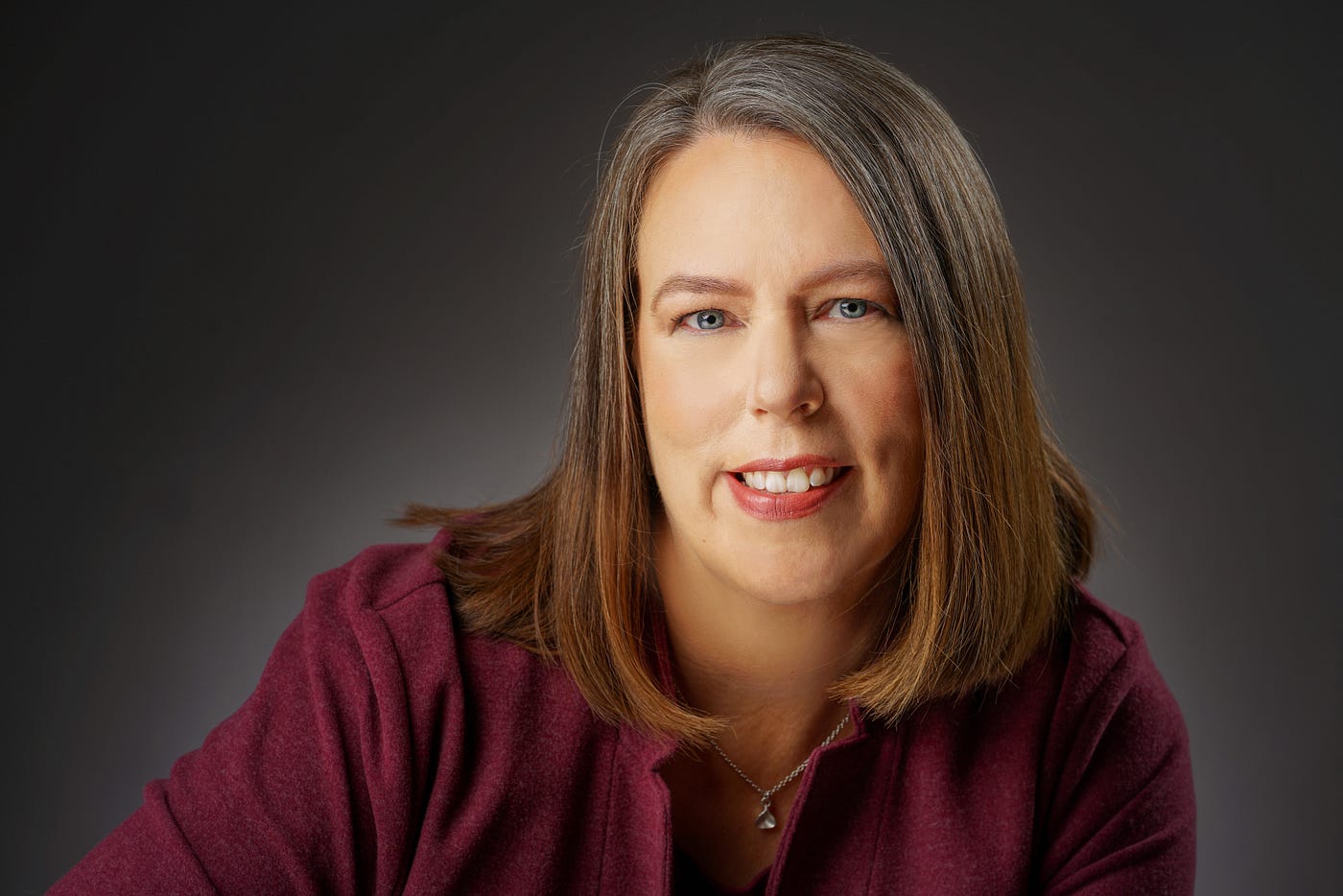
Liisa Kovala is a Finnish Canadian author, book coach, and podcaster. She is the author of Like Water for Weary Souls (House of Karhu, 2025), Sisu's Winter War (Latitude 46, 2022) and Surviving Stutthof: My Father's Memories Behind the Death Gate (Latitude 46, 2017). Learn more about Liisa at liisakovalabookcoach.com and subscribe to liisakovalawomenwriting.substack.com.
Thank you so much for joining us in this interview series! Before we dive in, our readers would love to “get to know you” a bit better. Can you tell us a bit about your ‘backstory’ and how you got started?
Can you share the most interesting story that occurred to you in the course of your career?
Research and writing include a lot of interesting moments and events, but probably the most touching moment happened when we made a family trip to the United States Holocaust Memorial Museum while working on Surviving Stutthof: My Father’s Memories Behind the Death Gate. It was a Wednesday morning. When we entered the museum, my father walked straight to the back of the large foyer where a woman was seated behind a table. Her name was Nesse Godin and she said she only volunteered on, of course, Wednesday mornings. Within minutes, the two realized they’d both been sixteen when they were in Stutthof Concentration Camp. Nesse said she’d met many survivors over the years volunteering at the USHMM, but rarely anyone who had survived Stutthof because it was notoriously brutal and few survived imprisonment in the camp or the grueling Death Marches. Nesse, my father, our family, and even the people working at the museum were in tears when Nesse and my father embraced as if they were old friends. It was an unforgettable moment.
What was the biggest challenge you faced in your journey to becoming a writer? How did you overcome it? Can you share a story about that that other aspiring writers can learn from?
I’ve always been a storyteller since the time I could hold a crayon and draw a picture. Every image told a story. Later, as I developed writing skills, I told those stories in narrative form. I studied English at university, only to become a teacher of English, Special Education, AP Research, and Creative Writing. In those years, I dreamed of writing, telling myself stories as I drove, and imagining a writing life for myself. When I turned fifty, I finally took the plunge. I left my career as a teacher and turned my attention to writing and book coaching, and I’ve never been happier. I don’t regret those years as a teacher—they taught me a lot about myself—but looking back I should have pursued my writing more actively during those years. Now, I encourage other writers to write before they think they are ready and know that it’s never too late to start.
It has been said that our mistakes can be our greatest teachers. Can you share a story about the funniest mistake you made when you were first starting? Can you tell us what lesson you learned from that?
One mistake doesn’t come to mind, but I can assure you I’ve made many mistakes over the years. As a recovering perfectionist, writing has taught me patience—projects need their own time to complete, and publishing is notoriously slow moving—and to embrace imperfection. I do my best to ensure my work is error-free and historically accurate, but even with many eyes on a manuscript, mistakes happen. We are human after all.
In your opinion, were you a “natural born writer” or did you develop that aptitude later on? Can you explain what you mean?
It’s hard to know if I was a “natural born writer” or not, but it seems that stories were part of my life right from the beginning. My mother was an avid reader, and we had lots of books in the house. I was the youngest of four children, and my oldest brother was also a devoted reader—and still is—and I think I also looked up to him. At a young age, I was reading the Classics, and anything else I could get my hands on. Writing is born from storytelling and reading, and I started writing short stories, poems, and my own newspaper, at a young age. Only later did I really study the craft of writing, devouring plays, poetry, short stories, and novels. Perhaps I was a natural born storyteller, but it took years to develop the craft to write well.
What are some of the most interesting or exciting projects you are working on now?
I’m currently working on the Hygge House Cozy Mystery series. The first book in the series, Hygge and Homicide will be available in March 2026, followed by Midsummer, Marriage, and Murder, and Murder by Nordic Design. I’m calling these Nordic cozy mysteries as a nod to the Nordic-inspired content and heritage of the main character. My next historical novel is about a Finnish war child during the Winter War, and I’m also working on a historical novel about the Finnish socialist utopian society of Sointula in the early 1900s. Plus, I have a non-fiction book idea, but that needs to wait in the queue for a bit.
Here is the main question of our interview. Based on your experience, what are the “5 Things You Need To Be A Successful Author or Writer”? Please share a story or example for each.
1. Start before you are ready. Folks who have a story to tell often think about it for years or even decades. Don’t wait. Just get started. Many of us have limiting beliefs about what we can or cannot do, often from innocent remarks made when we were children or teenagers. The only way to get better at a craft is doing it. Make bad art. Write poorly. Just start somewhere. You can’t be an expert without being a beginner first. And, in my case, I was a beginner again at the age of forty, learning a craft I’d loved my whole life.
2. If you write, you are a writer. For some reason, claiming that word is difficult for a lot of us. You’re a writer. Own it. I was a writer since early childhood, and wrote stories as a teenager, but once I became an adult, I couldn’t call myself a writer. I had an image of what a writer did—namely write every day—and that didn’t fit with my life as a full-time teacher and a mother of two. Only when I started taking my writing seriously and getting short pieces published could I finally call myself a writer. You don’t need anyone’s permission. If you write, you’re a writer. Period.
3. Read, read, read. This is probably the most important advice you can receive as a writer. Read excellent books, read terrible books. And start reading like a writer. I was always an avid reader, and studied literature at university, and became a high school English teacher. As a writer, I delve into the topics I’m writing about for research purposes, but also explore the fiction related to the topic to uncover how others have dealt with the topic. Great novels are inspirational, but there is a lot to learn from everything we read. You’ll soon discover storytelling techniques you admire, and those that you want to avoid.
4. Writing is not a solitary activity. Sure, you will spend hours and hours on your own writing and revising, but there is a lot of support out there. Find a writing community, connect with other writers in your genre, attend webinars, work with a book coach, seek out great editors. In my case, I joined a local writers’ guild when I started writing my first book and found people with more experience and insights than I had at the time. Soon after, I started a creative writing certificate program to learn from experts in the field. I continue to listen to podcasts, read craft books, attend webinars, seek out great mentors and editors, and spend time with writer friends discussing craft.
5. Writing is not a competitive sport. That’s a good thing, because I’m not a competitive person. Writers are some of the kindest and most supportive folks out there. Lift one another up. Celebrate each other’s successes. Perhaps that’s why I love the writing community so much. There is room for everyone, and your ideal readers are out there, waiting for your work. Fostering a writing community makes everyone stronger.
What is the one habit you believe contributed the most to you becoming a great writer? (i.e. perseverance, discipline, play, craft study). Can you share a story or example?
As a Finnish Canadian, sisu is a fundamental concept. The term doesn’t have a definition in English but means courage and determination in the face of adversity. Sisu is what keeps me going when I want to give up, when I feel discouraged, and when I feel imposter syndrome. When I first started taking my writing life seriously, I realized I didn’t know as much as I thought I did. I started taking courses at University of Toronto’s School for Continuing Studies, determined to learn about craft and make my first book—Surviving Stutthof—as good as I could. There was no option but to keep learning, keep practicing, and it was my sisu that ensured I didn’t give up.
Which literature do you draw inspiration from? Why?
I’m inspired by all kinds of literature. I return repeatedly to Classics like Middlemarch, and I regularly reread Jane Austen’s novels. While writing my cozy mystery series, I’ve been reading a lot in that genre, exploring what’s new in cozy mysteries, and returning to some old favourites like Agatha Christie. I’ve always loved historical fiction, so I usually have something on my reading pile.
You are a person of enormous influence. If you could start a movement that would bring the most amount of good to the most amount of people, what would that be? You never know what your idea can trigger. :-)
When I taught high school, I had one rule in my classroom: respect. It covered everything from how students treated the classroom environment, handled books, worked with one another, and behaved in the school and community. It covered how they treated themselves. Respect is such a basic tenant of living in a community, but it seems to be lost these days. What would our world look like if we respected what each other had to say? What if we respected one another’s time? Efforts? Art? Beliefs? Bodies? Ideas? What if we had respect for nature? The environment? Resources? When we start seeing the world through the lens of respect, we can create space for fruitful conversations and actions that will benefit everyone, instead of creating divisiveness. But as with everything, it starts at home, with our families, and friends, and ourselves.
How can our readers further follow your work online?
Readers can follow me at liisakovalawomenwriting.substack.com for feature articles about fellow writers, the Women Writing podcast series featuring authors and writing industry professionals, plus articles about book coaching topics, and news about my writerly adventures. And they can find my books at liisakovala.com and liisakovalabookcoach.com.
Thank you so much for this. This was very inspiring!