My internal code of ethics carried a blue-collar value from a tight-knit family in small-town Massachusetts: work hard, protect your people, and keep showing up.
Pop Culture
Matt Constantino: How a Life-Threatening Crisis and False Medical Diagnoses Forced a Private Equity Leader to Rebuild His Identity and Purpose
The Managing Partner of Delos Capital shares how surviving methanol poisoning transformed his approach to leadership, resilience, and personal clarity.
Trauma can arrive dressed in many different circumstances. You may be the victim of a criminal act. Your house may be destroyed by fire, flood or tornado. You may be fired from a job you loved. An illness or accident may change what you physically can do. Someone you dearly love may reject you or die. Even good things require us to explore a different version of who we are. We fall in love, marry, have a child, start a new career. No one gets through life without a trauma or two changing the trajectory of your future. At those junctures in life, we have to reimagine who we are now. What changes must I make in order to live the life I now have? Today I have the privilege of interviewing Matt Constantino.
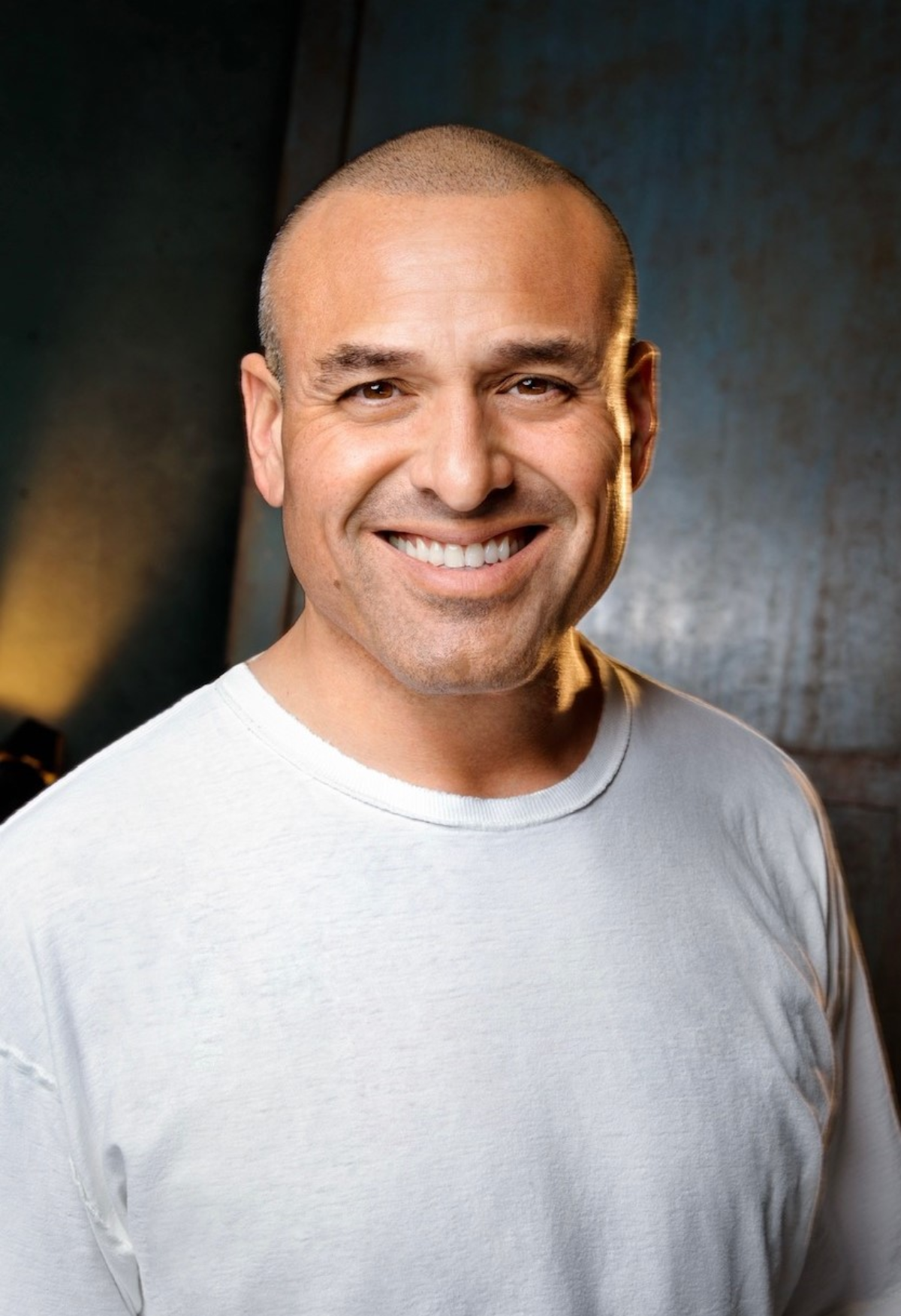
Matt Constantino is Managing Partner of Delos Capital and has more than 25 years of experience working with management teams, CEOs, and boards of privately-held businesses.
Previously, Mr. Constantino joined Apollo Global Management in 2002, where he was initially a member of the firm’s flagship private equity fund, which focused on buyout transactions. In 2006, Matt was promoted to Partner within Apollo. Subsequently, he was named Head of Private Investments for Apollo’s Strategic Value Fund, where he focused on lower- and middle-market private equity and special situations opportunities, as well as public and private debt and equity investing.
Mr. Constantino also worked with ZS Fund and at Donaldson, Lufkin & Jenrette in its Mergers & Acquisitions Department, and Vision Capital. He has an MBA in Finance from The Wharton School and a BA in Economics from Wesleyan University.
Mr. Constantino is engaged in several external organizations, including Smiles Through Cars, Cherish Health, Free a Girl, and Hamptons Youth Camps.
Matt is also the author of Graditude, Strength, and Opportunity: Living for Today.
Thank you so much for joining us in this interview series! Before we dive in, our readers would love to “get to know you” better. Please describe who you were before circumstances required you to change.
Today, authenticity and humility have become my guiding principles; however, I used to be a disciplined operator: a college athlete turned private-equity founder, running hard, raising capital globally, traveling the world nonstop, and measuring myself by execution and loyalty to my team and family. Weeks before everything changed, I’d just finished a whirlwind Europe trip — Vienna, Zurich, London — locking in commitments that nearly doubled my original fundraising target.
My internal code of ethics carried a blue-collar value from a tight-knit family in small-town Massachusetts: work hard, protect your people, and keep showing up. This, I am proud to say, I still maintain and hold, especially when it comes to my daughter.
Was the life change something you chose? Or was it thrust on you unexpectedly, as a surprise? Please explain in detail.
Thrust? That’s an understatement! I visited a hotel bar in the Caribbean during the COVID-19 pandemic while waiting for my girlfriend to arrive. I was unknowingly given a poisoned methanol-laced alcoholic drink, which caused my heart rate to spike. This poisoning is a dirty little secret of death for tourists brought on by the cartels, who cut actual alcohol in half by splitting the liquid and adding methanol to double the inventory.
Within hours of arriving at the Caribbean resort, my heart spiked — I went from “celebratory long weekend” to “how do I stay alive?” All of this was in the middle of a global lockdown over the COVID-19 pandemic. There was only one focus of medical issue and attention, and it was Covid, not methanol poisoning.
What were your initial feelings about this change in circumstances? Give a few examples.
During methanol poisoning, a person experiences malaise, nausea, and headache within 12 to 24 hours, and their organs can start to shut down. When my girlfriend arrived, I was so out of it that she thought I was drunk.
Confusion set in for me, thinking, “This makes no sense — I’ve kept a strict health regimen for years.” Fear set in while gasping for air while still conscious, and disbelief as my condition was misread and I was shuttled around a hospital that felt more like a lockdown ward than a place of healing. The medical professionals assumed, with my symptoms, that I was just another COVID-19 victim.
How long did it take to see how you could survive or thrive in your new circumstances?
Survival mode kicked in immediately. The hotel wouldn’t let me fly due to the mandatory lockdowns, so they had me stay in the hospital. When shifting diagnoses (Covid, anxiety, pancreatic cancer, then lung cancer) didn’t match facts, the mission became: get out, get home, get the right care. After two and a half days of anxiety pills, I finally said, “No, thank you.” I told my best friend, “If I don’t get out of here, I’m dead,” and we started planning extraction.
What are five important choices you made that helped you adjust to the change in your life?
- Refuse false narratives. When diagnoses contradicted evidence, I trusted my intuition and data.
- Activate my inner circle. I leaned on family and lifelong friends to coordinate, escalate, and advocate.
- Prioritize oxygen + stabilization. We arranged proper oxygen support outside the hospital while planning safe transport.
- Document and de-escalate. When mistreated, we stayed calm, recorded facts, and focused on the exit.
- Reframe identity. I stopped being just an “idea guy” and owned the role of inventor/solver — designing my way out of the maze and into purpose.
- Carry the message. I am sharing my story so that other people have the same courage and fortitude to trust their own intuition in such circumstances.
Have you been able to flourish in your new circumstances?
Yes — flourish by purpose, not speed. The trauma clarified my lane: to build things that keep people safe and well, invest in teams that do the same, and be radically present for my daughter and the people I mentor. Life is not a destination; it’s a journey.
What do you like or value about the new you that has emerged as a result of these circumstances?
Radical honesty. I wrote the hardest, most personal book of my life, and I only aligned with relationships that create mutual happiness and net good for the world.
If some time has passed, have you found things about the original trauma for which you now feel gratitude?
Gratitude, strength, and opportunity. I’m living for today. It pushed me toward spiritual clarity and a daily practice of meaning over milestones.
What are the best outcomes that are a direct result of the personal growth that was forced from you as a result of this trauma? Describe.
Nothing was forced. A purpose-driven operating system: fewer distractions, deeper bonds, higher-quality work.
A story that helps others spot and escape dangerous situations (including counterfeit supply chains — like adulterated alcohol re-bottled to look premium)
Was any particular person, or book instrumental in helping you formulate who the new you could be following this trauma?
I try not to be cliché, but The Alchemist.
Several others, but one frame that stuck was the idea of “attributes” (resilience, adaptability) for thriving under uncertainty — language I used while navigating lockdown and beyond with my family and team.
Have there been opportunities to encourage or support others who are going through similar traumas? Please describe.
Yes. I mentor founders and individuals working through health/identity shocks, emphasizing calm process, honest storytelling, and building the right circle fast. With a friend, I also started a charity, and helping others helps me spiritually.
Is there any particular person with whom you’d love to share a meal or a conversation about the lessons learned through trauma?
Larry David. He’d be the only person I’d ever be intimidated around. I’d give anything to have an hour to be with him. Nothing to do with my experience, it would just be the most interesting day in my life.
I am so grateful you’ve been able to share this experience. It is truly inspiring!
AM
Written by
Authority Magazine Editorial Staff
Editorial Desk · Authority MagazineThe Authority Magazine Editorial Desk produces, verifies, and edits long-form primary-source interviews with executives, innovators, clinicians, creators, and social impact leaders across Business, Tech, Pop Culture, Wellness, and Social Impact.

Published inAuthority MagazineTop Lessons, Top Authorities · 42K Followers
Exclusive, curated interviews with the leaders and changemakers shaping tomorrow. Leadership lessons, industry deep dives, and executive profiles.