If you don’t ask, the answer will always be ‘no’. I find this quote relevant to my life because it has encouraged me to step out of my comfort zone and ask for what I need to succeed.
INTERVIEW QUESTIONS:
In recent years, there has been a significant increase in interest surrounding the manufacturing sector. Historically, this industry has been dominated by male workers, with women constituting only about 30% of the workforce. What is the experience like for women working in such a male-dominated field? What challenges do they face, and how can they contribute to improving the industry? What does it take to establish a highly successful career in manufacturing? Additionally, what exciting advancements and innovations are US companies making in high-tech manufacturing, and what can we expect in the near future? How can the US emerge as a high-tech manufacturing powerhouse? To address these questions, we are talking to women leaders of the manufacturing industry. As a part of this series, I had the pleasure of interviewing Kirsten Chapman.
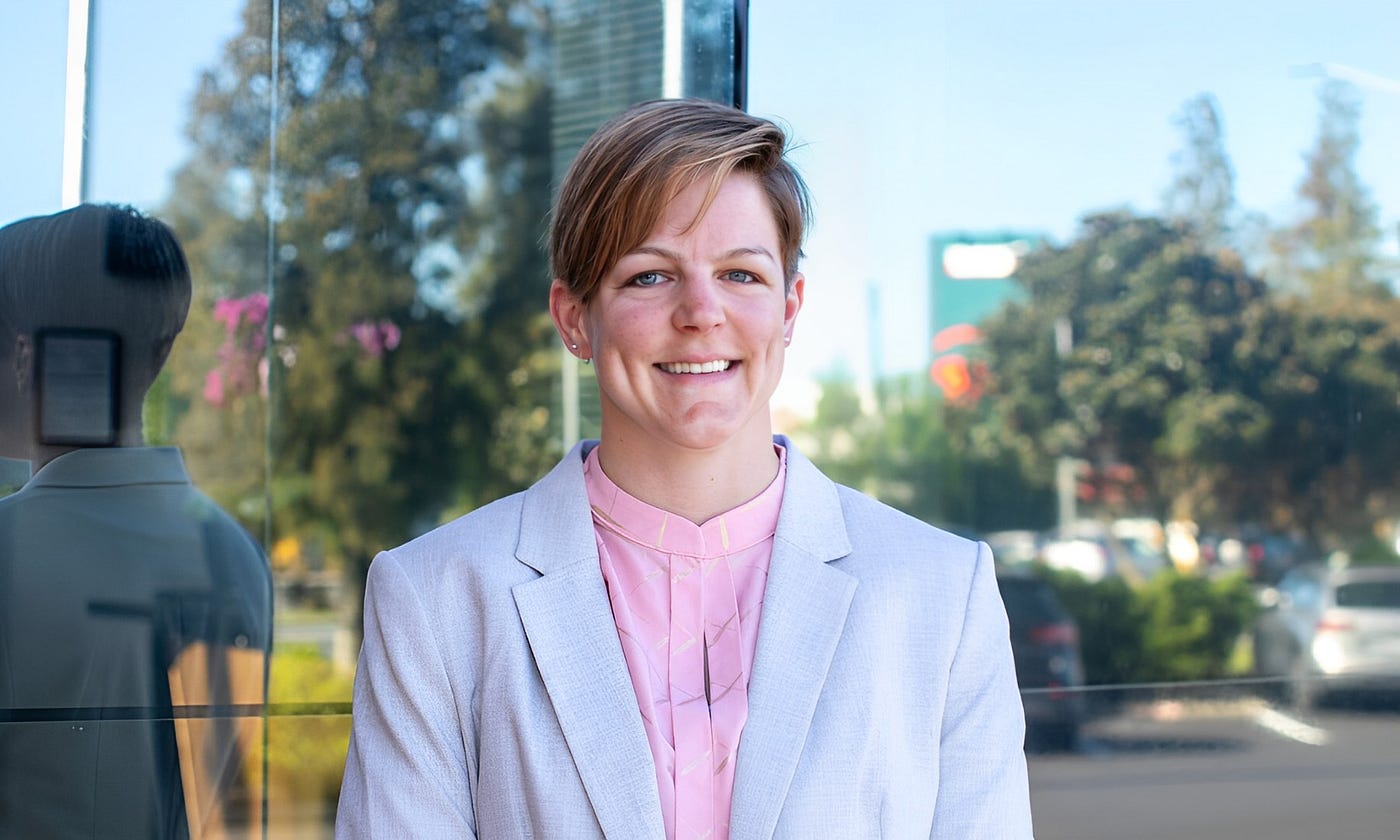
Kirsten is the Lead Engineer for Gallagher Security, a global technology manufacturer of integrated security solutions, where she leads a team of engineers in the production of security hardware. After graduating with a Bachelor of Electrical and Electronic Engineering in 2014, Kirsten officially signed on with Gallagher as an Electronic Engineer. Four years later, she was promoted to Senior Electronic Engineer, and in May 2021, was promoted to Lead Engineer on the Research and Development team.
Thank you so much for joining us in this interview series! Before we dive in, our readers would love to “get to know you” a bit better. Can you tell us a bit about your ‘backstory’ and how you got started in manufacturing?
I was fortunate enough to grow up with a father and uncle who were fitters and turners, so I was exposed to the manufacturing work environment from an early age. Seeing the intricate machines and the precise work that went into creating them fascinated me, and I knew from a young age that I wanted to pursue a career in manufacturing.
I was always a logically-minded person, and I enjoyed playing with toys like Lego, and Meccano, and solving puzzles growing up. I was constantly thinking outside of the box to solve everyday problems and loved the challenge of figuring out complex issues. It was this kind of thinking that led me to be interested in the manufacturing industry and how things were made.
It wasn't until high school that I got a chance to explore the manufacturing industry in more depth. A female teacher talked about a site visit to Gallagher, a local manufacturing company, and I was immediately intrigued. I thought it sounded amazing, and I knew I had to go on the site tour. I was lucky enough to attend a summer school course at Gallagher in Year 12, where I was able to see the facilities first-hand. I was amazed by the precision and complexity of the machines and was even more excited about the prospect of pursuing a career in manufacturing.
I had my first work placement with Gallagher via my university. I was eager to learn more about the industry and gain as much experience as possible. This opportunity allowed me to get hands-on experience and helped me develop my skills in manufacturing. Today, I am proud to say that my early exposure to manufacturing and my persistence to pursue my passion has led me to a fulfilling career in the industry.
Can you share the most interesting story that happened to you since you began your career?
A memory that stands out for me is that during my first week working at Gallagher, Sir William Gallagher (currently the company's President and Executive Director) visited the R&D office. He chatted with all of the engineers, and I was impressed that he took the time to discuss in-depth details about the projects they were working on and the problems they were trying to solve. He also knew many of the engineers socially and asked about their home life.
I remember being in awe of how much the CEO of the company cared about his employees and how he took the time to remember such details about the people I was working with. It was clear to me that he was invested not only in the company's success but also in the well-being and happiness of his employees. It was an experience that left a lasting impression on me and made me feel proud to work for a company that values its employees in such a way.
Another career highlight has also been steering my team through the current global supply chain issues. The Covid-19 pandemic, droughts, factory fires, shipping complications, and increased demand, meant Gallagher had key pieces of hardware, such as microchips and electronic components, that increased in price exponentially, making it difficult to continue operations.
I was new to my role as Lead Engineer on the R&D team and one of my first major tasks was to work with my team through the challenge of re-engineering several security products using the components that could be accessed, juggling priorities under intense time pressure.
We went through each product and where we couldn't source a component, we looked at what alternatives would be possible and what we could actually get. This was a manageable task for some of the minor parts, but for a few products, finding the key components became impossible.We couldn’t get those pieces, so, we shifted away from trying to source those components and changed our focus to redesigning them as quickly as we could with the resources we had at hand to make sure we never stopped our supply.
Our products are used in hospitals, in food production facilities, and small businesses – places where essential workers need the health and safety protections that we supply. Halting production and distribution wasn’t an option.
Gallagher has been one of the few security suppliers to continue shipping hardware products during the supply chain crisis. Challenges like this really energize me. One of the biggest obstacles in engineering is trying to predict the future and how we can make products that will be valued in the market for years to come. It’s a fun challenge to be sure – being responsive to unknown, future developments and needs. I still get excited thinking about all the potential out there.
Can you please give us your favorite "Life Lesson Quote"? Can you share how that was relevant to you in your life?
I have a few to share, if that’s okay? One of my favorite life lesson quotes is "If you don’t ask, the answer will always be ‘no’". I find this quote relevant to my life because it has encouraged me to step out of my comfort zone and ask for what I need to succeed. I have learned that people cannot read my mind and it is important to communicate my needs clearly. This quote has helped me overcome my fear of rejection and has given me the confidence to ask for opportunities and resources that have helped me achieve my goals.
Another quote that I love is "Hakuna Matata". I use this quote to remind myself to stay calm and think about the problem instead of worrying about it. It is important to take a step back and approach problems with a clear mind to find the best solution. This quote has helped me deal with difficult situations with a positive attitude.
Lastly, I also live by the quote "Practice doesn’t make perfect, it makes better". This quote has taught me to focus on making incremental improvements instead of aiming for perfection. It is important to continue to practice and learn to get better at anything in life. This quote has helped me to stay motivated and dedicated to improving myself in both my personal and professional life.
Ok wonderful. Let’s now shift to the main focus of our interview about High Tech Manufacturing. Can you tell our readers about the most interesting projects you are working on now? How do you think this will help people?
One of the most interesting projects I'm currently working on is a sustainability initiative. We're examining the entire lifespan of our products, from production to disposal, to see how we can reduce their impact on the environment. It's a complex and challenging project, but I believe it will have a significant positive impact.
Another project that I find particularly rewarding is Secondary School Employer Partnerships (SSEP). As part of this program, we work with high school students to show them how what they're learning in school directly relates to the manufacturing industry. It's been incredibly successful so far, with more students becoming interested in pursuing careers in maths and science after participating in the program. I believe initiatives like SSEP are crucial for inspiring and developing the next generation of innovators and problem solvers.
Can you share how you are helping to reshape the Manufacturing industry?
I am doing my part to help reshape the manufacturing industry by encouraging more females to take up Electronic Engineering as a career. I do this by putting myself out there in articles and other media, as well as taking part in school initiatives such as SSEP. By showing young women that anything is possible and that they can excel in this field, I hope to help increase diversity in the industry and create more opportunities for women.
In addition to this, we actively design for manufacture and work to identify opportunities to reduce manufacturing time and waste. We are always looking for ways to streamline our processes and make them more efficient, whether that involves identifying steps that can be automated or finding new materials and technologies that can help us increase yield.
I believe that these efforts are helping to reshape the manufacturing industry in a positive way, and by continuing to focus on these areas, I am hopeful that we can create a more sustainable and successful manufacturing industry for the future.
In addition to what you are working on, what other exciting advancements and innovations are companies making in High Tech manufacturing?
There are some really exciting advancements and innovations that companies are making in high-tech manufacturing. One of these is cloud-based computing. This technology can help to reduce the need for on-site hardware, which can be a significant cost saving for companies. Additionally, cloud-based computing can increase the scalability and flexibility of manufacturing operations, allowing companies to adapt more easily to changing market conditions.
Another exciting advancement in high-tech manufacturing is automation. By automating certain tasks, companies can increase productivity and efficiency, which can ultimately lead to cost savings and improved quality. Automation can also help to reduce the risk of human error, which can be particularly important in industries where precision is critical.
These advancements in high-tech manufacturing have the potential to transform the industry in many ways. By leveraging cloud-based computing and automation, companies can reduce costs, increase efficiency, and improve quality, ultimately helping them to stay competitive in a rapidly changing marketplace.
From your vantage point as an insider, what exciting developments will be coming out in the near future?
I am really excited about the developments that we are seeing in the smart sensors sector. The ability to remotely monitor the condition of manufacturing equipment is an amazing development.
With smart sensors, it will be possible to predict when maintenance or replacement is required, making it easier for companies to plan and schedule maintenance tasks. This can be a game-changer, as it can help companies to reduce downtime, increase productivity, and ultimately save money.
Overall, I believe that the development of smart sensors will have a significant impact on the manufacturing industry in the near future, and I am excited to see how this technology will continue to evolve and improve.
What are the three things that most excite you about the state of Manufacturing? Why?
Firstly, I'm excited about the focus on supply chain resilience. By making our manufacturing and product supply more robust and less reliant on single sources, we're encouraging growth and healthy competition in the industry. This, in turn, will lead to greater innovation and better products for consumers.
Secondly, I'm excited about the shift in focus to the retention and acquisition of talent in manufacturing. Skilled workers are in short supply, and employers are starting to realize the importance of investing in their employees. Incorporating strategies that benefit employees such as flexible work arrangements and professional development is a step in the right direction. By valuing and investing in their employees, companies can attract and retain the best talent, leading to a more productive and successful industry.
And finally, I'm excited about the growing focus on sustainability in manufacturing. As a society, we have become a throwaway culture that has created many environmental problems. By shifting our focus to sustainability, we can create a more responsible and environmentally-friendly industry. This is not only important for the planet, but it's also increasingly important to consumers who are looking for eco-friendly products.
What are the three things that concern you about Manufacturing? What would you suggest needs to be done to address those concerns?
I think that the same things that excite me about the state of manufacturing - supply chain resilience, retention and acquisition of talent in manufacturing, and the need to focus on sustainability in manufacturing - are the same things that concern me. As an engineer, we’re focused on solutions and problem-solving. It’s a great opportunity to be able to make a difference. By addressing these concerns, we can help create a more resilient, sustainable, and equitable manufacturing industry.
As you know, there are not that many women in High Tech Manufacturing. Can you advise what is needed to engage more women in these industries?
I think one of the best ways to engage more women in high-tech manufacturing is by showcasing the women who are already in the industry. By highlighting the successes of women in manufacturing, we can help to break down the barriers and stigmas that have historically prevented women from entering the industry.
It's important to show women that there are other women like them who have found success in high-tech manufacturing. By providing role models and success stories, we can help to dispel the notion that manufacturing is a male-dominated industry where women don't belong.
Fantastic. Here is the main question of our interview. What are your "5 Things You Need To Create A Highly Successful Career In Manufacturing? (Please share a story or example for each.)
1 . Overcome imposter syndrome
As a female in a male dominated environment, it can be all too easy to feel like I don’t belong and doubt the skillset I bring to the table. What we often fail to recognize is that we all make valuable contributions to discussions and decision making. I have had to work hard to reduce my self-doubt and grow the confidence it takes to speak up and share ideas.
2 . Encourage conversations on wellbeing (balancing work and life)
I think working out how to balance work and home life is very a very important aspect of building a long successful career. I do this by making sure the things my team and I work on are prioritized. This can help remove the feeling that not enough is getting done. My team and I also regularly go for lunch outside of the office. This helps encourage a more social aspect of working together and gives us a relaxed environment for discussions.
3 . Make time to inspire others
I do this by leading by example, setting goals, and aiming high. Having high career aspirations and creating clear expectations for myself, encourages everyone around me to do the same. Being passionate about what I am working on or the direction we are moving in is so important. It becomes easier to set goals and creates a driving force to achieve them. I also do a lot of work with high schools encouraging students to look at engineering as a career. I try to demonstrate, especially to the young women, that anything is possible if you are willing to give it a go. I find that just showing up and making yourself available to answer questions is often all it takes to create that initial spark.
4 . Have a willingness to step out of your comfort zone
You need to be brave and take small steps to reduce the fear and uncertainty. Embracing uncomfortable situations over and over again builds mental strength. I am constantly put in situations where the introvert in me wants to run and hide. Like presenting in front of students, making videos for many people to see, or attending conferences where I can often be the only woman in the room. I approach this by saying ‘yes’ first and thinking about how I will do it later. Making that first step is often the hardest. From there, I try to give myself time to prepare so that I can walk into the situation with confidence. The rest of it is approaching it with a positive mindset.
5 . Be empowered in knowing that you bring different perspectives to the table, which will enrich your team
This is very important to encourage collaboration and innovation, and strengthens the capabilities of the team. I tend to lean towards having an introverted personality. While at times this can be a weakness, I have also learnt to use it as a strength. By talking less and listening more I can provide solutions that are logical and well thought-out. I also listen to uncover the strengths of others and use them to maximize the success of the team. This helps everyone feel appreciated and in turn they can be more successful.
You are a person of great influence. If you could inspire a movement that would bring the most amount of good to the most amount of people, what would that be? You never know what your idea can trigger. :-)
I believe that there is a job for everyone. Treat everyone fairly whether they are a cleaner or a CEO. There are aspects to every job that are challenging and aspects that are easy. Don’t judge other peoples’ journeys and don’t compare your own journey to anyone else’s. We all face our own difficulties in life.
How can our readers further follow your work online?
They can follow me or request to connect via LinkedIn - Kirsten Chapman | LinkedIn