The work that I am doing that is disruptive is tackling the global problem of illiteracy by bringing books to life.
As a part of our series about women who are shaking things up in their industry, we had the pleasure of interviewing Kassi Kincaid.
Kassi Kincaid, a TEDx speaker and visionary behind Book Days, spearheads a groundbreaking children's literacy program that breathes life into books. Recognizing the transformative power of reading on young minds, she recognized that embracing creativity was pivotal in creating a meaningful impact. Finding herself unexpectedly becoming an agent of change, Kassi discovered that her creative journey has become an inspiration to adults and is on a mission to help people bring creative fire to their careers.
Thank you so much for doing this with us! Before we dig in, our readers would like to get to know you a bit more. Can you tell us a bit about your “backstory”? What led you to this particular career path?
I went to college to study business. Halfway through my degree, I needed to complete an internship. I ended up interning at Make-A-Wish Foundation. From that experience, I knew I wanted to work with kids in the future and make their lives better.
After graduation, I went to work for the family preschool as the administrator. I loved my job and supporting the families and daily running of the school. Over time, I felt like I needed a creative outlet, so I started pairing children’s books with experiences. This creative endeavor eventually turned into a global children’s literacy program called Book Days.
Can you tell our readers what it is about the work you’re doing that’s disruptive?
The work that I am doing that is disruptive is tackling the global problem of illiteracy by bringing books to life. I go on 2–3-day book tours at Title 1 elementary schools featuring popular children’s classics, such as If You Give a Mouse a Cookie by Laura Numeroff. At each school, I do a book reading with performance of the book’s character. Afterwards, I help facilitate class pictures where the students get to collect personal memories with the character. The purpose of these events is to make reading exciting for kids to increase their motivation to read. My work is disruptive because it is the only one of its kind. Book Days is different from other literacy programs because we focus on motivating kids to read. Other programs help kids to read and give away books. We pair books with memorable literacy experiences to ignite a love of reading that will leave a lasting impression.
Can you share a story about the funniest mistake you made when you were first starting? Can you tell us what lesson you learned from that?
My funniest mistake when I was first starting out was not turning off a fan!
We were doing a Book Day featuring Llama Llama in the Red Pajamas by Anna Dewdney. The llama costume was epically tall. There was a fan right above the reading area and I didn’t make sure it was off. My colleague didn’t bend low enough and the fan took off one of the ears right in front of all the kids. It was pretty hilarious!
The lesson I learned from that is always be prepared. The little details matter for the event to run smoothly. Now that I’m on tour, it’s vital I have all the equipment I need to make the tour a success and to have the greatest impact.
We all need a little help along the journey. Who have been some of your mentors? Can you share a story about how they made an impact?
Two of my mentors have been Dr. Don Christian and Dr. Lynette Gillis. During my collegiate years at Concordia University Texas, Dr. Christian was the CEO and president of the university and Dr. Gillis was the Dean of the College of Business.
When I was a freshman, Dr. Christian was professor of the Intro to Business class. When we walked in on that first day, there was a coloring sheet with a box of crayons at each desk. Five minutes later he walked in and instructed us to start coloring. After another five minutes, he stopped the class and had everyone look around. He wanted us to notice the people who colored outside the lines. That has been one of the most profound lessons of my life and a catalyst for the work I do today.
Both Dr. Christian and Dr. Gillis have always believed in me and encouraged me to pursue meaningful work, not a job that would make the most money or have the most prestige.
To this day, they continue to champion my efforts and inspire me to learn and grow to have a greater impact.
In today's parlance, being disruptive is usually a positive adjective. But is disrupting always good? When do we say the converse, that a system or structure has ‘withstood the test of time’? Can you articulate to our readers when disrupting an industry is positive, and when disrupting an industry is ‘not so positive’?
Can you share some examples of what you mean?
Can you share 3 of the best words of advice you’ve gotten along your journey? Please give a story or example for each.
HAVE LOTS OF IDEAS- During college, I took a class called Creativity, Critical Thinking, and Change with Professor Lee Pilz. The thing I remember most about that class was the brainstorming sessions where we would sit around and write dozens of ideas around the topic of the day. The number one rule was “There are no bad ideas.” After years in my creative journey, these words resonate deeper than ever. They serve as a perpetual reminder that the abundance of ideas directly correlates with the likelihood of discovering brilliance.
BELIEVE IN YOUR IDEAS- Being a disruptor means you are a trailblazer, going where others have not ventured before. This means that you must carry the mantle for those ideas and believe in them when others do not. Each outreach I conducted for Book Days was a testament to my unwavering faith in the program's concept. Every time I submitted a grant proposal or connected with an organization, I was unsure of the outcomes, but I knew I had to try and speak up for my idea. When I would get discouraged, I was quickly reminded that if I didn’t believe in the concept, then who would?
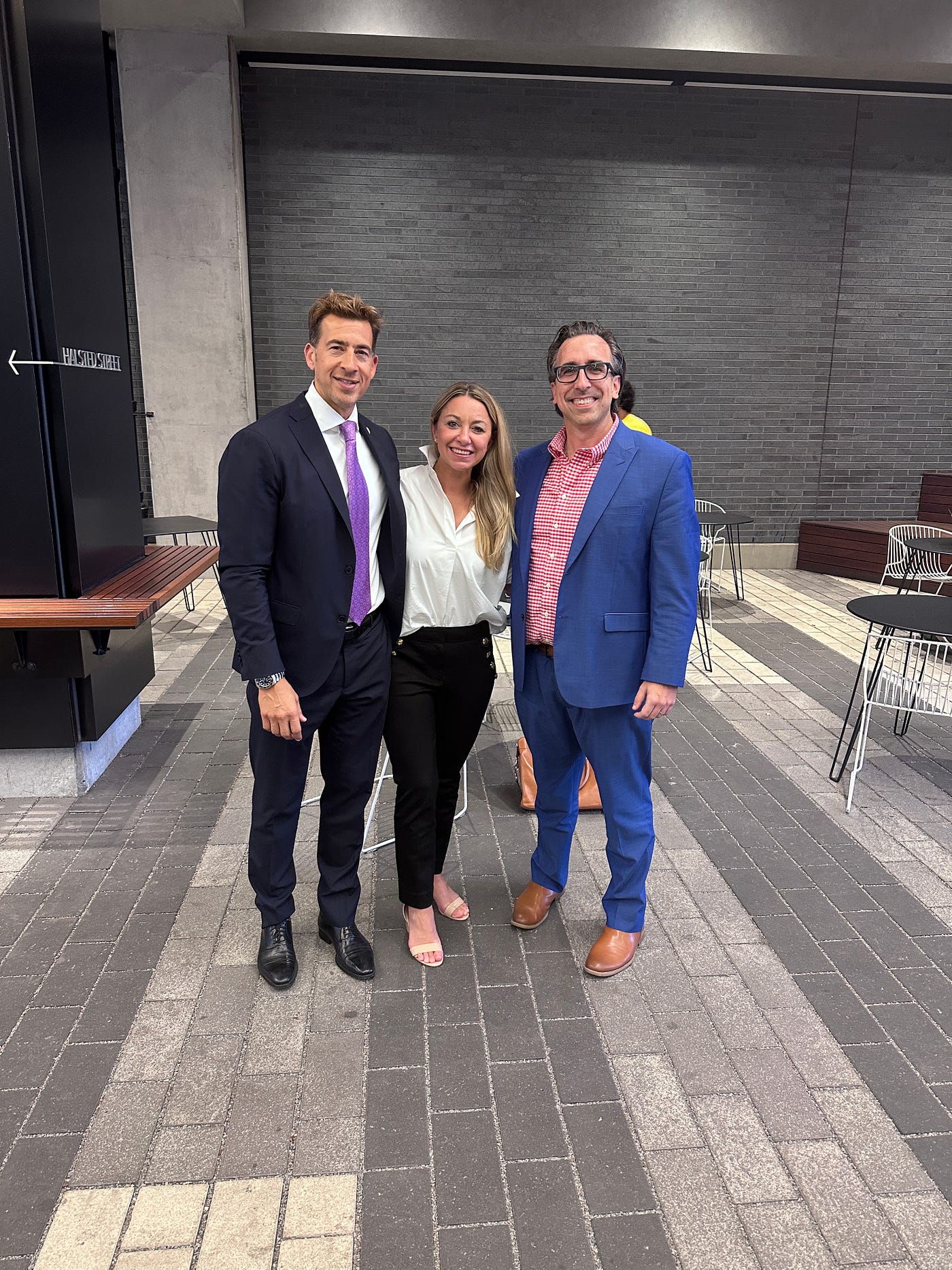
MAKE CONNECTIONS- During the early years of the program, it became apparent to me how children’s books can connect the world. I partnered with professionals of all backgrounds for the common purpose of inspiring the next generation to read and ultimately reach their full potential. I truly internalized this lesson when a friend prompted me to connect with Kansas Chief football legend, Derrick Johnson. Derrick now lives in Austin near me, and his foundation, Defend the Dream, refurbishes Title 1 school libraries. Together, with complimentary goals, we are working to inspire a love of reading throughout the city and beyond. Derrick and I now do join Book Day tours in Title 1 elementary schools in Austin ISD.
We are sure you aren’t done. How are you going to shake things up next?
After spending a year in the greater Austin area, my vision is for the book tours to continue expanding outside the region, reaching schools across America.
In your opinion, what are the biggest challenges faced by ‘women disruptors’ that aren’t typically faced by their male counterparts?
In my opinion, the two biggest challenges faced by women disruptors are encountering ego and cultural norm. Male counterparts may be intimidated by a confident female disruptor. In addition, men assume a lot of the space in various industries. For example, women speakers are a small percentage of total speakers out there. Cultural norm gives men more voices and with that authority.
Do you have a book/podcast/talk that’s had a deep impact on your thinking? Can you share a story with us?
I love Simon Sinek’s TEDx talk entitled “How great leaders inspire action.” Throughout the talk he shares how famous people in history have succeeded or failed largely contributed to why they were doing what they were doing.
In the early years of the program, I could not wait to get on holiday breaks to spend more time working on Book Days. One Christmas break I decided to spend time working on a donation request from Whole Foods. Some people might have wondered why I was doing that on a break. It was because I believed the program was an innovative idea and that I could do more with more funds. Amazingly, three months later I received news that I got a donation for 10 times the amount I asked. Acknowledging why we do things is so important.
You are a person of great influence. If you could inspire a movement that would bring the most amount of good to the most amount of people, what would that be? You never know what your idea can trigger. :-)
If I could inspire a movement, it would be for other people to use their creativity for impact, just like I did! I believe everyone is creative and can impact our world.
Can you please give us your favorite "Life Lesson Quote"? Can you share how that was relevant to you in your life?
My favorite life lesson quote is by Wayne Gretsky “You miss 100% of the shots you don’t take.”
This quote has been a constant reminder to not be afraid to take chances. Book Days has grown because I put myself out there time and time again by reaching out to people, sharing my story, and asking to collaborate. I was energized by the possibility of a “yes” and not devastated by a “no.” The thing that would feel the worst, would be knowing I didn’t try at all.
How can our readers follow you online?
I would love to connect on LinkedIn! That is where I post updates and content.
If you want specific Book Day updates, feel free to subscribe on our website, www.bookdays.org!
This was very inspiring. Thank you so much for joining us!