My younger self had protected me in the best way possible, but no one knew it at the time.
Power Women: (Kaare Long) On How To Successfully Navigate Work, Love and Life As A Powerful Woman
INTERVIEW QUESTIONS.
(If you are unable to download it, please click File-Download)
Please answer the questions, and leave the questions formatted as they are in the document. We may schedule a follow-up call or skype to round things out.
How does a successful, strong, and powerful woman navigate work, employee relationships, love, and life in a world that still feels uncomfortable with strong women? In this interview series, called "Power Women" we are talking to accomplished women leaders who share their stories and experiences navigating work, love and life as a powerful woman.
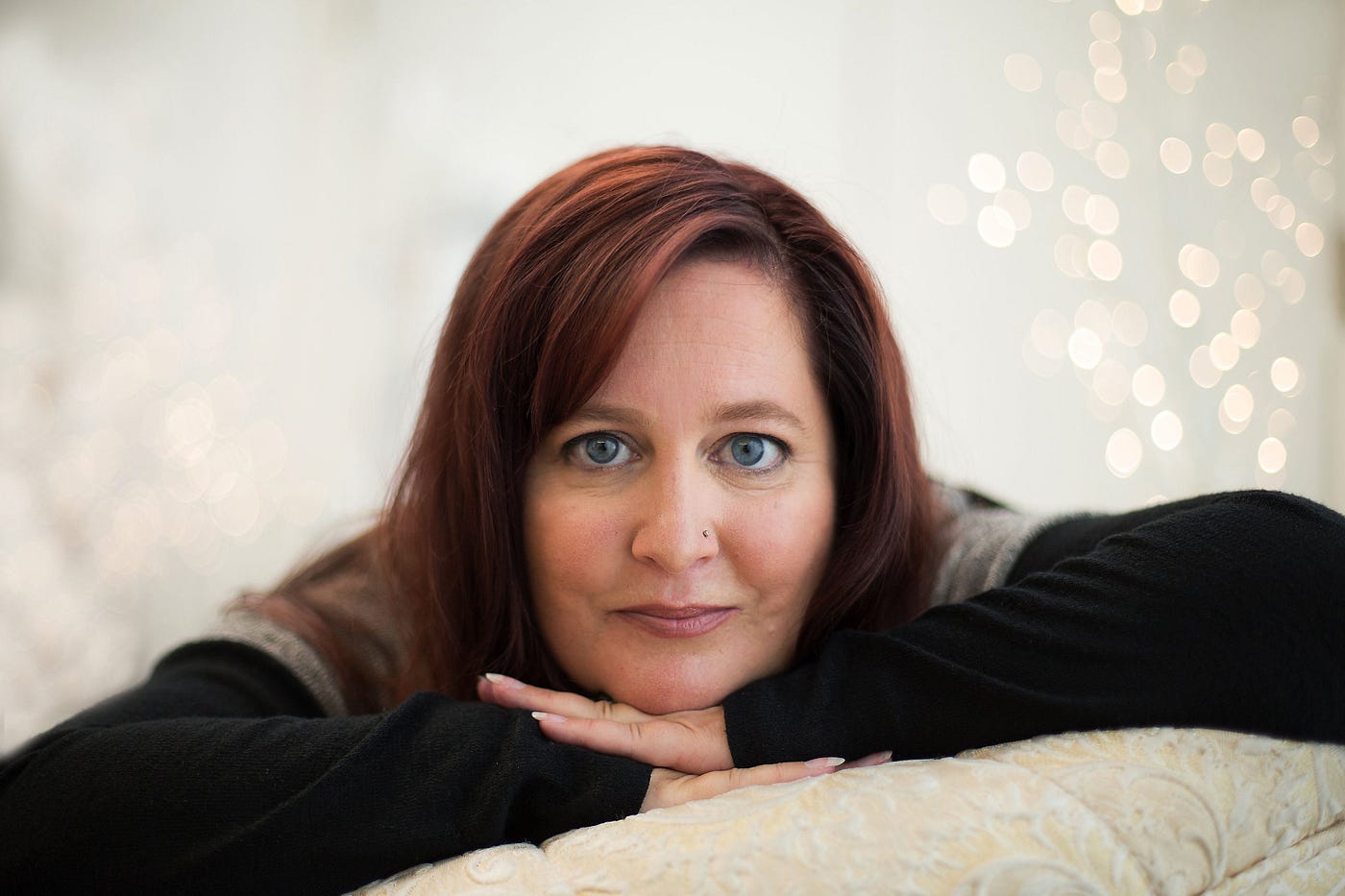
As a part of this series I had the distinct pleasure of interviewing (Kaare Long).
(please insert your three sentence bio, written in third person here.)
Kaare Long is the CEO and founder of a Cue Creative, an international award-winning marketing, and revenue management agency. An accomplished and featured writer, performer, multiple award-winning community engagement specialist, and strategic team leader, Kaare long regularly works with some of the most potent and innovative entrepreneurial-minded people and businesses in Canada and the US. Creative by nature, with a ‘popcorn genius’ mind, this boat rocking mama is a critical thinking visionary who is led by over 20 years of experience using a balance of both intuitive leadership skills and business expertise based on extensive training and study in marketing, communications, sales, leadership, writing, public relations, stage and TV performance, relationship dynamics, human behavior, psychology, philosophy, arts and culture, and health and wellness.
Thank you so much for doing this with us! Before we dig in, our readers would like to get to know you a bit more. Can you tell us a bit about your childhood “backstory”?
I was a weird kid. I didn't think I was strange because it was just me. Introverted, inquisitive, and constantly questioning the behavior of the adults around me. I could see through things to the truth with my observational skills and an exceedingly creative mind. I was labeled 'too much' by many people. I was ostracized for speaking out, punished for not complying with rules or the format of public schooling, and considered 'damaged' for using my intuition and taking self-responsibility at a really young age.
When I was around 7 years old, I attended a public school in the Kootenays, where we lived.
The school was regular, but I started to feel like that environment was very toxic, and something was wrong (in child thoughts, I just decided this place wasn't for me). I was dropped off at school in the morning, and rather than go into the school, I would pretend to fix my shoes until my dad drove away. I used this same trick every day; I'm not sure why my parents didn't catch on sooner. Then I would walk away from the school, back towards my home neighborhood, and hang out with the farm animals at a local property all day. I would walk through the woods, feed myself off the orchard trees, and go to the bathroom like I was taught to when camping. I would come home precisely around the time I would have if I had walked home from school and fabricate elaborate answers for the question "what did you do in school today?" I did this for 2 weeks before I was 'caught' and reprimanded. I was never actually asked 'why I had left the school. This was the pivotal moment that I realized, as a child, that the adults and most people were not the same as me, and something must be very wrong with me because I just didn't understand the way things worked in the world. I just didn't know how to communicate what I had been running away from at the time. Later in life, I learned that this school was the home to a pedophile priest who was later arrested and charged, and I was right in the thick of it during his worst offenses. My younger self had protected me in the best way possible, but no one knew it at the time.
Can you tell us the story about what led you to this particular career path?
I started my career aspirations as a performer. It was a natural choice, given my propensity for elaborate creativity bursts and my introverted nature. My mother was once told by a friend of hers while I hid behind her skirts, “She’s so shy, she can’t WAIT to be on stage!” I played the flute, was a singer, and starred in two high school musical productions as the lead. I went to acting school in college and was active in the arts community. I led a professional level all women a cappella singing group and started an a capella music vocal festival that was the first of its kind in our country. At that time, I also became a mom, so my availability for work was limited, and my performing arts career was restricted. My priority was my kids. I found a solution, though - I decided to work for the performing arts community as an administrator and grant writer. I did this for years and was very successful. I brought in millions of dollars of grant funds for multiple organizations and started seeing ‘marketing’ opportunities and ways to get further exposure for the groups I worked with. My talent and skill in this work led to the first incarnation of my business. This is where the ‘a Cue’ in the name of my company comes from; it is literally a call out to my performance days – the ‘cue’ to go on stage.
Can you share the most interesting story that happened to you since you began your career?
The most memorable story is when I found myself 'suddenly single' as a career-driven, single mom. I realized that the city where I lived (Vancouver, B.C.) was notoriously difficult to meet new people, especially men who were not threatened by a career woman with two kids. After some research, I found I was not alone in this feeling and that both men and women in our city were complaining about how 'cold' and 'distant' it was and that meeting someone new was almost impossible. So, I decided to do something about this. I created a campaign called #sayhitoastranger, and it was produced and presented by my company. We recorded a video of our team walking around the city and saying 'Hi!' to see people's responses, and if indeed, this city was as cold as folks were saying. The footage we captured officially launched our campaign and was picked up by local media, and the #sayhitoastranger hashtag trended in our city for 2 days. I created 3 events for this campaign within 2 years, and the campaign was so successful we had the media, businesses, and communities requesting more events. We collaborated with local companies to give away free 'stuff' when people said 'hi,' we involved many local community centers and business committees during the campaign. Our community celebration parties involved local artists and musicians, and it really brought everyone together. It was indeed a successful project as we made a significant impact. Our campaign caught on so much that I started being contacted by Universities and Businesses wanting me to create a similar program for their own community. I regretfully had to abandon this project as it was taking up too much of my time – it was 100% volunteer. It is still very much alive as represented in my company’s culture and current values, and the original website is still up and running. The principals of this project could be re-engaged at any time. This was my proudest achievement in my career as I genuinely felt the experience of leaving a legacy. This movement I started had legs to continue in other communities with other people leading the way. I learned an incredible amount during this time as I met so many different people and businesses. It was absolutely life-changing.
You are a successful business leader. Which three character traits do you think were most instrumental to your success? Can you please share a story or example for each?
Integrity
It has always been imperative to me to maintain my own integrity. However, I didn't always succeed. When I was younger and still trying to find my footing in life, I would make promises I couldn't keep, tell lies rather than the truth to avoid conflict, and pretend I was something that I wasn't. This inevitably led to severe depression and anxiety issues. As I got older, I started to realize that my own inner truth would keep me alive and allow me to thrive. I began to heal. My healing did not happen overnight, though, because life's conditioning as a woman and as a mom had left its mark on me. It took a long time, but once I finally found my own truth again and practiced integrity to myself and only brought to the world what was me, and not some pretend me, I started to experience success in health, work, life, and love.
Courage
Courage is so necessary because, without it, fear will take over your life and keep you locked up in a prison of your own making. Some of the most memorable and life-changing moments in my life were when I was terrified, yet I still found the courage to speak up and assert myself. Becoming a new mom really assisted in this. When my 2nd child was born, she was premature and was in the NICU for the first week of her life. When I was in there one day, trying to breastfeed her, a nurse came over to me and started bossing me around and telling me I should bottle feed because the breastfeeding was taking too long. She was pushy and was trying to thrust a bottle into my hand. I was not interested in what she wanted me to do, and her aggressive behavior made both me and my baby agitated. She bent over and tried to take my baby from me; the courage of mama bear snapped out of my body and firmly told that nurse that this was my baby. I appreciated her desire to help, but I had this, and I would like to be at peace with my baby. I then told her to leave and said that I would ask her if I wanted any support. This is a simple boundary, but the fear I felt at that moment was considerable. My whole life had been designed to avoid confrontation and stay quiet and not be assertive as it was considered a ‘bad thing. However, I listened to my own heart at that moment, and I did what I needed to despite my fear. I learned a lot that day. Courage means being afraid but doing what you need to anyway despite that fear.
Commitment
I’ve been accused of being stubborn so many times in my life. I used to think that was negative feedback. But, as I’ve grown and evolved as a woman and stepped more into my power, I have realized that stubbornness is just the wrong word. It’s a word used to diminish the power of someone with true tenacity and commitment to their cause and their passion. If I had not naturally been so tenacious, I would have likely quit life a long time ago. And I mean that in the most tragic of ways. Tenacity and commitment to what I believe kept me alive in the darkest days. I could not, would not give up. And, that same commitment to myself has proven to be one of the most vital skills I possess in the world of business. What makes one person successful and another person unsuccessful is usually only a matter of their level of commitment. True success always comes when the commitment is solid and giving up is never an option.
Ok, thank you for that. Let’s now jump to the primary focus of our interview. The premise of this series assumes that our society still feels uncomfortable with strong women. Why do you think this is so?
I think that our society, including women, is accustomed and familiar with the patriarchal system because it has been in place for so long. It has been put in place by those that benefit the most from this system, and it is kept in place by society because it is seen as the norm and is the most widely accepted construct – no matter how oppressive – around the world. It is a system built and maintained on social culture and has evolved over time but remains a dominant belief. Human beings are naturally drawn to what is familiar to them, even if that routine is potentially damaging or abusive. This is evident in abusive relationship dynamics that are systemic all around the world. It can take us a long time and a lot of work to realize the situation we are in, albeit familiar, is toxic and not suitable for us. We resist this truth because facing that truth would mean we would need to tackle our own demons and insecurities. It means we must become responsible for our choices, let go of the victim mentality, and journey to lands ‘unknown’ – this is scary. There is not a lot of support for it in our society because of the still strong ‘belief’ of the ‘wrongness’ of powerful women, which makes it even scarier. Embracing a new way or new ‘system’ that celebrates the power of women takes courage because it is not entirely accepted yet. It means that one must go against the ‘flow,’ and we are hardwired as humans to stay within the ‘tribe.’ The switch needs to be flipped in society so that the common belief is acceptance and empowerment of powerful women. Flipping this switch is the real work because there will always be resistance from those who have benefited from this system and the women familiar with it, as they don’t want to risk uncharted territory.
Without saying any names, can you share a story from your own experience that illustrates this idea?
One of the most prominent memories of this that I experienced was being part of a women's only FB group that focused on empowering women in business, sharing leads, networking, etc. This was a large group, and it had a lot of activity. I shared a post one day that linked to an article that I wrote that included a video of myself, sharing a personal story about body image, insecurity, and processing emotions as a sensitive woman. It was raw, authentic, and genuine. All my work is. For some reason, this article trigged some of the administration of this group. They decided to just delete the article without communicating with me. I then reached out to the admin team and asked them why they censored my article. They replied that they were NOT censoring me, the article 'triggered' too many people and had to be removed as it was offensive. This was perplexing to me, as it was just my own story and it WAS censorship. But they didn't like that I had spoken so openly about body image issues – this was the trigger for 'many' women in the group apparently. I disagreed with this, so I took my case to the general population of the group and asked them if they felt my article should be censored. Most of them said 'no' that they liked the article, and it was sincere. Because I disagreed and empowered myself to directly ask the people I was told were offended, I was blocked and banned from the group for not abiding by their group rules. It was very jarring to me and a wake-up call that a group of women, run by women, would end up treating me worse than a group of men would in the same context. The rawness and honesty of my story, which triggered others, became a scapegoat. Rather than deal with their own feelings coming up, facing their own insecurities and deep trauma, they decided to put the blame on me for making them feel 'uneasy.' This, in a nutshell, is the patriarchal society. The inability to take responsibility for one's own inner emotional world and blaming women should they 'emote' and trigger them to face their own emotions. This experience made it evident to me how deeply embedded this system is in all of us. It is accepted as the 'norm' and not seen for the oppression that it really is.
What should a powerful woman do in a context where she feels that people are uneasy around her?
This is the most challenging part of changing the system one baby step at a time. It requires you to stay in your truth, not dull down your power, express yourself, be yourself, and own your space regardless of the push-back that you will undoubtedly get. The rules of the current system would say that we should 'tone it down or not be so 'much' or maybe play by the rules if we want to play. We would be expected to manage the emotions of the people who feel uneasy. WE would be expected to change ourselves to make things more comfortable for them, rather than be fully in our power and let them deal with their own emotions around that. But this is how we change the system. We cannot accept responsibility for other people's feelings. We need to learn how to detach ourselves, honour ourselves, and know that other people feel uneasy because of their own issues. It's challenging because you simultaneously need to deflect the anger and frustration directed at you for not 'conforming to society's rules as well as face your own truth and insecurites. When you do this, though, you empower other women, and then they empower others, and so on. Once more women behave this way, the switch will flip, and 'normal' will be the new system. But that takes commitment, courage, and integrity.
What do we need to do as a society to change the unease around powerful women? We need to start celebrating women who are in their own power rather than fearing them. Society has a lot of healing to do as we are terrified of things we do not understand. It can seem like an overwhelming task to change a society that has been functioning in this way for so long. Often we feel we have no power to change culture but fail to realize we have ALL of the power if we remember to start right where we are and with who we are. The true beauty of societal change is it happens with just one person making that change they wish to see in the world and being that example. Remember your real power when the task seems so daunting - The only thing you have control of is you and your approach to the world. If you can change your own beliefs and behavior and be a model of this day-to-day with unfaltering courage and commitment, you will create a ripple effect and inspire others to do the same. The hardest part of all of this is reminding ourselves that we don’t need to change the world, we just need to heal and grow ourselves, and the world will follow.
In my own experience, I have observed that often women have to endure ridiculous or uncomfortable situations to achieve success that men don't have to endure. Do you have a story like this from your own experience? I have too many stories to share to answer this question, and that in and of itself is indicative of the level of discrimination women face in the world when it comes to work and career. I’ve faced abuse, harassment, and disrespect. I’ve been overworked, undervalued, and taken for granted. I’ve worked twice as hard and made ½ as much. I’ve raised children and my own business and still wasn’t taken seriously at the bank when wanting a loan. The worst part about this question is if you ask ‘any’ woman for one story, she likely won’t know how to choose the one to tell as there are so many of them. From day one, we are pitted against this force that is determined to keep us down. The system of the world has been designed for men to flourish and for women to flounder. My biggest story is that this force that keeps us down has been the only story, and I’ve had to fight against it for as long as I can remember. And then, my fight was seen as crass, over the top, argumentative, bossy…you name it. It’s the story that persists and the one that needs to end.
In your opinion, what are the biggest challenges faced by women leaders that aren’t typically faced by their male counterparts?
The biggest challenges are the fight and the need to justify and defend our every move. Where men are seen as assertive, women are seen as aggressive. When men are seen as influential and powerful leaders, women are seen as bossy. When men are seen as refined and classy, women are seen as old and ‘over the hill’ – and the comparisons can go on and on. Women cannot just enjoy life and be who there are and be celebrated for it. Women are expected to earn respect and constantly audition to be recognized as the goalposts keep moving and changing throughout their lives. Women need to be more demanding, more intelligent, stronger, and more resilient to even begin to play in the same arena as men. On the flip side, I have started to realize in my own healing and growth that this is precisely what makes women so powerful and probably why we are still feared. We beat the odds no matter what. We can overcome any obstacle, fight any battle, and outmaneuver any strategy to keep us down, and we STILL succeed. I have started to view these challenges we have faced as women as gifts. They have provided us with a tenacity and a deep inner strength that cannot be defeated.
Let’s now shift our discussion to a slightly different direction. This is a question that nearly everyone with a job has to contend with. Was it difficult to fit your personal and family life into your business and career? For the benefit of our readers, can you articulate precisely what the struggle was? As soon as I became a mom, I knew that I wanted to be there for my kids, no matter what. I also knew that the stay-at-home mom role would not fit me very well as I had things I wanted to do. So, it was going to take some work to establish a balance. When I then found myself a single mom, the challenge really started. How could I be a good mom build a business and career at the same time without any help at all? I would like to say I figured it out right away, but the truth is it took me years of failure and pain before I found the balance. There were years when I had to face the shame and go on income assistance when I couldn’t find childcare I could afford. There were years when I went without buying clothes for myself to pay for food and rent. There were years when I would sell special family items to send my child to a special event or join a class that she wanted. I have one vivid memory of a Christmas eve. My daughters really wanted a live tree. I was resourceful enough by then that this was no problem. I found one, bought one, hoisted it up on the car, and drove it home. When it came time to put that tree up, I had come down with the most terrible flu. I was outside on my deck, sick and with a fever, sawing that damn tree to get it up into the stand inside for my kids to decorate. I had no help at all, and I remember feeling so alone, so desperate, and so tired at that moment. It really epitomized the overall challenge of the struggle. I had worked all day despite my sickness, and I still had to get that tree up. ‘The Struggle is REAL’ when you are learning to find that life balance as a woman with kids and a career. Now, I can say, looking back, that those challenges and struggles truly made me stronger, but they were excruciating at the time.
What was a tipping point that helped you achieve a greater balance or greater equilibrium between your work life and personal life? What did you do to reach this equilibrium?
The final tipping point for me was ending a very abusive relationship and finding myself single again. I was destroyed by this experience, and my kids suffered right along with me. I was devastated that I had let things get this bad. I had needed support and partnership so much that I had overlooked some dangerous attributes of a person, and before I knew it, I was in deep trouble. It took me years to get out of this relationship and then more years to recover. Those recovery years were when I learned the most about myself. I was able to take stock of the previous 10-15 years and decided to start honouring the power that I had to endure and still survive rather than focusing on the weakness that I felt all that time. I learned how to absolve the shame, let go of the regret and abandon the negative self-talk. I started within and made the decision to start loving myself and empowering myself. Now, it was up to me to ‘be the change I wanted to see in the world.’ Rather than be a victim, I pursued the mindset of the survivor and the warrior. It became a daily mantra to me and a personal ‘culture’ to continue to build up my inner strength.
I worked to remember who I was as a child before life had beaten me down. I connected back into the natural state of ‘me’, who was wild, weird, and wonderful. The child who decided that walking alone in the woods and hanging out with animals was safer than the local public school I was expected to attend. Once I found my own self-confidence, the balance and equilibrium came naturally. I no longer looked for Drama; I avoided it. I no longer allowed myself to be disrespected; I demanded respect. I no longer begged for attention and help; I helped myself. I became self-sufficient in the true sense, not the trauma-induced ‘I can do it myself!’ sense, the powerful, unmovable sense of ‘me’ that could not be toppled over anymore by anyone.
I work in the beauty tech industry, so I am very interested to hear your philosophy or perspective about beauty. In your role as a powerful woman and leader, how much of an emphasis do you place on your appearance? Do you see beauty as something that is superficial, or is it something that has inherent value for a leader in a public context? Can you explain what you mean? This is a great question, and I’m excited to answer it because I have been to both extremes of perspectives when it comes to beauty. My philosophy has changed over the years, and as I grew, it grew. Initially, I believed I had to look as polished as possible in the infancy of my powerful woman and leadership journey. I had to have the best hair, makeup, the highest heels, and the longest nails. I worked very hard at it, and I was rewarded for my work. Men found me irresistible; women were very jealous of me. I was a 12 in a world built for the 10 out of 10’s. I had NAILED it! Ironically, this was also the most depressing and sad time for me. Once I had kids, I put on 20 lbs. that never went away, but I was much healthier. I started wearing flat, comfortable shoes, and my back didn’t hurt as much. I stopped styling my hair and didn’t wear makeup. I was a mom, and all that mattered was making sure my kids were taken care of. This was a happy time, but I was still not balanced. I felt I had abandoned my own self-expression and was just a bland person who purely existed for my kids, nothing else. I slowly started to explore more ‘middle of the road’ expressions of beauty rather than extremes, and I realized that beauty is in all of us, but we must believe in it first. IT wasn’t my clothes or makeup that would garner my respect as a leader. It was my words and my confidence. I also would make better choices for my appearance because my outward look needed to reflect the assurance and security coming from within. Beauty absolutely has value, but its value is not external; it is internal. And, once you can identify and remember the natural beauty within, the outside will match that expression, naturally. As a leader, I know that my body does not inspire others. My words and my passion do.
How is this similar or different for men? For the most part, I think men have relied on their personalities and confidence to inspire and lead others. Culture does not constantly bombard them with how they ‘should look; instead, it congratulates them for just being ‘men.’ Men are supported in being who there are, whereas women are always trying to reach an unreachable beauty standard, so they always feel like they are ‘not enough’. Both men and women are their most beautiful when they are assured, self-aware and passionate about what they believe in. However, men do not have as many hurdles and challenges to overcome to get to that state of self-acceptance.
Ok super. Here is the main question of our interview. Based on your opinion and experience, what are the “Five Things You Need To Thrive and Succeed as a Powerful Woman?” (Please share a story or example for each.)
Self-Awareness
Absolute success does not come out of a box and does not mean perfection, and true success lies within your ability to grow and expand and learn from life. Self-awareness is paramount to success because you need to learn from your mistakes, remedy them and create new patterns and approaches. If I hadn’t had the self-awareness to realize the limitations I was putting on myself as a single mom struggling to barely get by, I would not have had the ability to see past that reality and create a new one. Self-awareness is the ultimate weapon against the challenges that life presents.
Open Mind
The only time you should stop learning is when you are no longer living. Learning is life, and if you think you’ve got it all figured out, you’ve already failed. Your ego will want you to be sure about your beliefs, perceptions, and reality, but when you realize that nothing is permanent and your mind is open to new ways of being, you can get out of your own way. I had to see new possibilities to change my life and succeed against all the odds stacked against me. That ability to have an open mind and accept other perceptions taught me the most about myself.
Tenacity (sometimes known as stubbornness)
Tenacity is one of my favourite words. I learned to use it after being called stubborn many times in my life. The word 'Stubborn' tends to hold a negative connotation, but it is anything but. Tenacity is one of the most robust characteristics you can have to help you achieve success because you will refuse to give up. The only difference between people who succeed and people who do not is the ones who succeed never gave up. I was given many reasons to quit, and on the outside, it looked like I should have on several occasions. But, my tenacity and my' pit bull' bite to not succumb or surrender to defeat is what elevated me to a new place each and every time. There was so much to learn in the moments of defeat as long as I didn't let it overpower me and make me insecure. Failure is the most prominent teacher we have, and I failed, over and over.
Transparency
Transparency is vital to building positive and resilient relationships, and it is also essential in maintaining your own integrity, which serves to empower you as you are. One of the #1 tips I give other women in business when it comes to public speaking in meetings or on stage is to not avoid mistakes; own them. This tip comes from my performance training. If you try to cover them up, ignore them, or otherwise pretend they don’t exist, you will alienate your audience, and things will get awkward because they will see the mistake – pretending it is not there creates a dissonance. Declare your errors, and you will connect in a truthful way to your audience, and they will trust you more – they will sympathize, understand, and open up to you.
Passion
This is your driving force, the air you breathe, the light you are under. Passion is everything. Passion is a universal language that speaks to the motivation and emotions of others. In my experience, I would always fail to connect with others when I tried to ‘look’ a certain way or be something I wasn’t. When I connected to my unique passion, wild and wonderful as it is, I would instantly connect with others. The energy of passion ignites the spark within others. Find your passion, own it, and shine it out there. The world needs you!
We are very blessed that some very prominent names in Business, VC funding, Sports, and Entertainment read this column. Is there a person in the world, or in the US with whom you would love to have a private breakfast or lunch with, and why? He or she might just see this if we tag them.
I would love to meet Clarissa Pinkola-Estes as her book ‘Women who run with the Wolves’ was so important to my evolution and growth as a powerful woman. I would also love to meet Marianne Williamson as her books became ‘bibles’ to me during my dark days.
Thank you for these fantastic insights. We greatly appreciate the time you spent on this.