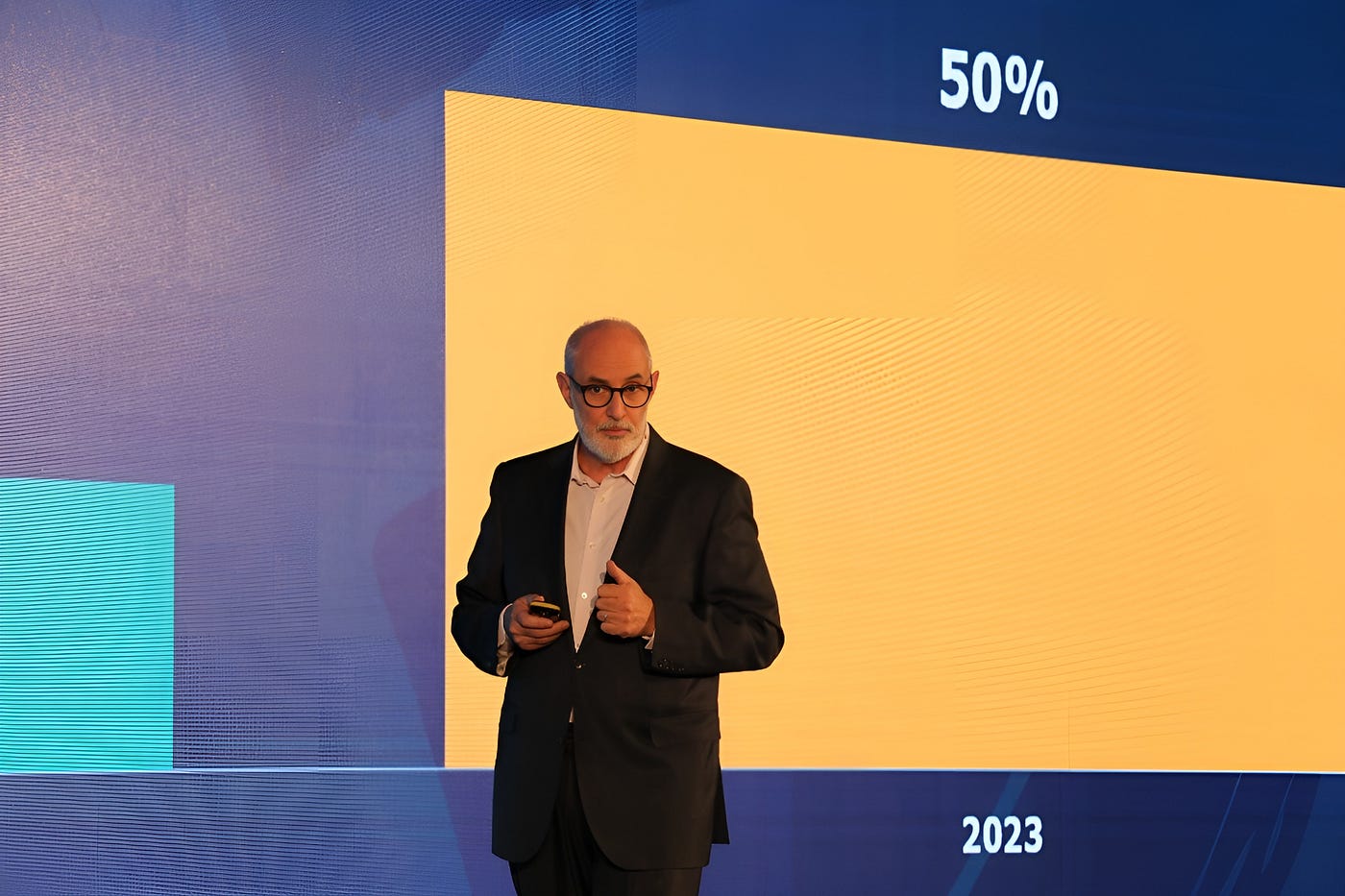
While I was doing well at BlackRock — a job I had worked through 16 years of education to earn — I wasn’t truly fulfilled. I’d leave work tired, but as soon as I started working on Simplify Tech, I’d feel energized, excited, and ready to build my business late into the night.
Tech
Johnny Palumbo of Simplify Tech on Corporate Burnout, High-Stakes Pivots, and Building AI Startups
The founding partner of Simplify Tech shares his journey from high school incubators and Wall Street internships to leading the charge in enterprise artificial intelligence.

Artificial Intelligence is transforming industries at a breakneck pace, and the entrepreneurs driving this innovation are at the forefront of this revolution. From groundbreaking applications to ethical considerations, these visionaries are shaping the future of AI. What does it take to innovate in such a rapidly evolving field, and how are these entrepreneurs using AI to solve real-world problems? As a part of this series, I had the pleasure of interviewing Johnny Palumbo.
Johnny Palumbo is the Founding Partner and Chairman of Simplify Tech, an AI-driven solutions provider leveraging advanced technology to streamline operations and enhance business productivity across industries. As a passionate entrepreneur and AI advocate, Johnny leads Simplify Tech’s mission to help organizations achieve measurable results through cutting-edge AI systems, creating customized automation and tools to empower clients to harness the full potential of artificial intelligence in an ethical, adaptable, and deeply client-centered fashion. With a background in computer engineering and experience in both startup and corporate tech environments, Johnny’s work is reshaping the AI landscape, setting new standards for impactful and responsible innovation while keeping people at the core of every solution.
Thank you so much for joining us in this interview series. Before we dive in, our readers would love to learn a bit more about you. Can you tell us a bit about your childhood backstory and how you grew up?
Thank you so much for having me — this is an exciting opportunity to share my journey. I grew up in the Chicago suburbs, specifically Barrington, Illinois, where my introduction to the world of entrepreneurship came when I was 16. I took my first business INCubatoredu course led by an incredible teacher who taught me the full spectrum of building a company — from ideation to marketing, legal practices, and even developing an MVP. One of the most exciting aspects was creating physical prototypes of our product.
The highlight of this journey was the chance to pitch our idea to a board of investors. My team received funding for our project, Safe Pack, valued at six figures. It was an exhilarating experience, and I quickly caught the “entrepreneurship bug.” I worked on Safe Pack for two years when our operations came to a screeching halt. The product targeted the live entertainment industry.
I decided to pursue a college degree and attended the University of Wisconsin, where I graduated with a major in Computer Engineering. My path to the world of AI began during an internship at BlackRock in 2023, where I had the opportunity to integrate AI within the DevOps department. It was during this internship I met my co-founder. By July 2023, we launched Simplify Tech, an AI-driven solutions provider.
Early 2025, I took the leap to follow my entrepreneurial dreams full-time, leaving BlackRock to focus entirely on Simplify Tech. Now, I’m living a life filled with challenges, opportunities, and continuous learning, and I wouldn’t have it any other way.
Can you share the most interesting story that happened to you since you began your career?
Sure! I think the most interesting story revolves around my brief full-time tenure at BlackRock and the leap I took to pursue Simplify Tech. As mentioned, Simplify Tech was born during my internship in the summer of 2023, and I worked on building it throughout my senior year of college. By the time I graduated, Simplify was still in its infancy and couldn’t yet provide a consistent income. So, I accepted my return offer at BlackRock and started working there in August 2024, while continuing to grow Simplify Tech.
Balancing a corporate role and my startup was one of the toughest challenges I faced so far. I was essentially working two full-time jobs, clocking 100-hour work weeks. My days were spent meeting the high expectations of my job, and nights were dedicated to pushing Simplify Tech forward. What made this time so interesting wasn’t the workload but the realization it brought me.
While I was doing well at BlackRock — a job I had worked through 16 years of education to earn — I wasn’t truly fulfilled. I’d leave work tired, but as soon as I started working on Simplify Tech, I’d feel energized, excited, and ready to build my business late into the night. The contrast was impossible to ignore. It made me realize splitting my life in half wasn’t sustainable or aligned with what I wanted.
Walking away from a rewarding corporate job was incredibly difficult. BlackRock challenged me. The environment surrounded me with amazing people and gave me invaluable learning opportunities. Betting on myself and pursuing Simplify Tech full-time was both the scariest and most exciting decision I’ve ever made.
A few months into running Simplify Tech full-time, we scaled our revenue by multiples. There’s still a long road ahead, but I’ll always look back on the leap as the most pivotal and influential decision of my life.
None of us are able to achieve success without some help along the way. Is there a particular person who you are grateful towards who helped get you to where you are? Can you share a story about that?
One of the most inspirational mentors and supporters throughout my journey is Hagop Soulakian, a former mercantile exchange trader turned entrepreneurship teacher for Barrington High School’s INCubatoredu programs. Hags, as we call him, was instrumental in inspiring each team to reach its full potential. From helping with ideation to offering advice on team dynamics, he had guidance and support every step of the way.
After my team received funding, I had the opportunity to take the second course in the program, ACCELeratoredu. Unlike the structured curriculum of INCubatoredu, the accelerator course offered daily workshops to work alongside our teammates and receive direct mentorship to grow our business. Throughout the year, we attended several pitch competitions, giving us invaluable experience in preparing pitches, asking for funding, and growing our businesses.
One standout moment for me was when Hags organized a field trip to North Central College to explore its entrepreneurship program. It was a perfect example of how he went above and beyond to open doors for us and inspire our growth. Since graduation, Hags and I have stayed close. He’s continued to mentor me, offering advice at every twist and turn of my journey. He’s helped me brainstorm business ideas, referred clients to Simplify Tech, and even introduced us to our first lawyer.
When I reflect on the start of my entrepreneurial journey, I see the INCubatoredu and ACCELeratoredu programs as an incredible opportunity to provide me with a solid foundation of entrepreneurship education and mindset. But it was Hags’ teaching and mentorship that made the program truly special. Without him, I wouldn’t have gained as much from the experience, and I definitely wouldn’t carry the same energy for entrepreneurship that I bring into my career today.
Can you please give us your favorite “Life Lesson Quote”? Can you share how that was relevant to you in your life?
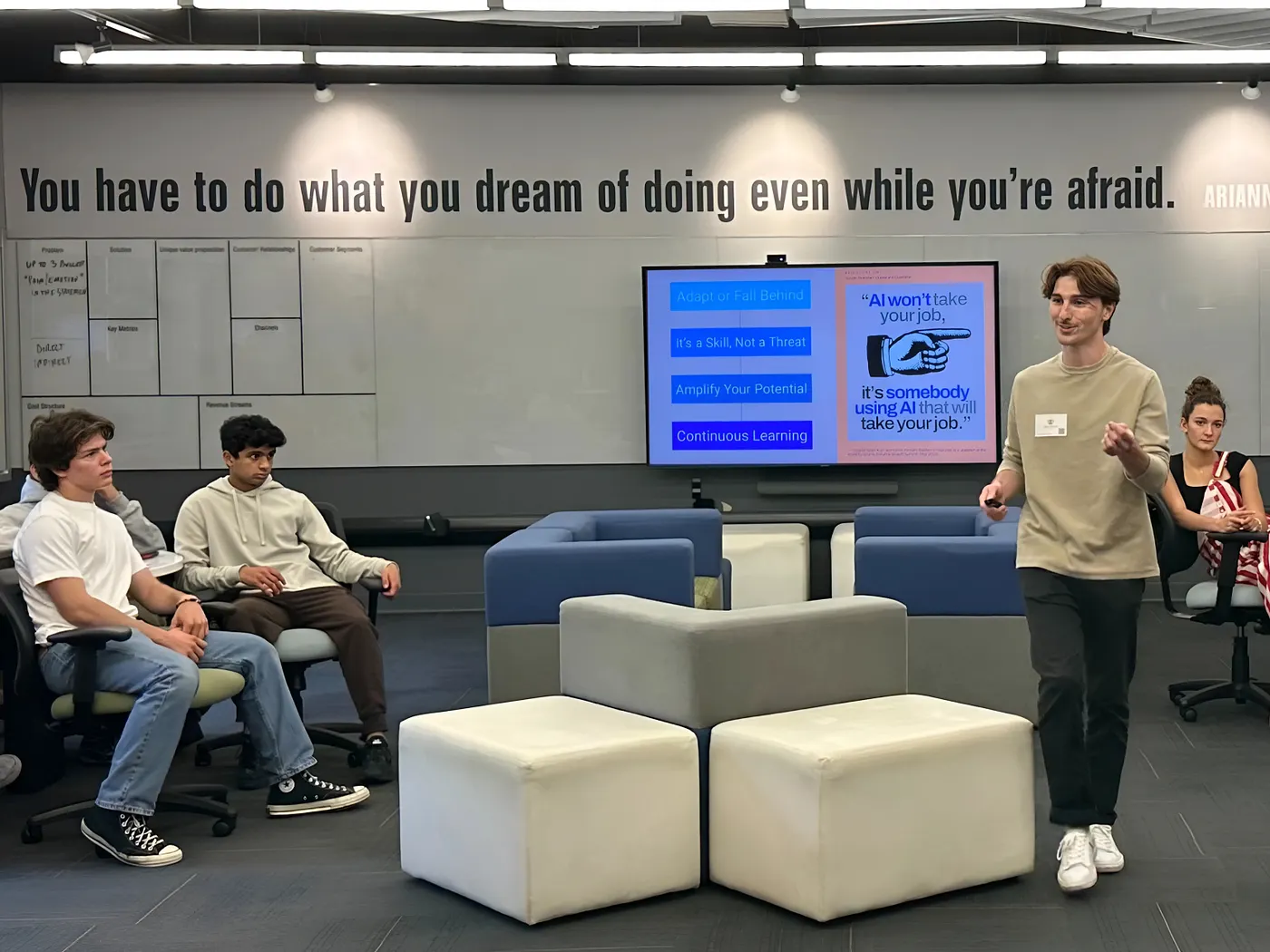
One of my favorite life lesson quotes is by the economist Richard Baldwin: “AI won’t take your job, it’s somebody using AI that will take your job.” This quote stuck with me during my internship at BlackRock, where I began integrating AI into several of the firm’s formerly manual processes. It opened my eyes to how crucial it is to stay ahead in an era where technology reshapes industries at breakneck speed.
The quote also ties into a broader historical pattern. Much like the Industrial Revolution forced workers to reskill when assembly lines replaced manual labor, today’s workforce must adapt to the AI revolution. It’s not just about avoiding obsolescence; it’s about embracing opportunity. For me, this lesson underscores my business philosophy. At Simplify Tech, staying on top of new AI tools is non-negotiable. With advancements emerging daily, integrating these innovations faster than competitors is critical for maintaining relevance and delivering value to clients.
What’s truly exciting is AI frees people from mundane, repetitive tasks, enabling them to focus on more meaningful and creative work. But it’s a double-edged sword — those who resist adopting AI risk being left behind. Ultimately, this quote reminds us the future belongs to the adaptable. Continuous learning and reskilling aren’t just optional; they’re the foundation for thriving in an AI-driven world.
You are a successful business leader. Which three character traits do you think were most instrumental to your success? Can you please share a story or example for each?
The journey toward success has taught me countless lessons, but three key traits have been most instrumental: continuous learning, vulnerability, and a willingness to fail.
- Continuous Learning
In today’s fast-changing world, the ability to constantly learn and adapt is essential. Whether it’s staying on top of emerging AI tools or diving into unfamiliar concepts, being a proactive learner is what sets successful leaders apart. Growth happens when you stay open to new ideas, even those you initially disagree with. For me, continuous learning isn’t just a habit — it’s a survival skill in an industry evolving faster than ever. - The Power of Vulnerability
Vulnerability has been a cornerstone of my personal and professional growth. Early on, I learned being honest — even saying, “I don’t know what the hell I’m doing” — fosters genuine connections. Clients appreciate this honesty because it builds trust and invites collaboration. I found being authentic — rather than pretending to have all the answers — helped me build genuine relationships and earn trust, even when I lacked a track record of success. - Willingness to Fail
Every meaningful lesson I’ve learned has come on the heels of failure. The bigger the failure, the greater the growth. In the startup world, risk is a constant companion, but it’s also the greatest teacher. As much as I wanted to quit my job and immediately find success, the decision wasn’t about chasing quick wins. It was about embracing the ups and downs of the journey and learning as much as I could every step along the way. This mindset has been essential in helping me grow personally and professionally.
Ok super. Let’s now shift to the main part of our discussion. Share the story of what inspired you to start working with AI. Was there a particular problem or opportunity that motivated you?
I’ve always been fascinated by artificial intelligence and its potential applications. While pursuing a double major in computer science at the University of Wisconsin, I had the opportunity to take several classes on machine learning and AI, including courses exploring real-world use cases. The use cases, in particular, captured my imagination. The stories showed me how AI could revolutionize industries and solve complex problems.
During my time at BlackRock, I saw firsthand how AI could transform a business’s ability to operate more efficiently and expand its growth potential. It became abundantly clear AI wasn’t just a tool; it was a game-changer.
The inspiration to work with AI more closely came when my business partner and I recognized an opportunity to help smaller businesses harness the power. While large enterprises were leveraging AI to transform operations and achieve exponential growth, we realized many small and medium-sized businesses struggled to move beyond surface-level tools like ChatGPT. We realized with the right approach, AI could do far more than save time — it could revolutionize how businesses operate by streamlining workflows, improving decision-making, and scaling growth without requiring massive teams or budgets. This vision of making advanced AI accessible and practical for smaller businesses is the foundation of our mission.
We began with the goal of acting as third-party AI consultants for small and medium-sized businesses. We wanted to bring the same powerful AI solutions we had seen in large enterprises to businesses that couldn’t afford to build in-house AI teams. A big part of our motivation was to not only implement these tools but also educate our clients — helping them stay up-to-date in a world where technology is advancing faster than ever.
Describe a moment when AI achieved something you once thought impossible. What was the breakthrough, and how did it impact your approach going forward?
One of the most surprising innovations I witnessed in recent AI development is the leap in conversational AI’s ability to mimic human conversation — both in efficiency and naturality. While I never thought it was outright impossible, I was genuinely taken aback by OpenAI’s recent advancements with GPT-4 voice bots.
At Simplify Tech, we’ve been building AI conversation bots for a while, but it was always clear you were speaking with AI. Historically, these systems relied on models so large and computationally complex that they were slow to respond, lacked natural interjections, and couldn’t replicate the nuances of human speech, such as cutting someone off mid-sentence or mirroring conversational tone. OpenAI’s latest breakthrough changed all of that.
This level of advancement has opened incredible opportunities across industries. We’ve seen companies implement AI receptionists and hotel concierge services capable of conversing fluently in multiple languages, offering a seamless, human-like experience. At Simplify Tech, we’ve been working on HIPAA-compliant AI receptionists for healthcare clients, as well as exploring applications in other sectors.
One of the most exciting projects we’re tackling is an AI CEO assistant. This system allows employees to dial a phone number and interact with a bot trained on hundreds of hours of the CEO’s meetings and communications. It mirrors the CEO’s decision-making style and conversational patterns, enabling faster access to guidance and feedback — almost like speaking to the CEO directly.
This breakthrough has completely reshaped my perspective on what’s possible with AI. It’s a reminder that even as we push boundaries, there’s always room for innovation to surprise us. The possibilities feel limitless, and it’s inspired me to explore ways AI can solve problems we haven’t even imagined yet.
Talk about about a challenge you faced when working with AI. How did you overcome it, and what was the outcome?
One of the biggest challenges we’ve faced at Simplify Tech has been designing AI solutions to align with the unique needs of smaller businesses. Small businesses often lack the resources to implement the same cutting-edge solutions as larger enterprises, which means they focus budget decisions to drive growth and scale rather than simply optimizing for efficiency. This required us to rethink how we deliver impactful AI solutions within those limitations.
To address this, we focused on developing cost-effective solutions that deliver significant value. One of our primary areas of innovation is lead generation. We’ve created techniques allowing small businesses to prospect new clients and automate outreach with the same efficiency and personalization as large-scale enterprise teams. What would typically take dozens of people in a big company is now achievable for small businesses using our AI tools, enabling them to handle large amounts of data and connect with leads in a hyper-personalized way to maximize engagement.
The outcome has been transformative. Not only have we helped our small business clients achieve growth and scale faster than they thought possible, but the refined focus on serving smaller businesses is one of Simplify Tech’s leading sources of revenue. It’s been incredibly rewarding to see how solving this challenge has fueled our growth, allowing us to scale more quickly than traditional approaches would have ever allowed.
Can you share an example of how your work with AI has had a meaningful impact (on others, on business results, etc)? What was the situation, and what difference did it make?
In my eyes, some of the most meaningful work we do is helping startups and small businesses scale their operations and achieve their goals. As an entrepreneur myself, I deeply understand the challenges of building a business, and I have empathy for those working to grow their vision.
One particularly impactful example comes from a nonprofit organization we worked with. Their mission revolves around providing educational resources to manufacturing companies, helping these businesses upskill their teams and stay competitive in an evolving industry. Like many nonprofits, they faced challenges in connecting with potential clients and expanding their outreach.
Using our expertise in AI-driven lead generation, we developed a tailored solution to help them identify high-value prospects and engage them in a more personalized way. This involved integrating a CRM system optimized for their needs and deploying automation tools to streamline individual email and LinkedIn outreach. By combining data analysis with AI, we helped them prioritize leads most likely to benefit from their services, then crafted personalized messages resonating with each prospect. This approach not only saved time but allowed the team to focus on relationship-building rather than manual prospecting, enabling them to achieve what would typically require a much larger workforce. Our system helped them target the right businesses with precision, ensuring their outreach efforts were efficient and impactful.
As a result, this organization not only grew its client base but amplified its mission of supporting the manufacturing sector through education. It’s incredibly rewarding to know our work didn’t only help our client achieve their immediate goals but had a ripple effect, empowering other businesses through the resources they provide.
Based on your experience and success, can you please share “Five Things You Need To Know To Help Shape The Future of AI”?
1 . Start with Clients, Not Code: Successful AI doesn’t start with flashy algorithms; it starts with a deep understanding of the client. The best AI solutions solve real problems, enhance the customer experience, and provide tangible value. At Simplify Tech, we’ve seen this firsthand. For example, when developing AI tools for small businesses, we prioritized understanding their unique challenges — whether it was scaling lead generation or automating repetitive tasks. By focusing on their needs, we build solutions to truly make an impact, proving user-centered design is at the heart of AI success.
2 . Embrace the AI Shift: AI is reshaping how we work, and adapting to this shift is critical. For businesses and individuals alike, embracing continuous learning and reskilling is no longer optional — it’s a survival strategy. At Simplify Tech, we’ve helped clients navigate this transition, empowering them to use AI tools to automate the mundane while unlocking time for strategic and meaningful work. AI doesn’t just replace tasks; it creates opportunities for growth and innovation when approached with an adaptable mindset.
3 . Let AI Handle the Busy Work: Repetitive tasks are the perfect playground for AI. By automating the busy work, businesses can focus their human talent on what truly matters — creativity, innovation, and strategic growth. For example, our work with small businesses often involves implementing AI-driven lead generation tools to handle outreach and data analysis. This frees up teams to focus on building relationships with clients and driving business growth, showing how AI can complement human efforts rather than replace them.
4 . Keep Learning, Always: In the world of AI, change is constant, and staying ahead requires a commitment to lifelong learning. Whether it’s exploring new AI tools, diving into emerging trends, or refining processes, a learning mindset is non-negotiable. At Simplify Tech, we prioritize staying curious, which has helped us remain competitive in an industry that evolves at lightning speed. As we learn, we can better guide our clients through their own AI journeys, ensuring they’re prepared for what’s next.
5 . Build AI with Ethics in Mind: Responsible AI development is essential — not just for trust, but for long-term success. From ensuring data privacy to addressing biases, ethical AI requires thoughtful design from the start. At Simplify Tech, we build every solution with transparency, fairness, and integrity as guiding principles. For example, when developing HIPAA-compliant AI systems for healthcare, we made privacy a top priority, earning client trust while meeting regulatory standards. Ethics isn’t just good business — it’s the right thing to do.
When you think about the future of AI, what excites you the most, and how do you see your work contributing to that future?
When I think about the future of AI, what excites me most is its potential to liberate humanity from the necessity of busy work. As AI continues to advance, it has the capacity to take over repetitive, time-consuming, or uninspiring tasks. This creates an opportunity for people to redirect their energy toward creativity, innovation, and self-exploration. Imagine a world where humans are free to focus on what truly matters to them — whether that’s pursuing personal growth, engaging in meaningful relationships, or pushing the boundaries of art and science.
To achieve this vision, we need to keep researching, learning, and integrating AI into real-world applications. That’s where my work at Simplify Tech comes in. I see our role as integrators — taking the groundbreaking advancements developed in research labs and applying them in ways that are practical, efficient, and accessible for businesses across industries. By helping organizations use AI to streamline operations and amplify their potential, we not only drive growth but also create space for people to do the work that inspires them.
In the long run, I believe integrating AI into the fabric of society will lead to a world where humans are no longer bogged down by the daily grind. Instead, we’ll have the freedom to focus on what truly matters — and that, to me, is the most exciting prospect of all.
What advice would you give to other entrepreneurs who want to innovate in AI? Can you share a story from your experience that illustrates your advice?
My advice to entrepreneurs looking to innovate in AI is this: find your niche, then make it your own. AI is a vast, blue ocean of opportunity, much like social media marketing was in the 2010s. Every business, regardless of size, stands to benefit from AI’s ability to boost efficiency and unlock growth. But because of its growing ubiquity, the key to success lies in decommoditizing your offerings. It’s not enough to say, “We do AI” — you need to tailor your solutions to a specific industry or unique use case that others aren’t targeting. Stand out by showing how your approach solves a problem in a way no one else can.
Here’s a great example, last summer Simplify Tech hit a dry spell. We realized many companies we approached were already being pitched AI solutions or had existing integrations. While we had the technical capabilities to deliver a wide range of services, we didn’t have a productized offering to set us apart. Our solution was to create a tailored, industry-specific product: a document retrieval chatbot designed specifically for asset management firms, an industry where my cofounder and I had corporate experience.
By focusing on this niche and crafting unique value propositions, we shifted the narrative. Instead of selling generic AI, we were offering a specialized tool with clear benefits for an underserved market. This allowed us to attract clients who resonated with the specificity of our solution.
So my advice is simple: carve out your space in the AI world. Don’t be afraid to narrow your focus — it’s often the most effective way to make a big impact.
Is there a person in the world, or in the US with whom you would like to have a private breakfast or lunch, and why? He or she might just see this, especially if we tag them. :-)
If I could share a meal with anyone right now, it would undoubtedly be Alex Hormozi, the author of $100M Offers and $100M Leads. Alex is a celebrated entrepreneur and a fountain of wisdom whose insights have significantly shaped the way we operate at Simplify Tech. From his books to his podcast, The Game, his teachings have been instrumental in helping us refine everything from our product offerings to our sales funnels.
What sets Alex apart is his uncanny ability to get inside the mind of the consumer and craft offers that stand out in even the most saturated markets. His expertise in creating value and driving growth has been a guiding light for us, inspiring many of the product ideas, business strategies, and even cultural shifts within Simplify Tech.
Having the chance to sit down with Alex would be a once-in-a-lifetime opportunity. I’d love to pick his brain about the unique challenges and opportunities we face at Simplify Tech and gain his perspective on how to take our offerings to the next level. Until then, I’ll keep revisiting his podcast for inspiration.
How can our readers further follow your work online?
LinkedIn: https://www.linkedin.com/in/johnny-palumbo/
Simplify Tech: https://www.simplifytech.ai/
Thank you so much for joining us. This was very inspirational, and we wish you continued success in your important work.
About The Interviewer: Dr. Bharat Sangani is a cardiologist and entrepreneur with over 35 years of experience, practicing in Gulfport, Mississippi, and Dallas, Texas. Board-certified in Internal Medicine and Cardiology, he specializes in diagnosing, treating, and preventing cardiovascular diseases, including heart disease and hypertension. In 1999, Dr. Sangani founded Encore Enterprises, a national real estate investment firm. Under his leadership, the company has executed transactions exceeding $2 billion, with a portfolio spanning residential, retail, hotel, and office developments. Known for his emphasis on integrity and fairness, Dr. Sangani has built Encore into a major player in the commercial real estate sector. Blending his medical and business expertise, Dr. Sangani created the Life is a Business mentorship program. The initiative offers guidance on achieving balance in health, wealth, and relationships, helping participants align personal and professional goals. Now based in Dallas, Texas, Dr. Sangani continues to practice cardiology while leading Encore Enterprises and mentoring others. His career reflects a unique blend of medical expertise, entrepreneurial spirit, and dedication to helping others thrive.
DB
Written by
Dr. Bharat "Doc" Sangani
Executive Contributor · Authority MagazineDr. Bharat "Doc" Sangani is an executive interviewer and contributor covering leadership, culture, and business for Authority Magazine.

Published inAuthority MagazineTop Lessons, Top Authorities · 42K Followers
Exclusive, curated interviews with the leaders and changemakers shaping tomorrow. Leadership lessons, industry deep dives, and executive profiles.