My point is that I was so committed to proving my body was 'just like everyone else’s' that I tuned out listening to it. Instead of saying 'hey, I might need extra breaks,' I said nothing and paid the physical price.
Creating inclusive workplaces is crucial for any organization that wants to get the most out of its talent. This means creating an environment where everyone feels like they belong, has equal opportunities, is empowered to do their best work, and feels comfortable making requests and contributing ideas. In this series, we asked prominent HR and business leaders about the steps they take to create more inclusive workplaces. As a part of this series, we had the pleasure of interviewing Jessie Wusthoff.
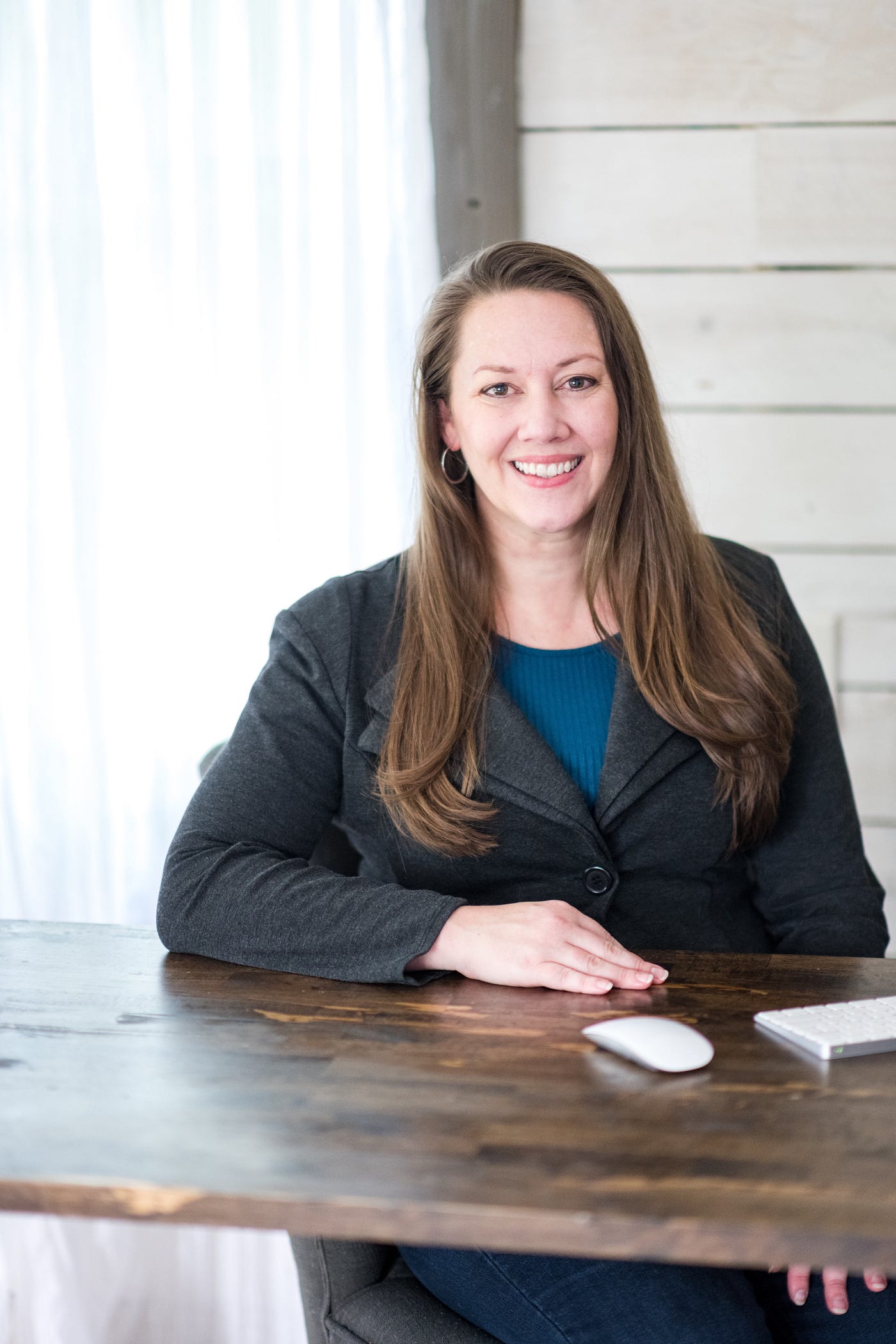
Jessie Wusthoff is a disability-focused DEI consultant with a particular passion for coaching, public speaking, and helping organizations understand the diversity of disability. She focuses on helping people understand their lived experiences as a filter and catalyst for moving past their discomfort. Jessie currently serves as a program advisor and instructor in the Kapor Center's DEIB Certification Program and applied her expert guidance on disability-related content for Dr. Suzanne Wertheim's upcoming book The Inclusive Language Field Guide. In addition to speaking at UC Berkeley’s Haas Business School, Harvard Business School, CultureAmp’s Culture First conference, and companies such as Ecolab and Box, Jessie is currently building a “Disability in DEI” training for DEI professionals eager to integrate disability equity into their work.
Thank you so much for your time! I know that you are a very busy person. Before we drive in, our readers would love to “get to know you” a bit better. Can you tell us a bit about your ‘backstory’ and how you got started?
My career has been anything but linear. When I was finishing undergrad, I worked in the maintenance department of an apartment management company. I went on to work on the floor of a museum, senior centers, tech companies, and owned an art gallery. I enjoyed doing so many different things early in my career because I believe I needed a true range of experiences to build my understanding of self. That understanding of who you are and what you need is particularly essential when you do DEI work because it is deeply personal for so many of us.
I transitioned into Diversity, Equity, and Inclusion (DEI) a decade ago for two reasons: I truly do believe it is strategic work that benefits business and I get excited about bringing that to fruition. The second reason, which I talked about much less, was beginning to see myself as disabled and finding no community for me at work. I was born with a congenital leg difference that led to using a prosthetic leg. Despite having a congenital disability, I didn’t really attach the label “disabled” to myself until adulthood.
I was well into my 20s and on an eight-hour hike in the Australian bush when I first said to myself, “You are disabled. Your body is different. You need to understand it better.” I didn’t tell the person leading the hike about my prosthetic leg and certainly hadn’t considered talking about some back and hip issues. I didn’t want to “other” myself because even as a child I knew the importance of being part of the “in group.” I was afraid they would tell me not to go on the hike if I mentioned my leg. But by the end of the hike I was barely able to put one leg in front of the other while everyone else was just a bit tired. There are plenty of athletes with disabilities, including prosthetics, that would have completed that hike like it was a casual stroll. I want to be very clear that my point is not that disability inherently makes you less able. My point is that I was so committed to proving my body was “just like everyone else’s” that I tuned out listening to it. Instead of saying “hey, I might need extra breaks,” I said nothing and paid the physical price.
Eventually, I grew tired of being the only one “like me” at companies. There were people with visible disabilities in my earlier jobs but once I went into corporate roles, it was just me. Between that and experiencing the workplace discrimination I had tried so hard to avoid, it was time. I was already getting involved in DEI efforts and that was when I knew it was what I needed to do full time.
I now focus largely on disability-focused DEI because most companies exclude this community from their DEI strategy. We’ve learned that gender equity work MUST include the intersection of race to create positive change. Other intersectional identities are finally starting to be integrated into strategic work and the intersection of disability is no less important than others. Yet somehow it is one of the most often excluded.
It has been said that our mistakes can be our greatest teachers. Can you share a story about the funniest mistake you made when you were first starting? Can you tell us what lesson you learned from that?
I’ve definitely made mistakes. I can think of many moments I’d like to re-do, especially early in my career. But that’s part of learning. The reality is, when you make a mistake in DEI there is a good chance you have done some harm. I can tell you many hilarious mistakes I’ve made (accidently showing up at a hair stylist convention instead of a DEI one stands out), but the DEI mistakes need to be taken seriously. One mistake I made that may seem small but I would argue isn’t was when I was on my first DEI panel. I mixed up the order of the B and T in LGBTQ. How did I mess up something I had said countless times?! I had so little speaking experience at the time and was very nervous. As soon as it came out wrong my brain blanked and I suddenly forgot my point and turned bright red. I stuttered and probably said “um” for longer than I care to remember before continuing and felt myself get very hot. So now I not only stumbled verbally, but I was sweating and trying not to bring more attention to myself while fanning my face. Luckily there was a closing question that gave me the opportunity to address my error. I was able to both apologize for the error and use it as an example of everyone messing up and what to do when you do. We didn’t laugh at the error. But the audience and I were able to laugh together when I then apologized for looking like a tomato for the last 30-minutes. Again, this wasn’t my first mistake and it’s far from my biggest mistake. But it was an important moment where I learned I was going to trip up and I needed to own it and move forward.
None of us are able to achieve success without some help along the way. Is there a particular person who you are grateful for who helped get you to where you are? Can you share a story?
I’ve been quite lucky to have some great managers and mentors along the way. It’s an interesting question because it makes me reflect on where I am in a literal career sense, as well as where I am as a human simply experiencing life.
Because so much of my current work really starts with “meeting people where they are,” I have been reflecting quite a bit on a manager I had earlier in my career in HR, Kristin Nagata. She showed me what kind, honest feedback really looked like and felt like. It was at a company that had training around “feedback as a gift” but at that point in my career it sure didn’t feel like one. But she simultaneously gave me the hardest feedback I’ve ever received and treated me with the most kindness I’ve experienced from a manager. I never doubted her sincerity or the fact that she absolutely had my best interests in mind. If she was telling me something tough to hear, it was because I truly needed to understand it. She unknowingly taught me what a growth mindset is. Without her I couldn’t have made the same progress on understanding the difference between intent and impact when communicating. Given that DEI involves so many difficult and vulnerable conversations, I would have been completely stalled in my career and probably my personal life without her feedback. She is a truly inclusive leader who enabled me to do the best work I had done at that company. And now much of my work really focuses on communication.
Can you please give us your favorite “Life Lesson Quote”? Can you share how that was relevant to you in your life?
I’m going to throw everyone off with this one. It’s something Vin Diesel posted on Facebook and I have up on my wall: ‘Protect your innocence…Our innocence allows us to do what the practical mind prohibits.” I haven’t been able to find an earlier citation of this, so I like to think of it as a Vin-original even though I’m not sure. Regardless, it speaks to something so crucial in a world that is often so harsh. I consider myself a realist and this quote choice will likely surprise people close to me. I’m pretty “matter of fact” about things. But those words really helped me look more broadly at my role in my work and my personal life. To think back to a time when I was more innocent and remember how freeing it was to just try things.
It’s just not practical to think that I can change the world on my own. But when I connect with a sort of innocence, a part of me that’s not weighed down by frustrations and realities, I’m motivated to try anyway. To create all the wins that I can while knowing others are working toward the same goals. I really leaned into this idea when starting disability-focused consulting work. It’s hard to create change, but I must believe it is possible. And in my personal life those words have led me to return to a lot of creative work that’s given me a lot of life and helped me maintain the energy to keep pushing forward in my work.
Thinking back on your own career, what would you tell your younger self?
That my mother was correct and majoring in Ancient Mesopotamian Art History was not the most practical choice. But in all seriousness, I would tell my college self to do it anyway. I’d tell my 20-something self that now is the time to try things and really double down on not comparing my career progress to others. That constant comparison took so much of my energy. You will not figure out the “right” career choice by thinking about it all day. Focus on learning as much as possible and stay humble. If something doesn’t go how you hoped, that’s not a failing. It just means it’s time to look at the next set of choices. I love that I have done so many different types of work in such different industries. I couldn’t have landed where I am today if I skipped any one of those steps.
Let’s now move to the central part of our interview. What systems do you have to ensure your workplace is as inclusive as possible?
Confidential support and resolution systems are essential. Ideally, we wouldn’t experience discrimination in the workplace. Second best would be working in environments where people don’t worry about the negative consequences of sharing that they have experienced discrimination. But neither of these ideals are reality. You need to provide employees with options to resolve situations and sometimes it simply feels safer for employees to go to a third party. Many companies have a vendor for confidential reporting, but those often simply pass along the message. That’s not a system that’s actually supporting anyone. My preference is to use a service like tEQuitable which doesn’t stop at writing something down. They collect data on topics that help employers know what systemic issues they have while also offering ombuds services to individuals looking to talk through options and advice. Ombuds are neutral third parties who work with employees on moving toward resolutions. They are available for all employees, whether they have created, observed, or been the target of unfair treatment.
Seek employee feedback through pre-existing groups. I am generally a fan of having employee test groups and focus groups, but they can take time to bring together and scheduling can be messy. Employee Resource Groups (ERGs) and DEI committees (or working groups) often have an established cadence for meetings and communications that you can join. I love connecting with such groups and asking if they would be interested in providing feedback on new training or policies. Make sure to start with permission to make a tangible request before diving right in. The group may already have full agendas related to their needs and goals; you don’t want to put those in jeopardy. I have found that the request is often welcome and feedback is fruitful. Be sure you connect with multiple groups to receive diverse perspectives.
Based on your experience and success, what are your top five tips for creating more inclusive workplaces? Please share a story or an example for each.
YouTube video: https://youtu.be/_lubqzoz9Mk
1. Show that it’s safe. Leaders who share their lived experiences signal that it is safe to do so at work. For example, if you have senior leadership who speak openly about their own disabilities, it can significantly increase a sense of normalcy and safety for employees to disclose their disability. I’ve seen this work first hand both when sharing my own disability and seeing disclosures increase, as well as my own increased sense of safety when hearing an executive disclose. When employees feel safe disclosing, they are more likely to ask for any needed accommodations.
2 . Make learning personal. Real stories simply make more impact than hypotheticals. I can tell you what to do and not do, but if you hear someone’s story that will make much more of an impact and create more of an investment in applying what you learn. I love Film Forward’s offerings because their program focuses on authentic stories and personal reflection. My favorite film included in their business offering showed a black mother who had just moved to a new neighborhood going around and introducing herself and son to neighbors, all of whom were white. There was something about seeing the reactions of the different neighbors that made it so much easier to think about my own behaviors welcoming new neighbors than reading about a more generalized experience. Stories simply make a bigger impact than listening to someone read slides for an hour.
3. Coach leaders. Much of advancing diversity, equity, and inclusion is about unlearning behaviors. By bringing in inclusive leadership coaches you are giving leaders personalized support for asking questions, making mistakes, and learning without fear. I’ve worked with many executives who say things they believe show their DEI adeptness, such as “I don’t see color,” because that’s what they were taught was the “right” mindset earlier in their career. The reality is, that phrase demonstrates erasure of someone’s racial identity, shows a lack of understanding systematic issues, and suggests someone’s race can automatically be a bad thing. When you say “I don’t think of you as disabled” to someone who identifies as having a disability, you are erasing the individual's experience and applying assumptions of what disability “looks” like. An individual may be well-meaning, but that doesn’t mean they are well-informed. A coach can help leaders identify what habits to break down and reassemble to align more closely to their intent.
4. Train HR on your accommodation process and make the information easy for employees to find. This probably seems like a given, but it’s pretty terrifying how many HR professionals don’t feel comfortable with disability accommodation requests. I hear stories about them stumbling over their words or simply being caught off guard and have no idea what the process actually is. Train them on these things and make sure employees can find the information in your handbook or intranet. Even better: train managers on what to do if an employee brings up the need for an accommodation. This is one area where training can be quite impactful in creating change because it can clarify so many misunderstandings around what accommodations actually are.
5. Use what you have, just use it better. For disability DEI, it’s often not about having separate systems. It’s about making sure the systems you have are used equitably for the full employee population. Are you automatically turning on closed captioning without making someone ask? Are you using Microsoft’s accessibility features when creating power points? Does your intranet provide corresponding text alongside information graphics? It’s easy to think “if someone needed these things, they would tell us.” Unfortunately that often isn’t the case. The stigma around disability is so high, people will often let their work suffer rather than risking the potential impact of that stigma.
Can you share 3 or 4 of the most common mistakes you have seen businesses make while trying to become more inclusive? What should one keep in mind to avoid that?
The first is panicking. Especially when employees are frustrated and wanting to see change. This leads to looking for quick fixes that don’t actually change anything. You need to do systemic work and keep employees regularly updated so they know you are listening to them. The world changes quickly and sometimes the work will be reactive. But there is so much companies can get ahead of. Companies have legal teams construct and review contracts before signing to avoid a problem down the road. It’s good business. So why not have a DEI team that can partner across the company to show teams how to build equitable and inclusive teams before harm occurs? It’s simply another version of getting ahead of a potential failure.
An all-to-common mistake is seeing DEI as a separate team “taking care of it.” DEI can definitely offer some tactical support and a properly staffed DEI team may manage full programs. But our role, first and foremost, is to teach you how to fish, not just to keep handing you fish. Approach your partnership with DEI with a learners mindset and you will find the work significantly more meaningful and satisfying.
Another common mistake is to measure things then not take action. There are many potential reasons why, but one I don’t see talked about as much is underestimating the work needed once the survey is complete. A well-designed survey allows you to dig deeper, it doesn’t print out a checklist you can complete in a week. That means additional conversations and collaborating with teams will be needed to create an action plan. Then there’s the implementation of the plan. If this sounds like a lot of work, that’s because it is. You have to prioritize findings and be strategic in order to make your survey action impactful and sustainable. Do not underestimate the lift needed to action survey results! If you do, you're more likely to deteriorate trust and do more harm than good.
How do you measure the effectiveness of your DEI efforts?
As with any business initiative, you start by defining the desired outcome of each strategy. For example, if you are worried about attrition being high for a specific employee demographic, you need to remember you’re looking at attrition for that group compared to the overall population. That means not just looking at the attrition rate over time, but also making sure you are gathering metrics for each of the retention strategies you are implementing. Otherwise you are relying on the overall population having a positive response and missing the point. I like to send short surveys to capture immediate sentiment after a training or ongoing development program, look at trends for correlating engagement survey questions, and of course, continue to look at the attrition metric you set out to change from the start.
One of my favorite metrics to examine is time to promotion, the length of time someone is in a role before promoted to the next level. Many people put a lot of weight on the importance of your current diversity demographics at the senior levels. I agree those numbers are important and impactful. And I’m just as concerned about what your leadership is going to look like in 2 years, 5 years, and further down the road. Time to promotion can signal what tomorrow’s leadership looks like. It shows you who you are holding back and who you are elevating. If you see one demographic moving through promotions at twice the rate as another, you have to dig into that and see what’s happening.
When thinking about people metrics, take a step back. The more you can connect data across each step of the employee lifecycle, the better. More and more platforms are allowing you to put employee onboarding surveys, performance reviews, exit feedback, and similar key data into one platform so you can see where you are doing well and where you need to invest.
Are there other organizations you admire for their approach to DEI? Can you please explain why?
I can think of two whose work I value in different ways. Microsoft does more than most in the area of disability inclusion. Their disability employee resource group has existed longer than any I’ve experienced (roughly 15 years), disability representation among employees is higher than I’ve seen elsewhere, and they bring accessibility to several of their products. They have a well-run annual summit where you can learn how they are further advancing accessibility in existing and new products. They are investing resources into the belief that inclusion is good for employees and market share.
I also respect CultureAmp’s approach largely because they demonstrate a consistency in their dedication to DEI, desire to integrate equitable design both internally and externally, and “put their money where their mouth is.” My favorite example of this last piece is their 38% discount for Black and Indigenous-owned organizations. That may seem like a random number, but it is very intentional. It represents the $0.38 wage gap between Black women and White men.
I see so many companies contradicting themselves when you compare their external and internal actions. They may donate to an external health care non-profit, but then not cover health care costs for their employees. Or they sign an external commitment to be anti-racist, but leaders never receive coaching on what that means and what actions to take. This is my number one rule: be consistent. As soon as you contradict yourself you lose credibility and often cause harm.
What do you do to address Proximity Bias? How do you ensure remote workers are treated the same as onsite workers and have equal access to opportunities?
In my work, I’ve seen leaders who make delegation decisions quickly and “on the fly” fall into proximity biases particularly quickly. When we are hurrying, biases have their chance to shine and interfere with better choices. No leader wants to be told to slow down and convincing them to do so is not easy. But it can save you so much time in the long run to simply put in two minutes of thought before assigning something. If nothing else, do the following when you are delegating new projects:
· Have a list of your team members in front of you in some form. You want to reset your brain to pay equal attention to everyone on that list instead of focusing on who you happen to think of first.
· Ask yourself questions such as: What skills are needed for the new project? Who has those skills or would benefit from developing them? Who has bandwidth? Who has not received a stretch opportunity recently? Who is set up for success to execute this? The key here is knowing your team members well enough to accurately answer these questions instead of assuming the answers.
· Be sure to look at how you answer these questions over time. If there’s only one name that comes to mind every time you ask one of these questions, you have a larger problem and need to move upstream to better enable the rest of your team. Partnering with your learning and development team or HR business partner should help you get direction on what to do next.
One of my top concerns around equitable opportunity right now is what I describe as time zone proximity bias. With some people back in physical offices, yes, we will see the return of “traditional” proximity bias that has long been proven. Due to the remaining increase in remote work, I’ve also seen people replace physical proximity bias with time zone proximity bias. You’re simply more likely to interact with people with whom you have the most overlap in working hours. That makes those people top of mind compared to those with less overlap, just as those sitting closest to you would be more top of mind. This is where pausing briefly to look at your full team can really pay off, as can scheduling messages in advance so that those employees in different time zones receive messages at the start of their day instead of the middle of the evening. The latter is a quick way to create stress and burnout.
Focus less on equal access and more on equitable access. It’s not about all of your globally-dispersed employees receiving an email with exciting projects they can volunteer for at the same exact time. Pretending all other factors are equal, it’s about making sure employees in every time zone have a realistic chance to read the email before people can start volunteering.
Leaders also need to understand what sorts of opportunities are of interest to employees. Is it stretch assignments to build skills? Increased visibility among senior leaders? If you are assuming which opportunities matter to people and putting effort into manifesting those opportunities, you may find yourself frustrated when employees provide feedback that they don’t receive opportunities that others have even though you feel like you’ve been consistent with everyone. Once you understand what opportunities employees are looking for, you can make sure that you are distributing those more equitably.
We are very blessed to have some of the biggest names in Business, VC funding, Sports, and Entertainment read this column. Is there a person in the world whom you would love to have a private lunch with, and why? He or she might just see this.
Given I mentioned him earlier, I obviously have to say Vin Diesel. The Fast & Furious franchise is a phenomenon that just keeps getting bigger. Its cultural impact is massive and that includes the choices made around representation. Not everyone realizes that Michelle Rodriguez advocated very successfully for increased representation of women on and off screen. I’d love to connect with Vin about getting more disability representation started. I feel that he’d agree there’s always room for more family.
How can our readers further follow your work?
You can follow me on LinkedIn to stay up to date on my various writing, podcasts, and consulting offerings. You can also see more about what I do on NewPerspectivesDEI.com.
Thank you so much for sharing these important insights. We wish you continued success and good health!