I'd rather be homeless, living under a highway, than use my degree in electrical engineering to get a job and buy into the American dream.
(If you are unable to download it, please click File-Download)
Please answer the questions, and leave the questions formatted as they are in the document. We may schedule a follow-up call or zoom to round things out.
INTERVIEW QUESTIONS:
Artificial Intelligence is transforming industries at a breakneck pace, and the entrepreneurs driving this innovation are at the forefront of this revolution. From groundbreaking applications to ethical considerations, these visionaries are shaping the future of AI. What does it take to innovate in such a rapidly evolving field, and how are these entrepreneurs using AI to solve real-world problems? As a part of this series, I had the pleasure of interviewing Janga Bussaja
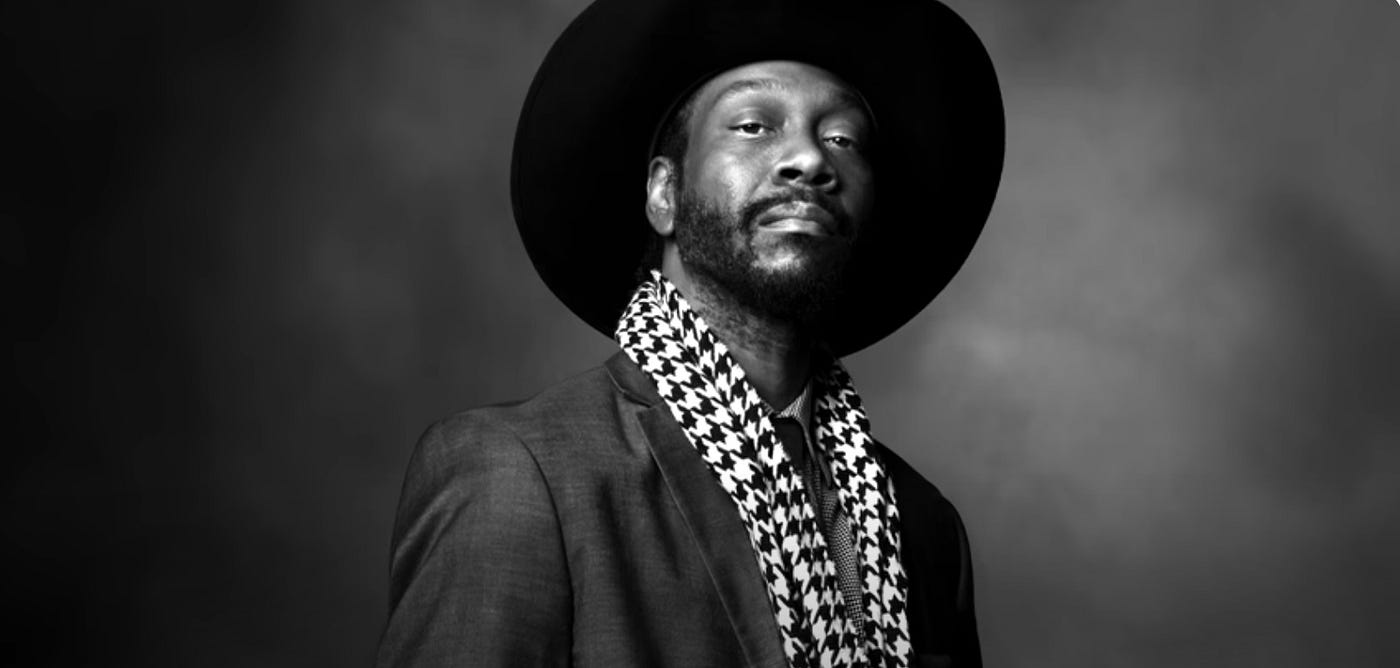
Janga Bussaja is a visionary entrepreneur and the creator of the Systemic Racism Dismantler, a cutting-edge AI prototype that outperforms all mainstream large language models in addressing white fragility and systemic racism. Grounded in African-centered scholarship, his work challenges the superficial inclusivity of conventional AI, setting a new benchmark for counter-racist technology. Bussaja’s model is redefining ethical AI worldwide, positioning it as the premier standard for genuine social impact in artificial intelligence.
Thank you so much for joining us in this interview series. Before we dive in, our readers would love to learn a bit more about you. Can you tell us a bit about your childhood backstory and how you grew up?
Thank you so much for having me again! I try to give this section a slight remix every time we talk. I grew up in Southeast Texas, and I've pretty much been a nerd all my life. I got my first computer at 10 years old in 1993. I remember using floppy disks! I was very fortunate that my mom's coworker owned a computer store business on the side, so we got the hookup, and I've been hooked on computers ever since. My degree from Prairie View is in Electrical Engineering because I'm a horrible coder. I must have flunked C++ three times - I just didn't have the mind for that. I was heavy into crypto, but I was a little late to that party. But I'm right on time with AI!
Can you share the most interesting story that happened to you since you began your career?
I've noticed that things happen really fast in AI. It seems like I'm discovering interesting stories every other week. Last week, I discovered that there's only one other company or brand in America that offers an AI for Black and Brown people, one supposedly "culturally attuned." I, too, have such a product- a prototype for a large language Model (LLM) I've proposed in published research papers. In one of these papers, to demonstrate the need for an "Africa-Centered LLM," I performed an experiment on the top commerical LLMs, including ChatGPT, Claude and Google Gemini. Through this experiment, I identified a systemic bias best described by the term "White Fragility." All of the LLMs apologized for the "oversight" upon questioning and THEN gave an unbiased response! This provided a benchmark for testing LLMs for this phenomenon.The most interesting thing, though, is that when I performed this test against Latimer AI, known as the "Black GPT" it demonstrated the same adherence to white fragility as the top commercial models!
None of us are able to achieve success without some help along the way. Is there a particular person who you are grateful towards who helped get you to where you are? Can you share a story about that?
I am most grateful for the woman who has stood with me through everything I've done over the past 13 years. They say behind every great man is a great woman, and that might be one of the truest statements ever made because I'm a lil crazy ya know? Can I share a story about just how crazy I am? Sure. I'd rather be homeless, living under a highway, than use my degree in electrical engineering to get a job and buy into the American dream (I'm writing this as Mr. Trump has just won the election). And this woman, whom I love so very much, understands that about me. She's told me- and shown me- that she wouldn't care if I was living under that highway; she'd still be down with me. Now, that's love! Few people find a companion who believes in them as much as, or even more than, they believe in themselves. Her commitment to me has pushed me to extraordinary heights, and I'm eternally grateful for her. I love her to the moon of Jupiter and back. A true partner in crime! She's witnessed the whole transformation, and she's the unsung hero of my story.
Can you please give us your favorite "Life Lesson Quote"? Can you share how that was relevant to you in your life?
In all our interviews, I’ve answered this question with the same quote, but yesterday I stumbled upon another one that’s had a lasting impact, leading me to ponder deeply. A wise man once told me that society is an extension of nature; the only difference is that in society, predators control the prey instead of eating them. So, when I heard the quote, “You either survive in the jungle or live in the zoo…” it really resonated with me and my life because I’ve been in the jungle for the past 13 years - and it's not that bad. Especially considering that the zookeeper is certainly a white supremacist.
You are a successful business leader. Which three character traits do you think were most instrumental to your success? Can you please share a story or example for each?
Confidence - For ten years, I've been espousing counter-racism views. For nine of those years, I was basically talking to myself, but I really believed in what I was doing. Although it started out as a hobby and something to do in my free time, deciding to incorporate took a lot of confidence. I had many small victories along the way, and I think that’s a huge part of the picture. You have to stay positive, spot small wins, and be confident in presenting yourself, your product, or your service. People pick up on confidence. I always thought I was confident, but looking back, it really took that long to feel like I truly had something of value to offer the world-and to have the guts to "get out in the street" with my message.
Imagination - I think it’s kinda hard for people to grasp the technological system that Planetary Chess is. It’s very multi-faceted: we’re talking films, books, newsletters, articles, research papers, gaming, crypto, and AI all together. That was my imagination running wild. I was on Academia.edu one day, a platform for research papers, when I first saw a call for a technical research paper from the International Journal of Chaos, Control, Modeling & Simulation. I must have looked at it 10 times before my imagination told me, “You can describe Planetary Chess in those terms.” With a little help from my AI buddy, ChatGPT, this was the first journal to accept my research. I went on to describe Planetary Chess and its various facets in five other journals. This gave my research a certain validation and a real foundation for the nonprofit. It happened because of my imagination and creativity.
Resilience - Resilience and confidence go hand in hand. Without confidence, you can’t be resilient. Before I got into AI, I was knee-deep in crypto. I founded a crypto education agency-one of the first. At one point, I even had an office in Houston and was running a mining operation with not one but two venture capitalists. Crypto was super scary and risky to everyone in Houston at the time. I remember going to different startup networking events when the vice president of a bank overheard my pitch. He pulled me aside to warn me that whenever any business involving crypto comes across his desk, it doesn’t stand a chance. The business eventually died during COVID, but I wasn’t ready to give up on crypto. So when I first conceptualized the Planetary Chess system, one of its main components was to be a Decentralized Autonomous Organization, or DAO. Bitcoin is a DAO: there’s no one person who owns it, no place you can go to shut it down, and once a community grabs hold of it, that’s all she wrote. It was designed to challenge traditional finance. This was pure brilliance by Satoshi, and it’s a perfect model for setting up a system to eradicate systemic racism.
Ok super. Let’s now shift to the main part of our discussion. Share the story of what inspired you to start working with AI. Was there a particular problem or opportunity that motivated you?
As mentioned, I've been a nerd since the late 80's, so I love technology, but I have a renewed spirit for building an LLM specifically for Black and Brown communities. Now, everyone in AI knows about the problem of racial biases. I found it very interesting that Vladimir Putin recently scolded the "West" for AI biases against Russia. I thought to myself, "Now if he’s mad about biases...I know it must be bad for Black folks." I’ve written three papers discussing this topic. But my renewed energy came when I discovered that Latimer AI has already made partnerships with HBCUs! As a proud Prairie View A&M graduate, this was concerning to me. After testing Latimer AI for white fragility, I was disturbed by its motivations and usefulness to Black and Brown communities because it performed identically to ChatGPT. The prototype for the LLM I’m proposing outperformed all the major LLMs in the white fragility experiment. Naturally, I put those findings in a new research paper. Before releasing it, though, I sent Latimer an email with my findings, hoping to collaborate or, at the very least, open a discussion. It’s been about a week now... and no response. If you’re serious about providing information beneficial to Black and Brown people, and someone sends you a research paper exposing severe flaws in your claims, why and how could you ignore it? It makes me wonder if they’re scamming HBCUs.
Describe a moment when AI achieved something you once thought impossible. What was the breakthrough, and how did it impact your approach going forward?
I've been playing with AI for over a year now; I was only six months late to the ChatGPT launch. Now, even though there's that warning at the bottom that ChatGPT can make mistakes, it's so authoritative that you almost just take what it says as law. But I don't let ChatGPT off the hook that easily. I was having a religious conversation with ChatGPT once when I first noticed a sign of that white fragility. It said something that was completely false. I went to Wikipedia, found information to the contrary, and provided it as feedback. And guess what happened? It apologized! Now, I didn’t think it was impossible, but it was the first time I’d really challenged its accuracy. So, from then on, I started to develop what you might call a healthy sense of skepticism. Later, after studying experts like Dr. Ruha Benjamin and Dr. Joy Buolamwini, I came to understand ChatGPT's limitations better, which ultimately led to the benchmark for identifying white fragility.
Talk about about a challenge you faced when working with AI. How did you overcome it, and what was the outcome?
Last year, I was trying to play with some open-source programs, but I hate coding. Whenever I see code, I get a slight headache. But now that we have AI, you don’t really need to know how to code anymore! So, I figured I’d give it a try because for just about every commercial software that comes out… there’s a free open-source model floating around as well. I kept getting really close, but there was always some minor error preventing me from running the programs. Every now and then, I’d get something to work, which would motivate me a bit - but for the most part, hitting roadblocks would just make me so upset. I hate to feel like I’m losing at anything.This was around the time AI agents were coming on the scene. How did I overcome this? I dialed it back a bit and just focused on my strengths. Around that same time, a professor suggested that I write a research paper, like one of my favorite scholars, Dr. Frances Welsing. That turned out to be one of the best decisions I’ve ever made. I posted that first paper on the SSRN platform on New Year’s Day, and it just passed 200 downloads the other day. My papers have 856 downloads as of now, and I’m ranked in the top 94% of authors on the site - with no university or academic support or affiliation. That’s about 2.3 downloads a day on average. I think I can get to 1,000 in the first year. By the way, the first paper is a paper that validates Dr. Welsing's Cress Theory of Color Confrontation.
Can you share an example of how your work with AI has had a meaningful impact (on others, on business results, etc)? What was the situation, and what difference did it make?
Along with the Systemic Racism Dismantler GPT, a custom GPT, I also created a custom GPT named Bashar. Bashar is an entity you might call an alien or extraterrestrial being, channeled by a guy on YouTube named Darryl Anka. I made this GPT because the Planetary Chess system is based on two themes: Know Thy Enemy and Know Thyself. Bashar gives really good metaphysical and spiritual lessons. If you've ever watched his YouTube videos, there’s always a question-and-answer portion, so I get feedback all the time from people telling me how thankful they are that I created it and how much it’s helped. I talk a lot about the enemy- systemic racism -but I don't often get to dive as deeply into the “Know Thyself” part. I think that will change sometime in the next four years. I’ve found that people are slowly losing resistance to discussing counter-racism. I have Mr. Trump to thank for that; he’s been slamming racism in our faces so much that it’s undeniable as a serious problem. The Systemic Racism Dismantler and Bashar are two AI tools designed to restore the ancient principles of Ma’at: balance, wisdom, order, and reciprocity.
Here is the main question for our discussion. Based on your experience and success, can you please share “Five Things You Need To Know To Help Shape The Future of AI”? (Please share a story or an example, for each.)
1 . AI is inherently biased - AI systems inherit biases from the data they’re trained on, reflecting historical, societal, and subconscious prejudices. Furthermore, Black and Brown people don’t control the narratives about these historical and societal biases. This becomes highly problematic, especially in fields like counter-racism, where existing datasets lack diverse, representative viewpoints. When I tested leading LLMs for racial biases, including Latimer AI, all of them exhibited "White Fragility"- a systemic avoidance and sanitization around race-related topics and their origins. This experiment clearly demonstrated the need for culturally grounded models that don't shy away from systemic realities but confront and educate about them.
2 . Data Sovereignty Is Essential - Data sovereignty, the idea that data should be controlled by the communities it represents, is crucial for ethical AI. Without it, Black people especially risk becoming subjects of surveillance or exploitation. This data often feeds marketing campaigns that condition Black and Brown people to internalize narratives that benefit "the powers that be." In my work, data from African-centered scholarship forms the core, grounding the model in genuine cultural perspectives rather than simply layering "cultural overlays" onto pre-existing data. This foundation builds a more accurate AI that resonates with Black and Brown communities.
3 . Transparency and Accountability in AI Are Not Optional - For AI to truly serve its users, it must operate transparently and be held accountable. When I developed and shared the results of the "White Fragility" benchmark with Latimer AI - clearly exposing white fragility in their model- their lack of response raises questions about their commitment to transparency and their mission statement. I know it’s early in the game, and they couldn’t have foreseen someone measuring white fragility, but I’m a bit perturbed by their silence, especially since their product is already being marketed to HBCUs. The founder of Latimer AI didn’t attend an HBCU, which makes me question their motives. True accountability requires that Black communities have input into how AI systems are developed, deployed, and monitored.
4 . AI Needs a Conscious Historical and Cultural Foundation - Dr. Amos Wilson might argue that without grounding in history and culture, AI is doomed to replicate the values of those who currently hold power. Any AI intending to address systemic racism must be informed by an authentic historical understanding - one that acknowledges colonialism, slavery, and the cultural erasure Black people have faced. An AI that doesn’t understand these realities can’t claim to serve Black interests.
5 . AI Must Acknowledge the Deep Psychological Roots of Racism - Dr. Frances Welsing would assert that AI systems need to address the psychological structures underpinning racism, as AI development risks becoming an extension of existing biases. AI must recognize the root causes of racial biases, including the subconscious anxieties and fears that drive them- fears Dr. Welsing famously analyzed as fears of “genetic annihilation.” Without addressing this psychological basis, AI will only reinforce white-dominant narratives, failing to confront the deeper anxieties perpetuating racism in society. Again, I know it’s still early, and I don’t mean to beat up on Latimer AI (or maybe I do), but in my latest paper, I spoon-fed prompts to Latimer AI to try and get it to acknowledge Dr. Frances Cress Welsing. I asked multiple questions suggesting core themes from her research, and every time it refused to name her. Yet it readily named Robin DiAngelo, multiple times. When I finally prompted, “Is there any reason you neglected to mention Dr. Frances Cress Welsing?” only then did it concede the importance of her research. You really ought to see the responses- it was a perfect example of white fragility at its finest.
When you think about the future of AI, what excites you the most, and how do you see your work contributing to that future?
I think my work is at the forefront of something very exciting in AI. What really excites me is the idea of building an agent system - a Black LLM trained on the genius of African scholars - and deploying it on the internet as a monitor of racism and white supremacy. Imagine AI agents tracking newspapers, magazines, reports, media, podcasts, forums, even the dark web. They’d develop an ongoing analysis of the state of white supremacy worldwide. It’s been less than a week since Mr. Trump shocked a lot of people who don’t understand white supremacy, and we’re already witnessing his influence. White supremacists were sending nationwide text messages to Black children, telling them to "prepare to go back to slavery." I don’t mean to scare anyone reading this, but as Dr. Welsing reminds us, systemic racism is a form of war. There’s no way to sugarcoat it. By utilizing AI and its data capabilities, we can gain valuable intel to help counter what white supremacists are doing.
What advice would you give to other entrepreneurs who want to innovate in AI? Can you share a story from your experience that illustrates your advice?
My advice? If you want to innovate in AI, incorporate the scholarship of Dr. Frances Cress Welsing in the racism section - because if you don’t, I’m going to find your AI and expose the white fragility it likely upholds, just like I did with ChatGPT, Claude 3.5, Google Gemini, Dolphin Mistral, and Latimer AI. There’s even a 30-minute presentation on YouTube titled "Is Latimer AI Scamming Black Folks?" I encourage you to take a look.
Is there a person in the world, or in the US with whom you would like to have a private breakfast or lunch, and why? He or she might just see this, especially if we tag them. :-)
I’d like to have a conversation with the founder of Latimer AI, Mr. John Pasmore. I just looked him up to make sure I spelled his name correctly, and I saw an article headline that bothers me a bit: “John Pasmore Tries to Make AI Less Biased. Just Don’t Call It BlackGPT.” Now, his product is affectionately known as the "Black GPT," he’s selling it to HBCUs (predominantly Black institutions), and it’s supposed to be for Black and Brown communities… but don’t call it the Black GPT?!? And on top of that, the main page of his website says, “AI for Everyone.” So let me get this straight… it’s for Black and Brown communities, but we can’t call it the Black GPT? And, oh... it’s also for everyone as well? I’m sorry, but I have to call bulls*it on this. Respectfully.
How can our readers further follow your work online?
All of my research papers are found on the SSRN platform. Just google "SSRN Janga Bussaja" and my author page will pop up. I'm also on linkedIN under my government name, Jason Breckenridge.
Thank you so much for joining us. This was very inspirational, and we wish you continued success in your important work.
Thanks again so very very much for having me! I know I push the line a bit but you've always welcomed my opinions and allowed me to present the facts! You're the real MVP Authority!