I used to think the average person cared about computer or data security, and I learned after a few years that, unfortunately, they do not. Many people view security as strictly a cost center and not an asset that carries value.
Tech
Jake Yocom-Piatt of Decred: Key Lessons in Tech and Building Lasting Impact
Crypto pioneer Jake Yocom-Piatt explains how blockchain governance uses rolling opt-in lotteries to eliminate dedicated decision-makers and align financial incentives.
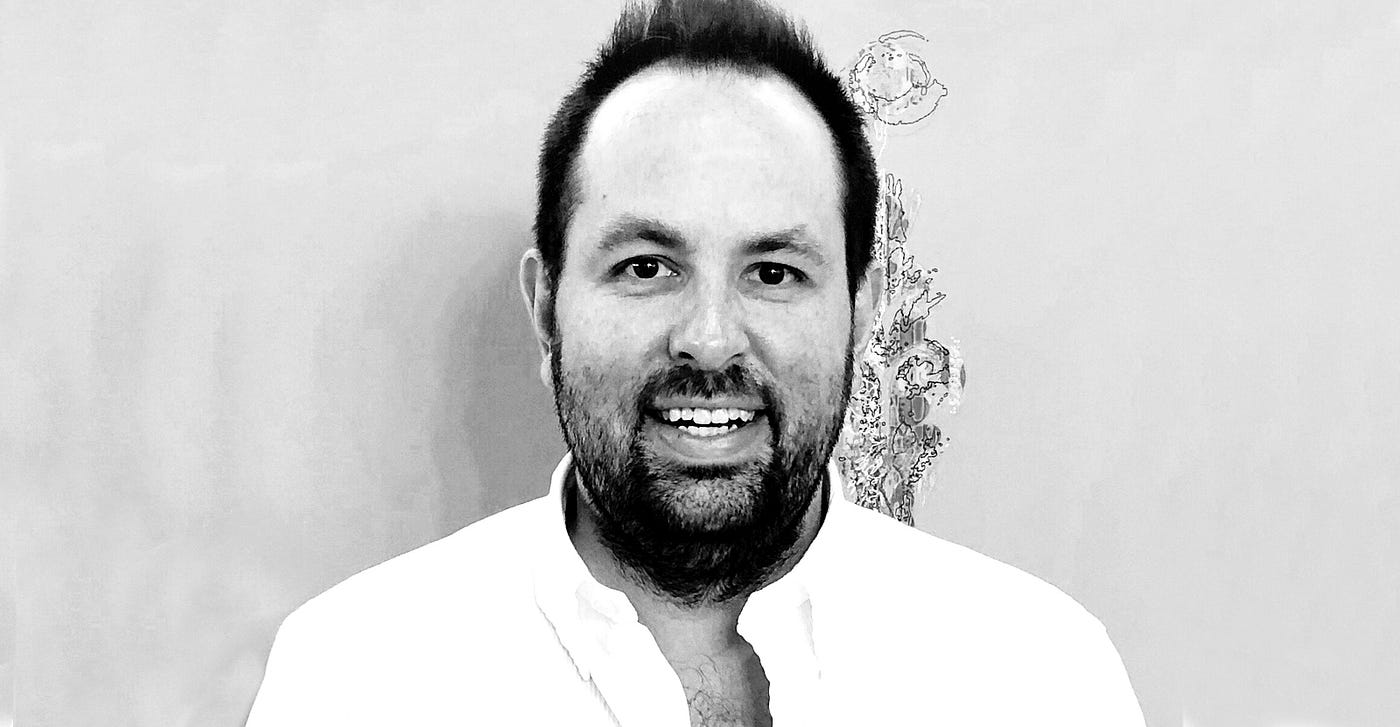
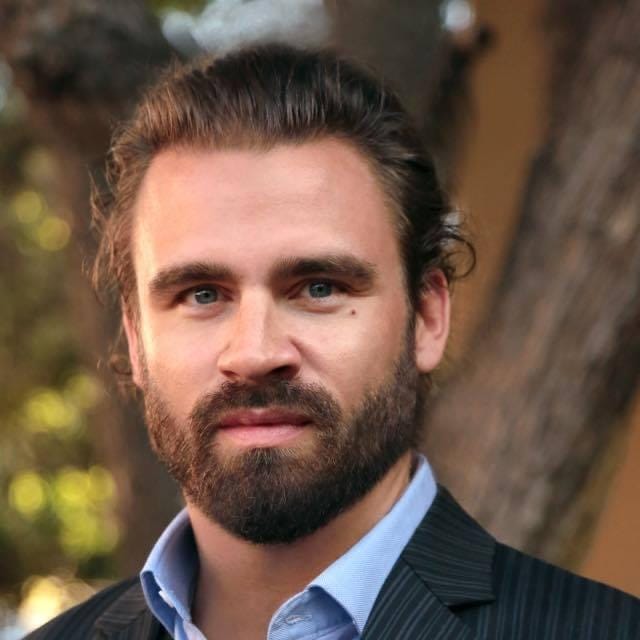
As a part of our series about business leaders who are shaking things up in their industry, I had the pleasure of interviewing Jake Yocom-Piatt.
Jake Yocom-Piatt is a Co-Founder & Project Lead for Decred. He is a cryptocurrency pioneer who has been using, funding and directing the creation of open-source software for 10+ years and has been featured as an expert source for a variety of publications, including Reuters, The Wall Street Journal, Forbes, Coindesk, and many more. Prior to Decred, Jake funded and oversaw the creation of btcsuite, an alternative full-node Bitcoin implementation written in go, whose source code has been used in several other notable projects, e.g. Lightning Network (lnd), Ethereum, and Factom. He also is a co-creator of zkc, a high-security asynchronous chat system.
Thank you so much for doing this with us! Before we dig in, our readers would like to get to know you a bit more. Can you tell us a bit about your “backstory”? What led you to this particular career path?
I am a self-trained system administrator who is preoccupied with security, both for fun and for profit. As a reaction to the extent of persistent surveillance that occurs in the United States and elsewhere, I developed an interest in non-custodial data networks, such as Tor. I funded and oversaw the development of btcsuite, an alternative full-node implementation of Bitcoin in Go, and I have been involved in the cryptocurrency space since 2013. After working on Bitcoin for several years, I decided to create a new cryptocurrency, Decred (https://decred.org), to address what I saw as substantial shortcomings in the governance and incentive alignment of Bitcoin.
Can you tell our readers what it is about the work you’re doing that’s disruptive?
My current project, Decred, is redefining governance using blockchain technology. Many nation state governments and corporations are staffed by elected officials, whose incentives only weakly align with those of their constituents. Instead of electing officials like a nation state or corporation, Decred uses a rolling opt-in lottery to make policy decisions, removing the need for dedicated decision makers and the corresponding delegation of sovereignty. Decred is an effort to create a fairer financial system driven by sound money, where its community makes decisions as a group and every decision maker has skin-in-the-game.
Can you share a story about the funniest mistake you made when you were first starting? Can you tell us what lesson you learned from that?
I used to think the average person cared about computer or data security, and I learned after a few years that, unfortunately, they do not. Many people view security as strictly a cost center and not an asset that carries value. I used to perceive my focus on security as a weakness, but I have come to see it as a strength when properly applied. Through blockchain technology, it is possible to convert computer and data security into something a broader audience gets excited about, namely sound money.
We all need a little help along the journey. Who have been some of your mentors? Can you share a story about how they made an impact?
My pseudonymous Decred cofounders, tacotime and _ingsoc, certainly made a lasting impression. I learned that names and identities in the cryptocurrency space are less relevant that you might think. Cryptocurrencies obsolete the meatspace notion of identity most of us are so familiar with by allowing anyone to accept payment for anything and masquerade as whoever they choose. This is a natural result of the permissionless nature of proof-of-work, and there are bound to be deep long-term effects from this decoupling of identity, work, trust, and value in the future.
In today’s parlance, being disruptive is usually a positive adjective. But is disrupting always good? When do we say the converse, that a system or structure has ‘withstood the test of time’? Can you articulate to our readers when disrupting an industry is positive, and when disrupting an industry is ‘not so positive’? Can you share some examples of what you mean?
When an industry depends on natural processes, such as farming or pest control, it is possible to disrupt an industry by disrupting nature, and I view this as a very dangerous and often negative kind of disruption. Replacing naturally occurring plant species or insects with genetically-modified organisms strikes me as having a lot of downside risk, e.g. the Oxitec mosquitos that have been released in Brazil and will be released in the Florida Keys.
Can you share 3 of the best words of advice you’ve gotten along your journey? Please give a story or example for each.
How you do things matters — There are many ways to accomplish a goal, but how you execute is incredibly important. The simplest way to accomplish something is almost never the proper way to do it, so deciding where to draw the line between the theoretical and practical is key.
Keep it simple — It is legitimately hard to keep things simple with cryptocurrencies. While many things I work on may be perceived as complex by observers, I always aim to keep complexity to the minimum required to accomplish a goal.
Put yourself in the right place at the right time. A huge factor in succeeding at anything is to be in the right place at the right time. You can be in the right place at the wrong time or the wrong place at the right time and your efforts can be totally fruitless.
Lead generation is one of the most important aspects of any business. Can you share some of the strategies you use to generate good, qualified leads?
Since Decred is a cryptocurrency, it doesn’t have a sales department like a corporate entity does. The fact that it is pretty much impossible to verify a sale or investment in a minable cryptocurrency means that the sales process depends strongly on word-of-mouth and social networks. We create simple messaging and make a point to deliver on our technological promises.
We are sure you aren’t done. How are you going to shake things up next?
We are nearing the initial release of our decentralized exchange, DCRDEX (https://github.com/decred/dcrdex), and, like our sound money and governance tech, the goal is to create a fairer system for exchanging cryptocurrencies. Instead of turning DCRDEX into a business that is driven by fees, we aim to create an email-like user experience for the exchange process, where anyone can operate a server and exchange any cryptocurrencies they want. DCRDEX is substantially different from both tokens and standalone cryptocurrencies that do decentralized exchange because it acts solely as an exchange protocol. While it is possible to shut down a blockchain with some effort, it is effectively impossible to shut down individual servers that can be spun up on demand without any prerequisites.
Do you have a book, podcast, or talk that’s had a deep impact on your thinking? Can you share a story with us? Can you explain why it was so resonant with you?
I have been reading Charles Hugh Smith (https://www.oftwominds.com/blog.html) for the past several years, and I have found his work to give deep insight into how society, labor, politics and finance drive the world around us. Since I am someone who works to unrig societally-important games, e.g. timestamping, decision-making, and price discovery, observing Charles’ ability to distill complex problems as processes that are clearly rigged in one or more ways helps build my own ability to have similar insights. By being intelligently reductive, it is possible to identify problems that others have missed and generate novel disruptive solutions.
Can you please give us your favorite “Life Lesson Quote”? Can you share how that was relevant to you in your life?
“You are what you do. A man is defined by his actions, not his memory.” Every person has their own memories and thoughts, and what truly defines them is what they do, what they manifest. Thinking about a solution or proposing one is just the preamble to the real work, the execution and delivery. Cryptocurrency is a domain rife with showerthought spewers and snake oil salesmen, which underscores the nature of executing and doing.
You are a person of great influence. If you could inspire a movement that would bring the most amount of good to the most amount of people, what would that be? You never know what your idea can trigger. :-)
Reorganize human society around fairer games. Our world as it exists today is ruled by blatantly rigged games and entrenched special interests, and rather than attempting to battle these forces on their own terms, we must redefine the battlefield. By creating a level playing field, we can create true equality of opportunity and legitimately evolve as a society.
How can our readers follow you online?
Follow me @behindtext on Twitter and Decred @decredproject on Twitter and Facebook.
This was very inspiring. Thank you so much for joining us!
AM
Written by
Authority Magazine Editorial Staff
Editorial Desk · Authority MagazineThe Authority Magazine Editorial Desk produces, verifies, and edits long-form primary-source interviews with executives, innovators, clinicians, creators, and social impact leaders across Business, Tech, Pop Culture, Wellness, and Social Impact.

Published inAuthority MagazineTop Lessons, Top Authorities · 42K Followers
Exclusive, curated interviews with the leaders and changemakers shaping tomorrow. Leadership lessons, industry deep dives, and executive profiles.