Web 2.0 accrued fortunes on the backs of free labor by unpaid open source volunteers. web3 has the power to change this. Software wants to be free, but programmers need to be compensated.
Tech
Timothy Lewis of Tea: Inside the Architecture to Bring the Creator Economy and Fair Compensation to Open Source Software
Veteran blockchain developer and Tea co-founder Timothy Lewis shares insights on leveraging decentralized token economies to sustainably fund the future of open source software development.
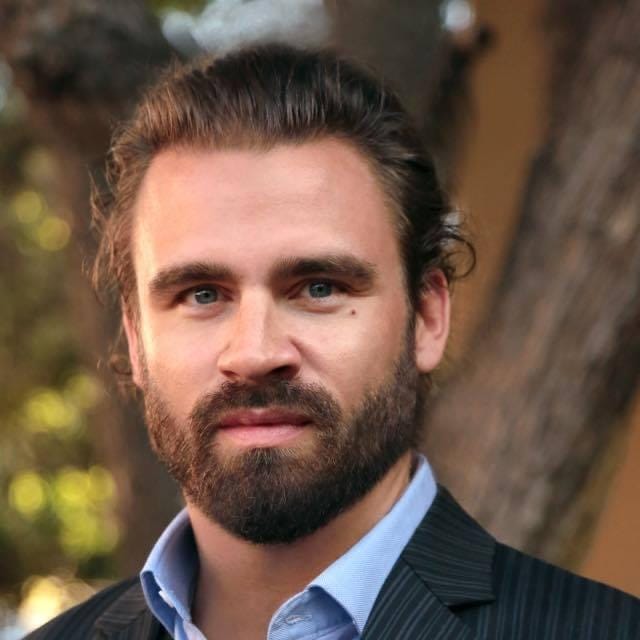
As a part of our series about business leaders who are shaking things up in their industry, I had the pleasure of interviewing Timothy Lewis, Co-Founder of Tea, a company building the first open source software platform on the blockchain. Tea launched in 2022 with $8 million in seed funding led by Binance Labs, the venture capital and innovation incubator of Binance, the world’s leading blockchain ecosystem and cryptocurrency infrastructure provider.
Thank you so much for doing this with us! Before we dig in, our readers would like to get to know you a bit more. Can you tell us a bit about your “backstory”? What led you to this particular career path?
I’ve been consulting as an engineer since I was 14 years old for clients including Fimat financial, Calyon Financial, NewEdge, Northern Trust, Sun Microsystems, Oracle, and Kaiser Permanente. I switched over to primarily working on Blockchain Development in 2015 and have been involved in that area ever since. I founded Ikigai Asset Management in 2018, an L/S hedge fund now managing over 200 million. Then, in early 2020, I founded DEVxDAO, a non-profit that provides grants to build cohesion and longevity in decentralized systems. This year, I’ve teamed up with Max Howell, the founder of the open-source software package management system Homebrew, to fix how open source is funded by creating our company, Tea.
Can you tell our readers what it is about the work you’re doing that’s disruptive?
Web 2.0 accrued fortunes on the backs of free labor by unpaid open source volunteers. web3 has the power to change this. Software wants to be free, but programmers need to be compensated. Through the use of the blockchain and crypto, Tea has the potential to introduce new paradigms that allow open source compensation without direct payment. The platform can solve a core problem for the open-source software development community by utilizing the critical value proposition of decentralized token economies. We’re bringing the creator economy to open source. Our vision is to fix how open source is funded and create the tools that will accelerate its creation for the benefit of all humanity.
We all need a little help along the journey. Who have been some of your mentors? Can you share a story about how they made an impact?
Scott Morris, one of the world’s best infrastructure engineers, helped me hugely when I was young. We met through Internet Relay Chat (IRC), a communication forum that was thriving in the early to mid-90s. He shared expensive gear, like optical routers and optical switches, with me when I was a kid. I wouldn’t have had access to that in my bedroom on the farm without him.
Brian McGahan is a great educator on routing protocols and I’ve used his educational materials often.
Later in my life, Scott Walker introduced me to the world of cryptocurrency and where the crypto/blockchain market was headed, which significantly shaped my career and the creation of my current company, Tea.
In today’s parlance, being disruptive is usually a positive adjective. But is disrupting always good? When do we say the converse, that a system or structure has ‘withstood the test of time’? Can you articulate to our readers when disrupting an industry is positive, and when disrupting an industry is ‘not so positive’? Can you share some examples of what you mean?
The one constant in life is change. One industry’s destruction is another’s creation. Disruption for the sake of disruption isn’t great, but if it’s an evolution in the ability for people to use a system in a better way, it should be expected and appreciated. From a technology perspective, things have always changed. Every generation has torn down and built new possibilities, but now the potential for technology is cycling much faster than ever before because we have a more interconnected humanity. As more intelligence is understood, the better the tools we’ll create will improve.
Can you share five of the best words of advice you’ve gotten along your journey? Please give a story or example for each.
Captain Bernardo Herzer has 70-something patents and circumnavigated the globe multiple times. He advised: No moving parts on anything you’re building. I’ve built both physical products and software and have come to understand that creating something software-based in this day and age has the power to impact the world at a much faster pace.
Another piece of advice that I live by is to travel the world. By traveling, you can see different perspectives and integrate within the communities where you travel.
Also, don’t expect others to meet you at your viewpoint. Instead, try to understand why other communities have come to their views in their corner of the world.
Buddha’s quote, “Peace comes from within,” is another great and beautiful thing to live by.
No matter how hectic and stressful life is, if you have a clear conscious view of your decisions and have peace within, it helps to get through difficult things. The chaos of Burning Man and finding peaceful consciousness within that was a big learning lesson for me.
We are sure you aren’t done. How are you going to shake things up next?
Our recent funding is being used to hire additional resources to continue work on the protocol, software, and community development. Tea will have unique, first-of-its-kind features like our blockchain remuneration component, token governance, security application, and decentralized distribution of packages.
Do you have a book, podcast, or talk that’s had a deep impact on your thinking? Can you explain why it was so resonant with you?
The Starfish and the Spider: The Unstoppable Power of Leaderless Organizations by Ori Brafman is a fantastic book. If a starfish loses a limb, that severed limb can create an entirely new starfish. The book explores how so-called ‘starfish’ organizations are changing the world. It explains decentralization in a great way and explores how other organizations with decentralized governance in history have succeeded.
I also really appreciated The Tao of Pooh by Benjamin Hoff and E. H. Shepard. Pooh is such a lovable character and a fun, accessible way to explore the ancient principles of Taoism. When I was younger, IQ was stressed instead of EQ, and this book laid out a much more impactful understanding of emotional intelligence.
And lastly, Think and Grow Rich by Napoleon Hill. I liked the author’s approach and the way he connected the understanding that if you want to strive for more in life, you have to be open to speaking with people who have more in life. It’s essential to be creative in how you see and imagine yourself; if you can imagine yourself in a way, you can be that way.
Can you please give us your favorite “Life Lesson Quote”? Can you share how that was relevant to you in your life?
I don’t ascribe to any overarching quote that summarizes direction in life. Listen to those who love you. Love with an open heart. Hope. Believe. Continue to move forward. Rinse. Repeat. Do it again.
How can our readers follow you online?
Follow Tea on Twitter or connect with us on Telegram, GitHub, or Discord.
This was very inspiring. Thank you so much for joining us!
FG
Written by
Fotis Georgiadis
Editor & Journalist · Authority MagazineFotis Georgiadis is a senior columnist at Authority Magazine covering Tech and Business, conducting primary-source Q&A interviews with founders, executives, and industry leaders.

Published inAuthority MagazineTop Lessons, Top Authorities · 42K Followers
Exclusive, curated interviews with the leaders and changemakers shaping tomorrow. Leadership lessons, industry deep dives, and executive profiles.