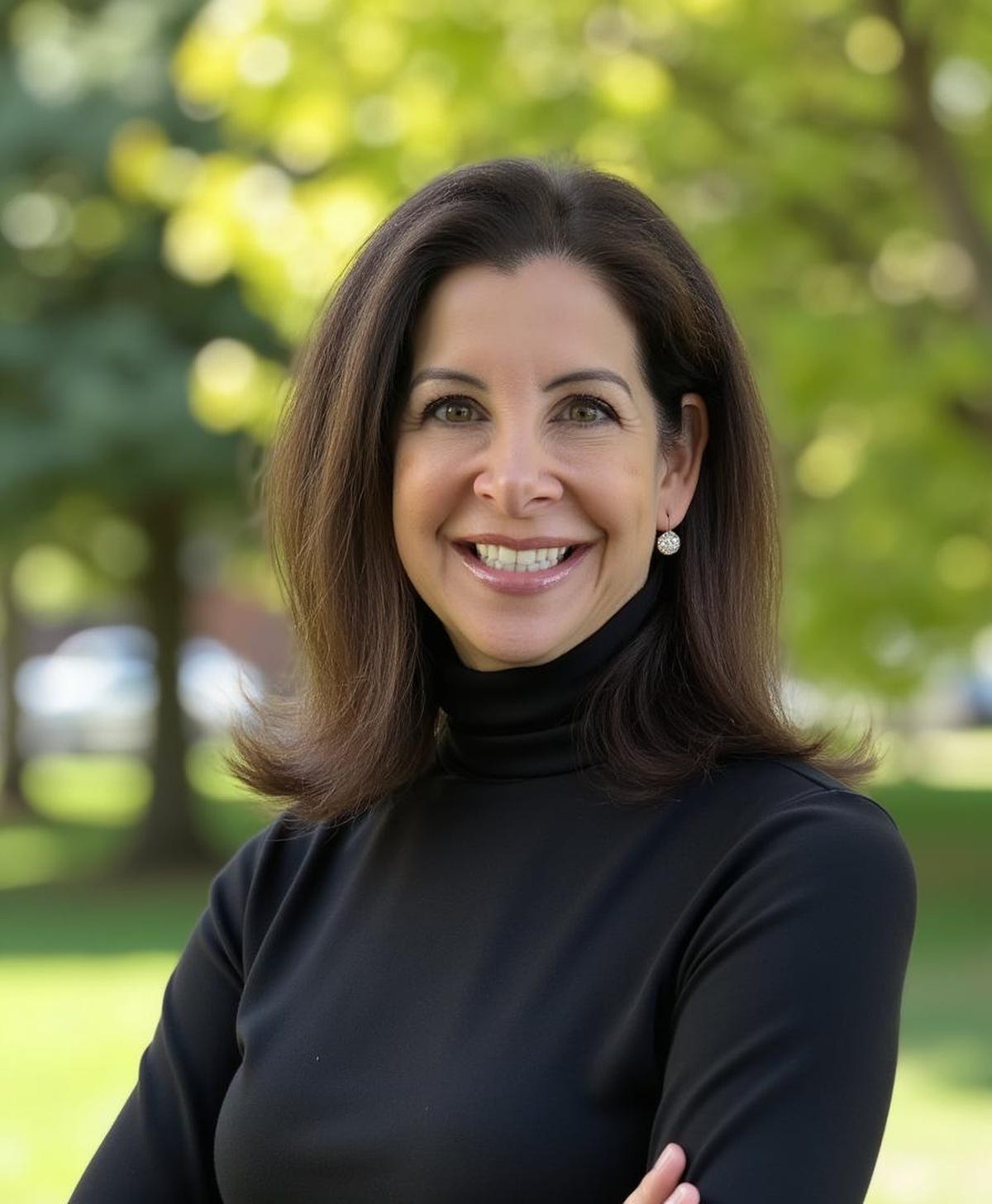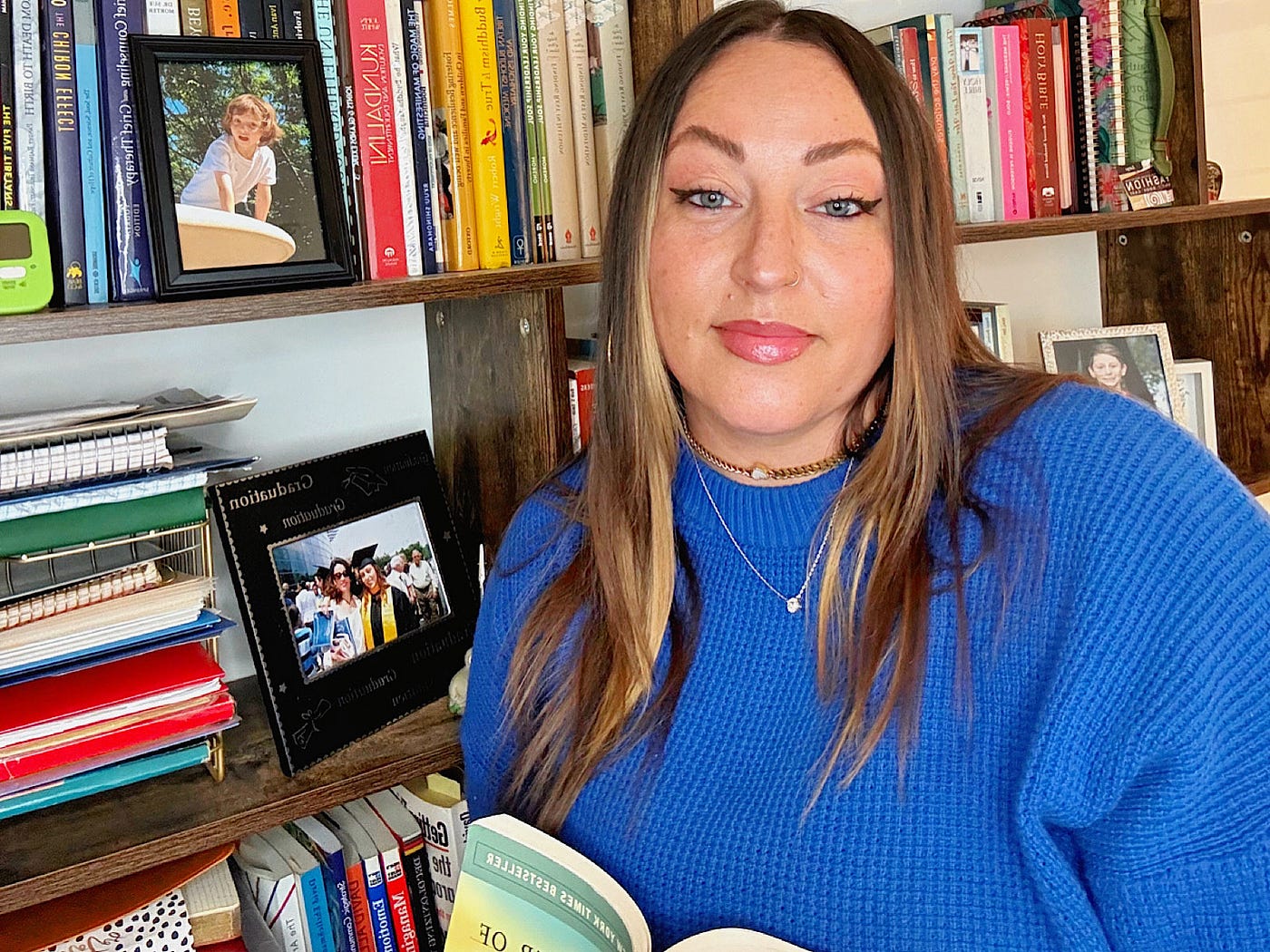

For years, I followed external expectations instead of my inner voice. When I began asking myself what truly inspired me and acted on those insights, my life and work transformed.
Intuition is defined as the ability to understand something immediately without the need for conscious reasoning. Where does intuition come from? Can it be trusted? How can someone tune in to their intuition? To address these questions, we are talking to business leaders, coaches, mental health experts, authors, and anyone who is an authority on “How to Get In Touch With Your Intuition And When To Trust Your Intuition When Making Decisions.” As a part of this series, I had the pleasure of interviewing Isabelle Spoon.
Isabelle Spoon is an intuitive medium and spiritual teacher who helps people reconnect with their inner wisdom and develop their intuition in practical ways.
She holds a bachelor’s degree in Human Development and Family Studies and has trained in mediumship and intuitive development under mentors affiliated with Arthur Findlay College, a world-renowned center for spiritual studies.
Through her work, Isabelle shares educational content and spiritual resources designed to help individuals strengthen self-awareness, trust their inner guidance, and recognize that human perception extends beyond the traditional five senses.
Thank you so much for doing this with us! Before we start, our readers would love to “get to know you” a bit better. Can you tell us a bit about your childhood backstory?
I grew up as a quiet, curious child in a small Pennsylvania city in the 1990s, surrounded by my supportive mother and grandparents. My childhood was filled with warmth, laughter, and memorable family moments. Even in those early years, I sensed a deeper spiritual pull and a strong intuition that I could not ignore, setting the stage for my later interests.
This early spiritual curiosity shaped my interests. I remember watching The Montel Williams Show whenever psychic medium Sylvia Browne appeared, captivated by her stories. At home, I developed personal rituals such as lighting a candle, sitting quietly, and seeking guidance in my own way.
At times, my intuition showed up as a gut feeling prompting me to pause or change direction. For example, before my grandfather and I left for a meal, I felt overwhelming dread; we went out and were soon in a minor accident. Research shows that most people have had gut feelings that later proved correct, supporting the idea that intuitive signals can anticipate events.
Like many teenagers, I set aside my spiritual interests to fit in. However, my intuition persisted, resurfacing during pivotal moments. This turning point eventually led me, in my mid-twenties, to fully embrace my spiritual path, which has since shaped both my personal and professional life.
Can you please give us your favorite “Life Lesson Quote”? Can you share how that was relevant to you in your life?
“Your vision will become clear only when you look into your own heart. Who looks outside, dreams; who looks inside, awakens.” - Carl Jung.
This quote has always resonated with me. For years, I followed external expectations instead of my inner voice. When I began asking myself what truly inspired me and acted on those insights, my life and work transformed. This experience reinforced that true direction comes from within. I incorporate this principle into my work by guiding clients through exercises that encourage honest self-reflection before making decisions. Inspired by Jung’s wisdom, this approach helps individuals seek clarity within themselves, turning timeless insights into a practical tool for self-discovery.
Try this: Before making your next decision today, pause, turn your focus inward, and ask, "What is my heart telling me about this choice right now?" Then set a one-minute timer and simply listen. Notice what surfaces, and act on that guidance.
The process of self-reflection brought both rewarding and challenging experiences, ultimately helping me become more authentic. For me, this quote serves as a gentle reminder to have the courage to follow what feels true to your heart.
Is there a particular book, podcast, or film that made a significant impact on you? Can you share a story or explain why it resonated with you so much?
One book that significantly influenced me was Radical Intuition by Kim Chestney. As I explored intuition more intentionally, its practical exercises encouraged daily use. This shift from learning about intuition to actively applying it made a lasting difference for me.
What stood out to me was the book’s practicality and clarity. As a hands-on learner, I appreciated its step-by-step structure, which made the material easy to follow. The book emphasizes practical application through simple exercises and reflection.
A key lesson I have learned from books on intuition is that each author presents a unique approach; there is no universal method. While each book deepens understanding, applying these ideas is most important. Books like Radical Intuition showed me that intuition is a skill that can be developed and strengthened through daily practice.
Let’s now shift to the main part of our discussion. Let’s begin with a definition of terms so that each of us and our readers are on the same page. What exactly does intuition mean? Can you explain?
In my experience, intuition works as an inner compass, providing immediate insight that does not rely on logic or conscious reasoning. It may appear as a quiet inner voice or a gut feeling that guides you before all the facts are known. Research from the Max Planck Institute suggests that people may make more accurate decisions under time pressure when they rely on their intuitive instincts rather than solely on logical analysis. This blend of personal experience and scientific evidence reinforces my belief in intuition as a reliable internal guide.
Intuition manifests differently for each person. For some, it is a gut feeling; for others, it may be a sudden insight, a sense of alignment, or unease. Often, it reflects our mind and body processing information subconsciously before we are fully aware.
I view intuition as a natural human ability, not a mystical trait reserved for a select few. The key difference is that some individuals learn to notice, trust, and intentionally develop it.
How would you define common sense? Are intuition and common sense related?
Common sense is the ability to make practical decisions using logic, experience, and available facts. It involves evaluating what is realistic or sensible in a given situation.
Intuition functions differently. Rather than relying solely on facts or logic, it often appears as an inner knowing or feeling, sometimes before we can articulate a reason. While common sense focuses on observable information, intuition draws from deeper awareness and subtle cues we may not consciously recognize.
Although they differ, intuition and common sense can complement each other. Intuition may provide an initial prompt, while common sense evaluates it logically. Using both often leads to more balanced and thoughtful decisions.
For instance, if you feel an unexpected urge to avoid your usual route home, consider practical reasons such as road construction or adverse weather. Here, common sense weighs the facts alongside your instinct.
Allowing intuition to guide your awareness, then using logic to assess the situation, often results in decisions that are both safe and wise. This partnership between inner guidance and practical reasoning frequently leads to optimal choices.
For example, you might feel prompted to take a different route home, only to later discover traffic or delays on your usual path. Such experiences show how intuition may guide us before we know the reason.
How are they different from each other?
The phrase, “The body knows before the mind,” captures the distinction between intuition and common sense. Intuition is often linked to sensory awareness and the nervous system, manifesting as gut feelings, subtle emotional signals, or an inner sense of right or wrong before conscious thought occurs. For instance, you might notice your shoulders tensing, a quickened pulse, or a fluttering in your stomach before consciously recognizing that a decision feels off. Naming these specific bodily cues makes it easier to recognize how your intuition communicates with you in real time.
Research in psychology and neuroscience suggests that our bodies can respond to subtle signals before our conscious mind processes them logically. For example, studies on decision-making indicate that physical responses, such as changes in the nervous system or emotions, can occur before we fully understand the reason for our feelings.
In contrast, common sense relies on logical reasoning and critical thinking. It draws from past experiences, facts, and practical judgment to support rational decision-making.
Intuition typically arises quickly and instinctively, while common sense involves a more deliberate evaluation of information. Both are valuable but operate through different mechanisms: intuition through immediate internal awareness and common sense through conscious analysis.
What are the positive aspects of being in touch with your intuition? Can you give a story or example to explain what you mean?
One major benefit of tuning into your intuition is a deeper connection to your inner guidance. Listening to this inner voice increases confidence in your decisions, as you rely less on external opinions and more on what feels right for you. For example, I worked with a client named Lillian, who struggled to make choices because she felt overwhelmed by endless information and uncertainty. During our work together, we intentionally paused and turned down the noise of outside input. As Lillian sat quietly with each option, I noticed her body shift, her shoulders relaxed, and she let out a slow, deep breath. In that stillness, Lillian suddenly felt a gentle warmth in her chest and a quiet certainty about one path. This was the first moment she recognized her intuition cutting through the confusion. Lillian later shared with me that this experience of clarity not only helped her make that specific decision, but also boosted her self-confidence and empowered her future choices.
Intuition also enables us to notice subtle details that might otherwise go unnoticed. Sometimes, you sense an opportunity is right or not quite right, even if it appears perfect on paper. In these moments, intuition serves as an early warning system, prompting closer attention.
For instance, you may meet someone and immediately feel comfortable or uneasy without knowing why. This first impression often results from your mind and body instinctively processing subtle cues in their behavior, tone, or energy.
Over time, learning to recognize and trust these signals helps you make choices that align authentically with your values, relationships, and life direction.
Are there negative aspects to being guided by intuition? Can you give a story or example to explain what you mean?
There are times when what we perceive as intuition can be misleading, often influenced by our emotional state. When we are angry, anxious, or highly emotional, these feelings can cloud both intuition and judgment. True intuitive signals are easier to discern when we are calm, grounded, and present.
Before making any important decision, I encourage readers to try a quick grounding pause. For example, close your eyes and take three slow, deep breaths, noticing the gentle rise and fall of your chest or the feeling of your feet on the ground. Spending just ten seconds focused on your breath can help settle your mind and body, making it easier to connect with a clear, authentic sense of inner guidance.
For example, during an argument, you may feel compelled to end a relationship or make a significant decision. Often, this urge stems more from emotion than from clear intuitive insight.
Exhaustion, extreme stress, or being under the influence can also cloud intuition. In these states, it becomes much harder to interpret your inner voice accurately.
For this reason, I encourage people to pause before making significant decisions. Allow yourself time to return to a calm, balanced state. When your mind and body are settled, intuition becomes clearer and more reliable.
Can you give some guidance about when one should make a decision based on their intuition and when one should use other methods to come to a decision?
In my experience, intuition is most effective when combined with thoughtful reasoning. For everyday decisions, such as choosing a route or considering an opportunity, intuition can serve as a valuable guide. In situations without a clear right or wrong answer, your internal sense of alignment can guide you.
For major or life-changing decisions, such as a career move or financial commitment, it is best to combine intuition with logic and practical analysis. As a general guideline, whenever a decision involves a significant amount of money (for example, more than $1,000), or will impact your life for a year or more, take extra time to weigh the facts, consider possible outcomes, and consult your intuition. Using both approaches leads to more balanced and confident decisions.
In my experience, the most effective approach is to allow intuition and logic to work together. Intuition may indicate a direction that feels right, while logic helps you determine how to proceed in a practical and responsible manner.
For example:
Let’s say someone is deciding whether to relocate to Arizona or Texas. They’d start by listing the pros and cons considering cost of living, career opportunities, climate, and community. That covers the logical side. Then, they’d quiet their mind and check in with how each option feels, noticing where they’re most drawn even if it’s not the place the pros-and-cons list suggests. Sometimes, intuition points to the option you least expect. Blending practical analysis with inner guidance allows for decisions that are both responsible and deeply aligned.
From your experience or perspective, what are some of the common barriers that hold someone back from trusting their intuition?
Overthinking is a major barrier to trusting intuition. When we become overly analytical, we may overlook subtle intuitive signals. Many people are conditioned to doubt their perceptions, resulting in a cycle of second-guessing.
Self-doubt and the search for external validation can also interfere. Frequently seeking others’ opinions before making decisions often indicates a reliance on external input rather than your own inner awareness.
The influence of the ego is another barrier. Personal desires or comfort can overshadow subtle intuitive signals. Developing intuition involves pausing, quieting mental noise, and distinguishing between emotions, external expectations, and genuine inner guidance.
Here is the central question of our discussion. What are five methods that someone can use to become more in touch with their intuition? (Please share a story or example for each)
To make these five methods easier to remember and share, I have created a unifying framework called the SPARK Model. SPARK stands for: Slow Down, Pay Attention, Ask Within, Record Insights, and Keep Learning. Each part of this model supports the journey of reconnecting with your intuition in daily life.
1. Slow Down (Practice Presence):
Intentionally focus your awareness on the present moment. Intuition is most clear when you are attentive to what is happening now. One way to anchor yourself is to notice a specific bodily sensation, such as the temperature of the air as you breathe. Concentrating on a single sensory detail grounds your attention and helps reduce mental distractions.
In my experience, my intuition is clearest when I slow down and create space for stillness, whether through meditation, a quiet walk, or a few deep breaths before making a decision. These pauses allow subtle insights to emerge that might otherwise be lost amid mental noise.
2. Pay Attention ( Start Small With Intuitive Choice)
A practical way to develop intuition is to start with small, low-stakes choices. When making simple decisions, such as choosing a route home or your next activity, pause and observe your gut response.
Intuition may feel like openness, curiosity, or calm toward one option, while another may feel tense or resistant. Noticing these signals in daily situations builds trust in your inner guidance without the pressure of major decisions. Over time, these small practices enhance your ability to recognize intuition.
3. Ask Within (Reduce the Noise of Outside Opinions):
Constant external input is a major obstacle to intuition. While advice from social media, friends, and family can be helpful, too many opinions can overwhelm your inner voice.
Creating small pockets of time away from outside input is incredibly helpful. Sit quietly before making a decision, journal your ideas before asking others for advice, or give yourself a moment to think before reacting. So often, the clearest answers show up when we stop searching for them outside ourselves.
4. Record Insights (Keep an Intuition Journal):
A powerful way to strengthen intuition is to track it. When you have a gut feeling, a strong first impression, or an intuitive hint, record it before you know the outcome.
Later, review your notes to see what occurred. Many are surprised by the accuracy of their first impressions. This practice helps you notice intuitive signals and gradually build trust in your interpretations.
For instance, you might record a feeling about a job opportunity, relationship, or decision. Reviewing these entries later can reveal patterns between your initial impressions and actual outcomes.
5. Keep Learning (Pay Attention to Patterns in Your Life).
Intuition often communicates through patterns rather than dramatic moments. Reflecting on your experiences may reveal recurring themes, such as times you felt drawn to something or sensed something was amiss.
Reflecting on these patterns shows how intuition has already influenced your life. For example, you may notice that ignoring a subtle uneasy feeling often leads to regret. Recognizing these patterns builds self-awareness and strengthens trust in your intuition.
Take a moment to try this simple reflection exercise:
1. List three times when ignoring your intuition ended up costing you, whether it was a missed opportunity or a situation you would have preferred to avoid
2. Notice what signals, sensations, or patterns you felt in those situations
3. Consider how you might respond differently next time based on what you learned.
A structured prompt like this helps translate insight into action, making intuition a practical tool in daily life.
You are a person of significant influence. If you could inspire a movement that would bring the most amount of good to the most amount of people, what would that be?
If I could inspire a movement, it would encourage people to slow down and reconnect with themselves. In today’s fast-paced world, constant stimulation and external opinions can be overwhelming. Pausing to look inward helps us discover what truly fulfills us, creating a ripple effect of confidence, clarity, and genuine connection. To help people take the first step, I invite you to schedule a five-minute daily stillness break. Set aside just five minutes each day to sit quietly, breathe deeply, and check in with your thoughts and feelings. This simple daily practice can be the starting point for tuning in and building a stronger connection with yourself.
Taking time to pause, reflect, and listen to our true feelings is powerful. The more we tune into our needs and values, the more likely we are to make fulfilling and healthy choices.
Encouraging people to slow down, reconnect inward, and prioritize what matters most can help create a culture of confidence, self-awareness, and connection to true purpose.
Is there a person in the world whom you would love to have lunch with, and why? Maybe we can tag them and see what happens!
If I could have lunch with anyone, it would be Oprah Winfrey. I grew up watching her and later learned how openly she discusses intuition and spiritual awareness in her life and decisions. I am inspired by her commitment to inner guidance and self-improvement, and I would value hearing how she balances these with leadership, creativity, and public life.
How can our readers further follow your work online?
If you would like to learn more about intuition, spiritual growth, or personal development, you can find me online. I regularly share insights, tips, and discussions about intuition and self-awareness on YouTube, Instagram, Facebook, and TikTok! You can find me at @mediumisabellespoon across most platforms (beware of fake accounts). You can also learn more about my work, resources, and offerings by visiting my website.
Thank you so much for sharing these important insights. We wish you continued success and good health!
Thank you for having me!
About The Interviewer: Hudi Gugenheimer is the Founder and CEO of the Thrilled Mama Programs, where she supports mothers of young children in reducing anxiety and building lasting inner peace, confidence, and a steady sense of happiness. For more than 15 years, she has worked closely with mothers, helping them develop practical tools and a stronger sense of autonomy in the midst of real life pressures. To date, Hudi has guided over 1,000 mothers through her programs, offering a grounded, compassionate approach that meets women where they are and helps them move forward with clarity and calm.