
When parents create secure attachment and strong connections with their children, they help build the foundation for lifelong emotional health, relationship well-being, and overall resilience.
Parenting is challenging. We all try so hard to give our all to our children. We desperately want them to feel loved and connected. But somehow there is often a disconnect. Perhaps it's a generational thing, or that we don't seem to speak the same language as our children, or just all of the "disconnection" that our kids are dealing with in today's frenetic world. What are steps that parents can take to help their children feel loved and connected? As a part of our series about “How to Raise Children Who Feel Loved and Connected” we had the pleasure to interview Alexandra Stewart.
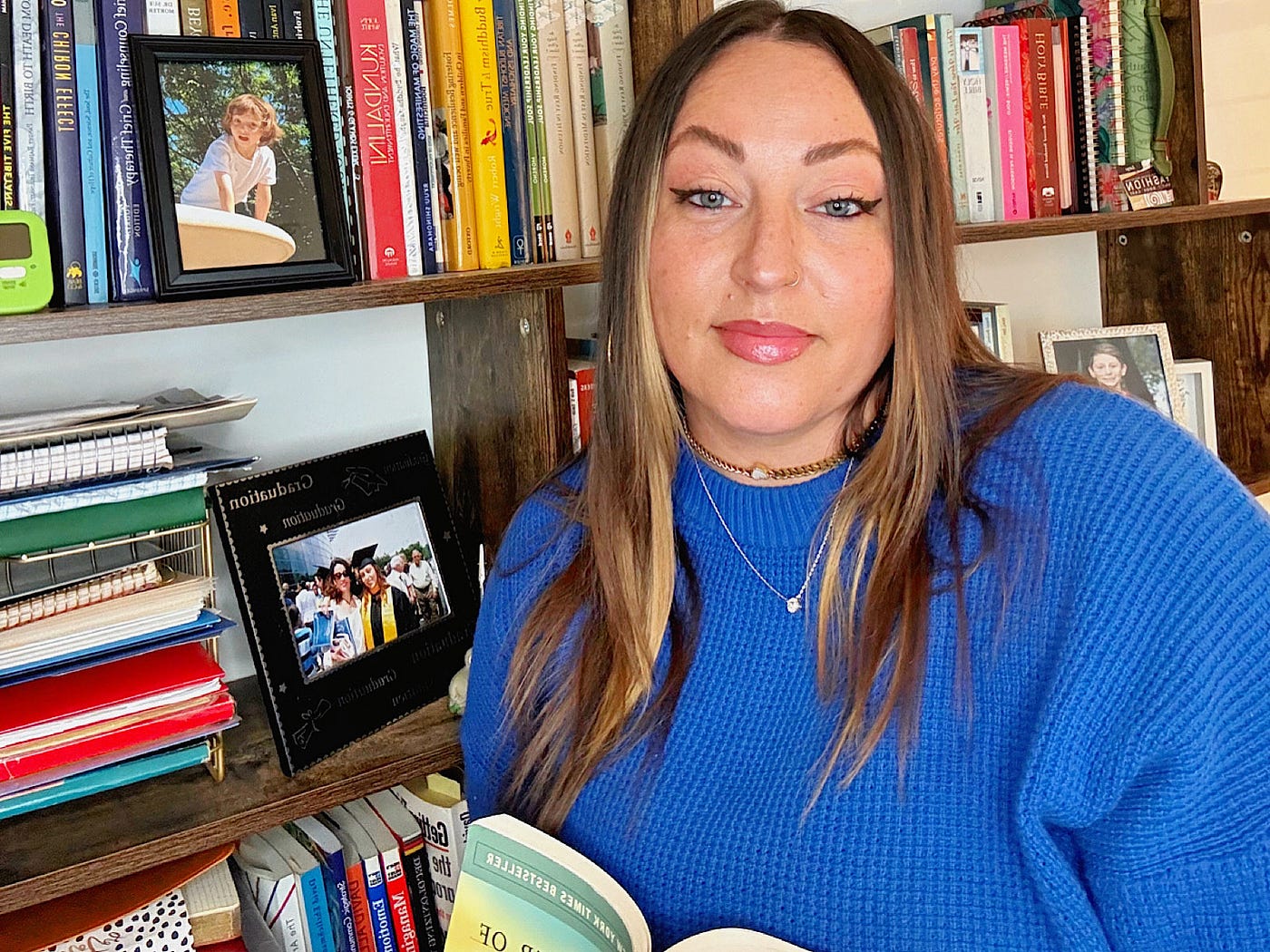
Alexandra (Alex) Stewart is a licensed clinical social worker and psychotherapist with over 16 years of experience working in early-childhood spaces, supporting youth and families within local government and nonprofit sectors, managing cross-sector teams and initiatives, and conducting independent research on special interest areas like neurodivergence and systemic burnout, or the intersection of spirituality, quantum physics, and consciousness. Rooted in foundational psychology and clinically trained in clinical social work, Alex holds a Master of Clinical Social Work from Virginia Commonwealth University and specializes in supporting adults through burnout recovery and attachment-based, trauma-focused care for families. Alex is a mom to a 16-year-old son and humbly acknowledges that parenting has been one of her most meaningful teachers. At the heart of Alex’s work is the belief that all parents love their children— and carry the innate wisdom needed to raise them in a loving and connected way.
Thank you so much for joining us! Before we dive in, our readers would love to get to know a bit about you. Can you tell us your “childhood backstory”?
My childhood is one of the main reasons I became a social worker, more specifically, a psychotherapist. My childhood story allows me to relate and empathize with clients who grew up within complex family dynamics, persistent relational conflict, and general instability. Because this was my experience too. By the time I graduated high school, I had attended eight different schools across two countries and three states. When I was a child, I didn’t have the language needed to express my feelings, which meant big emotions were mostly managed alone. As an adult, I recognized healing was possible. Once I understood that my childhood story lived in my body and was affecting all areas of my life, I decided to engage in deep, transformational work through psychotherapy and personal development. This work allowed my inner child to heal.
Now, I help parents and families improve their communication, create healthy boundaries, and care for themselves by finding the present moment through nervous-system regulation. These practices create the conditions needed for stronger parent-child connections and secure attachment— exactly what a child needs to feel loved and connected.
Can you share the story about what brought you to this specific point in your career?
When I applied to grad school, my intention was to focus on macro-level social work, which involved community organizing, advocacy, and systems-level change. At the time, this plan made sense. My career included serving children and families through local government programs, and later leading nonprofit community-level initiatives as a community organizer and later the strategy director. I was shocked when I learned I wasn’t eligible to apply for the macro-concentration program because I was a hybrid student and wouldn’t be in-person full-time. After realizing my options were to ultimately choose the clinical track or not apply at all, I felt conflicted about what I should do next. When I thought about the long term, I couldn’t imagine what getting a Master of Clinical Social Work would look like in my life— but I applied anyway. As I entered the program, it was clear this work was where my passion lived-- not only because therapy helps us understand ourselves on a deeper level, but because it heals the core wound that created the need for understanding in the first place. Now, I use my experience across government, nonprofit, and mental health sectors to provide attachment-based, nervous-system informed, and trauma-focused psychotherapy services for individuals, couples, and families.
Ok, thank you for that. Let’s now jump to the core of our discussion. This is probably intuitive to many, but it would be beneficial to spell it out. Based on your experience or research, can you explain to us why it is so important to forge a strong connection with our children?
Children perceive the world through their relationships with parents or caregivers. This perception becomes the child’s blueprint for all other relationships in life. In other words, how a child perceives how to gain emotional safety, access authentic connections, and understand what love should feel like is primarily based on the type of attachment style they developed early in life. Having a secure attachment with a parent or caregiver means the child is more likely to have a stable sense of self and be able to self-regulate, form healthy relationships, and feel comfortable within emotional boundaries. What’s interesting is this early-developed attachment style can manifest in any type of relationship later in life as an adult. A person’s attachment patterns can show up in romantic relationships, friendships, or work dynamics with colleagues and supervisors. When parents create secure attachment and strong connections with their children, they help build the foundation for lifelong emotional health, relationship well-being, and overall resilience.
What happens when children do not have that connection, or only have a weak connection?
Children who develop an insecure attachment style could grow into adults who may feel like “something is missing.” Some clients I’ve worked with have described this feeling as something missing from deep in their chest or diaphragm area. The unprocessed presence of these feelings over many years can lead to children becoming adolescents and adults who cope with attachment wounds by engaging in unhealthy relationship patterns, experimenting with substance use or developing addictions, or experiencing chronic insecurity or feelings of unworthiness.
Experiencing these feelings is never a child’s, or person’s, fault. Some children face even greater barriers in forming secure attachment with caregivers. Early trauma wounding from childhood abuse or neglect, pediatric medical diagnoses, adoption trauma, foster care displacements, or neurodevelopmental conditions can all create disruptions that impact a child’s unique attachment style and personal identity. While these barriers, or lived experiences, are well-studied and treatment approaches do exist, more funding is needed to further study and better understand the long-term effects of neurobiological development, multiple placements, and other complex trauma on the child’s ability to form strong connections over a lifetime.
Do you think children in this generation are less likely to feel loved and connected? Why do you feel the way you do?
I don’t believe children growing up today are less likely to feel loved and connected. I believe families are pulled in many directions due to various stressors which make creating authentic connections challenging. Technology, social media, political tension, societal expectations, identity confusion, chronic burnout-- and many other modern-day factors play a powerful role in the parent and child’s overall health and well-being. We’re not facing a situation where there isn’t enough love. The reality is we need to slow down, create space, and allow authentic connections to happen. Luckily, accessing this reality is always available to us— in the here and now. As parents, our power can always be found in the present moment.
We live in a world with incessant demands for our time and attention. There is so much distraction and disconnection. Can you share with our readers 5 steps that parents can take to help their children feel loved and connected? Please include examples or stories for each, if you can.
First, create emotional safety. Then, address behavior.
Before we address behavior, parents can focus on co-regulating with their child by pausing, taking a breath, and becoming grounded. Approaching conflict with your child calmly creates emotional safety for everyone. This shifts the dynamic from a power struggle, which can keep you and your child stuck in conflict, to co-regulation and solving a problem together.
Remember: a child’s behavior does not equal ≠ identity.
Imagine a parent who feels angry when their child breaks an object. The parent believes the child broke the object on purpose instead of assuming it was an accident. This way of thinking narrows the parent’s perspective to “why did this happen to me?” Viewing one’s child through this lens eliminates the parent’s ability to center the child and instead seek to understand. Remembering a child’s behavior is more related to how they’re feeling in any given environment, rather than a personal choice against parents, helps us separate what a child did from who they are.
Embrace imperfect parenting.
Imperfect parenting is rooted in radical love for yourself and your child. Parenting from this emotional place leads to a regulated nervous system, creating safety and stability through strong connections to your child. This happens through the practices of self-forgiveness and self-compassion when we make mistakes. Children don’t need perfect parents; they need present ones.
Look at your child like they’re a celebrity!
Children have their own inner worlds, hopes, and dreams. One of the best ways to connect with your child is to be curious about their inner world and genuinely interested in what they think and feel. Engage in play, create imaginary worlds, and allow for free-flowing conversations. By letting children do the talking while parents listen, strong connections are made helping to create moments of secure attachment where children feel loved.
Don’t forget about you.
Too often, parents operate from parenting models we witnessed growing up. Whether rooted in the belief that “a parent’s job is never done,” or “everyone else’s needs must come before mine.” The ways parents approach their own self-care are observed by their children. These observations contribute to a child’s own beliefs and practices about self-care later in adolescence and into adulthood. It’s important to remember that caring for ourselves is caring for our children; by showing self-respect and practicing emotional health, children learn how to love themselves by watching you as they grow.
How do you define a “good parent”? Can you give an example or story?
Good parents put their children’s emotional needs before their own. A short story to illustrate this could be a birthday party. The child’s parent, caught in the excitement of planning the party, ignores the child’s wants and needs for their party and instead focuses on their own desires. The child feels unseen and unheard, as though they are living in the shadow of the parent. In this example, the “good” parent realizes the mistake of ignoring their child and reflects on how to correct the situation. Instead of blaming the child, the good parent would validate their child’s feelings and create connection through accountability and communication.
You’ll notice the example of a “good parent” came from the same story involving the parent who prioritized their own needs. The example was framed this way to remind parents that we are not perfect— we will make mistakes. What matters most is how we demonstrate patience, self-forgiveness and self-compassion, humility, and accountability in similar situations. This way, we model authenticity instead of engaging from a defensive state. Children don’t expect us to be perfect; they simply need us to be present with them during the learning process.
How do you inspire your child to "dream big"? Can you give an example or story?
I love this question. It offers the assumption that children should dream big and feel free to imagine their lives in exciting and creative ways. As a mother, I try to inspire my son to dream big by telling him how much I love him— exactly as he is. Helping my son understand that my love is unconditional allows him to be confident in taking healthy risks by trying something new, making independent decisions, and exploring his own interests. If he doesn’t have to be afraid of fulfilling my expectations, he’s then free to push boundaries and grow as a person.
I communicate that I love my son unconditionally by saying “I love you” without conditions or qualifiers. Here are some examples of when “I love you” includes a qualifying or conditional statement:
“I love how smart you are.”
“I love your beautiful hair.”
“I love how kind you are.”
“I’m so proud of you for getting good grades.”
“I love you when you listen so well.”
Expressing love to our children using these types of statements can be interpreted as “conditional” because it seems to be related to the qualifier, such as being smart, having beautiful hair, always being kind, etc. Children may feel like they’re only lovable when those conditions exist. Here are examples of how to tell your child you love them using unconditional language:
“I love you.”
“I’m so glad you’re you.”
“You don’t have to be or do anything different for me to love you.”
“You are always enough, exactly as you are.”
“I love you every day, all the time.”
In addition to encouraging children to be themselves, expressing unconditional love also helps children develop emotional regulation skills through their perception of stability and safety. This sense of safety strengthens the nervous system’s ability to self-regulate in times of stress, helping children remain grounded as they navigate adolescence and grow into adulthood.
How would you define “success” when it comes to raising children?
If I could rewrite the question, it would be, “Once a child enters the world, how would we know they experienced secure attachment and strong connections during childhood?” Framing the question like this allows us to center the child and bring us full circle to the relationship between the power of the parent, nervous-system regulation, and the ability of children to manage big emotions during stress. We would know a child experienced secure attachment and strong connections with caregivers when they remain grounded in the present moment during distress, manage their emotional reactions during conflict, and maintain their ability to pause, breathe, and self-regulate. If my son can handle those situations in a healthy way when he’s an adult, I would feel like I was successful as a parent, especially by helping him grow to feel strong, safe, and secure even in challenging times.
This is a huge topic in itself, but it would be worthwhile to touch upon it here. What are some ideal social media and digital habits that you think parents should teach to their children?
Agreed-- this is a huge topic. I believe with children, less is more. Everything children perceive through their senses is affecting their development on some level. Online safety is critical to teach children, which starts with parents learning about the risks and protective steps to take. For teenagers, it’s somewhat different. Social media is a primary form of communication with friends. Taking away the phone is taking away access to social media and access to this communication and can backfire, creating barriers between parents and their teens. Practicing open communication about online safety and expectations is important with teens, which builds trust and fosters independence, a very healthy sign of adolescent development. Being aware of what your children and teens are viewing online is great practice for parents. This could look like getting curious and spending time watching videos or channels children or teens are subscribed to, so you can get a feel for the content and people they’re watching online.
Social media and exposure to countless platforms, apps, opinions, and influencers have created their own range of issues parents should also be aware of. For example, distorted perceptions of beauty and attractiveness are significantly experienced by adolescents due to what they’re watching online. Repeated exposure to distorted beauty standards, for girls and boys, can lead to body dysmorphia. In general, body-image issues are experienced by approximately 40% of teens. Being knowledgeable, showing interest, and having honest, loving conversations demonstrates support for your teens through a time of increased vulnerability to external pressures and societal expectations. Parents can be even more influential by reminding their children of how beautiful they are— just the way they are and by creating connections, love, and moments of emotional co-regulation needed during such a critical developmental period of their lives.
In case parents would like to learn more about the intersection of social media and issues with body image/body dysmorphia, here are two great resources they can check out:
https://axis.org/resource/a-parent-guide-to-body-image/
What are your favorite books, podcasts, or resources that inspire you to be a better parent? Can you explain why you like them?
I believe I am the best parent I can be when I’m the best version of myself. One book that inspired me to be the best version of myself is The Power of Now by Eckhart Tolle. This book taught me how to remain present and see beauty in each moment, just as it is. Being present with my son means I’m fully focused on the true nature of the situation and prevents me from making decisions based on feelings or past experiences. This book was truly transformational for me, and I can’t recommend it enough.
An interesting resource often overlooked by parents is our own children. Children are the experts of their own lives; just as we are. They have unique thoughts, feelings, and beliefs. Asking children what they think about a situation, decision, or action, and learning from their responses, offers special insight to their inner world and builds authentic connections. Creating space so children can express themselves and be involved in everyday activities empowers them to use their voice, learn how to formulate opinions based on their senses, and be confident in making decisions.
Can you please give us your favorite "Life Lesson Quote"? Can you share how that was relevant to you in your life?
A quote I learned from my dad a long time ago is, “Enjoy the journey”. So simple, yet it has helped me hundreds of times. The reason this quote stuck with me for so long is because I can apply it to any situation. A failure at work, a fight with my best friend, collapsed relationships, financial losses, and more. I’ve always returned to reminding myself to simply enjoy the journey. In other words, I allow life to take me where I need to go and trust the growth that follows. It also helps me find gratitude for every experience, even if it feels impossible in the moment. When I remind myself to enjoy the journey, it’s as though my worry shifts from deep heaviness to a lighter feeling, almost as if I’m riding the emotional wave instead of being overcome by it. When I focus long enough, the wave eventually reaches the shore, and the situation begins to settle. It may not be the outcome I wanted, but the circumstances no longer hold power over me. This has been a gift in every area of my life.
You are a person of great influence. If you could inspire a movement that would bring the most amount of good to the most amount of people, what would that be? You never know what your idea can trigger. :-)
If I could inspire a movement, it would be for all systems to collaborate on a national and global initiative educating parents on their profound influence in shaping children’s emotional wellbeing and resilience. Through training offered in hospitals, community spaces, schools, non-profits, faith-based organizations, and available on digital media platforms, parents would learn about the important role they play in creating strong, secure connections with their child. Educational topics would include understanding how the nervous system functions, what happens in the body when we become dysregulated, and the powerful physiological process of parent-child co-regulation— emphasizing how these principles shape emotional development in childhood, throughout adolescence, and into adulthood. Large-scale collective efforts to implement this parent-education movement could fundamentally change how future generations of children are raised, cultivating the most emotionally regulated society in history.
Thank you so much for these insights! This was so inspiring!
If anyone would like to connect or learn more, they can go to my website: www.alexandrastewartlcsw.com or reach out directly on LinkedIn. Thank you for the opportunity to share my thoughts and experience with your audience. It’s been wonderful working with you!
About The Interviewer: Hudi Gugenheimer is the Founder and CEO of the Thrilled Mama Programs, where she supports mothers of young children in reducing anxiety and building lasting inner peace, confidence, and a steady sense of happiness. For more than 15 years, she has worked closely with mothers, helping them develop practical tools and a stronger sense of autonomy in the midst of real life pressures. To date, Hudi has guided over 1,000 mothers through her programs, offering a grounded, compassionate approach that meets women where they are and helps them move forward with clarity and calm.